Nepal High Trek
Contact Us

Everest Base Camp Trek: Leave Your Footprint at the World’s Tallest Base Camp

Traveler 1Traveler 2Traveler 3Traveler 4

💚 99% Recommended

by verified travelers

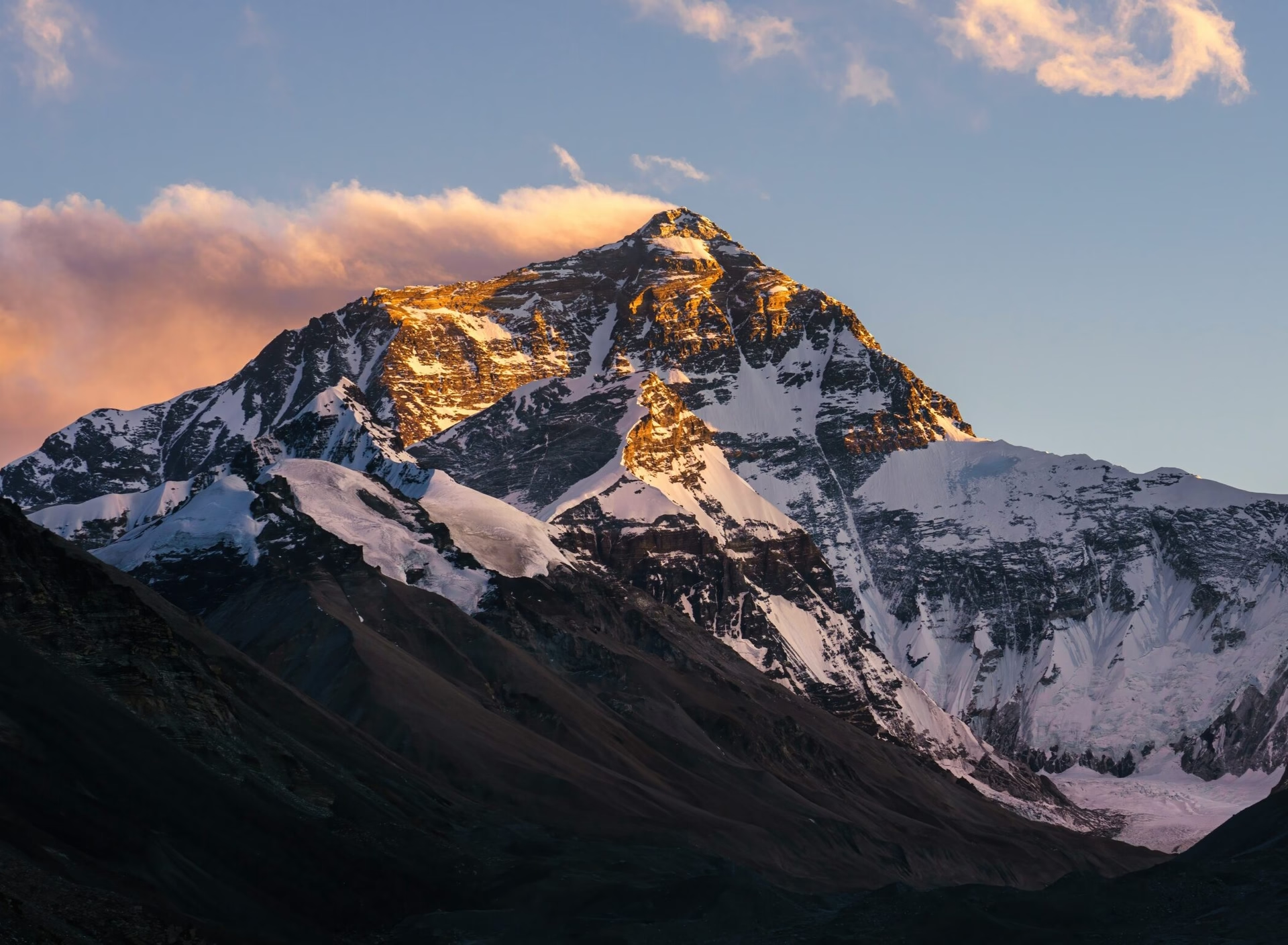
The journey to the foothill of the world’s tallest mountain is a once in a lifetime adventure. The iconic Himalayan journey combines mountains, Sherpa culture, and enticing trekking experiences. Following the scenic trails from Lukla to the Everest Base Camp via monasteries, diverse vegetation, and diverse landscapes inside the Sagarmatha National Park, trekkers enjoy spectacular mountain vistas. The trek is suitable for moderately fit travelers and it offers a perfect blend of culture and natural beauty. With the team of the Nepal High Trek, fulfill your dream of exploring an abode of Mount Everest (8848.86 m). However Everest Base Camp Trek is an iconic adventure journey in the world and leave your footprint to the world's base camp of Everest.
Duration
14 days
Difficulty
Moderate
Max Altitude
5545 m
Destination
Nepal
Activity
Trekking
Accommodation
Hotel/Lodge
Group Size
1
Transport
Both way Flight
Meals
B.D.L.
Season
Sep-Nov & Mar-May

Trip highlights

The 14 Days Everest Base Camp Trek Cost And Itinerary Highlights

  • Mount Everest (8848.86m) is the tallest peak in the world.

  • A memorable scenic adventure flight to Tenzing Hillary Airport, Lukla.

  • Everest Base Camp (5364 m) is a fascinating adventure spot and is 100% Recommended By adventure travelers.

  • Discover the world’s legendary massive Khumbu Glacier and Khumbu Icefall.

  • To get close to Mount Everest and relish amazing mountain views, you will have a captivating panoramic view of the Khumbu Valley from Kalapathar’s vantage.

  • Sophisticated Namche Bazaar is a unique and convenient high-altitude Himalayan marketplace.

  • Experience a unique Sherpa Culture and visit the oldest Tengboche Monastery.

  • Visit the Sherpa Museum and learn about the mountaineering Sherpa lifestyle.

  • Hike to Hotel Everest View and Khumjung Village.

  • Sagarmatha National Park lies at a high altitude with diverse flora and fauna.

  • Authentic Sherpa villages and glorious landscapes.

  • Explore the assorted vegetation and wildlife.

  • Immerse yourself in the stunning scenery of the sparkling peaks of Mount Everest, Lhotse, Makalu, Amadablam, Nuptse, Pumori, Thamerku, Lingten, Lhola, Khangtenga, Tauche, Cholatse and many more.

Trip overview

Immerse in the Sherpa Culture and explore the home of the world’s tallest mountain, Mt. Everest (8848.86 m). Travel planners of the Nepal High Trek And Expedition call you for an enticing journey of the Everest Base Camp Hike that offers extraordinary scenarios that are as tall as the alpine-tundra heights we reach. On this journey, we will hike on trails treaded by legends of the past with a lap of the world’s numerous peaks. The 14 Days Everest Base Camp Trek is certainly not a trek in the park and requires a strenuous walk to complete the adventure. But this is where you get to know you’re on the right path when things stop being easy. Imagine you are at the foothill of the world’s tallest mountain! Book the Everest Base Camp Trekking package in 2026/2027 and relish being amidst the Himalayan atmosphere. In addition, breathe the fresh mountain air and get repose from your daily drabness of life. Everest is calling you to escape from a monotonous lifestyle.

Do the daredevil task once in a lifetime! Knit a momentous travel tale that you can share proudly with friends and family. It is possible to create such a tale by spending a holiday in Nepal. The country boasts the world’s most famous and tallest mountains. In fact, the country is the home of over 14000 mountains snowy mountains including 8 mountains within the top 10 mountains of the world including the world’s tallest Mt. Everest (8848.86 m).

Visit the Everest Region and learn about the Sherpa

Doing the Everest Base Camp Trek not only provides the Himalayan perks, it also provides the greatest insights of intrepid mountaineering people the Sherpa! Get to know about the lifestyle of the Sherpa people and relish the chance to encounter more than a dozen snowy mountains. Moreover, the EBC Trek challenges trekkers to the limit. It gives immense life lessons and provides the best experiences of Nepal’s Himalayan wilderness adventures.

Your Mount Everest Base Camp Trek 14 Days is a lifetime journey and it creates unforgettable memories of adventure. Once your mind is made up for a holiday, the Himalayas strike your mind first. As a result, your thoughts stray to the dizzy altitude of Everest. Mount Everest is a major attraction for being top of the world.  EBC Trek has always been a desired spot for adventure lovers and Mother Nature lovers alike. The EBC Trek cost begins from $1299 to $2900 per person. The Everest Base Camp Trekking Cost can vary depending on various factors and holiday length.

From Sherpa Culture to Mighty Peaks: Epic Adventures on the Everest Base Camp

Besides, the Everest Base Camp Trek for beginners is the ideal trip to begin your Himalayan captivating journey. You will soon learn of a whole different world to explore as your trekking boots hit the trails. The EBC Trek lead to reach the Everest base camp elevation of 5364 m, is full of adventure and experiences that last a lifetime. This trip offers opportunities to see many stunning Himalayan peaks including Everest in shorter periods. The gripping magnificence of Mt Everest is always an attraction for trekkers from different corners of the world.

Everest Base Camp Trek gives you one whole day of rest to soak up interesting unique Sherpa culture. For most mountain lovers, to be at the base camp of the planet’s mightiest mountain is a practical status symbol. Nevertheless, the hike to Everest base camp comes with numerous rewards and the rewards are vast in the risky world above the tree lines.

The World’s Iconic Adventure Everest Base Camp Trail

Our almost 2 week’s teahouse trek begins with a nail-biting flight to Lukla. From hereabouts, our trek starts in the quiet village of Phakding where we haul up for the night. The following day, we ramble on to the Everest gateway of Namche where it’s all happening. While hiking, we chatup with welcoming locals on the way. Importantly, our Everest Base Camp Route gives us exciting insights into the local culture.

Additionally, highlights of the Everest Base Camp Trek also include getting to Base Camp. The height of the Everest base camp is 5364 m/17598.43 ft and it is surrounded by numerous tallest peaks with majesty Himalayas ranges. If your trip is in the spring, you’re likely to see expeditions preparing for the big climb to Everest. On the other hand, your own taxing climb to Kalapathar at 5545m is a challenge by itself. This is the highest point we get to on our odyssey. Nonetheless, we experience unbelievable rewards in a league of its own.

Everest Base Camp Hike with Brilliant Kalapathar Viewpoint

One of the major highlights of the trip was reaching the Everest Base Camp (5364 m). It was my top priority list on the bucket list of things to do in my life. Therefore, it was exciting. The sight of the foothills of the world’s tallest mountain, Mt. Everest, is truly blissful. Moreover, interacting with the climbers stationed in the base camp to climb the mountain was another fruitful experience. The early morning hike to Kalapathar (5545 m) for the sunrise view was the most momentous. I could see the Mt. Everest top brightened by the rays of the morning sun. It was one of the most remarkable sights of my life.

Additionally, the chance to encounter the Sherpa Culture and experience the diverse vegetation and wildlife in the Himalayan sanctuary, the Everest Base Camp Trek is must to do trek in Nepal. We hope you’ll have an unforgettable adventure memories period of the journey.

Mountain Wonderland: A Trail Brimming with Spectacular Sparkling Peaks

The jaw-dropping views from Kalapathar of the snowy giant peaks leave our hearts fluttering with joy. Similarly, close-up views of Everest, Makalu, Mount Pumori, Cholatse  Lhola, Lobuche Peak, Khumbutse, Ama Dablam, Khangtengka, Lhotse, and Nuptse leave us gasping for breath. Everest Base Camp Trek – operated by Nepal High Trek & Expedition, gives us a sense of complete fulfillment. This is our goal and the primary point of our trip.

The Everest Base Camp Hike is an ideal adventure for anyone at any age level. This is an open challenge to the base of the highest peak on earth. If you’re looking for something to test you more physically, then try our Three High Passes Trek for 17 days. You will know how far your limits can go.

Is this an adventure trip for you?

If you know you are physically fit, this is an arduous grade trek at (level 5). You walk to Mount Everest Base Camp and ascend Kalapathar at over 5545m. This is where we get the best close-up views of the highest mountains in the world. Furthermore, everyone should sleep a night at Gorakakshep elevation of 5180 m, it is the world’s highest tea house. The view of Everest from base camp is jaw-dropping and you should not miss it at any cost. Please get involved in some good physical activity at least 1 or 2 months prior to your EBC venture.

We experience 12 days of point-to-point walking with full porterage throughout – you need only carry your daypack. Before you trek to Everest Base Camp, you should have some previous trekking experience if you do not partake in regular exercise or hill walking. If this is so, then you should do some physical preparation before you begin this trip. The trail crosses approximately seven modern suspension bridges (twice), all of which have mesh sides.

How to Avoid Altitude Sickness Throughout the EBC Trek?

A journey to Everest Base Camp would be always arduous due to the high altitude that requires good preparation physically and mentally. Anyone with a strong fear of heights or dizziness may feel a bit heady. The maximum elevation of Everest base camp is achieved at Kalapathar at 5,545m and the average is near 4000 meters However, We give you enough time for acclimatization throughout the trip, but altitude is a factor here and must be considered. This is why we ask our clients to ensure good physical fitness. It’s good for us to have some previous trekking/hiking experience above 3,500 m before we head into the Mount Everest Base Camp.

Walking hours stated within the itinerary of the Everest Base Camp Hike are given as approximates only. Timings stated exclude lunch stops and will vary depending on the pace of your group. We encourage our guests to walk at a comfortable pace suitable to their bodies.

Lastly, we assure you all that 2026/2027 would be a favorable and ideal time to visit adventurous destinations in Nepal. We’re a team very excited to take you to explore the glamorous, distinctive Sherpa cultures and beauty of a stockpile. The local best team assists you create an experience of a lifetime adventure to Nepal.

Therefore, embark on the remarkable journey of the Everest Base Camp! Book it with Nepal High Trek And Expedition and get to the base camp of the world’s tallest mountain without any travel hassles.

EBC Trek for Beginners at the best rate

What makes Everest Base Camp an epitome of all the trekking destinations? The mere significance of the base camp makes it a coveted traveling destination. However, the question arises regarding the suitability of beginners on this trekking journey. Don’t worry, the travel planners of the Nepal High Trek have knitted the Everest Base Camp Trek itinerary in such a way that you can beautifully and complete this amazing journey. Make sure that you are heeding the instructions of our trekking guide and follow the itinerary to the core.

What makes Nepal High Trek an ideal agency for EBC Trek?

The Nepal High Trek is the leading trekking agency for any kinds of trekking activities in Nepal. Please check our mettle and love showered by our past clients in various testimonial sites like Tripadvisor. We always strive to provide value of every penny spent by our clients. Our itinerary of the Everest Base Camp Trek is knitted by local expert Sherpa crews and experienced travel planners. Therefore, trekking with us ensure that you get local authentic information. In addition, our trips are safe and have high success rate! Book your trek to Everest Base Camp with us without any confusion. We are dedicated to provide you the best trekking experiences. Almost 60 % of our trekkers are repeat clients! This proves our hospitality and trip management skill. So, without any doubts, contact our travel planners today for the mesmerizing trekking holiday in an abode of the Mt. Everest.

 Crucial Notes for Everest Region Treks in Peak Seasons

  • All Kathmandu to Lukla flights will be diverted from Ramechhap Manthali due to hectic seasons such as (Mid September to November & March to May).

  • Make sure to keep a extra day as a reserve day to tackle unforeseen events like flights cancellations (Note: high altitude places have varied and unpredictable weather conditions).

  • You can trek independently but it is not recommended in terms of hassle free trekking and ideal logistics management.

  • Late bookings may result less chance of finding the best choice of accommodation and flights during the trek.

Itinerary

Altitude profileMax 5,180 m
1,365 mD12,660 mD23,440 mD33,880 mD43,885 mD54,320 mD65,100 mD74,970 mD85,180 mD94,005 mD103,440 mD112,860 mD121,365 mD131,365 mD14
  1. Day 1:Arrival at TIA in Kathmandu Nepal (1345 m/4429 ft) then transfer to hotel

    1,365 m35mHotelB/L/D

    Our airport representative will pick you up at the airport and transfer you to the hotel. All the trip details will be finalized and last-minute preparation will be completed. Our guide will brief you about the trip and will check all the necessary gear lists too. The agency provides sleeping bags, down jackets, duffle bags, trekking poles an company Tshirt.

  2. 02

    Day 2:Flight to Lukla (35 minutes); Trek to Phakding Village (Altitude – 2660 m/8727 ft ) 7km -3/4 hrs

    2,660 m4/5 HrsGuest HouseB/B

    Early in the morning, we will depart for Domestic Airport for the flight to Lukla. In the case of the first flight, the hotel will provide the packed breakfast otherwise the breakfast will be at Lukla after landing. Approximately we will fly half an hour with a scenic flight with sparking peaks of Eastern Himalayas with diverse majesty landscapes. Upon our arrival, we will meet the rest of the crew members (Porters & Sherpa) in Lukla. All our luggage will be bedded and ready to be carried.

    Note: For flights to Lukla during October, November, April, and May there is no provision for a direct flight from Kathmandu rather we will have to drive to Manthali and fly from Manthali to Lukla.
    Today, we will trek for about three hours to reach Phakding. The trail is easy through various small towns and hamlets, lush green forests, terraced farmlands, and streams. We will have to cross the suspension bridge as well. Phakding is on the banks of the Dudhkoshi River and it is a small village consisting of lots of teahouses and lodges. Overnight at teahouse the local tea house at Phakding village.

  3. 03

    Day 3:Trek from Phakding to Namche Bazaar (Altitude:3440 m/11286 )10 km - 7/8 Hours

    3,440 m7/8 HrsGuest HouseB/L/D

    We will do light exercises before breakfast. This activity continues for an entire trip to avoid muscle cramps and tiredness. Every day, we will start our trek after breakfast. We should climb around 800 m and should walk 11 km from Phakding to Namche bazaar (3440 m). We will be passing separate beautiful Sherpa villages like Toktotok, Benkar, Manjo, and Jorsale. As well, today we will be entering the Sagarmatha National Park in Manjo. All our documents will be checked and we will officially enter the park. The trail has many streams and we need to cross at least 5 suspension bridges. The most iconic and adventurous one is at the foothill of Namche Bazaar, the Twin Bridge. Until this bridge, the trail is on a gentle Nepalese flat but from here on, trekkers have to walk uphill for about an hour to reach Namche Bazaar.

    The first sight of Mt. Everest makes this day even more special. About half an hour from Namche Bazaar, we can get the first glimpse of Mt. Everest, Nuptse, and Lhotse. Throughout the day, we will be seeing the Kusum Kangaru, Kwangde, and Thamserku Mountains. We will be staying overnight in Namche Bazaar. Overnight at local Sherpa Teahouse.

  4. 04

    Day 4:Acclimatization Day (Hike to Hotel Everest View & Khumjung Village (3880 m/12729 ft) - 5 km)

    3,880 m4/5 HrsGuest HouseB/L/D

    Today is the most crucial day of our trekking. Proper acclimatization prepares our body for high-altitude trekking. Therefore, we will be hiking on this day. We will hike to Hotel Everest View (3880 m). The hotel is also one of the highest-situated 5* hotels in the world. Tabuche, Cholatse, Amadablam, Nuptse, Everest, Lhotse, Thamserku, etc. are mountains that can be seen today. On our way back to Namche Bazaar, we will visit the Khumbu Museum as well.

    You can roam around the Namche Bazaar in the late afternoon or evening. The place is the major marketplace of Khumbu. You can visit to Sherpa museum and Buddhist monasteries too. There are various eateries, bars, shops, banks, and Sherpa houses. You can enjoy roaming around this Sherpa market center. The Khumjun village is one the best optional places to hike for exploring the authentic sherpa village, monastery, and mountains. We will back to Namche Bazaar and stay overnight at the teahouse.

  5. 05

    Day 5:Trek from Namche Bazar to Tengboche Monastery (Altitude: 3885 m/12746 ft) 9.5 km - 6-7 Hours

    3,885 m7/8 HrsGuest HouseB/L/D

    We will be walking uphill, downhill, and gently flat in the ridge line today. After a brief uphill walk, we will walk on the gentle flat trail on the ridge line up to Kyangjuma. The trail is easy to walk and well-paved. The scenery of Dudhkoshi Valley, Amadablam, Tengboche Hill, and Everest look spectacular. We take our lunch at Phungi Thanga which is on the bank of the river.

    From this lunch place, we will enter the green lush forest area and walk uphill to Tengboche. You should walk around 9 hundred meters from Phunge Thang to Tengboche. In the evening you can visit the monastery and offer your prayer and you can attend the evening worship. The view of Everest, Amadablam, Khangtenga, Thamserku, Tauche, and Pangboche Valley is splendid from here. Overnight at a beautiful teahouse.

  6. 06

    Day 6:Trek from Tengboche Monastery to Dingboche (Altitude: 4320 m/13845 ft) 9 km -5-6 Hours

    4,320 m6/7 HrsGuest HouseB/L/D

    Today’s trekking takes us to two big Sherpa villages. The first one is Pangboche and the second one is Dingboche. However, the Dingboche village is the most massive and last Sherpa village throughout the trek. Walking downhill to Debuche and then uphill after crossing the Imja River takes us to Pangboche village. We will have lunch in Pangboche or Somare. After Somare, the trail divides into Pheriche Village and Dingboceh Village. We will continue our trekking on a gentle uphill trail to Dingboche. The village of Dingboche is the least densely populated village on the Everest Base Camp Trekking trail. Overnight at Teahouse.

  7. 07

    Day 7:Acclimatization Day ( Hike to Nangkartshang Peak 5100 m/16726 ft) or Chhukung Valley) - 4/5 Hours

    5,100 m4/5 HrsGuest HouseB/L/D

    The second acclimatization activity is done in Dingboche. We will hike to Nangkartshang (5100 m) and trek back to Dingboche for overnight sleep. During our hike, we can see the marvelous scenery of mountains like Island, Makalu, Lhotse Sar, Tabuche, Cholatse, Amadablam, Kangtega, Thamserku Baruntse, etc. You can stroll around the village in the late afternoon. Relish the chance to witness Sherpa people in their backyard. Overnight at teahouse.

  8. 08

    Day 8:Trek from Dingboche to Lobuche Village (Altitude - 4970 m/16305 ft) 6.5 km - 5/6 Hrs

    4,970 m6/7 HrsGuest HouseB/L/D

    We will enter fewer vegetation areas from this day onward. The trail is on the ridge line overlooking the mountains above the Pheriche Valley. We will take our lunch in Thukla and continue our uphill trek to Lobuche. In Thukla Pass (4900 m), there are many memorials of brave mountaineers who perished on Mt. Everest. You can offer your condolences too. After a brief stop, we will continue walking along the banks of a river and reach Lobuche. Overnight at the local best teahouse with a private room.

  9. 09

    Day 9:Trek from Lobuche to Gorakshep (Altitude: 5180 m/16994 ft) (3 Hrs/4 km) Hike to EBC (Altitude: 5364 m/17598 ft) 3.5km- 7/8 Hours

    5,180 m8/9 HrsGuest HouseB/L/D

    Today is the most iconic day of our trek and our prime goal is very close. We will reach Everest Base Camp today and get an opportunity to leave our footprint at the base camp of Mount Everest. Most of the trail today is on the glacier and moraine. After reaching the Gorakshep (5180 m), we will have lunch and rest for a while. We will continue our hike to Everest Base Camp. After walking for about 2 hours, we will the base camp. The base camp is surrounded by legendary peaks, massive glaciers and the Khumbu glacier. Create a memory of the base camp of the world’s tallest mountain. During the climbing season, you can see lots of colorful camps camped in the base camp. We will again return to the teahouse in Gorakshep overnight.

  10. 10

    Day 10:Hike to Kalapathar for Sunrise (5545 m/18192 ft) 1.2km/2 hrs ): Trek to Pangboche (4005 m/13139 ft ) -17 km) 7/8 Hours

    4,005 m8/9 HrsGuest HouseB/L/D

    In the early morning, we will start our hike to Kalapathar viewpoint(5545 m). It takes about 1-2 hours to get on the top. The Kalapathar vantage point is the best place to relish the view of Everest and the panoramic Khumbu Himalayas. You will reach the lap of Pumori mountain and will be surrounded by the majesty mountains.  The Scenery Mountains look splendid from the top of the Kalapathar. Everest seems so close and massive than far away. Besides Everest, you can be immersed in the majesty scenes of Khumbutse, Lhola, Amadablam, Pumori, Nuptse, Lhotse, and Thamserku look spectacular from the top. We will return to Gorakshep within 45 minutes from Kalapathar and have breakfast at the lodge. After breakfast, we will continue our trek back to Pangboche via Lobuche, Thukla and Pheriche village then eventually reach to Pangboche village.

  11. 11

    Day 11:Trek from Pangboche to Namche Bazaar (Altitude: 3440 m/11286 ft) - 19km) 7/8 Hours

    3,440 m8/9 HrsGuest HouseB/L/D

    Today, the trail is quite longer than on previous days but we coming low altitude. We will retrace the same trail back to Namche Bazaar via Pangboche village and Tengboche Monastery. Remember that a return trip is always exciting with comfortable. The altitude drops and the surrounding scenery looks more enticing. Therefore, enjoy every bit of the return trip. Overnight at the best teahouse in Namche Bazaar.

  12. 12

    Day 12:Trek from Namche Bazar to Lukla (Altitude: 2860 m/9384 ft) 17 km ) 7/8 Hours

    2,860 m7/8 HrsGuest HouseB/L/D

    We will trek back to Lukla passing by many Sherpa villages like Jorsale, Manjo, Benkar, Toktok. Phakding, Ghat and Thadokoshi. The trail is mostly downhill and on a gentle flat along the Dudhkoshi River. For about 1-2 hours, we will have to walk gently uphill to reach Lukla. Today is the last of trekking. Therefore, we will enjoy in our teahouse with the rest of the crew members. Even though, before ends the trip we must check out from Sagarmatha National Park and Khumbu Rural Municipality. We will also bid farewell to our porters and Sherpa. Tips are not compulsory but are expected by the staff members. Today is the day to provide tips to the staff. Overnight at local cozy guest house.

  13. 13

    Day 13:Flight Back to Kathmandu - 35 m (Altitude: 1350 m/4229 ft)

    1,365 m35mHotelB/L

    We will take the flight to Kathmandu. We can see the last stunning Himalayas scenario from the plane and you will have a memorable scenic flight. The guide will accompany you to your hotel. The agency will host the farewell dinner for you in the Nepalese cultural restaurant. All the trip memories will be shared. Overnight at the 3-star level Hotel in Kathmandu.

  14. Day 14:Final Departure

    1,365 m35mB/B

    The last of your Nepal vacation going to end soon at Tribhuwan International Airport Kathmandu. Before heading to the airport we'll come to pick you up at your hotel and Our Airport representative will take you to the Tribhuwan International Airport for the farewell.

Are you looking to customize the trip itinerary?

If the provided schedule is not suitable for you, we can create a personalized travel arrangement tailored to your preferences and requirements.

Customize Trip

Cost breakdown

What's included

  • All ground transportation (Including 2 times international  and 2 times domestic airport pickup & drop)

  • Two-night boutique hotel in Kathmandu with breakfast.

  • Meals throughout the trek (Breakfast, Lunch, and Dinner).

  • Both-way domestic flight ticket (Kathmandu-Lukla-Kathmandu)

  • An experienced, expert, helpful, and friendly mountain Guide ( Included Accommodation, Transportation, and Insurance)

  • One strong porter for each two clients (No porter for solo travelers).

  • Sagarmatha National Park Permit.

  • Pasang Lhamu Rural Municipality Entrance Ticket.

  • 1 Assistant guide above 6 people (Including his salary, food, accommodation & insurance.

  • 11-Night tea house basis good Accommodation throughout the trek. (One private room for every two clients)

  • Seasonal fresh fruit throughout the trek.

  • NHTE’S Dawn jacket, sleeping bag, T-shirt, Trekking pole & duffle bag. (If required )

  • An arrangement of Emergency Helicopter service will be paid by your Travel insurance company.

  • Medical kit bag.

What's not included

  • Your high altitude emergency travel insurance.

  • All the expenses in the mountain over than scheduled itinerary (due to strike, delay, or canceled flight)

  • All the Bar bills and personal expenses (phone call, laundry service, Wifi, battery recharge, a bottle of water, hot water, desert & shower.

  • Tips for the guide and porter.
Dates & Availability

Filter departures by month
09Aug

Aug 9 – Aug 22, 2026

Available
$1,499pp
13Aug

Aug 13 – Aug 26, 2026

Available
$1,499pp
17Aug

Aug 17 – Aug 30, 2026

Available
$1,499pp
21Aug

Aug 21 – Sep 3, 2026

Available
$1,499pp
24Aug

Aug 24 – Sep 6, 2026

Available
$1,499pp
29Aug

Aug 29 – Sep 11, 2026

Available
$1,499pp
31Aug

Aug 31 – Sep 13, 2026

Available
$1,499pp

Trip map

Loading map…

Useful information

Best Time to Trek

The best time to do the Everest Base Camp Trek in Nepal is during the spring and winter season. However, the global climate change has shifted the ideal time consideration for the trek. Nowadays, you may not get favorable weather conditions during September month. Instead, August from Monsoon season can be ideal too. March to May of spring season is by far the best time to do the trek. Even during winter season (December – February), you can do the trek especially in early weeks of December. Skies are clear in this season but you may not be able to complete the trek beyond Dingboche due to snow blizzard. Monsoon season is okay to trek in the Everest region but Lukla flight uncertainties may increase the hassle to you.

Trek Difficulty & Fitness Level

The difficulty level of the Everest Base Camp Trek in Nepal is moderate. Lesser number of steep uphill and downhill sections are easy to walk but altitude plays crucial role. Trekkers may find it hard to trek in the places beyond Dingboche due to higher elevation. Lower oxygen level places are hard to walk and trekkers may feel more exhausted. Therefore, you must have good cardio – vascular abilities to do the trek.

Good physical fitness level is required for the trek. Make sure to build up the stamina level to be able to walk for about 6 to 7 hours in an average for weeks. Similarly, you should also be able to tackle higher elevation places and manage exhaustion. Exercises like running, swimming, cycling, and walking are best to improve stamina level.

Altitude & Acclimatization

The journey of the Everest Base Camp Trek in Nepal is an ultimate high – altitude walking activity. The risks of altitude sickness are high. Major incidents happen in the Everest Base Camp Trek route are related to altitude. Therefore, you can’t ignore this fact. The best way to tackle the issues of altitude sickness is by doing acclimatization activities. Generally, a classic Everest Base Camp Trek itinerary has two acclimatization activities. They are in Namche Bazaar and in Dingboche Village. Trekkers trek to the Everest View Hotel (3880 m) and hike the Nagarshan Hill (5100 m) as part of acclimatization process. In fact, these acclimatization activities help you to adjust to the demands of higher elevation places.

Altitude Sickness Prevention

There are many ways to prevent altitude sickness during the Everest Base Camp Trek. Acclimatization activities are in the itinerary and that help trekkers to prevent it. Similarly, you should also heed instructions of your trekking guide. Maintain uniform pace throughout the trek. Under pacing and over pacing can be exhausting and it may increase chance of altitude sickness. Always drink water in at least 20 to 30 minutes on the trek. Stay hydrated. Eat soupy foods and don’t go hungry. You may not get good appetite in the higher elevation places but you must not stay empty belly. Try eating foods that help you regain energy. Try chocolate bars and stay positive throughout the trek.

Emergency Evacuation

Despite lots of precautionary activities, you may end up in the emergency situation. Therefore, you should know about the procedure to follow during emergencies. If you are in discomfort or if you are suffering from altitude sickness, then you must descend quickly. The option to descend is either by walking yourselves or by the help of mule or porter. In severe cases, you may have to choose emergency helicopter rescue option. During the situation, the agency will coordinate with hospital, helicopter company, and insurance company. Therefore, you must leave the copy of your insurance plan to our office before the trek.

Maximum Elevation

The highest point in the Everest Base Camp Trek journey is the height of the Kalapathar Hill. The top is at an altitude of 5545 m above sea level. Some trekkers may choose to avoid Kalapathar Hill hike due to exhaustion. We highly recommend you to do the hike for the best sunrise experiences. Furthermore, the hill top is also an ideal place to witness mountains from the Mahalangur Himalayan range including Everest. In fact, the best view of Mount Everest is seen from Kalapathar hill. If not Kalapathar, then the highest elevation is the Everest Base Camp (5364 m). However, the maximum elevation for overnight during the Everest Base Camp Trek in Nepal is in Gorakshep (5100 m).  

Weather & Temperature

The nighttime temperature in the Everest Base Camp Trek route falls down to minus 10 degrees to minus 15 degrees Celsius in the higher elevation places like Lobuche and Gorakshep. Lower elevation places may experience around minus 5 degrees Celsius to 2 – 5 degrees Celsius. Well, winter temperature may drop significantly. Usually, the weather is clear during spring and autumn season. Therefore, these seasons are also ideal times to do the Everest Base Camp Trek in Nepal.

Trek Permits

Two permits are required to do the Everest Base Camp Trek in Nepal. Sagarmatha National Park entry permit costing NRs. 3000 to foreigners and NRs. 1500 to SAARC nationals is the one. Another permit is the local Pasang Lhamu Rural Municipality entry permit that costs NRs. 3000. Recently, the rate of the Pasang Lhamu Rural Municipality entry permit changed from NRs. 2000 to NRs. 3000.

Required Travel Insurance

Travel Insurance is mandatory for the Everest Base Camp Trek in Nepal. Make sure that your travel insurance covers emergency helicopter rescue, accidents, medical expenses, flight delays, and flights cancellations. Leave the copy of the insurance plan to our trek office in Kathmandu. We will activate the plan if needed by coordinating with the insurance company, helicopter company, and hospital. Note down that you must get the insurance from legitimate international agency rather than the local Nepalese travel insurance agency. Staff insurance is done by the Nepal High Trek.  

Accommodation

The trail of the Everest Base Camp Trek is trekked by trekkers, climbers, and locals. It is one of the commercial trails of Nepal. Therefore, you can find different options of lodging facilities in the trail. Low budget porter houses are also abundant in the trail. These lodging facilities are best for porters and helpers of the trekking team. Similarly, you can also find basic tea houses to luxury mountain lodges in the trail. In our standard Everest Base Camp Trekking package, you get standard tea house accommodation. Don’t expect attached bathrooms but our trekking guide can ask for one if you need as per availability. Luxury mountain lodges are available until Dingboche Village. Therefore, you can also choose to book the luxury Everest Base Camp Trekking package if you want.

Meals During the Trek

Similar to the accommodation facilities, meals during the Everest Base Camp Trek are also full of options. Trekkers can choose from menu and items include cuisines from Nepal, China, India, and Continental areas. Almost all tea houses serve the similar menu but the price may vary. Higher elevation places’ tea houses may charge more than the tea houses from lower elevation areas.

Drinking Water

Bottled mineral water is easily available in the Everest Base Camp Trek route. The cost of the bottle water is very high but it is available. However, it is not wise to use the bottled mineral water from the environmental point of view. It is better to get the hot drinking water from tea house. Make sure that you have thermal water bottle that holds warm water for long time. If not, you can also choose to use spring water by using the water purifying tablet.

Transportation & Domestic Flights

The major means of transportation to the trail head of the Everest Base Camp Trek is by flight. In Kathmandu, you will be picked up in our private vehicle according to group sizes from car and jeep to bus. Lukla flight may not happen from Kathmandu during peak seasons. You may have to travel to Manthali Ramechhap for regular flight to Lukla or from Lukla. In order to do more flights and to utilize short best weather window, flights take place from Manthali Airport in Ramechhap during peak season.

There is an option of jeep drive to Surke via Phaplu as an alternative to the Lukla flights. However, it takes around two days to reach Surke from Kathmandu. At first, you have to drive to Phaplu which takes around 6 to 7 hours from Kathmandu. The road from Phaplu to Surke is off road and it is still under construction. Therefore, you have to take another 6 to 7 hours drive from Phaplu to Surke. From Surke, you can reach Lukla in an hour but you can choose to trek to Phakding instead of taking the Lukla route.

Baggage Allowance

Lukla flight carries maximum 15 kilograms including hand bags. If you are using the road transportation, then you can take as much as you like. Please remember that a porter carries not more than 25 kilograms. A porter is assigned to two trekkers. Therefore, keep your baggage to at most 12 – 13 kilograms.  

Guides & Porters

Your trekking guide will accompany you from Kathmandu in most of the cases. However, porter – guide case can be different. You may have to fly to Lukla alone and you will meet your guide in Lukla airport. Porters and Sherpa Guide will be in Lukla airport. Upon your landing, these people will handle your baggage. Local crew members are stationed in Lukla and we have our separate private team of local Sherpa and porters to help you with the trekking activities.

Communication & Internet

Nowadays, you can use either NCELL or NTC SIM card to use internet services except in few places. It is wise to get both sims as in some places one works and in some places another works. Besides the NTC & NCELL sims, you can also use the tea house WIFI internet. Higher elevation places may charge you for internet services.

Electricity & Charging

Until Namche Bazaar, you get free charging services. Beyond this place, you may have to pay extra for battery charging of your electronic gadgets. Therefore, we advise you to carry portable solar chargers or high - capacity power bank. If not, you can pay in tea house and charge it in the dining area.

ATMs & Cash Availability

You can find ATMs in Lukla and Namche Bazaar. Cash withdrawal services are available but you can’t heavily rely on these services. Internet issues and technical issues may occur. Therefore, plan in Kathmandu about how much money do you need to bring during the trek. Tea houses can also give you cash by using their POS machine but they may charge you 3 % to 8 % of processing fee.

Currency & Payment

The majority of international currencies work in the Everest Base Camp Trek route. However, US dollars and Nepalese currencies are in use most of the time. If you are tipping your local guide or porter, then it is good to give them Nepalese currency so that they don’t have to pay for exchange commission fees later on.

Cultural Etiquette

Don’t take pictures of the locals without their permission. Please don’t give chocolates or stationery items to kids during the trek. If you have wish to do so, make sure to tell your trekking guide. He or she will take permission and allow you to donate. Namaskar or Namaste is the formal greeting in Nepal. Respect the local culture and environment. Do not enter monasteries with your shoes on and you can’t be loud in these places.

Customization Options

Nepal High Trek offers customization options to all trekkers. If the proposed customization request is out of harm and safe, we always respect it and do as require. Our prices are flexible and affordable according to the services included in the package. In the case that you wish to upgrade the facilities and services; we can change the package upon discussions. We are open to our clients about safety, services, and overall trekking experiences. At the end of the trek, your travel investment must be returned to you in the form of hassle free trek operations full of magnificent memories from Khumbu Nepal.


Trip video

Packing list

CLOTHING & LAYERING SYSTEM

Base Layers (Sweat Management)

  • 2–3 Long-Sleeve Tops: Lightweight synthetic or merino wool. Leave all cotton at home—once cotton gets wet with sweat, it stays wet and chilled.

  • 2 Thermal Bottoms / Long Johns: Merino wool or warm synthetic leggings for cold mornings and lounging around the lodge after walking.

  • 4–5 Pairs Underwear: Quick-drying synthetic or merino options.

  • 2–3 Sports Bras (if applicable): Moisture-wicking and comfortable without rough seams.

Mid Layers (Warmth)

  • 1 Fleece Jacket: A good medium-weight fleece grid or pullover is your everyday workhorse while walking.

  • 1 Lightweight Synthetic/Down Mid-Layer: Great for throwing on during lunch breaks or cool morning starts before the sun hits the trail.

  • 1–2 Pairs Trekking Pants: Quick-dry, flexible hiking trousers.

Outer Shell (Wind & Elements)

  • 1 Waterproof & Windproof Jacket: A breathable shell with a sturdy hood. High-altitude wind cuts right through mid-layers, so a good windbreaker is crucial.

  • 1 Pair Rain Pants: Packable, lightweight rain trousers to pull over your trekking pants if a storm rolls in.

The Big Cold Layer (Evening & Base Camp)

  • 1 Heavy Down Parka: A thick, high-fill down jacket with an insulated hood. Once the sun drops, teahouse common rooms cool off quickly. You will practically live in this coat every evening and on the morning walk up to Kala Patthar.

FOOTWEAR

  • Trekking Boots: Sturdy, waterproof hiking boots with solid ankle support and good grip. Crucial rule: Put at least 30–50 miles on them before your flight to Nepal. Getting fresh blisters on day two will ruin the trip.

  • Camp Shoes: Lightweight sneakers, sandals, or down booties to switch into as soon as you finish trekking for the day. Getting out of sweaty boots feels amazing.

Socks:

  • 3–4 pairs of thick merino wool trekking socks.

  • 1 pair of dedicated, super-thick wool socks saved strictly for sleeping in.

MAIN TREKKING GEAR

  • Duffel or Main Pack: If you’re hiring a porter, get an 80L–100L heavy-duty duffel bag (the rugged, splash-proof vinyl ones are gold standard here). If you’re carrying your own load, a solid 50L–65L backpack works best. Try to keep your packed weight under 12–14 kg (around 26–30 lbs)—your back or your porter will thank you.

  • A Good Daypack (25L–35L): This stays with you all day. You’ll keep your rain shell, extra mid-layers, water, camera, lip balm, and daily snacks in here.

  • Rain Cover: Make sure you have a waterproof cover fitted specifically for your daypack. Weather changes fast.

  • 4-Season Sleeping Bag: Aim for something rated around -10°C to -15°C (14°F to 5°F). Lodge bedrooms aren't heated, and by the time you reach Lobuche or Gorak Shep, the indoor air will be well below freezing at night.

  • Sleeping Bag Liner: A simple silk or fleece liner is a game-changer. It adds a few extra degrees of warmth and keeps your main sleeping bag clean.

  • Trekking Poles: Get a sturdy, adjustable pair. Your knees take a beating on the long downhill stretches back to Namche, and poles save an incredible amount of joint wear.

  • Headlamp: Don't skip this or buy a cheap one. You’ll need a reliable, bright headlamp (around 200+ lumens) for the dark, freezing climb up Kala Patthar before sunrise.

  • Water Bottles: Bring two 1-liter wide-mouth Nalgene bottles. Avoid bladder systems with long hoses—the water inside the exposed tube freezes solid on chilly mornings above Namche. Plus, you can fill Nalgenes with hot water at night and toss them into your sleeping bag as a heater.

  • Water Purification: Chlorine dioxide drops or tablets, a SteriPen, or a lightweight squeeze filter. Tap water isn't safe to drink untreated.

HEADWEAR & HANDWEAR

Head & Face

  • Sun Hat or Cap: High altitude means intense UV rays. A wide-brim hat or standard cap is essential during sunny midday walks.

  • Warm Beanie: Fleece-lined wool or synthetic hat that comfortably covers your ears.

  • 2 Buffs / Neck Gaiters: One thin buff to protect your neck from sun and keep trail dust out of your lungs (helps prevent the infamous "Khumbu cough"). Bring a second, thicker fleece buff for freezing air.

  • Category 3 or 4 Sunglasses: Polarized or dark UV-blocking glasses are non-negotiable. Sunlight bouncing off dry rock and ice higher up will give you a nasty headache if your eyes aren't shielded.

Hands

  • Light Liner Gloves: Thin merino or synthetic gloves for milder days or when you just need to handle gear without bare skin touching cold metal.

  • Warm Windproof Gloves: Thick, insulated, windproof gloves for freezing morning starts and icy winds higher up.

TOILETRIES & HYGIENE

Keep in mind that running water freezes overnight at higher elevations, and hot showers become rare (and expensive) the higher you go.

  • Wet Wipes: Pack 2 to 3 large packs. This will basically be your daily "shower" above 3,500 meters.

  • Hand Sanitizer: 2–3 small travel bottles. Keep one in your jacket pocket so it doesn't freeze or get lost in your main bag.

  • Travel Towel: A small-to-medium quick-dry microfiber towel.

  • Sunscreen & Lip Balm: High SPF is mandatory (SPF 50+ for skin, SPF 30+ for lips). Bring two lip balms because they have a habit of rolling away.

  • Oral Care: Toothbrush, small tube of toothpaste, and travel-sized mouthwash.

  • Toilet Paper: 2–3 rolls. Pro tip: Pull out the inner cardboard cylinder and crush the rolls flat so they slide easily into your pack. Teahouses don't provide TP.

Personal First Aid Kit:

  • Blister care: Compeed patches, Leukotape, or moleskin (fix hot spots the second you feel them).

  • Altitude: Acetazolamide (Diamox) if you and your doctor decided on it.

  • Pain Relief: Ibuprofen or Paracetamol (altitude headaches happen to almost everyone at some point).

  • Stomach: Imodium, rehydration powder/salts, and a general broad-spectrum antibiotic from your doctor.

  • Throat: Medicated cough drops or throat lozenges—dry mountain air makes your throat feel raw.

TOILETRIES & HYGIENE

Keep in mind that running water freezes overnight at higher elevations, and hot showers become rare (and expensive) the higher you go.

  • Wet Wipes: Pack 2 to 3 large packs. This will basically be your daily "shower" above 3,500 meters.

  • Hand Sanitizer: 2–3 small travel bottles. Keep one in your jacket pocket so it doesn't freeze or get lost in your main bag.

  • Travel Towel: A small-to-medium quick-dry microfiber towel.

  • Sunscreen & Lip Balm: High SPF is mandatory (SPF 50+ for skin, SPF 30+ for lips). Bring two lip balms because they have a habit of rolling away.

  • Oral Care: Toothbrush, small tube of toothpaste, and travel-sized mouthwash.

  • Toilet Paper: 2–3 rolls. Pro tip: Pull out the inner cardboard cylinder and crush the rolls flat so they slide easily into your pack. Teahouses don't provide TP.

Personal First Aid Kit:

  • Blister care: Compeed patches, leukotape, or moleskin (fix hot spots the second you feel them).

  • Altitude: Acetazolamide (Diamox) if you and your doctor decided on it.

  • Pain Relief: Ibuprofen or Paracetamol (altitude headaches happen to almost everyone at some point).

  • Stomach: Imodium, rehydration powder/salts, and a general broad-spectrum antibiotic from your doctor.

  • Throat: Medicated cough drops or throat lozenges—dry mountain air makes your throat feel raw.

Frequently asked

1. Get the best Nepal Government Licensed Trekking Agency 2. Ask for copies of all the required documents of the agency to avoid any kind of fraudulence 3. Consult about acclimatization, itineraries, and services included in the trek package. 4. Inform your physical fitness level and previous trekking experiences in high-altitude places. 5. Once agreed on trip details (Package includes, excludes, and Itinerary), send the Trip Advance Costs – Usually Advance Deposit is 20 – 25 % of the trip cost 6. Send your valid passport copies and PP sized Photographs 7. Send your Flight Schedule so that the agency can pick you up from the airport 8. Get the Travel Insurance with a policy that includes emergency helicopter rescue, medical expenses, accidents, and trip cancellations 9. Ask for accommodation confirmation from the agency 10. Ask for the Advance Deposit Receipt

Tipping is customary in Nepal and is appreciated by guides, porters, and support staff as a gesture of gratitude.

Accommodation is mainly in teahouses and guesthouses, typically offering twin-sharing rooms and basic facilities.

No. Regular walking, hiking, and cardiovascular exercises before the trek are generally sufficient.

The trek is considered moderately challenging due to altitude and duration. Most physically fit individuals can complete it with proper preparation.

No, unless you specifically request a private room. Otherwise, you may share accommodation with another trekker of the same gender.

Yes, solo travelers frequently join Everest Base Camp treks, providing opportunities to meet like-minded adventurers.

Proper acclimatization, staying hydrated, eating well, avoiding alcohol and smoking, and ascending gradually can help reduce the risk of Acute Mountain Sickness (AMS).

Credit cards are accepted in some locations such as Lukla, Namche Bazaar, and Dingboche, but carrying cash is recommended.

It is not recommended to drink untreated tap water. Use purification tablets or drink boiled or filtered water provided by lodges.

Paid Wi-Fi services are available in most teahouses and lodges throughout the trek. Airlink Wi-Fi is commonly used in the region.

A 20% deposit is required to confirm the booking. Deposits are generally non-refundable but may be transferred to a future trip. If full payment has been made, cancellations made one month before departure may be eligible for a 50% refund.

One porter is usually assigned to two trekkers and carries a maximum of 20–25 kg.

Special training is not required, but cardiovascular exercises and regular hiking are highly recommended before the trek.

During peak months (April, May, October, and November), flights often operate from Ramechhap (Manthali Airport) instead of Kathmandu due to air traffic congestion.

The trek is generally suitable for people aged 10 to 85, depending on their fitness and health conditions.

Yeti is a mythical creature found in local folklore. Snow leopards do exist in the region, but sightings are extremely rare.

Yes, helicopter returns to Lukla or Kathmandu can be arranged at an additional cost with prior notice.

Helicopters generally do not land at Everest Base Camp. Trekkers usually descend to Gorakshep before boarding a helicopter.

Major Sherpa villages include Namche Bazaar, Pangboche, Dingboche, Khumjung, and Khunde.

Trekkers require: Sagarmatha National Park Permit (NPR 3,000) Pasang Lhamu Rural Municipality Permit (NPR 3,000)

Yes, it can be challenging due to altitude and terrain. However, beginners with good physical fitness and preparation can successfully complete the trek.

While independent trekking may be possible depending on regulations, hiring a guide is highly recommended for safety, navigation, and cultural insights.

Sherpas are indigenous people of the Khumbu region known for their mountaineering expertise. Sherpa assistants may be provided for larger trekking groups.

The cost varies depending on services and itinerary, but generally ranges from USD 1,400 to USD 3,000 per person.

Essential equipment includes sturdy hiking boots, warm clothing, a waterproof jacket, sleeping bag, hat, sunglasses, and a personal first-aid kit.

Common meals include Dal Bhat, momos, noodles, pasta, pizza, burgers, spaghetti, and a variety of Chinese and Italian dishes.

Acclimatization hikes are scheduled at Namche Bazaar and Dingboche to help trekkers adjust to higher elevations and reduce the risk of altitude sickness.

Nepal Telecom (NTC) and Ncell provide coverage up to Tengboche. NTC generally works better at higher elevations, including Gorakshep. Network coverage becomes limited at higher altitudes.

Most Everest Base Camp treks take between 10 and 20 days, depending on the itinerary. Routes starting from Jiri may take over three weeks.

A moderate level of fitness is required. Regular cardiovascular exercise and hiking for several months before the trek are highly recommended.

Most trekkers get their first glimpse of Mount Everest on the second day of the trek after crossing the Hillary Suspension Bridge and climbing toward Namche Bazaar.

Trekkers experience temperate forests at lower elevations, alpine forests at mid-elevations, and tundra vegetation above 5,000 meters. Rhododendron forests are especially beautiful in the upper Khumbu region.

Yes, fit and experienced trekkers can complete the trek in as little as 10 days from Kathmandu. However, the shorter itinerary includes no acclimatization days and is more strenuous. A 12-day itinerary is recommended for better acclimatization and enjoyment.

Spring (March–May) and autumn (September–November) are the best seasons for the Everest Base Camp Trek due to favorable weather conditions and clear mountain views.

Yes, all ground transportation, including international and domestic airport transfers, is included. A Nepal High Trek representative will meet you at the airport holding a Nepal High Trek signboard.

Kala Patthar (5,545m) is the highest point reached during the trek, while Everest Base Camp stands at 5,364m. Kala Patthar offers one of the best panoramic views of Mount Everest and the surrounding Himalayas.

The trekking permit and Khumbu entrance ticket can be arranged by Nepal High Trek. The Khumbu entrance ticket is issued by Pasang Lhamu Rural Municipality in Lukla and costs NPR 2,000 per person. The Sagarmatha National Park permit can be obtained in Monjo and costs NPR 3,000 per person (except for SAARC nationals).

Everest Base Camp Trek is one of the world's top adventure destinations. The trek offers stunning views of Mount Everest, Sherpa culture, the Khumbu Glacier, Khumbu Icefall, Buddhist monasteries, diverse landscapes, and magnificent Himalayan scenery.

Yes, travel insurance is mandatory for Everest region treks. Before purchasing insurance, make sure it covers high-altitude trekking, emergency rescue, and medical expenses.

Please ensure that your passport is valid for at least 6 months after the last day of your trek as some countries may refuse entry if there is any less. Most citizens can also be granted a visa on arrival at Tribhuvan International Airport, Kathmandu. For up-to-date regulations, please check: http://www.nepalimmigration.gov.np

What travellers say

Rated 5.0/5 from 10 reviews.

TripAdvisor
5.0
Google
4.9
Facebook
5.0
Trustpilot
5.0
Everest Base Camp Tour
I would highly recommend using Nepal High Trek for your Nepal adventures! We did the EBC trek in April 2025. The owner operator Anjan was great at answering our questions and was quick to respond Our guide Shyam was exceptional. His attention to detail and hands-on care for us was extraordinary. I trust him with my life and my sons. He went above and beyond to keep us safe, happy, and moving forward. This is a very professional organization, you can’t go wrong with Nepal High Trek!
Andrew WiseleyAndrew Wiseley
Adventure trip to Mount Everest Camp with Nepal High Trek
I just returned from a two week trip through Nepal with six other friends. We had an absolutely incredible time, and it was primarily due to Nepal High Trek & Expedition. We did seven days trek up to and down from 7 days Everest view trek, as well as a two-night stay at Chitwan National Park. For the Poon Hill Trek, the one-time fee covered meals, lodging, and guides, and the only additional costs we paid were for small snacks like Snickers and Mars bars we purchased along with the trekking route and beers at night. Anjan and Nepal High Trek & Expedition provided for us prime services as like a fresh fruit, quality food, good accommodation, perfect trekking guide, Hot water during the trek and competitive cost. We had a beautiful time. The one-time fee for the Chitwan stay covered our meals, lodging, Elephant ride safari, Jungle walk, canoe ride, Tharu cultural dance show, as well as pick up and drop off from the bus center. To say that Anjan and his team went above and beyond their d…
Dr. JurvaDr. Jurva
Gokyo Lake with Everest Base Camp
Our trekking company, Nepal High Trek, was amazing from the word “Go” when we started our inquiries about trekking six months ago! Anjan never got tired of replying to our inquiries …one after the other… His swift responses showed how he cared more about his clients. His Guide, Indako and his Porter, Bimal were two amazing souls in the mountains..so caring and helpful all the way to and fro Everest Base Camp. What a wonderful Team we had!! Cho La Pass was the most challenging part of the trekking but with our amazing team..Indako and Bimal, we sailed through. We became like” one family “ in the 14 days we were with them on the mountains. Will miss them dearly and blessings to them as they continue with their mountain work in this Season and future Seasons to come.
Gondai GunarGondai Gunar
A lifetime Trip
A lot of thanks to Nepal High Trek & Expedition team for providing us with an awesome guide. Huge thank you to Pawan, our amazing guide to Everest Base Camp and Kala Patthar. He made sure that our needs were tended to especially when the going got tough. I would highly recommend Pawan as a guide to anyone considering hiking in Nepal. Thank you to Anjan and his team in making sure our trip was executed perfectly from the day we arrived at the day we left.Email: john@rent-a-container.co.zwMobile No: +263 77 994 8499
John OliveyJohn Olivey
Great adventure with Pawang and Nepal High Trek
Especially a lot of thanks to Nepal High Trek & Expedition as organized a wonderful and experienced guide for the Everest Base Camp Tour in April 2024. Our trip of a lifetime was made even more special after meeting our amazing guide and Nepal High Trek & Expedition. We could not have asked for a better guide than Pawan. He looked after us every step of the way, organizing every aspect of the trek. His friendly, positive attitude made the trek for us all. Would not want to do a hike with anyone else.07/04/2024Country: Zimbabwe
Kevin SmithKevin Smith
A Lifetime Experience in the stunning Himalayas of Nepal
Such an awesome trip with Nepal High Trek & Expedition Team. I have been captured by the mountains and their beauty! Thanks to our amazing guide went off without a glitch. He helped us through the airport, with no problems, and got us up and down some tough climbs and long days by keeping our spirits up with music and smiles. He made us feel like kings and queens wherever we stayed and always sad to say goodbye. Thank you, Pawan!
Laurelle BrownLaurelle Brown

Showing 6 of 10

From$1,299
Book Now
Chat with us