Nepal High Trek
Contact Us
Traveler 1

💚 99% Recommended

by verified travelers

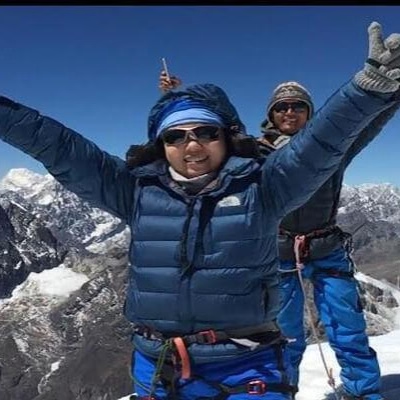
An ideal mountain for acclimatization rotation during the Everest expedition is the Lobuche Peak (6119 m). It combines the Everest Base Camp Trek itinerary in its climbing trail. The difficulty level of the mountain is comparatively easier than the Island Peak but offers mesmerizing Himalayan scenery from the top. The Lobuche Peak is probably the best introductory peak for beginner climbers and to those who are planning for higher mountains’ expedition.
Duration
15 days
Difficulty
Adventure/Expedition
Max Altitude
6119 m
Destination
Nepal
Activity
Peak Climbing
Accommodation
Tea House/Camping
Group Size
2
Transport
Both way Flight
Meals
B.D.L.
Season
Sep-Dec & Mar-May
Start / End Point
Lukla to Lukla

Trip overview

Nepal is synonymous with the Himalayas of the Everest Region. There are countless mountains where one can quench their thirst for wilderness adventure. Thousands of mountaineering records are made here in Nepal. People are queuing up for the expedition of lofty Himalayan peaks. However, everyone can’t do successfully ascent of gigantic mountains. So, what is an alternative to a high-mountain expedition? Peak climbing is the best way to fulfill the dream of mountaineering. NMA (Nepal Mountaineering Association) has identified mountains below 7000 meters in height as trekking peaks. However, some peaks below 7000-meter height also need expedition permits because of technicality and difficulty. Prepare yourself by climbing peaks before trying the lofty mountains. The best way to begin the mountaineering journey is by doing Lobuche Peak Climbing.

Which is the climbing peak? Lobuche East Peak or Lobuche West Peak?

Mount Lobuche is in the vicinity of Khumbu Glacier and Lobuche Village. The peak has two summits. They are Lobuche East and Lobuche West. The altitude of Lobuche East is 6119 m and the altitude of Lobuche West is 6145 m from the sea level. Lobuche Peak Climbing is done in the East Peak. However, the Lobuche West Peak requires an expedition permit. The major reason behind this is the technicality and difficulty in the west peak of Lobuche.

If you are thinking of reaching the top of the West Peak after East Peak climbing, it is impossible. The deep notch ridge and a steep drop as well as the huge distance between the two peaks make it harder. It is impossible. Moreover, the permit doesn’t allow us to do so as well.

Lobuche High Camp to Summit

After one challenging stretch, climbers can reach the summit of Lobuche Peak. The trail from high camp to the top gets steeper as you come closer. You will have to cut your way via a snow ridge and turn northwest where you will encounter snow notches. A steep climb from the notch takes climbers to the summit.

Lobuche Peak Climbing Difficulty

Climbing a mountain is not an easy task. It is a difficulty. However, climbing some of the peaks in Nepal is considered an easy adventure. Among these peaks, Lobuche is fairly difficult and technical. Climbers have to climb the steep slopes and carry out some hard climbing. Mountain climbing difficulties are not only about physical endurance. Numerous other factors make it difficult. Climbing equipment, Sherpa guides, weather conditions, and willpower are the factors to consider before finalizing the difficulty.

Everest Base Camp Trek via Lobuche Peak Climbing

The Everest region of Nepal has three iconic peaks for climbing. Island Peak, Mera Peak, and Lobuche Peak are the mountains that provide alternatives to expeditions. Besides Mera Peak, peak climbing in these two mountains include the Everest Base Camp Trekking adventure too. The journey follows the itinerary of EBC Trek.

Climbers enter the Everest region via an adventurous flight to the Lukla Airport. Moreover, the flight is deemed the world’s most extreme. Rejoice in flying to such an extreme airport. It takes about 9 days to reach the Lobuche Base Camp after completing the Everest Base Camp Trek. Leave your footprints at the base camp, Mt. Everest, before stepping on the top of its neighboring peak.

Most of the climbers try to avoid the Everest Base Camp Trekking journey while doing Lobuche Peak Climbing. However, we strongly suggest you do the trek before climbing the peak. For any kind of high-altitude adventure, acclimatization is the key to success. Trekking to Everest Base Camp prepares your body for the summit push. Therefore, don’t miss out on the trek, and don’t ruin the success rate of peak climbing.

Highlights of the Labuche Climbing

  • Ideal Peak Climbing for Beginners

  • Everest Base Camp

  • Namche Bazaar

  • Sagarmatha National Park

  • World’s Most Extreme Airport at Lukla

  • More than 2 dozen Mountain Vista

  • Best Training activity for Expeditions

  • Green lush forests and diverse wildlife

  • Suspension bridges & glacial rivers

  • Moraines and glaciers

  • Buddhist Monasteries & Sherpa Villages

Cost of Lobuche Peak Climbing

The cost of Climbing Lobuche Peak varies according to the itinerary. If you wish to include Everest Base Camp or not is the major deciding factor. However, the selection of the Sherpa crew members also impacts the price of the peak climbing. The range of price is from 2200 USD per person to 3000 USD. Plan with the travel planners and decide for yourselves.

When is the best time to climb?

The months of spring season and autumn season are best for climbing. In comparison to the autumn window, the spring window is famous. During this time of the year, there is less rainfall, and the chances of snowfall are very less. Lots of people across the globe prefer to do this adventure at this time of the year. Therefore, plan your peak climbing for the spring season. However, you may book the climbing packages for the autumn season as well.

Requirements for the Climbing

Lots of planning and people are involved in one successful ascent of the mountain. Climbers have to get mandatory travel insurance. The plan of insurance must cover the helicopter rescue, cancellation due to adverse weather conditions, medical aids, and accidents. Permits must be gained from Nepal Mountaineering Association (NMA) along with the Sagarmatha National Park entrance fees. Nowadays, climbers have to get a rural municipality permit as well.

Do some exercises before embarking on the trip. Cardio exercises in outdoor places are highly recommended. Any kinds of high-altitude adventure require you to have good and healthy lungs. Increase the body’s endurance and follow healthy eating habits two months before climbing.

For any kind of information regarding peak climbing in Nepal, contact the travel planners of Nepal High Trek And Expedition. Our team of mountaineering experts comprises multiple Everest Summiteers. Therefore, you can get authentic counseling as well as a high success rate climbing package. Furthermore, Labuche climbing is the most popular trekking peak climbing in Nepal. Besides the Labuche peak, the Island Peak Climbing, Pokalde Peak, and Amadablam expedition are the most popular and fascinating climbing in the Khumbu region. Book the Lobuche Peak Climbing in 2026 and begin your mountaineering journey in a style.

Itinerary

Altitude profileMax 6,119 m
1,365 mD11,365 mD22,660 mD33,440 mD43,880 mD53,867 mD64,365 mD75,110 mD84,890 mD95,180 mD104,890 mD115,600 mD126,119 mD134,000 mD143,440 mD152,860 mD161,365 mD171,365 mD181,365 mD19
  1. Day 1:Arrival in Kathmandu with transfer to hotel.

    1,365 m40 mHotelB/B

    On arrival at Kathmandu international airport get transferred to hotels after being received by our Nepal High Trek & Expedition staff, at the hotel check in and join in for a group briefing regarding trek and climb and other useful information, with a welcome dinner.

  2. 02

    Day 2:Trip prepartion and self sightseeing Tour

    1,365 m

    Today we'll prepare and check the gear for the trip. If you have ample time, you can self explore around the Kathmandu valley. We recommend to visit Swayambhunath, Patan Durbar Square, Pashupati temple and Boudhanath Stupa. At evening our mountain guide will brief you about the trip.

  3. 03

    Day 3:Flight to Lukla 2,860 m and trek to Phakding 2, 660 m – 04 hrs.

    2,660 m4/5 HrsGuest HouseB/L/D

    Fly to Lukla with grand views of Himalayan peaks during 30 mins flight with Everest on reaching at Lukla with time to refresh, then continue walking on the gradual trail with a few ups and down past Lukla town and visit Sherpa farm village to reach at Phakding for an overnight stop.

  4. 04

    Day 4:Trek to Namche Bazaar 3,440 m – 07 hrs.

    3,440 m7/8 HrsGuest HouseB/L/D

    Today a long walk to reach at famous Namche Bazaar, the morning starts with a gradual walk following the Dudh Kosi River and crossing a few bridges to reach the Sagarmatha National Park entrance near Monjo village. From here walk on the river bed and then climb for a few hours into the forested trail with views of snow-capped peaks, as this scenic walk reaches you at exciting Namche Bazaar.

  5. 05

    Day 5:Acclimatization Day and Hike to Hotel Everest View (3880m)

    3,880 m5/6 HrsGuest HouseB/L/D

    Rest day at Namche Bazaar for acclimatization, before heading higher area a good place for a free day in Namche, spend the day with a scenic hike to viewpoints on the top of Namche facing Mt. Everest, Lhotse, Nuptse, Amadablam, and other ranges of peaks, afternoon explore the streets and shops, Namche holds a colorful and busy Saturday Market once a week.

  6. 06

    Day 6:Trek to Tengboche Monastery 3,867 m – 06 hrs.

    3,867 m6/7 HrsGuest HouseB/L/D

    From Namche walk leads on the gradual scenic path with a downhill to Imjatse River at Phunge-Tenga for lunch, an afternoon uphill climb into rhododendron, pines, fir forest with grand views of snowcapped peaks. After few hours of climb reaching at Tengboche Monastery, enjoy marvelous views of Everest, Nuptse, Lhotse, Kantega, Thamersarkhu, and Kwangde with magnificent Amadablam, an afternoon with time to visit its interesting monastery and observe monks and priests on prayer.

  7. 07

    Day 7:Trek to Dingboche 4,365 m – 05 hrs.

    4,365 m4/5 HrsGuest HouseB/L/D

    Morning with grand views of peaks then downhill to a river, after crossing a bridge with a slow climb towards Pangboche village with close views of Amadablam peak, the walk continues to reach a scenic Imjatse Valley where our overnight stops at Dingboche located with views of Amadablam and Island peaks.

  8. 08

    Day 8:Another rest day at Dingboche for acclimatization and a local hike.

    5,110 m4/5 HrsGuest HouseB/L/D

    Another lovely and scenic spot for the rest day to get acclimatize where one can take a short hike up at Nakarjung hilltop, for excellent views of mountains facing Imjatse and Dingboche below, after at leisure and rest marvel the grand views of the mountains.

  9. 09

    Day 9:Trek to Lobuche 4,890 m – 05 hrs.

    4,890 m5/6 HrsGuest HosueB/L/D

    From Dingboche with pleasant time heading up above Dingboche and Imjatse valley with scenic views, and then on gently up as altitude catches taking slowly to reach at Thugla for the lunch stop, in this small place, afternoon climb to a ridge of Thugla-La with the gradual walk of an hour from here to reach at Lobuche for overnight with views of Nuptse and Lobuche peaks.

  10. 10

    Day 10:Trek to Everest Base Camp 5,365 m back at Gorakshep – 06 hrs.

    5,180 m7/8 HrsGuest HouseB/L/D

    After the Lobuche walk, today takes you to our highlight at Everest base camp, as our route leads with a slow uphill and above Khumbu glacier and moraine to reach a flat field at Gorakshep a place with few nice lodges.

    From Gorakshep continue to walk toward the east to reach Everest base camp, on reaching our target enjoy views of giant peaks with Khumbu Ice-Fall and glaciers, and then walk back to Gorakshep for an overnight stop.

  11. 11

    Day 11:Morning climb on top Kalapathar 5,545 m trek to Lobuche 4,865 m – 5/6 hrs.

    4,890 m4/5 HrsGuest HouseB/L/D

    Early morning climb on top of Kalapathar at above 5,545 m, the highest point on trekking with magnificent views of mountains including Mt. Everest at a close distance, after a great time on top descend back to Gorakshep for breakfast and continue to walk to Lobuche, from here downhill into hidden areas tucked in a corner away from the main trail at Lobuche.

  12. 12

    Day 12:Climb to Lobuche High Camp 5,600m / 18,368 ft – 04 hrs.

    5,600 m4/5 HrsTentB/L/D

    The morning starts with a gentle climb to reach the high and advanced camp, the climb takes almost four hours to reach the flat available ground for an overnight camp, after climbing past rocks and moraine to High Camp. Afternoon time to scout the areas with the final preparation for the climb and as well practice climbs on ice and rocks face at Lobuche High Camp.

  13. 13

    Day 13:Climb the summit 6,119m / 20,070 ft and to Base Camp – 08 hrs.

    6,119 m8/9 HrsTentB/L/D

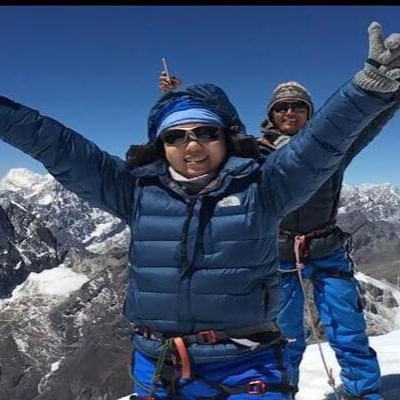
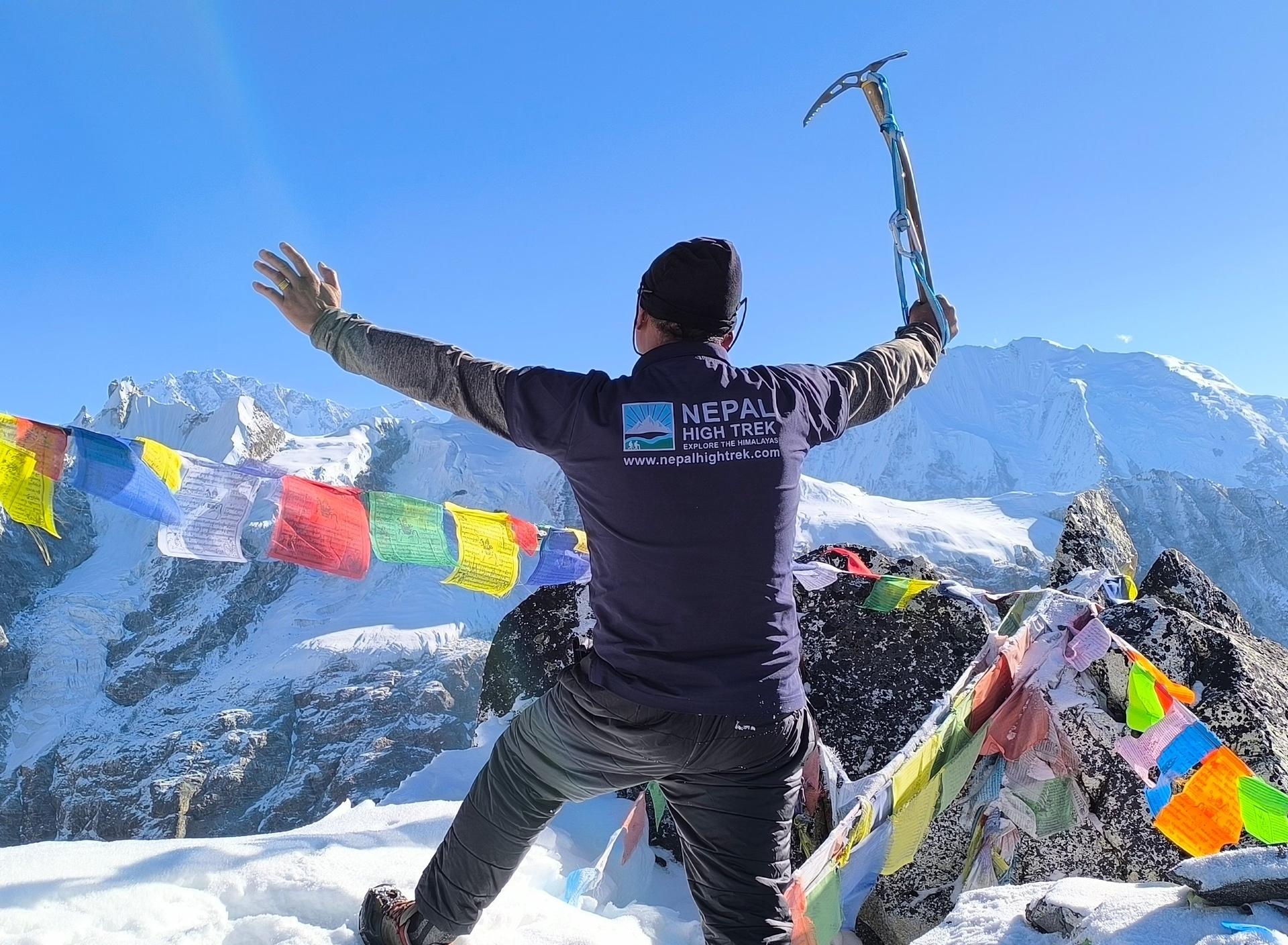
    As climb starts early morning towards Lobuche East Peak summit heading with a steep climb facing some technical sections; where our guide will fix ropes around necessary places to make the ascent much more accessible towards the summit of Lobuche East at above 6,119 m high. The top on reaching after a vigorous climb rewards you with breathtaking views of the fascinating scenery of mountains and valleys, after a successful climb enjoys a panorama that surrounds you with close views of Mt. Everest, Lhotse, Mt. Amadablam with Mt. Makalu, Chamlang, and Baruntse peaks towards southeast after a great adventure and experience of a lifetime descend safely taking the same route back at base camp.

  14. 14

    Day 14:Trek to Pangboche 4000 m – 05 hrs.

    4,000 m5/6 hrsGuest HouseB/L/D

    All climbers should be at base camp on this day to clean up the garbage to hand over to designated SPPC personnel (Sagarmatha Pollution Project Control) as well as packing gear for Yaks to carry onward to Lukla. After getting organized our return route leads towards Imjatse valley with scenic views as the walk proceeds towards Thugla and down at Pheriche valley to reach at Pangboche village for the overnight halt.

  15. 15

    Day 15:Trek to Namche Bazaar – 07 hrs.

    3,440 m7/8 HrsGuest HouseB/L/D

    From Pangboche retrace the journey with ups to Thyangboche and downhill with an hour up and then on the good winding path to Namche Bazaar for an overnight stop before Lukla.

  16. 16

    Day 16:Trek to Lukla – 7/8 hrs.

    2,860 m7/8 HrsGuest HouseB/L/D

    Today a long walk to reach our last stop in the Khumbu area at Lukla, from Namche on the downhill to a river with a short climb to Monjo and then on a good trail to Phakding village, where a few hours walk from here reaches you at Lukla for final overnight stop within Everest and Khumbu area.

  17. 17

    Day 17:Fly back to Kathmandu with a free afternoon at leisure.

    1,365 m40 mHotelB/L/D

    Morning as per your flight time transfer to Tenzing-Hillary air terminal in Lukla, boarding in a smaller aircraft for a scenic flight back to Kathmandu and then to your hotel, after the greatest adventure on Lobuche Peak Climb.

  18. 18

    Day 18:In Kathmandu reserve and contingency day with the free day.

    1,365 mHotelB/B

    We reserve this extra day as a contingency in case of bad weather that might lead to flight delay and cancellation at Lukla, which happens sometimes even in the best season of time If all goes well enjoy this spare day for your own individual activities and shopping.

  19. Day 19:Final departure from Kathmandu homeward bound.

    1,365 m40 mHotelB/B

    Last day in the land of Himalayan Wonders, as per your international flight time depart from the hotel for the airport for your international flight back to your home countries or other respective destinations.

Are you looking to customize the trip itinerary?

If the provided schedule is not suitable for you, we can create a personalized travel arrangement tailored to your preferences and requirements.

Customize Trip

Cost breakdown

What's included

  • Airport pick up and drop off by private vehicle.

  • Two-night hotel in Kathmandu with breakfast.

  • 3 times meals during the trek (Breakfast, Lunch & Dinner)

  • Domestic airfare (Kathmandu- Lukla -Kathmandu)

  • English-speaking guide(leader)

  • Climbing sherpa guide.

  • Require Permits (Khumbu Rural Municipality, Sagarmatha National Park & Lobuche Climbing)

  • Teahouse accommodation during the trek

  • Tented accommodation during the climb

  • Three times hot tea/coffee during the trek and climbing.

  • Trekking gears, Down jacket, and sleeping bag  (to be returned after trip completion)

  • Good quality tents and kitchen utensils for camping

  • Group mountaineering (climbing) equipment

  • Medical kit (carried by your guide)

  • Farewell Dinner.

What's not included

  • Nepalese visa fee (bring accurate USD cash and two passport photographs)

  • Travel insurance.

  • Excess baggage charges (if you have more than 15 kg of luggage, the cargo charge is around $1.5 per kg)

  • Extra night accommodation in Kathmandu because of early arrival, late departure, or early return from the mountain (due to any reason) than the scheduled itinerary

  • Lunch and evening meals in Kathmandu (and also in the case of early return from the mountain than the scheduled itinerary)

  • Personal expenses (phone calls, internet, laundry, bar bills, battery recharge, extra porters, bottle or boiled water, shower, etc.)

  • Personal climbing equipment

  • Personal climbing guide if requested

  • Tips for guides and porters

Dates & Availability

Filter departures by month
07Aug

Aug 7 – Aug 21, 2026

Available
$2,200pp
09Aug

Aug 9 – Aug 23, 2026

Available
$2,200pp
17Aug

Aug 17 – Aug 31, 2026

Available
$2,200pp
19Aug

Aug 19 – Sep 2, 2026

Available
$2,200pp
23Aug

Aug 23 – Sep 6, 2026

Available
$2,200pp
27Aug

Aug 27 – Sep 10, 2026

Available
$2,200pp
31Aug

Aug 31 – Sep 14, 2026

Available
$2,200pp

Trip map

Loading map…

Useful information

Where Is Lobuche Peak Located?

Right up in the Khumbu, practically waving at Mount Everest, you will find the mountain near the section of the Dingboche to Lobuche trekking section of the EBC Trek route. You’ll find it towering over the Khumbu Glacier, just a stone's throw away from the little settlement of Lobuche. Most folks literally walk right past it while dragging their boots toward Everest Base Camp. Getting to its base involves trekking deep into the heart of the Himalayas.

How High Is Lobuche Peak?

It’s a serious chunk of rock and ice. Lobuche actually has two main summits, but the one you'll be aiming for is Lobuche East that sits at 6119 meters. Another summit is about 6145 m but it requires expedition permit and it is technically difficult than the East Lobuche Peak. That’s ridiculously high. To put it in perspective, the air up there holds barely half the oxygen you breathe at sea level. Your lungs are definitely going to notice.

Lobuche Peak Climbing Difficulty

Look, it’s not an easy stroll. It’s officially graded as a trekking peak, but don't let that fool you into thinking it's completely safe. The Nepal Mountaineering Association considers it moderately difficult. You're dealing with steep, icy slopes, rocky moraines, and fixed ropes on exposed ridges. It is surely exhausting alpine mountain climbing journey.  

Is Lobuche Peak Suitable for Beginners?

Yes and no. If "beginner" means you've never slept in a tent or hiked up a steep hill, absolutely not. But if you're talking about someone with killer cardio and tons of high-altitude trekking experience who just hasn't used an ice axe before? Then sure, it's possible. The Sherpas will teach you the technical stuff at base camp. Just don't underestimate the sheer physical punishment.

Do You Need Previous Mountaineering Experience?

Honestly, it helps massively, but it isn't strictly mandatory. What you actually need is serious high-altitude hiking under your belt. Have you done Kilimanjaro or Everest Base Camp? Good. You'll learn how to jumar up a rope and abseil down before the final push. That said, if you’ve never walked in crampons, your calves are in for a brutal awakening.

Best Season for Lobuche Peak Climbing

Timing is everything up there. Spring, meaning March through May, gives you warmer weather and stunning views, though the trails get pretty crowded. Autumn—September to November—is arguably the sweet spot. The monsoon rain washes all the dust out of the sky, leaving the mountains looking razor-sharp against the blue. Honestly, I'd aim for mid-October if you can swing it.

Lobuche Peak Weather and Temperature

Mountain weather changes faster than you can blink. Down in the valleys, it’s chilly but manageable. Up at High Camp? Expect nighttime temperatures to violently plummet to -15°C or worse. And that’s before the wind starts screaming across the ridge. You'll be freezing your toes off waiting for that sunrise on summit day.

How Long Does Lobuche Peak Climbing Take?

You can't just sprint up a 6,000-meter mountain. A standard trip eats up about 15 to 18 days, starting from Kathmandu. Why so long? Because your body needs an agonizingly slow pace to adjust to the dying oxygen levels. The actual technical climbing part only takes about two or three days. The rest is just walking and waiting. We have kept the Everest Base Camp Hike in this itinerary to make sure that you are acclimatized fully before ascending the peak.

Lobuche Peak Climbing Distance and Walking Hours

Most days on the approach are pretty mellow. Think five to seven hours of walking, covering maybe 10 to 15 kilometers a day. But summit day breaks all the rules. It’s an incredibly short distance horizontally, but vertically? It's a soul-crushing 1,100-meter ascent from Base Camp. Expect a grueling 10-to-12-hour round trip of pure, unfiltered suffering. Overall trekking distance of the Lobuche Peak Climbing is about 145 to 155 kilometers depending upon your side treks and round exercises during the peak climbing event.

Lobuche Peak Climbing Route

It’s a classic Himalayan journey. You’ll fly straight into Lukla, dodging clouds on the way. From there, you just follow the legendary Everest Base Camp trail, passing through Namche and Tengboche. Most teams hang a left near Lobuche village and slog their way up into the rocky, hidden bowl where Base Camp sits.

Lobuche Peak Climbing Itinerary

A smart schedule builds in massive buffers. You'll land in Lukla, spend a couple of nights acclimatizing in Namche Bazaar, and slowly push toward Dingboche. A lot of climbers tag Kala Patthar or Everest Base Camp first to prime their lungs. After that, you set up at Lobuche Base Camp, move to High Camp, launch the summit bid, and stumble all the way back down.

Acclimatization for Lobuche Peak Climbing

This is the only thing standing between you and the summit. If you rush it, your brain swells, and you go home on a helicopter. You absolutely have to do the "climb high, sleep low" routine. Resting in Namche and Dingboche isn't optional. Getting bored on rest days is literally proof that the itinerary is working to save your life.

Lobuche Peak Base Camp and High Camp

Base Camp is a rocky, dusty hollow sitting around 4,950 meters. It’s comfortable enough. But High Camp? That’s perched up at 5,400 meters. Moving up there cuts hours off your summit night, but it’s a miserable place to sleep. It’s freezing, exposed, and completely lacks running water.

What to Expect on Lobuche Peak Summit Day

Total darkness, freezing fingers, and gasping for breath. You'll crawl out of your sleeping bag around 2:00 AM, strap on your crampons, and start crunching up a steep snow slope. Before long, you hit the fixed ropes. From there, it's a brutal, exhausting jumar pull all the way up the false summit ridge. The sunrise up there, though? Completely unearthly.

How Difficult Is the Lobuche Peak Summit?

It’s a total gut-check. The final push involves ascending a 45-degree icy slope. Every time you pull yourself up the rope, your heart feels like it's trying to punch through your ribs. Is it technically impossible? No. But the sheer physical exhaustion combined with the terrifying drop-offs on the ridge makes it a massive mental battle.

Technical Skills Required for Lobuche Peak

You don’t need to be a rock climbing ninja. You do, however, need to know how to walk without snagging your crampons on your own pants. You’ll use an ice axe, clip into a harness, and push a jumar ascender up an icy rope. Knowing how to safely rappel back down a steep face is also wildly important.

Lobuche Peak Climbing Training and Preparation

Stop taking the elevator right now. You need to train for months. Three or four months is barely enough if you're starting from scratch. We’re talking brutal, heavy-pack hikes that make your knees scream. If you show up in Nepal without serious leg strength and a massive aerobic engine, the mountain is going to chew you up.

Best Physical Training for Lobuche Peak

Find the biggest, nastiest hill near your house. Load a backpack with water jugs and walk up it repeatedly. Box steps, squats, and lunges are going to save your life when you hit the headwall. Don't ignore your core, either—you need it to stabilize yourself when the wind tries to blow you off the ridge.

How to Prepare for High-Altitude Climbing ?

Besides the brutal workouts? Get your head straight. You have to accept that you're going to be uncomfortable, dirty, and tired for two weeks straight. Learn how to suffer quietly. Also, try to spend some time at altitude before your trip if you can, just to remind your body what it feels like when the air gets thin.

Lobuche Peak Climbing Permits and Fees

Bureaucracy is inescapable. You need an NMA climbing permit, which hits your wallet for $350 in the spring or $175 in the autumn. On top of that, grab your Sagarmatha National Park permit and the local Khumbu municipality fee. The climbing agency usually handles the paperwork, but you still have to pay up.

Required Documents for Lobuche Peak Climbing

Bring your passport, obviously. Make sure it doesn't expire for at least six months. Keep a handful of passport-sized photos in your pocket for all the random permits. The absolute most critical document? Your specialized travel insurance policy. Without proof of high-altitude rescue coverage, nobody is letting you set foot on that glacier.

Lobuche Peak Climbing Guide and Sherpa Support

Do not try to solo this thing. A licensed Sherpa guide is legally required, and honestly, they are the only reason anyone makes it up. They read the weather, fix the sketchy ropes, and haul massive loads. A good guide will literally save your life if a storm blows in while you're dangling on the ridge.

Lobuche Peak Climbing Equipment and Gear List

You’re going to look like the Michelin Man. You need thick base layers, a ridiculously warm expedition down jacket, and hardshell waterproof pants. Let's talk boots—they have to be stiff, insulated mountaineering boots. Throw in some high-quality glacier glasses so the sun bouncing off the snow doesn't blind you permanently.

Technical Gear Required for Lobuche Peak

Get ready to jingle. You'll wear a climbing harness loaded with locking carabiners. You need an ice axe, a jumar to haul yourself up the fixed lines, and a descender to get back down. Oh, and crampons that actually fit your boots securely. Add a climbing helmet, too, because falling rocks are a very real threat.

Can You Rent Lobuche Peak Climbing Gear in Nepal?

Yes, easily. Thamel in Kathmandu has hundreds of rental shops, and you can even rent gear up in Chhukung or Dingboche before the climb. Why spend $800 on plastic boots you'll use exactly once? Renting the heavy, bulky stuff is a massive money saver and leaves room in your duffel bag.

What Clothing Should You Pack for Lobuche Peak?

Cotton kills. Only pack merino wool or synthetic base layers that wick sweat away from your skin. You need fleece mid-layers and a massive, windproof down parka. A buff to cover your mouth is a lifesaver, too—the dry, freezing air will absolutely shred your lungs otherwise.

What Type of Sleeping Bag Do You Need?

Don't mess around here. Get an expedition-grade, four-season down sleeping bag. It needs a comfort rating of at least -20°C. Base camp gets so insanely cold at night that if your bag isn't rated properly, you’ll just lay there shivering violently instead of sleeping. Rent one if you don't own one.

Food and Accommodation During Lobuche Peak Climbing

Down in the trekking villages, you'll sleep in basic teahouses and eat massive plates of dal bhat, pasta, and momos. Once you push up to Base Camp, it's tent life. Surprisingly, the expedition cooks pull off miracles, whipping up heavy, carb-loaded meals on tiny stoves to keep you fueled for the summit bid.

Drinking Water and Hydration at High Altitude

You need to aggressively drink water. Four to five liters a day, minimum. It sounds insane, but dehydration makes altitude sickness strike much faster. Buy boiled water in the teahouses, or bring purification tablets for the streams. At camp, the Sherpas will constantly melt snow for you to chug.

Electricity, Wi-Fi, and Mobile Network on the Route

You can pay a few bucks to charge your phone and use Wi-Fi in the lower villages. Everest Link internet is surprisingly okay sometimes. But once you leave Lobuche village for Base Camp? Dead zone. Bring a heavy-duty power bank and keep it warm inside your sleeping bag if you want your camera to survive.

Altitude Sickness During Lobuche Peak Climbing

Acute Mountain Sickness is terrifying and completely unpredictable. It feels like the worst hangover of your life combined with breathing through a straw. Headaches, nausea, and massive fatigue. It doesn't care how fit you are. If your headache won't go away, or you start vomiting, the only cure is to run down the mountain.

Lobuche Peak Climbing Insurance Requirements

Your standard credit card travel insurance is useless here. You absolutely must buy a specialized policy that explicitly covers technical mountaineering up to 6,500 meters. It has to cover helicopter evacuation. A chopper rescue from the Khumbu will cost thousands of dollars, and you don't want to pay that out of pocket.

Emergency Rescue and Evacuation During the Climb

If things go completely sideways, the guide jumps on a satellite phone. Assuming the weather isn't totally socked in, a helicopter will fly up to the nearest safe landing zone, scoop you up, and zip you straight to a hospital in Kathmandu. It’s wildly dramatic, but it’s the only way out when someone goes down hard.

Lobuche Peak Climbing Age and Fitness Requirements

You need to be at least 16 to get the permit. There isn't an official age cap, assuming your heart can handle the strain. Fitness? You need an elite-level aerobic engine. Can you hike steeply uphill for 10 hours on half oxygen while freezing? If yes, then you're fit enough.

Lobuche Peak Climbing in Spring

March to May is prime time. The days get noticeably warmer as the season rolls on. The lower valleys explode with blooming rhododendrons, which is gorgeous. The downside? You’re going to run into a lot of traffic on the fixed ropes because everyone else had the exact same idea.

Lobuche Peak Climbing in Autumn

September through November is spectacular. The monsoon rains just swept all the smog and dust out of the air, so the visibility is completely insane. The skies are razor-sharp blue. It gets significantly colder, especially as November hits, but the weather is generally super stable. It's probably the best time to go but climbing mountain is mainly reserved for spring season even if the autumn season is the best.

How much does Lobuche Peak Climbing Cost ?

It’s not a cheap vacation. A standard package will easily set you back between $2,000 and $3,500. What are you paying for? Those insanely expensive Lukla flights, permits, guide wages, and all the logistical chaos required to keep you fed and relatively warm at 5,000 meters. Please check our INCLUDES section to know more about the things that are included in this trekking peak climbing package.

Lobuche Peak Climbing with or Without a Porter

Hire the porter. Carrying a 15-kilogram backpack up to 5,000 meters will completely destroy your legs before you even reach the mountain. Let the absolute machines of the Himalayas carry the heavy stuff. It saves your energy for the summit push, and it puts money straight into the local economy.

Lukla Flight Information for Lobuche Peak Climbing

The flight is completely wild. A tiny little plane dives into a mountain valley and lands on an impossibly short runway. They fly visually, so if a cloud rolls in, everything is canceled. Pack a serious amount of patience, and definitely build buffer days into your itinerary just in case you get stuck. Note down that the condition of Lukla flight is similar to the Everest Base Camp Trek journey as it follows the same itinerary. Therefore, you can expect flights from Manthali Airport instead of direct flight from Kathmandu due to heavy traffic congestion.

Lobuche Peak Climbing vs Island Peak Climbing

They are right next door to each other, but Lobuche is definitely easier than the Island Peak in terms of technical difficulty. A few years before, Lobuche Peak was the challenging peak than the Island Peak but the trail has changed drastically. Nowadays, Sherpa guides consider Lobuche comparatively easier than the Island Peak Climbing.

Lobuche Peak Climbing vs Mera Peak Climbing

Mera is much taller, scraping 6,476 meters. But here’s the secret: Mera is basically just a very long, very high snow walk. There's almost zero technical climbing. Lobuche is shorter, but you actually have to use ropes and ice axes. Want altitude? Pick Mera. Want to feel like a real climber? Pick Lobuche.

Can You Combine Lobuche Peak with Everest Three Passes?

Yes, and it is an absolute monster of a trip. Crossing the Renjo La, Cho La, and Kongma La passes before hitting Lobuche guarantees you are insanely acclimatized. But it also means you’ll be hiking for over three weeks in completely exhausting terrain. You need legs made of iron to pull this off.

Communication and Emergency Support on Lobuche Peak

Down low, the teahouse Wi-Fi sort of works. Once you reach Base Camp, your phone is a useless brick. Your lead guide will carry a satellite phone. Give your emergency contact the agency’s number back in Kathmandu. If something bad happens, the guide calls the agency, and the agency calls your family. Many sections of the Lobuche Peak Climbing route may give proper signals of NTC and NCELL mobile coverage nowadays! So, don’t worry about communication as your guide will be with you all the time.

What Time Does the Lobuche Peak Summit Start?

Get ready to suffer in the dark. You'll wake up around 1:00 or 2:00 AM. You choke down some hot tea and start climbing by headlamp. Why? Because you absolutely have to summit and get back down the fixed ropes before the afternoon sun turns the snow into dangerous, avalanche-prone slush.

How Cold Is Lobuche Peak Summit Day?

It is violently cold. We’re talking -20°C before the wind even starts hitting you. If you take your thick gloves off to mess with a carabiner, your fingers go completely numb in seconds. You just have to endure the freezing misery until the sun finally peeks over the horizon and thaws you out.

How to Choose the Best Lobuche Peak Climbing Company?

Ignore the cheapest price tag you see online. Dive into the reviews. Are their guides actually certified? Do they bring a real medical kit and oxygen? A trustworthy company doesn't cut corners on acclimatization days and actually pays their porters a living wage. You want true professionals and the Nepal High Trek fits the requirement. We have done multiple Lobuche Peak Climbing journeys successfully. Our price is right and our team is highly certified including local Sherpa guides.

Trip video

Packing list

Main Trekking & Camping Gear

Duffel Bag (90–120L): Heavy-duty waterproof duffel for porters/yaks.

Daypack (30–40L): For your daily trekking needs and summit night (carrying extra down layers, water, snacks, and camera).

Sleeping Bag: Rated to -20°C to -25°C (-4°F to -13°F). High Camp is set on exposed, freezing rock.

Sleeping Pads: Closed-cell foam pad plus an insulated inflatable pad for ground protection in tents.

Trekking Poles: Essential for the approach hike and the steep, slippery scree climb to Lobuche High Camp.

Headlamp: High-output (300+ lumens) with extra batteries. You'll set off for the summit around 1:00 AM–2:00 AM.

Hands, Feet, Head & Eyes

Glacier Glasses (Category 4): Standard sunglasses won't cut it—you need Cat 4 lenses with side coverage to prevent snow blindness.

Ski Goggles: Vital if high wind or spindrift hits on summit morning.

Heavy Expedition Mittens or Gloves: Waterproof and windproof. Metal jumars and fixed ropes pull heat out of hands fast.

Liner Gloves & Mid-Weight Gloves: For warmer lower-altitude trekking and gear handling.

Balaclava & Warm Beanie: A windproof balaclava to shield your face completely from freezing wind.

Thick Wool Mountaineering Socks (3–4 pairs): High-density merino wool for climbing boots.

Technical Mountaineering Gear

Mountaineering Boots: Double plastic or high-altitude synthetic boots (e.g., La Sportiva G2 SM, Baruntse, or Scarpa Phantom 6000). Standard hiking boots will freeze your feet and won't flex properly with crampons.

Crampons: 12-point steel crampons (semi-automatic or automatic), pre-fitted to your climbing boots.

Ice Axe: Straight-shaft mountaineering ice axe, sized so the spike reaches your ankle.

Climbing Harness: Lightweight alpine harness that adjusts over heavy down pants.

Ascender (Jumar) & Rappel Device: Standard right- or left-hand jumar plus a Figure 8 or ATC for rappelling down fixed lines.

Carabiners & Lanyards: 3 locking screw-gate carabiners, 2 non-locking carabiners, and 2 sling loops/prusik cords for safety lines.

Climbing Helmet: Lightweight, low-profile helmet that fits over a beanie.

Layering & Cold Weather Clothing

Base Layers (2–3 sets): Heavyweight merino wool or synthetic thermals. Keep one clean, dry set purely for sleeping/summit day.

Mid-Layers: Grid-fleece jacket or mid-weight fleece pullover.

Heavy Down Jacket: Expedition-grade down jacket with hood (800+ fill power). You’ll wear this at belay points and during high-camp stops.

Down Pants / Heavy Puffy Pants: Crucial for hanging around cold tents and keeping warm on cold belays.

Hard Shell Jacket & Pants: GORE-TEX (or equivalent) windproof and waterproof outer layers.

Trekking Pants: 2 pairs of durable stretch pants for the low-altitude approach.

Essential Personal Items

Thermal Water Bottles: 2x 1-Liter wide-mouth Nalgene bottles with insulated neoprene sleeves. Skip hydration bladders—their hoses freeze instantly in sub-zero temps.

Pee Bottle (1 Liter): Dedicated wide-mouth bottle for middle-of-the-night tent emergencies.

Sunscreen (SPF 50+) & Lip Balm with SPF: Reapply every 2 hours on the glacier.

First Aid & Meds: Diamox (for altitude), blister tape (Compeed), throat lozenges (for Khumbu cough), and ibuprofen.

Frequently asked

During the trekking section, climbers stay overnight in tea houses and get meals from the available menu. During the climbing section, climbers stay in tents at Lobuche Base Camp and Lobuche High Camp. Sherpa cooks prepare and serve food inside the tent during the climbing period.

Lobuche West and Lobuche East are connected by the same long ridge line, but it is not possible to climb both peaks in one single trip. Lobuche East is a trekking peak and can be climbed with a trekking peak climbing permit. Lobuche West requires an expedition permit and is more technical than Lobuche East.

Lobuche False Summit is a snowy ridge section before the true summit. Climbers have to cross the false summit and continue around 0.25 miles further to reach the actual summit of Lobuche East Peak. The altitude of Lobuche False Summit is about 5,990 meters.

Yes, you can see Mt. Everest from the summit of Lobuche Peak. The top offers a beautiful panoramic view of the Everest region, including the surrounding landscapes and landmarks. One of the best views from the summit is of Rongbuk Valley. Seeing Mt. Everest from the top of a snowy peak is a special and unforgettable experience.

Lobuche is a small village with a few tea houses and porter houses. It is located on the way to Everest Base Camp. Trekkers usually stay overnight in a tea house in Lobuche before moving toward Lobuche Base Camp and Lobuche High Camp, where tented accommodation is used.

The total trip usually takes around 15 to 16 days, depending on your schedule and climbing plan. First-time climbers may need an extra day for proper training. The summit day itself usually takes around 8 to 9 hours. It is also wise to keep 3 to 4 reserve days for unexpected weather conditions.

Lobuche Peak has two summits. Lobuche West Peak is 6,145 meters high, while Lobuche East Peak is 6,119 meters above sea level. Lobuche Peak is also commonly used as an acclimatization peak before attempting Mt. Everest, along with Island Peak and Mera Peak.

The average cost of Lobuche Peak Climbing starts from USD 2,200 per person. Peak climbing is more expensive than trekking because it requires Sherpa guides, porters, climbing gear, meals, lodging, transportation, and support services. Apart from the regular cost, climbers should also prepare for summit success bonuses and tips.

No, you do not have to do the Everest Base Camp Trek before Lobuche Peak Climbing if you do not want to. However, it is highly recommended because it helps with acclimatization and gives you the opportunity to reach the base camp of Mt. Everest before climbing Lobuche Peak. It also makes the journey more memorable by combining Everest Base Camp Trek with a Himalayan peak climbing experience.

The best time to climb Lobuche Peak is during spring, from March to May, and autumn, from September to November. Spring is usually preferred by most climbers because the weather is clear, less windy, and the chance of snowfall is lower. The success rate is also higher in spring, especially in May.

The trekking section up to Lobuche Base Camp is relatively easier compared to the climbing part. During Lobuche Peak Climbing, you need to climb rocky terrain and steep snowy slopes, which makes the climb difficult. A Sherpa guide can make the climb safer and more comfortable. Although Lobuche Peak is suitable for novice or first-time climbers, it still requires strong willpower, mental preparation, and excellent physical fitness.

What travellers say

Rated 5.0/5 from 1 reviews.

TripAdvisor
5.0
Google
4.9
Facebook
5.0
Trustpilot
5.0
Jeanne Tan
I did 3 treks with Nepal High Trek & Expedition Team as Annapurna Base Camp Trek in 2019, Island Peak in 2022 and Lobuche peak in 2024. The Nepal High Trek& Expedition has been an amazing experience for me. Every day we are surrounded by beautiful forests, gushing rivers and cascading waterfalls and gorgeous night skies filled with stars along some of the routes. Our guide and Porter were friendly and helpful and made our trek much easier by their cheerfulness and hospitality. I would recommend the Annapurna Base Camp trek, Island Peak Climbing and Lobuche Peak Climbing to anyone who loves awesome views of mountains at such close range.
Jeanne TanJeanne Tan

You may also like

Classic itineraries with hundreds of happy travellers under their belts.

From$2,200
Book Now
Chat with us