- Duration
- 18 days
- Difficulty
- Moderate/Adventure
- Max Altitude
- 5545 m
- Destination
- Nepal
- Activity
- Trekking
- Accommodation
- Hotel/Lodge
- Group Size
- 1
- Transport
- Flight/Drive
- Meals
- B.D.L.
- Season
- September - December & February to June
- Start / End Point
- Lukla/Lukla
Trip overview
Test your perseverance in the Everest region of Nepal. Trek the trail to experience the authentic high Himalayan wilderness. The Khumbu region of Nepal has numerous adventure trekking routes where one can relish the splendid harmony of Sherpa villages, the massive glacier, and various landscapes with gigantic mountains. Besides the three high passes trek is an engrossing high adventure journey in Nepal and it has incorporated numerous places. It is always fascinating to sweat in the high mountains crossing the high-altitude mountain passes.
Everest Base Camp with Three High Passes – Renjo La – Chola Pass – Kongma La Pass
It’s purely an adrenaline junkie kind of adventure. Join the Three High Passes Trek and experience the mini mountaineering feel. It’s an ideal and challenging destination to discover the hidden beauties and cultures of Khumbu Valley. Take your spirit to the next level by conquering three arduous yet gorgeous high passes of the Everest region. These high passes are Chola Pass (5420), Renjola Pass (5357 m), and Kongma La Pass (5550 m). Throughout the journey, you will have an opportunity to discover the world’s renowned Ngozumpa and Khumbu glaciers.
The trail of Three High Passes Trek traverses through authentic Sherpa Villages, mountain passes, and Everest Base Camp. Therefore, one can consider the journey as the Khumbu Circuit Trek. Explore almost every area of the Upper Khumbu region of Nepal. Get ready to visit the Everest Summiteers’ villages. Apart from the chance to leave footprints at the top of the mountain passes, the trip has cultural benefits too. The village-like Thame is on the trekking trail. Almost every house in the village has at least one Everest Summiteer. Therefore, it can become a fantastic opportunity to learn the untold stories of the Everest Expeditions and the mountaineering lifestyle of Sherpa.
What makes Three High Passes Trek Adventurous?
To know about the things that make Three High Passes Trek adventurous, you need to know about the landscape where the trail traverses. The landscape is an ultra-Himalayan. Trekkers have to visit five amazing places located at more than five thousand meters from the sea level. The altitude alone can make it harder for people to walk. Moreover, the trail requires trekkers to walk at least 6 – 7 hours daily. On some days, the trip starts very early in the morning.
Altitude, trail conditions, unstable climate, and fatigue are the major factors that make Three High Passes Trek adventurous. Moreover, the Everest region of Nepal is not like a walk in the park. After all, it is an abode of the world’s tallest mountain Mt. Everest along with two other top ten mountains (Mt. Choyou & Mt. Lhotse).
Can I visit Everest Base Camp During the 3 Passes Trek?
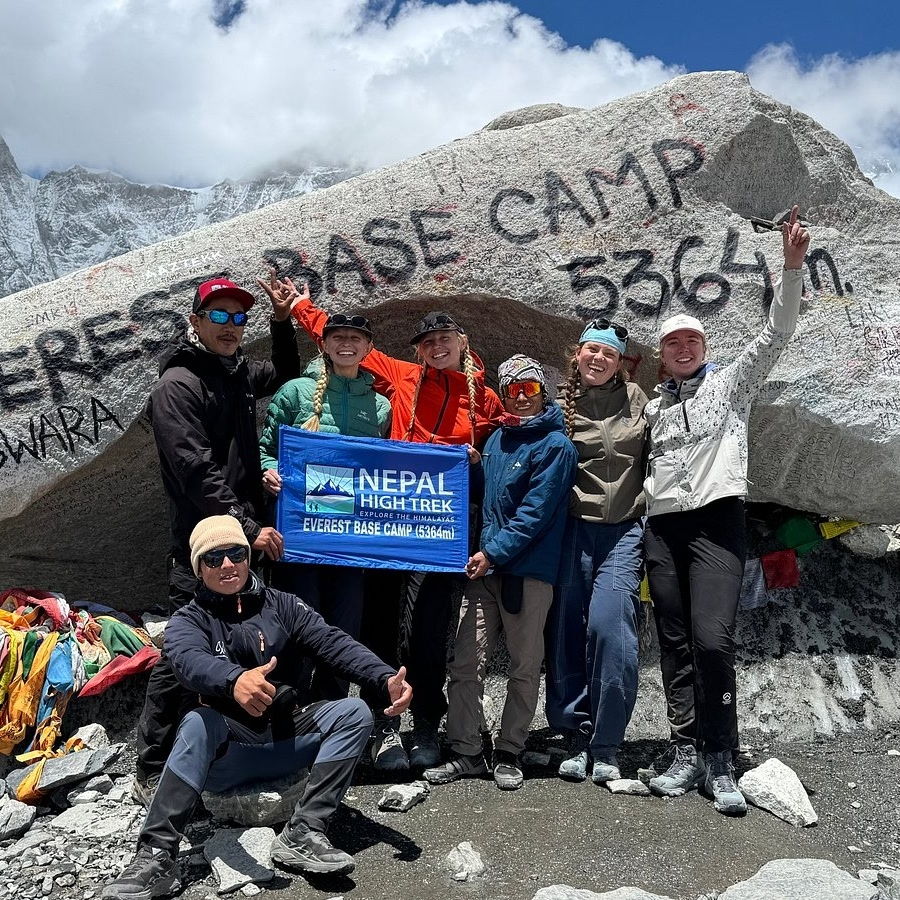
Yes, the Everest Base Camp (5364m) is on the trail of a high three-pass trek. If you start trekking in a clockwise direction, you can reach the base camp after crossing Renjo La and Chola Pass. However, if you do the trek in an anti-clockwise direction, you can reach the base camp after crossing one pass i.e. Kongma La Pass. The presence of the Everest Base Camp on the itinerary adds gloss to this high-altitude trekking journey.
When is the best season to do the Everest Three Passes Trek?
Monsoon and winter seasons are the worst time to do the trek. During the winter season, the crossing of mountain passes is not safe. Excessive snowfall may result in the covering of the walking trail. If you can’t see the trail, you might fall into the crevasses or glacier lakes. The monsoon season is also not a recommended time for trekking as the climate is unstable along with the view of mountains is also blocked. The best season to do Everest Three High Passes Trek is during the spring and autumn seasons. In fact, in these two seasons, trekkers can get fantastic weather and visibility.
17 Days Three High Passes Trek Cost and Itinerary
Do you know that the High Passes trek trail covers more than five trekking routes in the Everest region of Nepal? While you do the trek, you will experience the 10 Days Everest Base Camp Trek, Everest View Trek, Gokyo Valley Trek, Gokyo Chola Pass Via EBC Trek, and Everest Panorama Trek. Yes, the route is a detour of an entire Khumbu region of Nepal. Therefore, the cost of Three High Passes Trek is slightly higher ranging from 1455 $ to 2159 $ per person. The itinerary of the trek is knitted by clubbing together all the itineraries of the above-mentioned treks.
Trekkers cross the Kongma la pass at first to reach the Lobuche. The trekkers leave the Everest Base Camp Trek route from Dingboche and head to the Chhukung area. They will again meet on the EBC Trek route in Lobuche. Again, it follows the EBC itinerary and explores the Everest Base Camp (5364 m) and Kalapathar (5545 m). After crossing the Chola Pass, trekkers reach the Gokyo Valley. On the shores of an amazing Gokyo Lake, the place offers solace in this tiring walking journey up in the Himalayas. Upon crossing the Renjo La Pass, trekkers reach the Everest Summiteers’ village, the Thame. Finally, trekkers rejoin the Everest Base Camp Trek route in Namche Bazaar.
How to avoid altitude sickness during the Everest Three High Passes Trek?
The trek is at an altitude adventure where there is no vegetation above 4000 meters. Moreover, these places have thin air making it harder for the trekkers to breathe. A simple mistake in trek planning can become fatal. AMS (Acute Mountain Sickness) is the biggest hurdle in this high-altitude trekking. Therefore, you need to know about the things that help to avoid altitude sickness. Choose the best trekking agency for the high passes treks around the Himalayas of Nepal.
It is the most important thing to do before the trek to Three High Passes with Everest Base Camp. Having a reliable company as your trek operator helps in tackling the arduous problems that may arise during the trek. Do the acclimatization activities sincerely. Some people tend to skip the acclimatization activities. This kind of thing must be avoided especially during the high-altitude voyage. Take good food and drink plenty of water or soupy foods. Heed the instructions of the trekking guide. Get travel insurance to cover emergencies and unforeseen events.
Why Nepal High Trek is an ideal local trekking agency for High Passes Trek in the Everest region?
For a successful trekking trip, you need experienced crew members. Especially in high-altitude places like Chola, Renjola, Kongmala, and Everest Base Camp, navigating through the safe route is a high priority. Some sections of the trail are not trekked by many people. There are hidden crevasses and icy lakes. Moreover, trekkers have to traverse the vertical uphill trails with the support of rope too.
Because of these arduous hurdles, you need an experienced person as a support crew. Nepal High Trek deploys Sherpa guides and porters. These people are the locals and are known the world over as expert mountaineers. At an affordable cost, you can get the Sherpa guide and assurance of safety. So, don’t be late, contact the travel planners and book the Everest Three High Passes Trek now!
Itinerary
Day 1:Arrive in Kathmandu and transfer to hotel
Upon reaching Kathmandu International Airport receive by our staff with a warm welcome then a short drive to your hotel in the main areas of Kathmandu city, here joining with other members of the Everest Three High Passes Trek, our guide will brief you with full information about the trek. Also we will check your gear for the trip.
- 02
Day 2:Fly to Lukla 2,820m and trek to Phakding village 2,640 m – 04 hrs.
- 2,820 m
Three High Passes Trek begins with a scenic flight to Lukla and it takes 30 minutes to an air view of the stunning mountain range with Mt. Everest. The plane lands at Lukla named ‘Tenzing-Hillary Airport’ in honor of the legendary climbers’ first summiteers of Mt. Everest.
From Lukla, our first-day walk starts on a winding downhill path with a short climb passing many traditional Sherpa farm villages with views of peaks, after a pleasant walk reaching at Phakding for an overnight stop near the glacier-fed Dudh Kosi (river).
- 03
Day 3:Trek from Phakding to Namche Bazaar 3,440 m – 7/8 hrs.
- 3,440 m
After a pleasant overnight stop in Phakding, the morning walk starts following Dudh Kosi, and crossing bridges to reach Sagarmatha National Park at Monjo village. The trail from here walks to the last Jorsalle village before Namche Bazaar and then on crossing a last high bridge climb leads with beautiful views of Everest and other peaks. A quite strenuous walk finally ends at the famous Namche Bazaar for two overnights in this prosperous town. In the Namche Bazaar, you can get more amenities of ATMs, Cybercafes, stores, shops, restaurants, banks, and a fresh bakery with a busy colorful Saturday market.
- 04
Day 4:Acclimatization Day Hike to Hotel Everest View or Khumjung Village
Namche an ideal spot for rest and acclimatization, free day with a morning short hike up to the park museum with the necessary information on mountaineering, flora/fauna with Sherpa culture, and Buddhist religions, this scenic spot offers grand views of mountains Mt. Everest, and stunning Amadablam, for interested people hike uphill to Everest View Hotel for best views of Mt. Everest and other mountains. You can visit to Khumjun village and explore the sherpa culture with an authentic Buddhist monastery.
- 05
Day 5:Trek From Namche Bazar to Thame 3,880m – 4/5 hours
- 3,880 m
A good day walks with a pleasant trail through an enchanting forest of rhododendrons, oaks, and pines trees, then passing small farm villages following the Bhote Kosi River upstream and to Thamo village with a small hydro project that supplies hydroelectricity to most of the Khumbu area, from this village continue to walk then reaching a small bridge, with beautiful Buddhist Rock Wall Paintings on the rocky wall, from the bridge a short walk to Thame a quiet and sleepy village seldom frequented by trekkers, at Thame with time visit one of the oldest monasteries of the region.
- 06
Day 6:Trek from Thame to Marlung 4,137 m – 4/5 hours
- 4,137 m
Morning with time visit of the monastery and then walk towards our first pass of the adventure, as the route leads to Marlung village above Bhote Kosi River, past the villages of Thyangmoche and Hungmo, and then walking into complete wilderness passing yak grazing land, onwards walk leads to arid terrain of sparse vegetation, finally, our walk reaches our overnight stop at Marlung after Taranga village
- 07
Day 7:Trek From Marlung to Lungden 4,600 m – 04 hours.
- 4,600 m
The journey continues to Lungden near an old salt trade trail of Khumbu and Tibet, our route diverts from the Tibet border route heading northeast, walking for few hours to our overnight stop at Lungdeng a small village with fantastic views of the surrounding high snow mountains.
- 08
Day 8:Trek and cross over Renjo- La 5,465 m to reach Gokyo 4,800 m – 7/8 hrs.
- 5,465 m
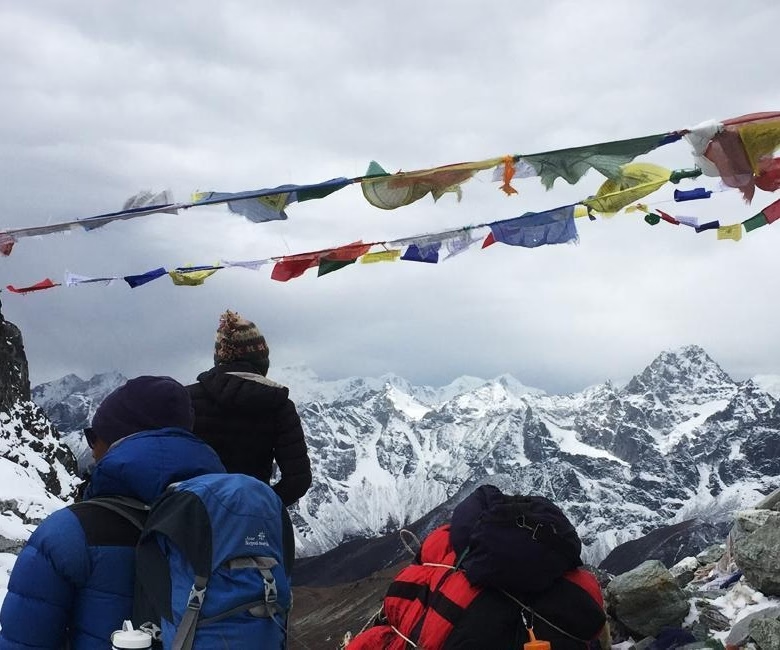
From Lungden a long tough day to cross over the first high pass of the adventure, the walk follows to frozen ponds beneath Renjo La pass, our walk leads to cross the pass with marvelous views of Mt. Everest, Lhotse, Cholatse, and Taboche, and then crossing Renjo La pass at 5,465 m / 17,929 ft, one of the most difficult section of this adventure, after enjoying the views downhill to Gokyo valley for an overnight stop in the comfort of a nice lodge overlooking Gokyo glacial lake.
- 09
Day 9: Hike to Gokyo Ri at 5,357 m and trek to Thangnag at 4,750 m.
- 5,357 m
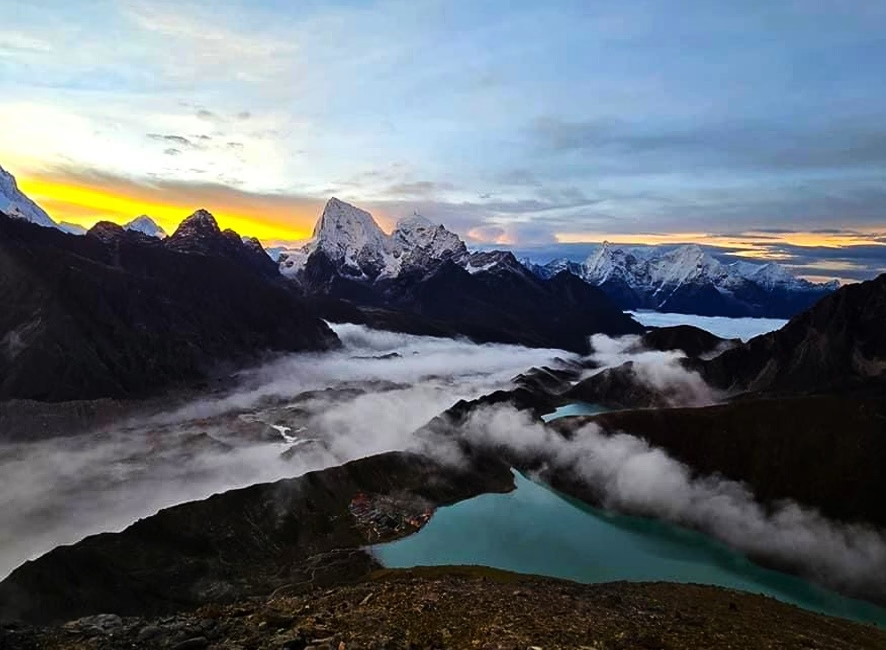
A steep hike uphill early morning to catch striking sunrise over mountains from Gokyo Ri at above 5,357 m, after a climb rewarded with brilliant views of the world’s highest mountains from Mt. Cho Oyo 8,201 m, straddles the border with Tibet along with Gyachung Kang, Mt. Everest 8,848 m, worlds 4th highest Mt. Lhotse 8,516 m, Cholatse, Taweche and towards east worlds 05th highest Mt. Makalu at 8,463 m. After a great time on top of Gokyo Ri, downhill to Gokyo and then continue a few hours walk to Thangnag along the glacier and moraines to reach a small settlement of Thangnag for an overnight stop.
- 10
Day 10:Cross Cho-la (Tshso-la) 5,367m to Dzongla 4,850 m – 07 hrs
- 5,367 m
Today, is another Big Day! Crossing the high Cho-la pass ( Tsho-la) with an early breakfast walk leads to a step up and then crossing the glacier of the eastern side. The top of Cho-la at 5,367m and sometimes it can be challenging to cross in snow conditions; the top offers excellent views of high mountains and of Cholatse Glacier, from here descend carefully to a small lake on the way to Dzongla for an overnight stop after a tough morning and day walk.
- 11
Day 11:Trek from Dzongla to Lobuche 4,930 m – 3/4 hrs.
- 4,930 m
Today’s walk leads to Lobuche following a path that descends to Yakherder’s summer pastures. Then the walk climbs up to the terminal debris of Khumbu Glacier and continues on the pleasant gradual path all the way to Lobuche for an overnight stay, Lobuche a small hidden settlement with about ten or more nice lodges.
- 12
Day 12:Trek from Lobuche to Gorakshep (5,180 m - 3 hrs) Everest Base Camp 5, 364 m – 4/5 hrs.
- 5,180 m
The morning walk leads on a gradual trail with a few short steps up gaining high altitude with superb views of Mt. Pumori, Lingerie, Khumbutse, and Mt. Everest. After a few hours of scenic trekking reaching at Gorakshep after walking past the moraine and glaciers, Gorakshep with few nice lodges for an overnight stop, this isolated spot is located beneath Kalapathar Hill and Pumori peak on route Everest base camp.
Everest Base Camp is located beneath massive Khumbu Ice Falls and glaciers, this super spot with immense views can be crowded during peak expedition season around April and May months, here enjoy surrounding views with Mt. Everest hidden behind the high peaks of Lho-la and Nuptse and walk back to Gorakshep for an overnight stop.
- 13
Day 13:Hike to Kalapathar 5,545 m trek to Lobuche – 4/5 hrs
- 5,545 m
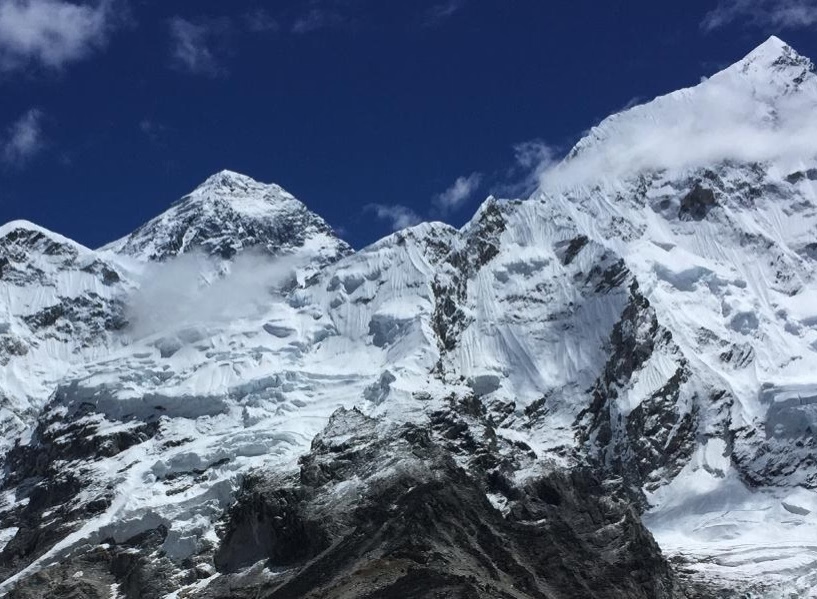
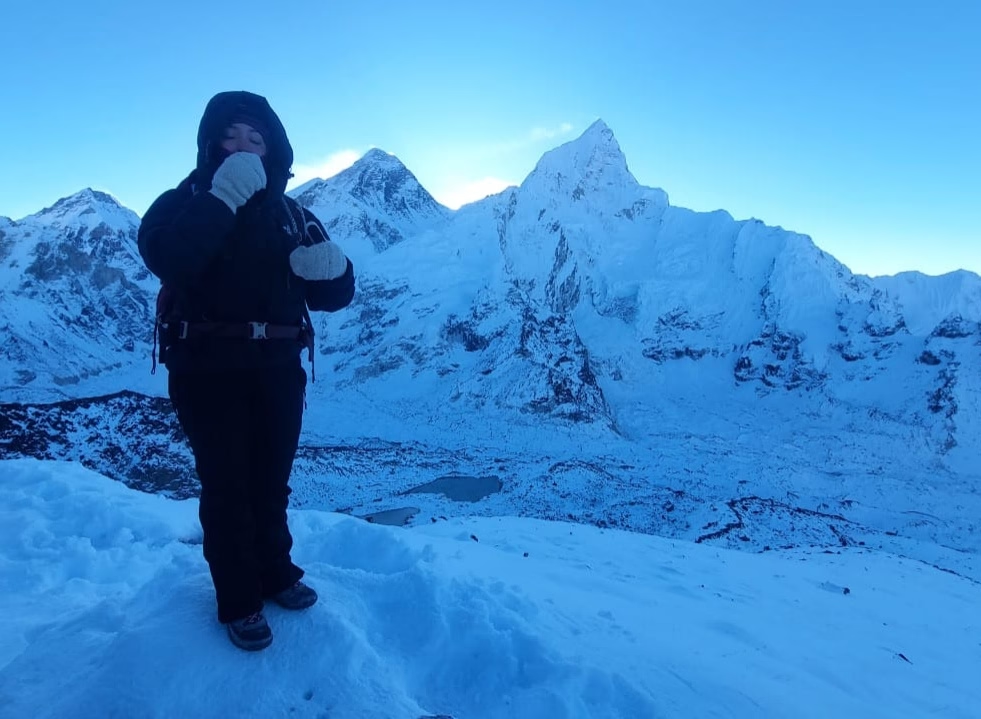
Morning climb to Kalapathar for a fantastic view of Mt. Everest and other adjoining peaks, Kalapathar at 5,545 m offers the entire south face of Mt. Everest at the closest, after an exciting moment heading back to Gorakshep and continue the journey all the way to Lobuche for lunch and overnight stop, afternoon at leisure rest and preparation for the last high pass of the adventure.
- 14
Day 14:Cross Kongma La 5,535 m to Dingboche 4,420m – 08 hrs
- 5,535 m
Today is our last tough and Big Day! crossing the last pass over Kongma La, starting early before dawn, the morning walk leads towards Khumbu glacier and moraine, walk with care on the misleading icy glacial path, from here onwards our route leads on a rocky trail beneath Kongma-la and the peak of Kongma or Mehra, after a short good rest traverse the Kongma-La pass at 5,535 m / 18,159 ft enclosed between the great Nuptse wall, Mehara and Pokalde peaks, after a long descend walk leads on a pleasant trail to join at Imjatse wide valley with incredible views of Island peak, Amadablam, and other high peaks. On reaching at Bibre at Imjatse valley a few hours of nice walk brings you at Dingboche village with many fine lodges, after a hard day walk retires in one of the nice and cozy lodges for overnight at Dingboche.
- 15
Day 15:Trek from Dingboche to Tengboche 3,867 m – 5/6 hrs
- 3,867 m
Leaving Dingboche with super morning views of Amadablam, and then on a downhill walk with a short climb then losing altitude heading past Pangboche and from the bridge back into tree lines with an hour climb to Tengboche Monastery, a beautiful and scenic spot surrounded with mountain views including Everest and majestic Amadablam, time here to visit Tengboche interesting monastery.
- 16
Day 16:Trek from Tengboche to Monjo 2,880 m through Namche Bazaar – 06hrs
- 2,880 m
The morning walk leads to a long descent reaching at Imjatse River in Phunge Tenga, after crossing a bridge with a short steep uphill and then on a gradual winding trail to Namche Bazaar, after a short break at Namche, continue to walk on the downhill to Dudh Kosi River valley, and then with short ups and downs to reach at the entrance and exit gate of Sagarmatha National Park, a short walk from brings you at Monjo village for an overnight stop.
- 17
Day 17:Trek from Monjo to Lukla for the last overnight in Khumbu area – 04 hrs walk.
After a marvelous and enjoyable time on high Khumbu valley and ridges with super Everest Three Passes trek, our last day walks of this adventure leads you back to Lukla, reaching by Lunch and for last overnight stop, after lunch free and celebrate dinner with fellow members, staff and guides.
- 18
Day 18:Fly back to Kathmandu and transfer to hotel.
Waking early morning to catch the flight back to Kathmandu, transfer to Lukla airport terminal and then board in a small aircraft either twin otter or Dornier, for a super scenic flight to reach at Kathmandu, on arrival in Kathmandu airport, transfer to your respective hotels with rest of day free for individual activities and souvenirs shopping.
Day 19:International departure for homeward bound
Your last day in Nepal, an amazing country of Himalayan wonders, as per your flight time leaving your hotel where our staff transfers you to an airport, after a great memorable adventure with an enjoyable time on Everest Three Passes Trek.
Are you looking to customize the trip itinerary?
If the provided schedule is not suitable for you, we can create a personalized travel arrangement tailored to your preferences and requirements.
Cost breakdown
What's included
Airport Pick up drop off by private vehicle.
Two-night Hotel in Kathmandu with Breakfast
Meals During Trek: (14 Breakfasts, 15 Lunch, and 14 dinners) during the trekking.
Sagarmatha National Park Permit (Rs, 3000 per person)
Pasang Lhambu Rural Municipality entrance fee (Rs. 3000 per person)
Including Domestic airport pick-up and drop service.
Both-way domestic flight ticket (Kathmandu to Lukla / Kathmandu)
Government license holder mountain guide for the whole trek.
14 nights of tea house accommodation throughout the trek.
Fresh fruit during the trek
Trekking gear down jacket, sleeping bag and duffle bag.
Adventure Certificate: NHT provides an Adventure Certificate.
The arrangement of the Emergency Helicopter service will be paid for by your Travel insurance company.
Medical kit bag.
What's not included
Nepal entry visa fee.
Your Travel and rescue insurance.
Personal porter.
All the expenses in the mountain over than the scheduled itinerary (due to strike, delay, or canceled flight)
Extra night Hotel in Kathmandu if arrive early or late departure than scheduled Itinerary.
All the Bar bills and personal expenses (phone call, laundry service, battery recharge, a bottle of water, hot water, shower.
Tips for the guide and porter.
Upcoming departures
Planning your trip schedule
No fixed group departures right now — run Three High Passes Trekprivately with your own group. Pick a preferred start date and we'll confirm availability.
Group-size discounts will be applied in the next step.
Select a start date from the calendar.
All prices per person, twin share. Subject to availability — Three High Passes Trek dates fill quickly in peak season.
Trip map

Useful information
Why try the Three High Passes Trek?
For trekkers seeking the absolute pinnacle of Himalayan endurance, the Three High Passes Trek stands completely unrivaled. It is the definitive, no-compromise loop of the Khumbu region, designed to steer you far away from the crowded, linear highways of the standard Everest Base Camp route. By connecting the four major valleys of Bhotekoshi, Gokyo, Tarboche, and Imja, this legendary route forces you to push past your comfort zone, offering a raw, unfiltered look at the roof of the world that few travelers ever get to see.
Is this Epic Journey the Right Fit for You?
This is not a beginner's hike; it is an elite, intensely demanding mountain expedition. If you possess exceptional cardiovascular endurance, a bulletproof mental mindset, and a deep love for remote, high-altitude challenges, you will find this trek deeply rewarding. However, if you are prone to severe knee issues, cannot handle sleeping in freezing, rustic rooms for weeks at a time, or struggle with rapid, successive ascents, a shorter, single-valley route like Gokyo Lakes would be a far safer and more enjoyable option.
The Perfect Windows for the High Passes: When to trek in challenging passes trek?
Timing this trek requires absolute precision due to the high risks of pass closures.
Autumn (September–November): The gold standard. The monsoon winds leave behind pristine, dust-free skies and completely stable high-pressure systems, offering the best conditions for clearing the snow on the high passes.
Spring (March–May): A spectacular second choice. Temperatures are significantly warmer, and lower valleys are bursting with blooming rhododendrons, though afternoon clouds are more common.
Winter & Summer: Winter (December–February) brings heavy snow that routinely blocks the high passes, while the summer monsoons (June–August) bring heavy rains, mud, and intense landslide risks.
The Grand Loop: Route Overview of the Everest Three High Passes Trek
The classic journey begins with an unforgettable, thrilling flight into the mountain airstrip at Lukla (2,846m). From there, you march up the deep Dudh Koshi valley to the vibrant Sherpa capital of Namche Bazaar. Instead of following the crowds toward Everest, your route splits northwest into the remote, pristine valley of Thame. From here, you begin a massive counter-clockwise horseshoe loop, conquering Renjo La, dropping into the turquoise glacier waters of the Gokyo Lakes, crossing Cho La into the Everest base valley, and finally tackling Kongma La before looping back down through Tengboche.
By the Numbers: Distance, Time & Moving Hours
This massive mountain expedition covers a total loop distance of approximately 166 kilometers (103 miles). A properly paced itinerary requires between 18 and 22 consecutive days on the trail to ensure safe acclimatization. You should prepare your body to walk for an average of 6 to 8 hours per day over highly demanding, rocky terrain. However, your three pass-crossing days are monumental undertakings, demanding between 9 and 11 hours of intense, continuous moving over steep, shifting moraines and icy fields.
Standing at the Roof: Highest Altitudes reached
This trek keeps you consistently exposed to extreme elevations. Your highest sleeping point will be at Gorak Shep, sitting at an imposing 5,140 meters (16,863 feet). Your highest physical steps, however, will occur when climbing the optional non-technical viewpoints of Gokyo Ri (5,357m) and Kala Patthar (5,550m), as well as the highest of the three mountain passes, Kongma La, which tops out at a dizzying 5,535 meters (18,159 feet) above sea level.
Giant One: Conquering Renjo La Pass
Standing at 5,360 meters (17,585 feet), Renjo La is your first major structural hurdle. Leaving the quiet stone shelters of Lungden before dawn, you will ascend a steep, beautifully constructed stone staircase that eventually transitions into a rugged, windswept ridge. Reaching the summit rewards you with what many mountain photographers consider the absolute finest view in the entire Everest region: a jaw-dropping, wide-angle panorama of Mount Everest, Lhotse, and Makalu, perfectly framed next to the deep, turquoise waters of Gokyo Lake.
Giant Two: Crossing the Cho La Glacier
At 5,420 meters (17,782 feet), Cho La is easily the most technical and unpredictable pass on the loop. Connecting the Gokyo Valley to the central Khumbu highway, the route requires navigating a steep, unstable field of loose scree and boulders before delivering you to the base of a real, sloping glacier. You will need to attach lightweight micro-spikes (crampons) to your hiking boots to safely cross the slick, hard-packed ice sheet before tackling a steep, rocky descent down into the valley of Dzongla.
Giant Three: Defeating the Brutal Kongma La
The final and highest giant is Kongma La, standing at an imposing 5,535 meters (18,159 feet). Often overlooked, this pass is widely considered the most physically punishing of the three. It features no permanent settlements along its route, forcing you to carry a packed lunch and extra fluids. The trail climbs relentlessly over steep, shifting moraines directly beneath the towering rock walls of Nuptse, demanding total concentration, steady footwork, and immense physical stamina from start to finish.
Air & Elevation: Acclimatization Strategy
Expedition safety hinges entirely on your body's ability to adapt to thin air. Pushing past 5,000 meters multiple times means you cannot afford to rush. Our itineraries feature mandatory, built-in rest and adaptation days at Namche Bazaar (3,440m) and Dingboche (4,410m). The golden rules are non-negotiable: maintain a slow, steady, and deliberate walking pace (bistari, bistari), avoid alcohol or sleeping pills completely, and consume between 4 and 5 liters of water daily to flush your system.
Unforgiving Elements: Mountain Weather Conditions
The weather along the high passes is a study in brutal extremes. While a sunny morning at lower elevations can feel warm enough for a lightweight shirt, temperatures drop instantly as you cross the tree line. Above 4,000 meters, nights are bitterly cold, routinely plunging between -10 to -20 degrees Celsius. Biting winds are common on the pass summits, and sudden, unpredictable snowstorms can sweep through the high valleys within hours, making high-quality, professional layering systems absolutely essential.
Paperwork & Borders: Necessary Permits
To legally complete this loop, you must secure three distinct administrative documents. First is the Khumbu Pasang Lhamu Rural Municipality Permit, which costs 3,000 NPR (approx. $25 USD) and is collected directly at Lukla. Second is the Sagarmatha National Park Entry Permit, priced at 3,000 NPR (approx. $23 USD). Lastly, if your route enters the pristine valleys via Jiri, you will require a Gaurishankar Conservation Area Permit. Your registered agency will handle all these logistics smoothly before you set off.
Getting to the Trailhead
The vast majority of trekkers access the loop via a domestic flight from Kathmandu to Tenzing-Hillary Airport in Lukla. This 35-minute flight is world-famous for its short, sloping mountain runway and breathtaking aerial views.
To manage heavy air traffic congestion during peak seasons (Spring and Autumn), the civil aviation authority routinely diverts all Lukla flights to operate out of Manthali Airport in Ramechhap, located a 4 to 5-hour drive from Kathmandu.
Mountain Lodging: Teahouse Comforts
You will be staying in local, family-operated Sherpa teahouses. While lower hubs like Namche offer surprising modern luxuries like heated blankets and attached bathrooms, accommodations become basic as you ascend. Rooms are unheated, twin-sharing timber spaces with two simple beds and foam mattresses. The communal dining room is the sole heated space in the lodge, warmed by a central stove fueled by dried yak dung each evening, creating a wonderful social hub for weary hikers.
Mountain Fuel: Dining & Menus
Teahouse menus in the Khumbu region are highly standardized but surprisingly extensive. You will find pasta, potatoes, eggs, and porridge. However, the ultimate fuel for high-altitude survival is Dal Bhat (steamed rice, thick lentil soup, and vegetable curry). It is nutritious, organic, and comes with unlimited free refills. We strongly advise sticking to a strict vegetarian diet once you climb past Namche Bazaar, as all meat must be carried up by porters or yaks from lower elevations without refrigeration.
Staying Hydrated: Water Management
Drinking enough fluids is vital for preventing altitude sickness; you should aim for 4 to 5 liters of water a day. Never drink untreated tap or river water. You can buy boiled water from teahouses, or bring your own reusable bottles paired with water purification tablets, a UV purifier, or a filtration pump to save money and reduce plastic waste.
Satellite Signals: Communication & Internet
Staying connected along the Three Passes is possible but highly erratic. While local Ncell and NTC SIM cards provide decent cellular data in larger hubs like Namche, they fail completely in remote valleys like Lungden or Chhukung. To bridge this gap, almost all teahouses sell access to Everest Link, a specialized mountain satellite Wi-Fi network. You can purchase data cards (10GB to 20GB) for roughly $20 to $30 USD, though speeds can drop dramatically during bad weather.
Powering Up: Electricity & Charging
The vast majority of teahouses along this loop rely on solar panels or local micro-hydro grids. You can charge your devices in the communal dining hall, but lodge owners will collect a fee ranging from $3 to $8 per hour as you climb higher. Because extreme alpine cold drains lithium-ion batteries rapidly, bringing two high-capacity power banks (20,000mAh or more) and keeping your devices stored inside your sleeping bag at night is an essential packing strategy.
Funding the Loop: Cash & ATM Reality
You must carry an ample supply of Nepalese Rupees (NPR) in cash before leaving Kathmandu. While there are functional ATMs in Namche Bazaar and Lukla, they are notoriously unreliable, frequently running out of cash, losing power, or rejecting foreign cards. Your trekking package covers your room and standard meals, but you will need out-of-pocket cash to pay for trail luxuries like hot showers, Wi-Fi, charging fees, snacks, sodas, and tips. Budget roughly $20 to $30 USD equivalent per day.
Health, Safety & Wilderness Survival & Staying Healthy on the Trail
Your physical health requires aggressive, proactive management on a trek of this length. The most common trail ailments include painful blisters, minor stomach bugs, and the famous "Khumbu cough" caused by inhaling freezing, bone-dry mountain air. Pack a comprehensive personal medical kit containing blister tape, rehydration salts, throat lozenges, ibuprofen, and broad-spectrum antibiotics. Always prioritize personal hygiene by using hand sanitizer frequently, and wear a buff to protect your lungs from dust.
Reading the Signs: Altitude Sickness Awareness
Acute Mountain Sickness (AMS) is an absolute reality when spending weeks above 4,000 meters. Early warning symptoms include a persistent, throbbing headache, loss of appetite, mild dizziness, or nausea. You must be completely transparent with your guide about any symptoms. Minor symptoms can often be managed by resting or taking Diamox. However, if your symptoms worsen, you must immediately halt your ascent and descend to a lower altitude. Pushing through severe altitude symptoms can lead to life-threatening conditions like HAPE or HACE.
Emergency Rescue Logistics
In severe cases of altitude sickness or critical physical injury, the only viable method of evacuation from these remote mountain valleys is via a charter helicopter rescue. These operations are highly complex and extremely expensive, often costing upward of $3,000 to $5,000 USD. Helicopter companies in Kathmandu will not deploy an aircraft unless they receive immediate credit card confirmation or a verified payment guarantee from your insurance provider. Your guide will handle the satellite logistics to coordinate the rescue smoothly.
Travel Insurance Checklist
Standard travel insurance policies will not cover an adventure of this magnitude. Before arriving in Nepal, you must purchase a specialized adventure policy. Double-check the fine print to ensure it explicitly covers medical expenses and emergency helicopter rescue up to an elevation of 6,000 meters (to safely cover the high passes and viewpoints). It is highly recommended to email a digital copy of your insurance policy and emergency contact numbers to your trekking agency before your trip begins.
Sherpa Hearts: Local Culture & Traditions
The Khumbu region is the historic homeland of the Sherpa people, famous for their mountain prowess and deep Tibetan Buddhist traditions. Your trail will weave past ancient monasteries like the Tengboche Monastery, spinning brass prayer wheels, and long mani walls made of carved stones. Always pass these religious monuments on their left-hand side, remove your shoes before entering temple shrines, and always ask for explicit permission before taking photos of local people or monks.
Preserving the Peaks: Responsible Practices
Preserving the pristine beauty of the Himalayas is a shared responsibility. We strictly follow a "Leave No Trace" philosophy. Avoid buying single-use plastic water bottles, and ensure you pack out all non-biodegradable waste (such as used batteries, wet wipes, and plastic wrappers) back to Kathmandu. Stick strictly to the designated trails to prevent soil erosion, avoid disturbing the mountain wildlife, and support the local economy by purchasing locally made goods and staying at locally owned, sustainable mountain teahouses along your route.
Wild Khumbu: Wildlife & Landscapes
The entire route cuts through the heart of the UNESCO-listed Sagarmatha National Park. The landscape transitions dramatically from pine and rhododendron forests to stark, high-altitude alpine deserts and massive glaciers like the Ngozumpa glacier (the largest in the Himalayas). Keep your eyes peeled for unique wildlife, including herds of Himalayan tahr, musk deer, elusive snow leopards, and beautiful birds like the Danphe (the colorful Himalayan monal, Nepal’s national bird).
Solo vs. Group Logistics: Managing the Restricted Route
Following recent regulatory updates in Nepal, trekking the high-altitude routes of the Khumbu requires intentional planning. While some lower regions allow independent hikers, tackling a circuit this complex on your own is highly discouraged and often restricted by local check-posts. To successfully cross all three passes, you must register your route through a licensed agency. Trekking in a small group or paired with a dedicated local crew ensures that you have secured scarce lodge placements during peak seasons and guarantees a robust support network if trail conditions suddenly deteriorate.
Porter or Yak for carrying Baggage
The trails of the Everest region function as active transport highways powered entirely by animals and human endurance. While walking, you will frequently share narrow, cliffside paths with heavy yak trains, dzokpa caravans, and hardworking local porters carrying immense loads. Safety on these trails requires a simple, non-negotiable rule: always step to the wall side of the trail (away from the steep drop-off cliff) well before the animals reach you. Yaks carry wide, unpredictable loads and can accidentally push you off the edge if you stand on the riverside of the path.
Physical Benchmarks: Training Targets Before Departure
To safely enjoy this grueling loop rather than simply surviving it, your physical preparation must begin at least 3 to 4 months before arriving in Kathmandu. Focus intensely on building high-capacity cardiovascular endurance and lower-body structural strength. Your training regimen should include long, continuous stair-climbing sessions, weighted hill rucks (carrying a 10-12kg pack), and targeted leg exercises like weighted squats, lunges, and calf raises. If you can comfortably complete a 6-hour hilly hike with a weighted pack back home, your body will transition smoothly to the demands of the passes.
Acclimatization vs. Fitness: The Golden Rule of the Passes
A common trap that trips up exceptionally fit athletes is confusing physical strength with altitude adaptability. Being in peak cardiovascular shape does not make your lungs immune to Acute Mountain Sickness (AMS); in fact, high fitness levels often tempt hikers to walk too fast, accelerating the onset of altitude distress. The mountains do not care about your marathon times. The key to conquering the Three Passes is absolute humility on the trail—embracing a slow, rhythmic, almost frustratingly relaxed pace that allows your blood chemistry to adapt to the dropping oxygen pressures naturally.
Nepal High Trek: Your Elite Expedition Partner
When it comes to executing a safe, flawless Himalayan adventure, Nepal High Trek is the premier choice. As a fully authorized, local agency boasting over a decade of operational excellence, they specialize in custom itineraries led by wilderness-certified, English-speaking guides. Their deep local roots guarantee the best teahouse rooms, prompt logistics, and a highly reliable safety backup system. By choosing Nepal High Trek, you are partnering with an ethical, responsible team dedicated to transforming your Three Passes dream into an unforgettable, flawlessly organized reality.
Frequently asked
What travellers say
I had a pleasure of trekking the three high passes in the Everest Region, with a brief detour to the Everest Base Camp, in May 2024.I trekked alone, guided by Suman Rai, an experienced guide with a lot of knowledge about the region. We completed the trek in 12 days. Suman remained attentive throughout, was equipped with all necessary first aid supplies, regularly monitored my physical condition, and ensured a smooth and safe journey despite the weather conditions. Both Suman and his boss Anjan, managed the logistics including, ensuring that we fly to and from Lukla the same day and staying in the best lodges.I would most definitely recommend Nepal High Trek and Expedition, this trek and Suman’s services to anybody wishing to avoid the inconvenience of group tours, enjoy flexibility, and go at their own pace, be it fast or slow.
Yuriy PLast November I did the ‘Three High Passes Trek’ with Nepal High Trek. From the very beginning I felt I was in good hands with this trekking agency. Anjan, the manager, answered all of my questions immediately (I was very short-term with my request for the trekking) and he organised everything very quickly and professionally.Anjan and our guide Pawan welcomed me and the other person of the group on the day before the trekking and helped us with everything that was left to organise and pack. They gave us very good advice of what to bring with us and informed very well about the whole trek and what to expect in terms of teahouses, weather conditions, temperature, and conditions of the path.Pawan was definitely the best guide I could have imagined for this trekking in Nepal! He is doing his work with so much passion, and he has a lot of experience as a trekking guide and knows the region very well! You can always feel safe with him in the mountains.He was very professional, especially wh…
Eden GrantWe had a wonderful time trekking with Nepal High Trek & Expedition Team. We trekked to Annapurna Circuit Trek 2010 and Everest base camp via three pass trek in 2015 at the end of October. We had a fantastic time with Nepal High Trek& Expedition Team and found Anjan and Lukti to be incredibly welcoming, kind and caring. We wouldn’t hesitate to recommend them if you are thinking of trekking in Nepal. From picking us up at the airport to lending us additional trekking gear, to assisting with great accommodation either side of the trek, our trek was very well organized. Anjan was very flexible along the trek allowing us to trek at our own pace which we enjoyed. Each night we were treated to fresh apples and pomegranates for dessert which was awesome after a long day of hiking. We saw lots of animals along the trek which Anjan and Lukti were good at finding and the villages you pass through and people you meet along the way were one of the highlights of our trip. We are very grateful for t…
Liz GrantDear Anjan & Nepal High TrekI would like to thank you for the support you provided on our Journey. The three passes trek was by no means an easy feat but your professionalism and care for us over the 20 days were exceptional. You attended to our every need by ensuring our safety along the trek, not only sourcing excellent accommodation but also monitoring our health and being on a constant vigil for any altitude related issues. You paced the trek to our ability and managed each day to ensure we walked within our personal capabilities.Your knowledge of the region was excellent and you proved to be a wealth of knowledge of the cultural and environmental aspects along the trek.Your experience as a guide ensured we had a wonderful journey and I highly recommend to anyone considering a trek in the Annapurna region and Everest region of Nepal. Thank you once again.
Mark HeustonThe three high passes trek was an amazing experience. It exceeded all expectations. Our guide Suman took such good care of us and I always felt safe and that he had our best interest in mind. He provided us with once in a lifetime opportunities and he felt more like of a friend then a guide we had a lot of fun together. The trek was very reasonably priced with all necessities covered. Our trek was 16 days with a few more added on both ends for travel. Even though it was the rainy season and we did get a few days of bad weather. It was nice not having it be crowded a lot of the time is was just us in tea houses and on trails.Sumans team was also amazing our porters Mr. Dipi and Yogesh were so kind and hardworking. Overall would 100% recommend this company and this trek!!
Sarah JensonComing into this trek, we were all a little nervous; but, we have never been more blessed by a group of people. Our guide, Suman was the best thing to ever happen to our group here in Nepal. His knowledge, attitude, and character was central to our positive experience. We never felt unsafe or not taken care of. Our porters, Yogesh and DP, became some of our best friends. There was never a spare moment without laughter with our group.Throughout our trek, we conquered some of the highest mountain passes in the world and our guide, Suman, was always looking out for us. He helped us maintain a pace that we could recover from at such a high altitude, but also matched our fitness.Thank you so much Nepal High Trek for giving us the most amazing experience. I would recommend anyone who wants to tackle any journey in Nepal with Nepal High Trek, and hopefully with Suman and the boys! Please use them for your future journeys!
Mya Gory