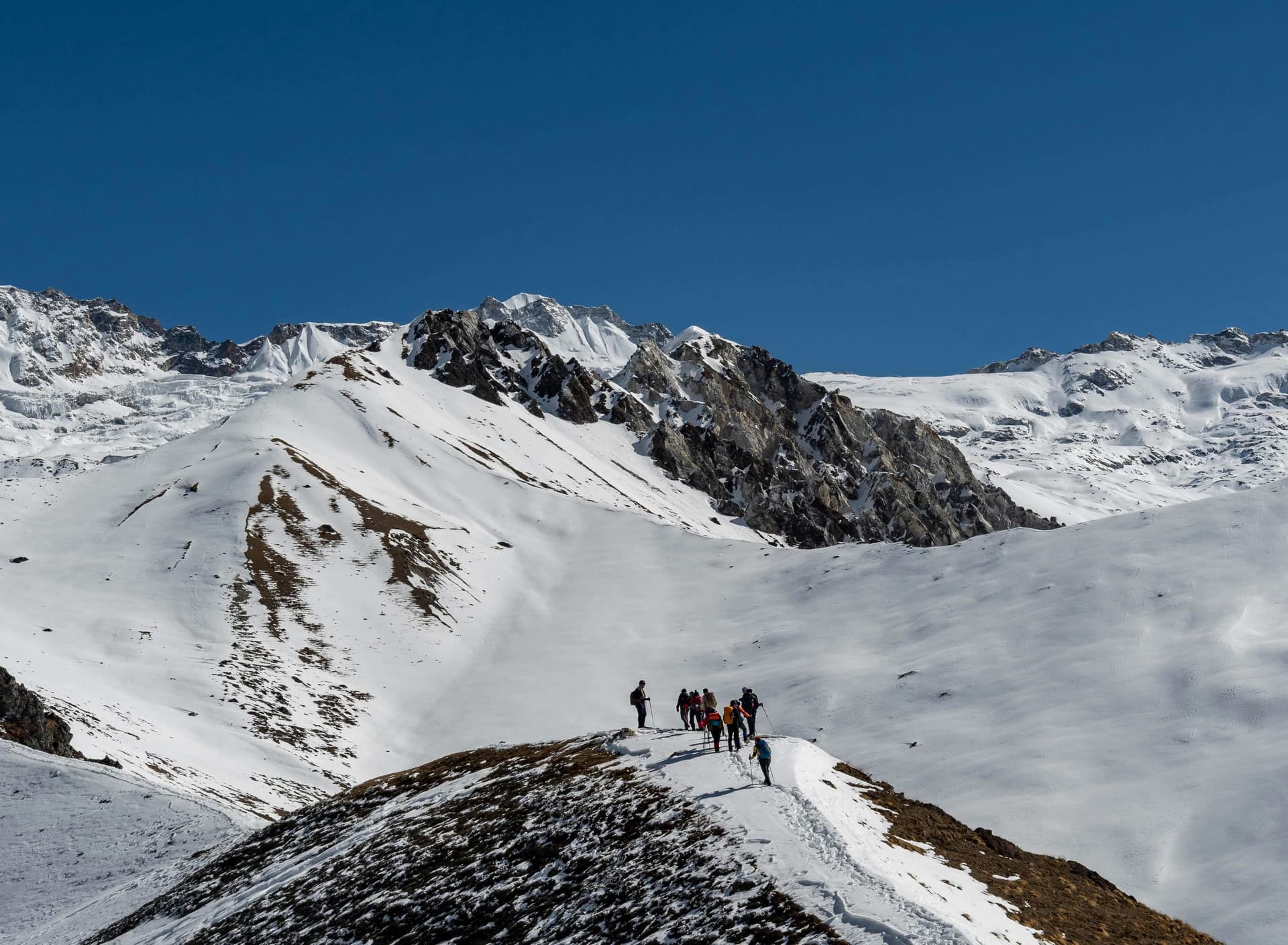
Langtang Valley Budget Trek is an affordable Himalayan adventure close to Kathmandu, offering spectacular mountain scenery, traditional Tamang villages, Buddhist culture, and beautiful alpine landscapes. The trail passes through Langtang National Park and reaches the scenic settlement of Kyanjin Gompa, surrounded by impressive Himalayan peaks. Ideal for budget-conscious travelers, this trek combines natural beauty, local culture, comfortable teahouse accommodation, and rewarding mountain views without the higher costs of Nepal’s more remote trekking regions.
- Duration
- 6 days
- Difficulty
- Moderate
- Max Altitude
- 4380m
- Destination
- Nepal
- Activity
- Trekking
- Accommodation
- Trek Lodges
- Group Size
- 2
- Transport
- Local Bus
- Meals
- B.D.L.
- Season
- Sep-Dec & Mar-May
Trip overview
Are you looking for a mountain getaway? The Langtang Valley Budget Trek is exactly what the doctor ordered for anyone craving serious altitude but with minimum physical tiredness. Honestly, it is one of those rare sweet spots in the Himalayas where your wallet doesn’t just instantly start crying the moment you step out of Kathmandu. There are many places where we conduct trekking activities and tours but Langtang is our darling destination. The company started to thrive by conducting trips in the region. In fact, the company is founded by a Tamang guy who has nearly 2 decades of experience in the field of Nepalese Trekking. Interestingly, Langtang region is the home of the Tamang indigenous community.
We've seen so many folks stress over money instead of enjoying the trail. Why do that? Look, keeping it budget-friendly doesn't mean you’re sleeping in a ditch or chewing on dry rocks. You get proper tea houses, warm beds, hot meals, and a guide who knows these winding paths like the back of their hand. Just contact the travel planners of the Nepal High Trek, we ensure that you get worth of every penny spent. We don’t get biased over finances. Our way of conducting trekking and tour activities remain the same as per our values of impeccable hospitality and quality services.
So, what's the big picture here? The overview is pretty simple but it packs a massive punch for anyone who loves walking uphill. You start off driving through some rough and tumble roads straight up to Syabrubesi. From there, it's just you, a roaring river, and forests that look like they hide actual fairies. As you push higher up the valley, the trees just disappear. Suddenly you’re surrounded by giant walls of rock and ice that make you feel incredibly tiny. The open valleys and ancient monasteries present in the trail can surely help you knit the best trekking journey in budget price.
Nepal High Trek designed this specific package to maximize your time up high without dragging the whole trip out for weeks. It’s short and you can finish the trek in less than a week’s time exploring the home of Langtang Lirung Mountain and ancient myths associated with legendary figures of traditional Tibetan Buddhism.
Why Choose the Langtang Valley Budget Trek?
Why this one out of all the options? That’s the golden question, isn’t it. Well, compared to Everest or Annapurna, Langtang is like the quiet cousin who’s actually insanely cool once you finally talk to them. You choose this budget option because you want the big mountain feel without the massive crowds breathing down your neck at every single suspension bridge you cross. Besides, Nepal High Trek knows exactly how to cut the fluff. We don't charge you for useless luxury add-ons that you don't even need when you're just sweaty and tired anyway. You want authentic? This is it. You're giving your hard-earned cash to local tea house owners and getting a raw, unfiltered Himalayan experience that leaves you wanting more.
Please note that, the agency offers budget trek packages in the Everest, Annapurna, and Manaslu region of Nepal as well. Check our Everest Base Camp Budget Trek, the Annapurna Base Camp Budget Trek, the Annapurna Circuit Budget Trek, and the Manaslu Circuit Budget Trek besides the Langtang Valley Budget Trek in Nepal. Travel smart and choose the Nepal High Trek for best value of your travel investment.
Langtang Valley Trek Route and Itinerary
Let me break down the actual path you take. The route basically follows the Langtang River all the way up into the belly of the mountains. Starting from Syabrubesi, you just keep walking east. It sounds straightforward, right? Well, the trail goes up and down through forests before finally opening up at Ghoda Tabela. After that, it’s a straight push up to Langtang village and then Kyangjin Gompa. Langtang Valley Trek route combines the Tamang Heritage Trail with Gosalinkunda Pass Trek too.
Nepal High Trek has tweaked this itinerary so you don't feel like you are running a marathon every single day. We build in enough time for you to actually breathe. Coming back down is a breeze because you retrace your steps. You'll be amazed how different everything looks when you're walking the other direction.
Langtang Valley Trek Distance and Walking Hours
You are probably wondering how far you actually have to walk. In total, you’re covering roughly 65 to 70 kilometers round trip depending on how much exploring you do up at Kyangjin. That breaks down to about 5 to 7 hours of walking a day. It doesn’t sound like much. But remember you are walking uphill at an angle that sometimes feels like a staircase. Nepal High Trek guides keep the pace nice and slow so you don't burn out by day two. Honestly, distance doesn't matter as much as time when you're dealing with altitude. Some days you might only cover 10 kilometers, but it takes you six hours because the air is getting thinner and your legs feel like lead.
Langtang Valley Trek Difficulty Level
Look, we won't lie to you. It is a moderate trek. You aren't doing technical climbing with ropes and ice axes, but you also aren't strolling through a city park. There is many steep sections that will make your lungs absolutely scream for a few minutes. If you have bad knees, the downhill parts on the way back might make you wince a bit. That said, Nepal High Trek has guided people in their sixties and seventies up this exact trail. It is also equally fit for family treks with kids. The difficulty is mostly in your head and in how well you handle the lack of oxygen. If you can walk for a few hours with a backpack without collapsing, you can handle this. Just don't expect it to be a complete walk in the park.
Best Time for Langtang Valley Budget Trek
Timing is everything in the mountains. You really want to aim for spring or autumn. From March to May, the weather warms up and the rhododendron forests explode with crazy red and pink colors. It’s absolutely wild. Then you have September to November. This is when the skies are so crisp and blue it looks fake, and the mountain views are sharp as a knife. Nepal High Trek usually tells people to avoid the monsoon season unless you really love leeches and walking in clouds all day long. Winter is doable. But honestly, it gets incredibly cold up there and tea houses might be closed. Stick to the sweet spots and you’ll get the absolute best bang for your buck.
Langtang Valley Trek Maximum Altitude
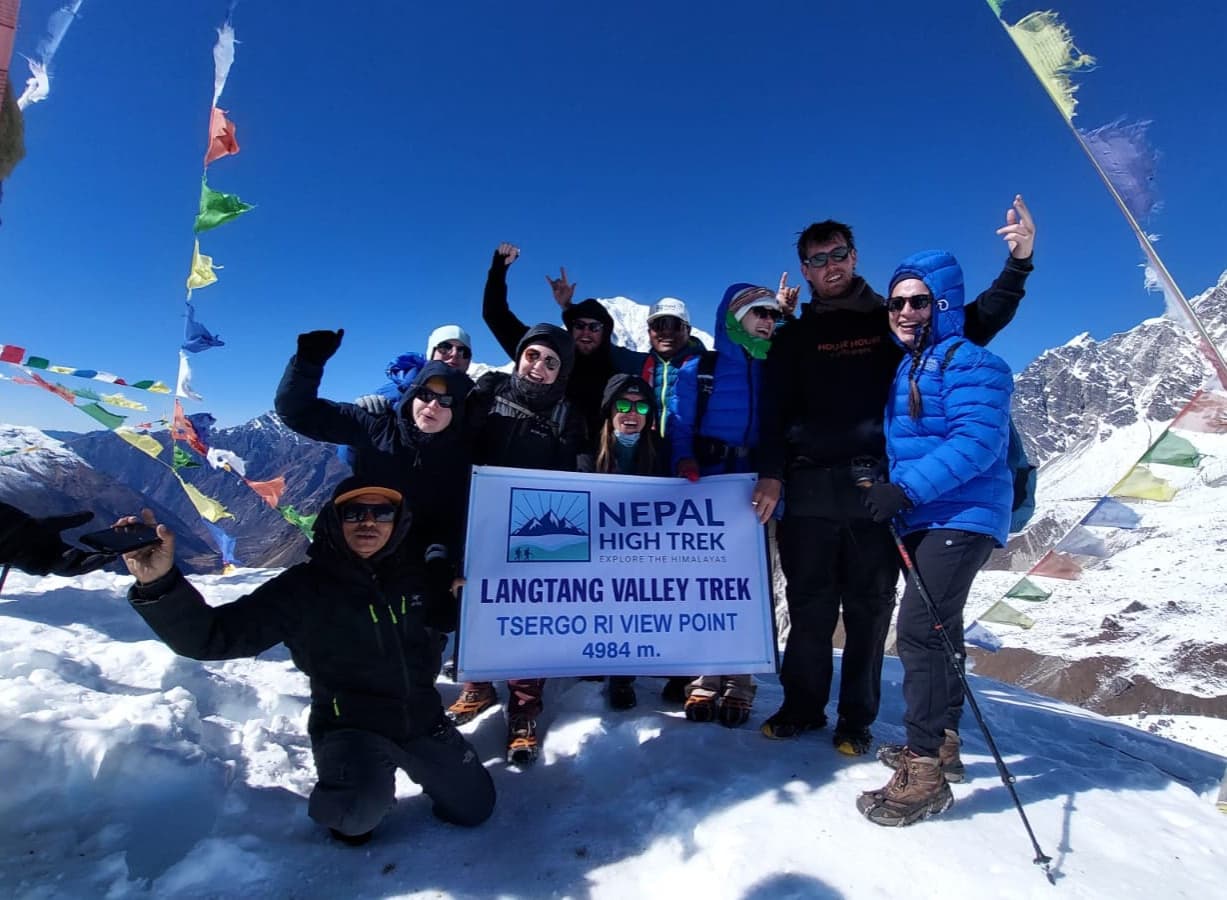
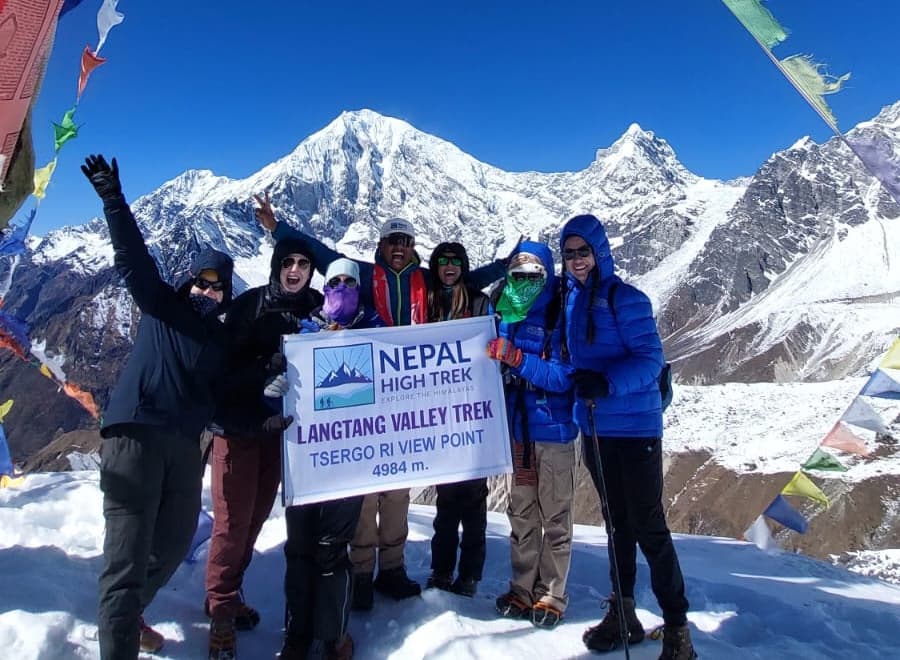
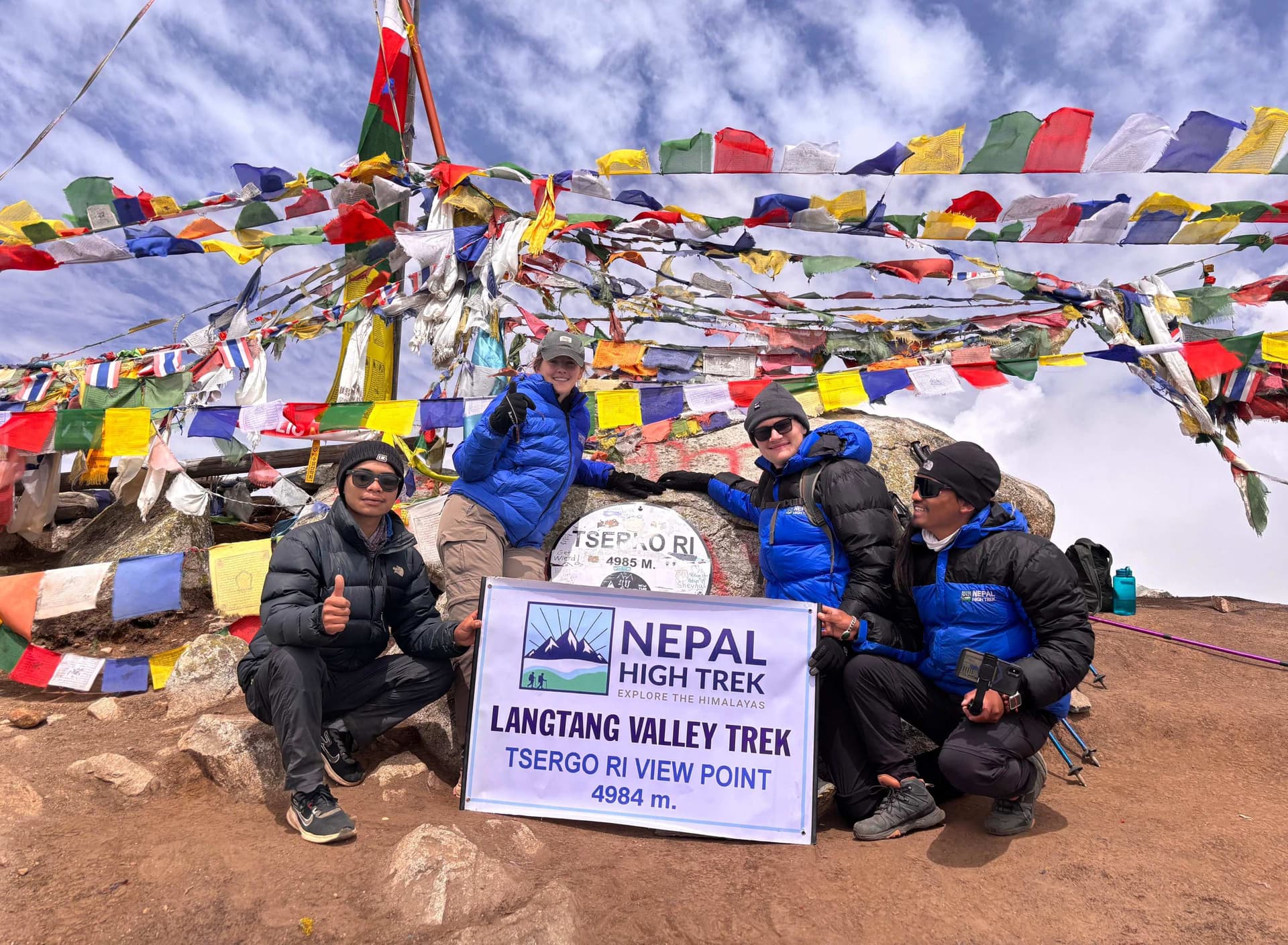
How high are we talking? The highest place you actually sleep is Kyangjin Gompa, which sits right around 3,870 meters. That is high enough to make your head throb if you aren't careful. But the real maximum altitude happens if you decide to hike up Kyangjin Ri or Tserko Ri on your acclimatization day. Tserko Ri pushes you up almost to 5,000 meters. Standing up there? It feels like you are sitting on the roof of the entire world. Nepal High Trek guides watch you closely when you get this high to make sure you aren't showing signs of sickness. The air is thin. Every step feels heavy. But the view from that maximum altitude is something you will literally never forget.
Accommodation During Langtang Valley Budget Trek
Forget about fancy hotels. You are sleeping in tea houses. These are basically stone or wooden lodges run by local families who live up there. The rooms are tiny but enough to stay overnight warm and you usually get two small beds, a blanket and a window. Honestly, it is part of the charm. Nepal High Trek books the best available places for you, but keep your expectations in check. The dining room is where the magic happens anyway. That’s where the wood stove is. Everyone huddles around the fire at night, drinking tea and drying their socks. The walls are thin, so you will hear your neighbor snoring. Bring earplugs and a good sleeping bag.
Food and Meals on Langtang Valley Trek
You are going to eat a lot of Dal Bhat. Look, it’s the unofficial fuel of the Himalayas. Rice, lentil soup, curried veggies, and spinach. You can eat as much as you want and it keeps you going all day. But tea houses have massive menus now. You can get pizza, pasta, momos, and pancakes. Keep in mind that everything you eat has to be carried up there by a mule or a person, so a pizza at 4,000 meters isn't going to taste like New York. Nepal High Trek includes your meals in the budget package so you don't have to carry wads of cash every time you get hungry. Just eat carbs. Your body desperately needs them up high.
Transportation for Langtang Valley Budget Trek
Getting to the start of this trek is an adventure itself. You don't fly. You drive. We hop into a jeep or a local bus in Kathmandu and head north toward the Tibetan border. It takes about 7 to 8 hours to get to Syabrubesi. The road? It is bumpy. Very bumpy. Sometimes it clings to the edge of cliffs that will make you close your eyes and pray. Nepal High Trek arranges safe, reliable transport so you aren't crammed in with a bunch of chickens—unless you really want that local bus experience. A private jeep costs a bit more but saves your spine a lot of grief. Either way, the journey gives you a wild introduction to rural Nepali roads.
Guide and Porter Services for Langtang Valley Trek
Do you actually need a guide? Look, having one changes everything. Nepal High Trek provides local guides who don't just point the way. They tell you stories, negotiate your room, and make sure you aren't eating dodgy meat. Plus, they know exactly what to do if you get sick. Porters are optional on the budget package, but if you don't want to carry a heavy 15kg bag uphill for six days, hire one. Our porters are absolute machines. They carry two people's bags at once and still beat you to the tea house by an hour. Hiring them also pumps money straight into the local economy, which is exactly how sustainable trekking is supposed to work up here. Nepal Government has strictly mentioned that you must be with a licensed trekking guide while trekking in the Langtang region of Nepal.
Langtang Valley Trek for Beginners
If you have never trekked in Nepal before, Langtang is the perfect testing ground. It isn't insanely long like the Manaslu Circuit Trek and the Everest Base Camp Trek. You don't have to deal with the crazy domestic flights like you do with Everest. Honestly, it is very beginner-friendly as long as you have decent fitness. The trail is easy to follow and the local people are incredibly welcoming. Nepal High Trek has taken absolute newbies up this valley. You just have to listen to your body. Walk slower than you think you need to. Drink way more water than you want to.
Langtang Valley Budget Trek Itinerary Options
The standard fast itinerary takes about 7 to 8 days from Kathmandu and back. But here's the beauty of it—we can adjust it. If you want to push hard, we can squeeze it into a tighter window. If you want to chill out and explore the side valleys, we can add a couple of days up in Kyangjin Gompa. Nepal High Trek gives you options. You can even combine this with the Gosainkunda lakes if you have an extra week and want to punish your legs a bit more. We build the budget package to be flexible. It’s your holiday. We just provide the framework so you aren't stressing out about where you need to sleep every single night.
Itinerary
Day 1:Day 01: Drive to Syabrubesi (1,550m) 5/6 hrs and trek to Bambo - 3 hrs
Our trekking guide will meet you in your hotel and transfer you to bus park in Machha Pokhari. Your trip kicks off with a massive dose of Nepali road adventure. We leave Kathmandu early in the morning and head north. The road quickly turns winding, bumpy, and sometimes a little bit scary as it hugs steep hillsides. You will see incredible terraced farms and deep river valleys out the window. It takes about 5 to 6 hours to finally reach Syabrubesi, a small bustling town right at the edge of the Langtang National Park. Nepal High Trek gets you checked into a comfortable lodge here. From Syabrubesi, we have to walk 3 hours to get to Bambo village and it lies at 1920m elevation. The trail leads you to a beautiful valley with a lush forest and the Trishuli River. Overnight in a local guest house at Bambo.
- 02
Day 2:Day 02: Trek from Bambo to Ghoda Tabela (3000m) 6-7 hours
This is where the sweat starts. The second day of the trek is to Ghoda Tabela via Lama Hotel. Normally, trekkers spend overnight in Lama Hotel but our Langtang Valley Budget Trek pushes further to Ghoda Tabela but your guide will determine whether to stay in Lama Hotel or continue to Ghoda Tabela. After breakfast, you cross a suspension bridge and immediately start climbing through thick forests of oak and rhododendron. You follow the Langtang River the entire day, listening to it roar. The trail goes up and down constantly. It is humid and tough. You will likely see langur monkeys swinging in the trees above you. After a grueling 6 to 7 hours of uphill grinding, the forest finally begins to thin out and you reach Ghoda Tabela. Nepal High Trek settles you in here. You are now at 3,000 meters, so the air feels cooler and much thinner. Overnight in a tea house
- 03
Day 3:Day 03: Trekking to Kyangjin Gompa (3,870m) 6-7 hours
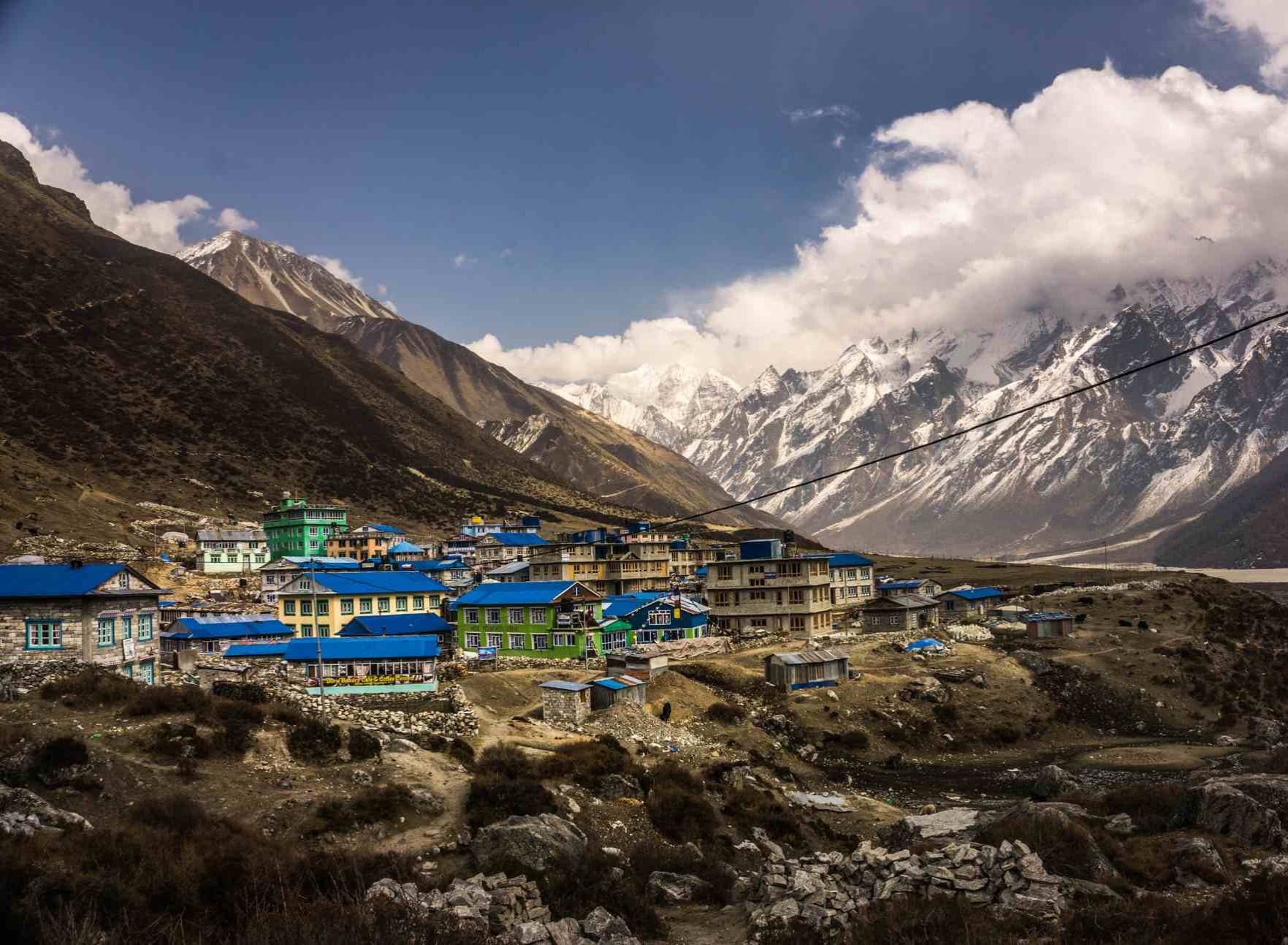
Today is the day the landscape completely changes and blows your mind. You leave the trees behind entirely. The valley opens up wide, and suddenly you are surrounded by massive snow-capped peaks on all sides. You pass through the rebuilt Langtang Village, which is a very emotional place due to the earthquake history. From there, it is a steady, breathtaking climb up to Kyangjin Gompa. The altitude will make you breathe heavily. Nepal High Trek guides keep the pace painfully slow here on purpose. When you finally arrive, you are in a high alpine wonderland with a famous cheese factory waiting for you.
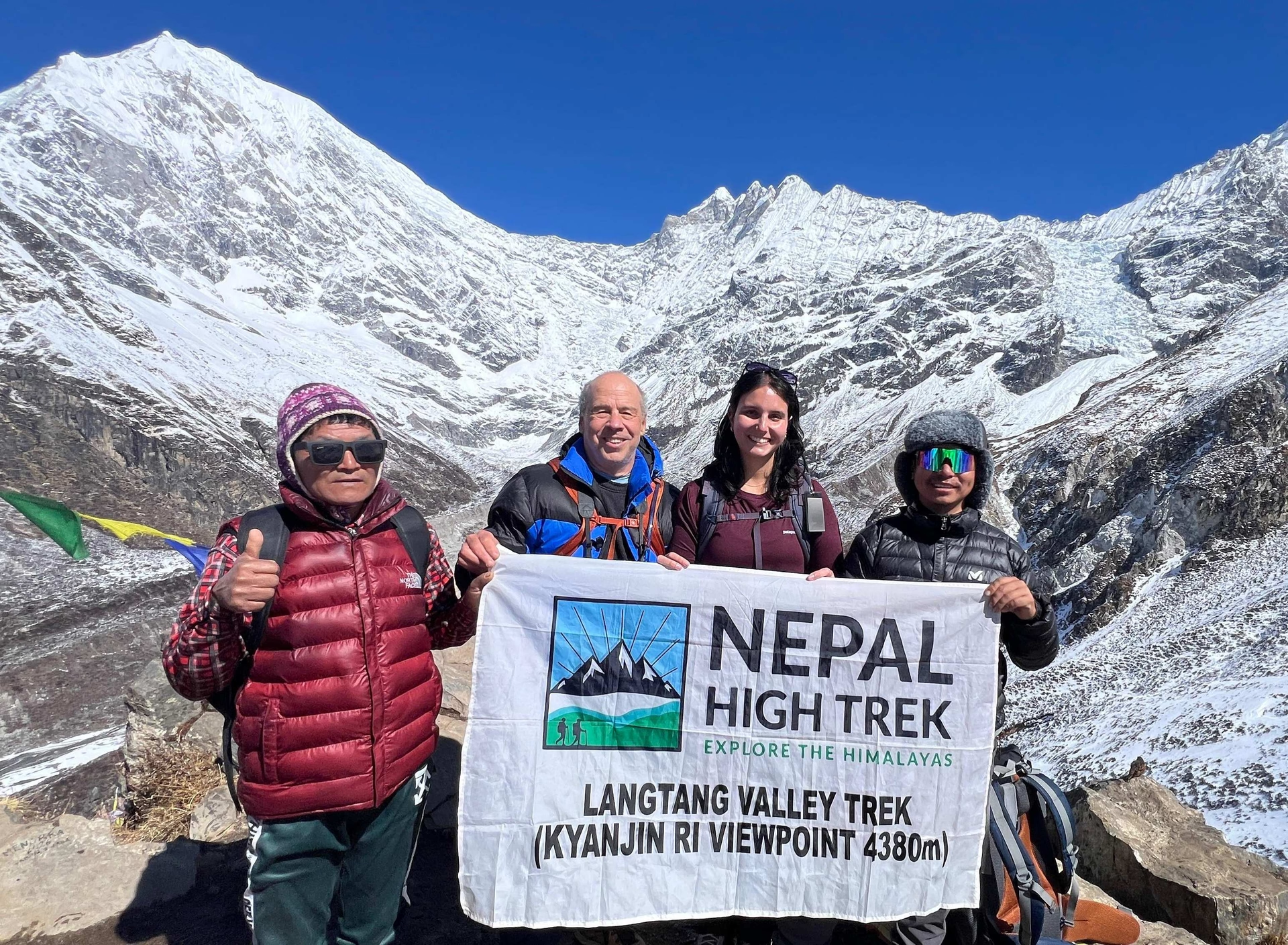
In the afternoon, we will climb Kyanjin Ri and observe amazing sunset as well as the scenery of surrounding landscapes, valleys, and mountains. After spending some time at the top, we will return back to our tea house in Kyanjin Gompa. Overnight in a tea house
- 04
Day 4:Day 04: Trekking to Lama Hotel 6-7 hours
Now it is time to start heading back down. You wake up surrounded by freezing cold mountains, eat breakfast, and begin the descent. Because you are dropping in altitude, your lungs will feel like superchargers. You will cover ground incredibly fast. You retrace your steps through Langtang Village and Ghoda Tabela, dropping back down into the dense green forests Lama Hotel. Overnight in a tea house
- 05
Day 5:Day 05: Trekking to Syabrubesi 5 -6 hours
This is your final day on the actual trail. It is a relatively short and sweet hike back to where this whole crazy journey started. You follow the river downstream, mostly downhill, weaving through the bamboo forests. After about 4 to 5 hours, the tin roofs of Syabrubesi appear. You made it. Nepal High Trek throws a little celebration dinner for you tonight. Enjoy with your trekking crew members to celebrate amazing trekking trip.
Day 6:Day 06: Drive to Kathmandu
It is time to face the bumpy road one last time. We pack up the jeep or board the bus early in the morning for the 7 to 8 hour drive back to the chaos of Kathmandu. Nepal High Trek drops you off right at your hotel. You say goodbye to your guide, grab a massive city dinner, and start sorting through the hundreds of incredible photos you just took. The trip ends today! You can consult with our office representative for other logistics arrangement until your departure time from Kathmandu.
Are you looking to customize the trip itinerary?
If the provided schedule is not suitable for you, we can create a personalized travel arrangement tailored to your preferences and requirements.
Cost breakdown
What's included
Government license holder and knowledgeable guide (Including guide’s salary, meals, Accommodation & insurance)
Kathmandu to Syabrubensi and Syabrubensi to Kathmandu by sharing
Langtang National Park permit fees.
5 nights accommodation during the trek (1 private room for each 2 client)
Medical supplies (first aid kit will be available)
What's not included
Your Travel and rescue insurance.
Meals and drinks in mountain and city
Private jeep and porter cost.
All bar bills and personal expenses such as hot, phone calls, laundry service, battery recharge, a bottle of water, hot water, shower.
Tips for the guide and porter.