
How Much Does the Manaslu Circuit Trek Cost?
The Manaslu Circuit Trek cost typically depends on the trek duration, group size, accommodation, transportation, guide services, and package inclusions. A standard trek commonly costs around US$9,000–$2,000 per person, while private or upgraded packages can cost more.

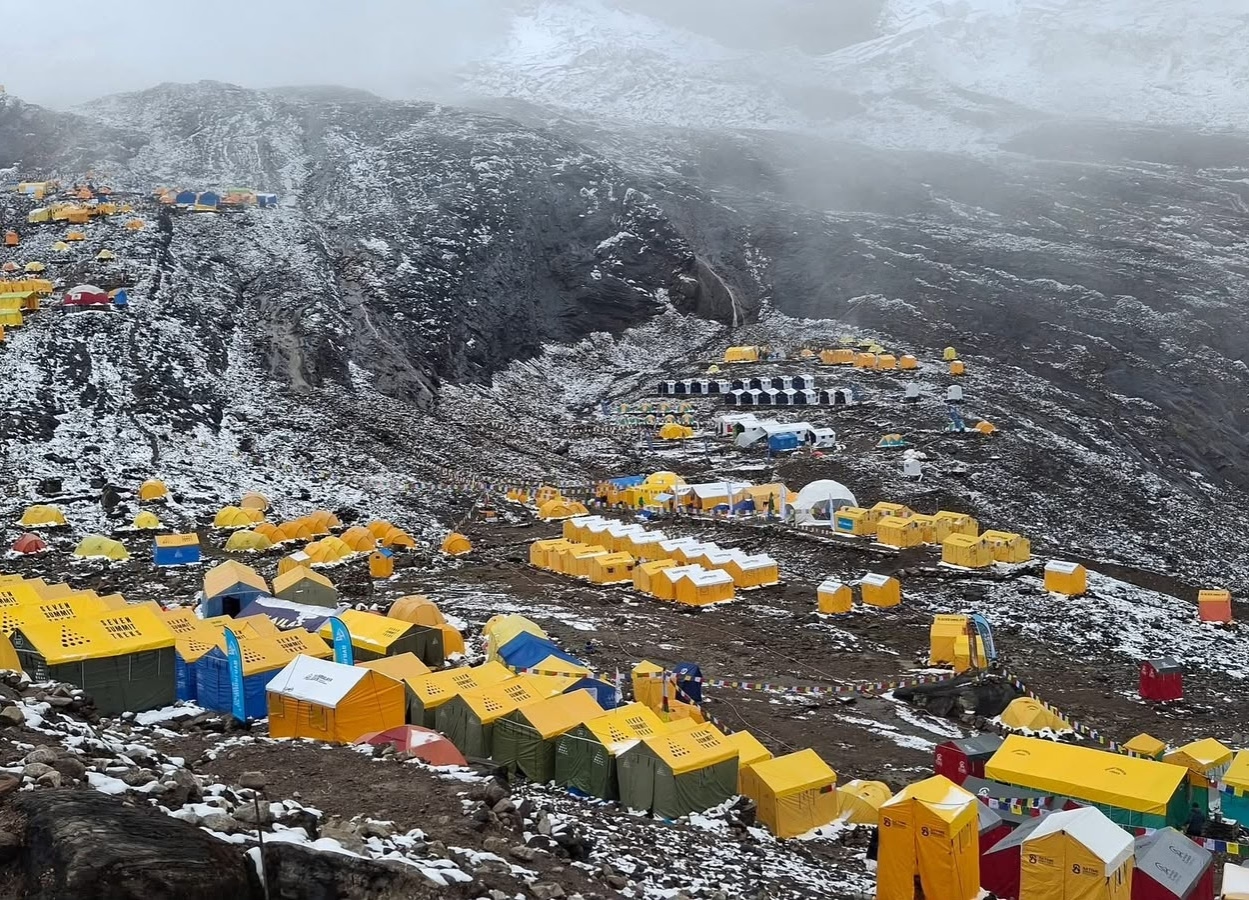
Expect to spend anywhere from $900 to $2,000 depending on how you run the logistics. How much does the Manaslu Circuit Trek Cost? Well, it's a massive gap, I know. But doing it rough and ready costs peanuts compared to a fully catered private expedition. Are you paying an international agency? Double that figure right now. Honestly, the final bill boils down to your comfort threshold and whether you prefer flying solo with a local guide or handing the headache over to a big company. Therefore, the cost of the trek largely depends upon the preferences of a traveler.
If you want a rough snapshot, let’s break it down simply. Set aside about $1,000 to $1,400 for a standard 14-day trip if you book locally. Permits eat up a decent chunk of that. Guide fees? About $25 to $30 a day. Food and a bed? Factor in maybe $30 to $40 daily once you hit the trail. Transport is a wild card. Taking the local bus might cost $15, while hiring a Jeep sets you back a few hundred. That said, always stuff an extra $200 in your pocket for emergencies, fancy coffees in Samagaon, or unexpected extra days on the mountain. However, if you add Tsum Valley Trek for you have to pay around $600 to $700 and this trek can do as single.

Manaslu Circuit Trek
View detailsThe Nepal High Trek is one of the best trekking companies to operate travel activities in the Manaslu region! Note down that the company has trekking crew members from guides to porters from the Manaslu region. Flexible itinerary and open pricing on trekking packages mean that you can fully trust the company in terms of the Manaslu Circuit Trek cost.
Let’s know in detail about different aspects that surround the question “how much does the Manaslu Circuit Trek cost?” in this section of the blog.
What Actually Determines the Price of a Manaslu Circuit Trek?
Group size completely skews the math. Solo trekkers pay a heavy premium. Why? Because you shoulder the entire cost of the guide and transport yourself. Then there’s the agency factor. Western trekking companies charge a fortune to essentially hire local operators anyway. Honestly, just book local. Your itinerary length matters too.
Every extra day acclimatizing means another day of paying for food, tea house beds, and your guide's wages. Oh, and the time of year. Autumn permits cost more than spring permits. It’s annoying, but the government sets those rules. Small choices just stack up over a couple of weeks.
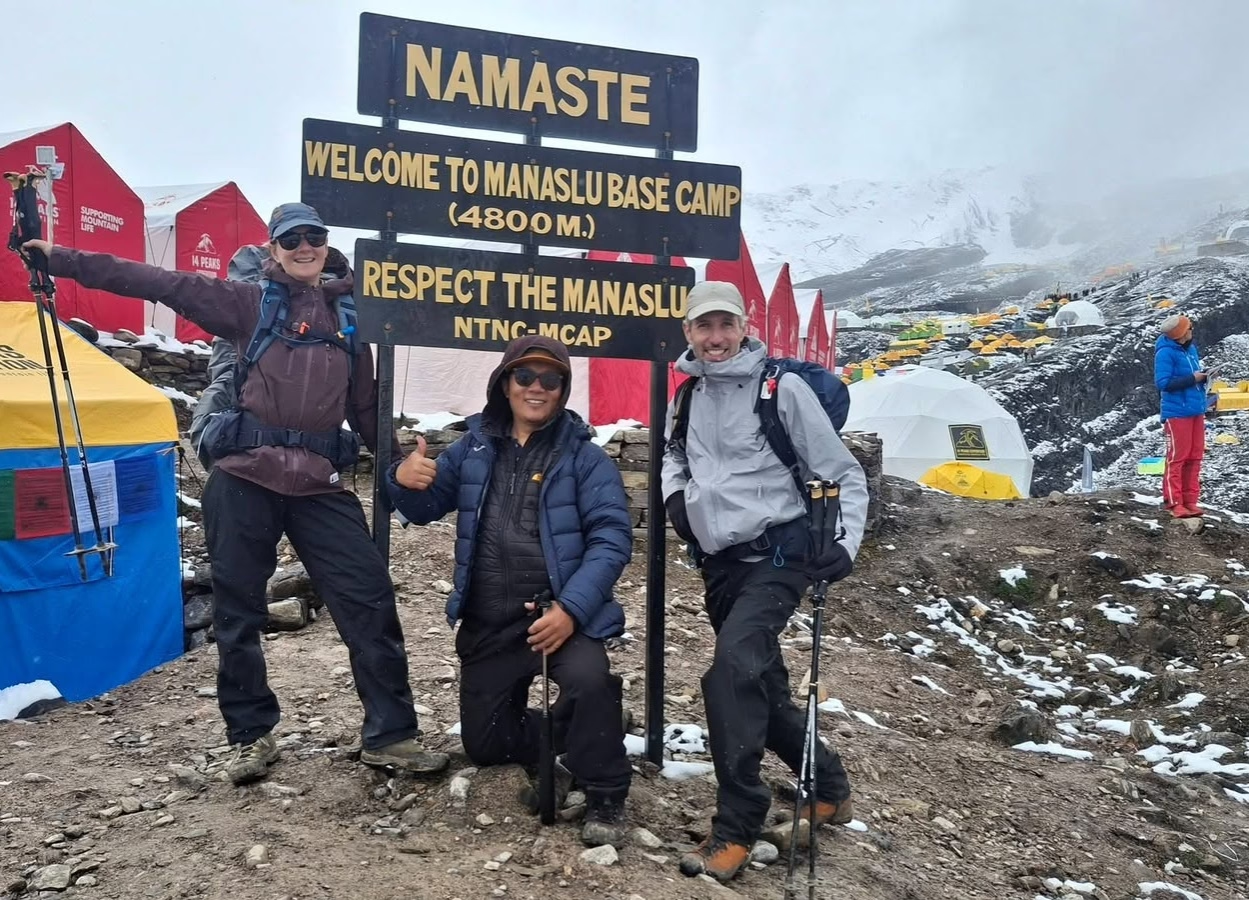
Manaslu Trek Package Cost vs. Independent Trekking Expenses
Here's the catch. You can’t legally trek Manaslu fully independently. The government forces you to hire a licensed guide. So, your "independent" trek is basically just you paying a guide directly and buying your own meals as you go. Buying an all-inclusive package fixes your costs upfront. It’s stress-free. But going the semi-independent route? You pay for everything piecemeal. It might save you a couple of hundred bucks in the end if you eat cheap dal bhat every day and skip the hot showers. If you like knowing exactly what you’ll spend before you even land in Kathmandu, grab a package.
How Much Do Manaslu Restricted-Area and Conservation Permits Add?
Permits are a massive headache here. They aren't cheap. You need three different ones. The Manaslu Restricted Area Permit is the heavy hitter. If you go in autumn (September to November), it’s $100 for the first week, plus $15 for every extra day. Spring? A bit kinder at $75 for the week. Then you drop another $30 for the Annapurna Conservation Area Project permit, and $30 more for the Manaslu Conservation Area Project permit. You can’t get these yourself, either. Only registered agencies can issue them. So factor in around $150 to $200 just for the paperwork before you even tie your boots.

Tsum Valley Manaslu Circuit Trek
View detailsGuide and Porter Costs on the Manaslu Circuit
You have to have a guide. No way around it. A good, English-speaking local guide runs about $25 to $35 a day. Worth every penny. They keep you alive when altitude sickness creeps in. Porters are optional, but carrying 15 kilos over a 5,100-meter pass is miserable. Trust me. Hiring a porter costs around $20 to $25 daily. Usually, two trekkers share one porter, splitting the cost. Don't forget to tip. Seriously, it's expected and they bust their backs for you. Earmark about 15% of their total wages as a thank-you at the end of the trip. It adds up, sure, but it’s fair.
Accommodation Costs: What Changes From Lower Villages to High Altitude?
Down low, tea houses are dirt cheap. We’re talking $3 to $5 a night for a twin room. But don't celebrate yet. As you climb higher towards Samdo or Dharmasala, the prices creep up. Why? Mules have to carry building materials up a mountain, that's why. But here is the real kicker. Tea house owners make their money on food, not beds. If you sleep there but eat dinner somewhere else, they’ll slap a massive surcharge on your room. It’s an unwritten rule. Some places even waive the room fee entirely if you agree to eat all your meals in their dining hall.
Food and Drinking Water Costs During the Manaslu Trek
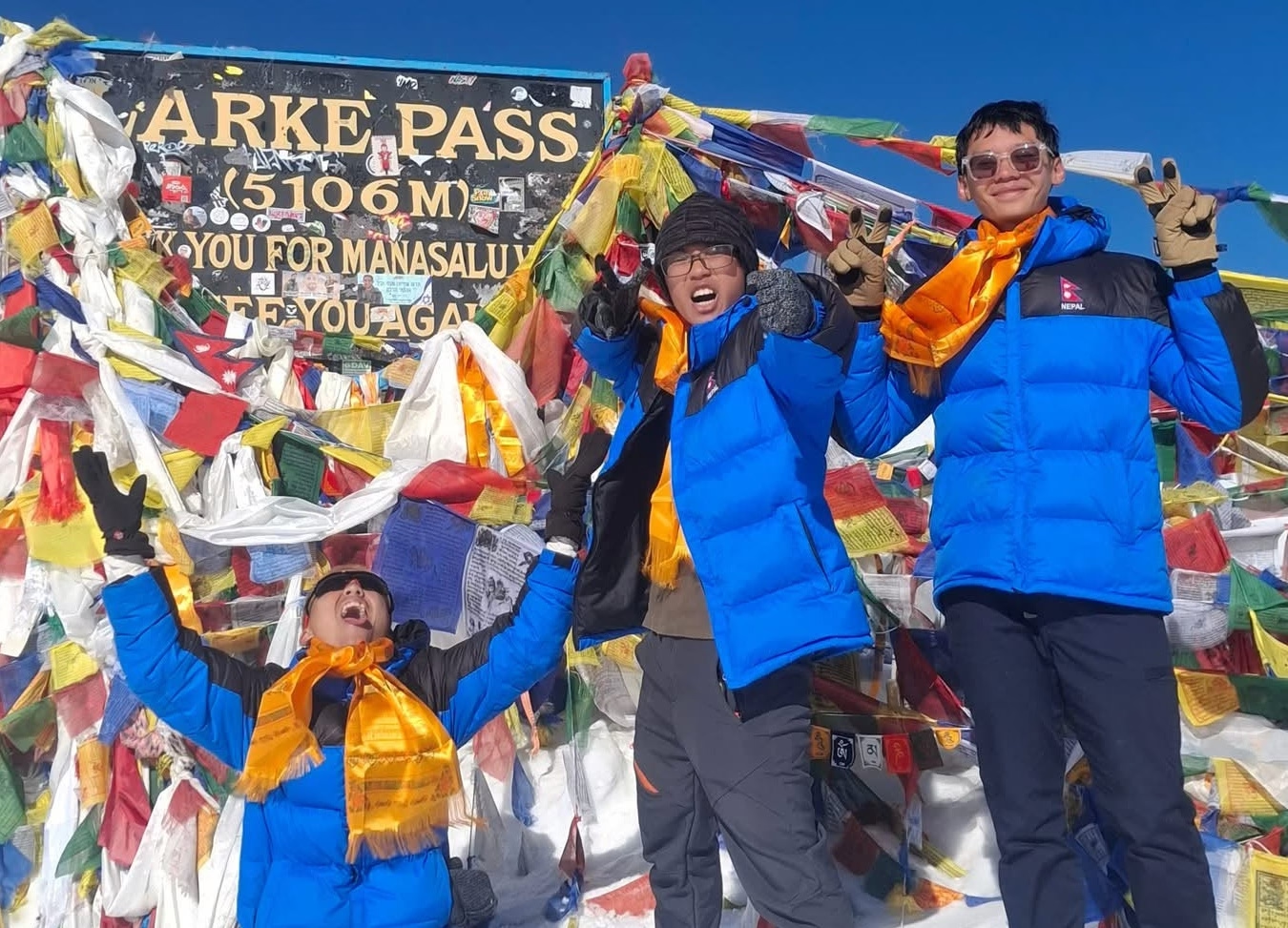
Dal bhat power, 24 hour. You'll hear that a lot. Down in Soti Khola, a massive plate of dal bhat costs maybe $3. Up at 4,000 meters? Prepare to pay $8 or $9. A simple bowl of garlic soup will set you back $4. Bringing a water filter is a game-changer. Bottled water isn't just terrible for the environment; it’s ridiculously expensive up high. You might pay $3 for a single liter in Samdo. Just filter the tap water. You’ll drink four liters a day, which means filtering saves you enough cash over two weeks to pay for a guide.
Transportation Costs From Kathmandu to the Manaslu Trailhead
Getting to the start of this trek is a bumpy nightmare. You’ve got choices, though. The local bus from Kathmandu to Machha Khola costs about $15. It takes 10 to 12 hours, stops everywhere, and your knees will hate you. Want comfort? Hire a private Jeep. That’s gonna cost you between $200 and $250. Split that between four people, and it’s actually totally reasonable. The dirt roads are rough, often washed out by landslides. Sometimes the bus drops you miles from the real trailhead, meaning you have to shell out for a local tractor or Jeep anyway to close the gap.
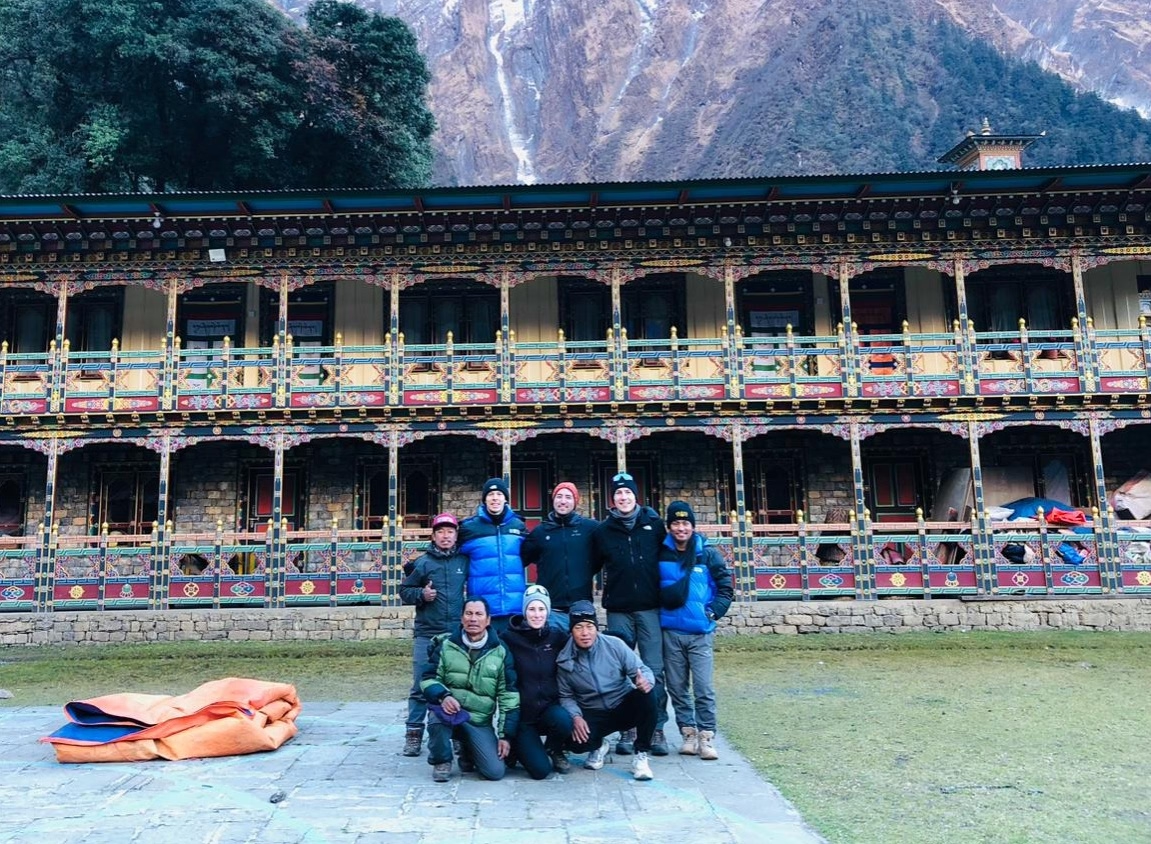
Manaslu Circuit Trek with Serang Gompa
View detailsHow Much Extra Money Should You Carry Beyond the Trek Package?
Even with an all-inclusive package, your wallet isn't safe. You need hard cash on the mountain. Agencies cover basic food and lodging, but they don't pay for your Snickers bars or that celebratory Everest beer at the end. Carry about $200 to $300 in Nepali rupees. Why? Because you’ll want hot showers. You’ll want to charge your phone. You’ll definitely want Wi-Fi to tell your mom you survived the pass. Plus, you need cash to tip your guide and porter at the end. There are zero ATMs once you start walking. Run out of rupees, and you’re begging your guide for a loan.
The Hidden Costs Travelers Often Miss When Calculating Manaslu Trek Cost
People always forget the petty cash stuff. It bleeds you dry. Charging your phone? $2 to $5 a pop. A bucket of hot water to wash off three days of sweat? Another $5. Wi-Fi cards cost a few bucks and barely work. And let’s talk about gear. Did you rent a sleeping bag? Buy trekking poles? What about your travel insurance? High-altitude helicopter evacuation insurance is mandatory and runs around $100 to $200. These aren't technically trek costs, but they leave your bank account anyway. Budgeting just for flights and the agency fee is a rookie mistake.
Why Private Manaslu Circuit Treks Cost More Than Group Departures
Sharing is cheaper. It’s basic math. Jump on a fixed departure with eight strangers, and the agency splits the cost of the Jeep, the lead guide, and the permits across everyone. If you want a private trek—just you, your partner, and a guide—you absorb all those base logistical costs yourselves. The Jeep alone adds a heavy hit per person. But honestly? Private is better. You walk at your own pace. If someone in a large group gets sick, the whole itinerary gets derailed. Paying the private premium buys you control, flexibility, and a lot less annoying chatter at the dinner table.
Manaslu Trek Cost After Recent Trail and Road Changes
The road is creeping further up the valley every year. It used to take weeks; now you can drive halfway to the snowline. This actually shifts the budget. You spend less time walking the lower sections, which cuts down on daily wages and tea house bills. But the flip side? Jeep syndicates know they have a monopoly on those rough mountain tracks, and they charge steep fares. So, you trade three days of cheap trekking for one day of expensive off-road driving. Overall, the trek is getting slightly shorter, which technically makes the baseline cost lower. But the remote charm? That’s shrinking fast.
.avif)
Manaslu Circuit Budget Trek
View detailsHow to Compare Two Manaslu Trek Prices Without Comparing Only the Final Figure
Look closely at the inclusions. One company quotes $1,000, another quotes $1,300. The cheap one looks great until you realize it doesn't include the Jeep, forces you on a public bus, and makes you pay for your own dinners. Suddenly, that $1,000 trek costs $1,400 out of pocket. Does the package include three cups of tea a day, or just one? Is the guide a seasoned pro or a kid on his first trip? Are accommodation costs covered in Kathmandu? Don't just look at the bottom line. Rip the itinerary apart and see who is actually buying your dinner.
Frequently asked
Nepal High Trek
Travel writer and passionate explorer sharing stories and expert guides from the heart of the Himalaya.