Nepal High Trek
Contact Us

Tsum Valley Manaslu Circuit Trek

💚 99% Recommended

by verified travelers

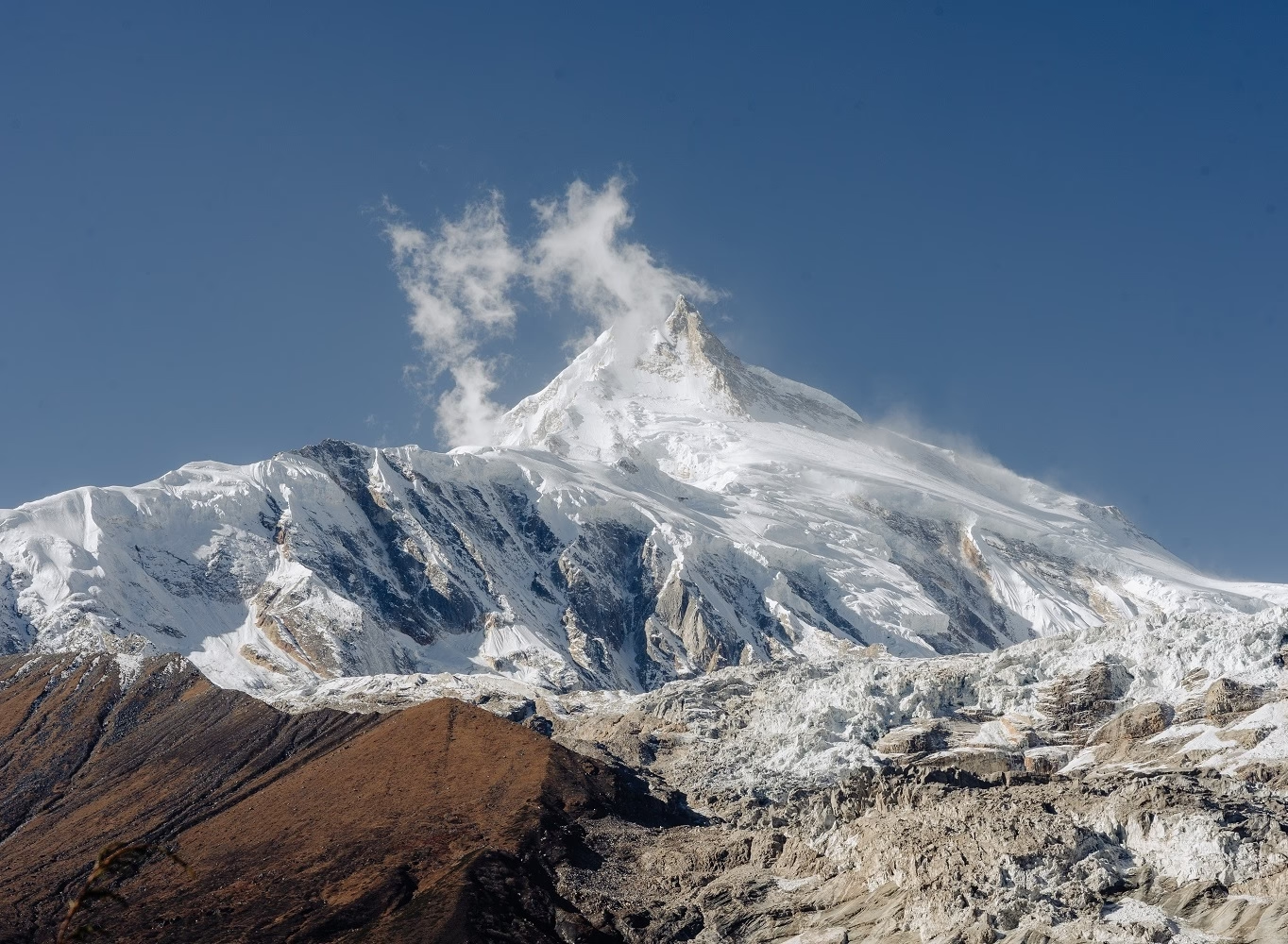
The Tsum Valley Manaslu Circuit Trek is an extraordinary long detour journey in the Manaslu region of Nepal that combines remote Tsum Valley and the classic Manaslu Circuit Trek route. Traverse through isolated mountain villages, ancient monasteries, and untouched Himalayan landscapes. From sacred Tsum Valley to the top of Larke La Pass (5106 m), explore the home of the world’s 8 th tallest mountain, Mt. Manaslu (8163 m). Get to know about the culture and traditions of the Tsum and Nubri People.
Duration
20 days
Difficulty
Moderate
Max Altitude
5106 m
Destination
Nepal
Activity
Trekking
Accommodation
Hostels & Guesthouses
Group Size
2
Transport
Drive
Meals
B.D.L.
Season
Sep - Dec & Feb- June

Trip overview

If you want to explore entirety of Manaslu region then try our Tsum Valley Manaslu Circuit Trek package. It allows you to understand Manaslu region’s great mountain wonders and unique culture of people living in the region. Moreover, this detour trekking trip in Nepal offers great insights of authentic rural environment of Hilly and Himalayan regions of the country.

Please check out our Manaslu Circuit Trek and Tsum Valley Trek package to book these two of the most popular trekking routes of the region. Our travel planners have put forward the perfect itinerary to explore the whole Manaslu region. Do you know that people who have already visited Tsum Valley Trek or Manaslu Circuit Trek in one single trip always support this itinerary? It is the most satisfying and cost saving trekking trip to do in Nepal to explore the entirety of the Manaslu region.

Tsum Valley Trek in Nepal is the short trekking route of the region and the Manaslu Circuit Trek is a detour trekking trail. Combining these two destinations will always endow the best trekking experience inside the Manaslu Trekking routes!

Tsum Valley Trek Route Overview

Trekkers trek to Tsum Valley before continuing their journey of Manaslu Trek. During the Manaslu Circuit Tsum Valley Trek, trekkers follow the similar trekking itinerary until Machhakhola. A bus or jeep drive will take trekkers to Machhakhola. Trekking starts from this place and trekkers head towards Jagat on a first day of the trekking. After traversing through villages like Lokpa, Chumling, and Chhokangparo, trekkers reach the Mu Gompa monastery the nerve center of Tsum Valley. The monastery is believed to have built by Guru Rimpoche himself back in the 7th century. Therefore, it is mystical to trek up to this monastery. After visiting the monastery, trekkers return back to Nile and stay overnight to continue their trekking trip of Manaslu Circuit Trek by meeting the trekking trail at Deng.

Manaslu Circuit Trek Route Overview

After visiting the Tsum Valley locale, trekkers meet the Manaslu Circuit Trek in Deng traversing via Chumling from Nile. This is the long trekking trip. Therefore, the travel planners of Nepal High Trek have kept two more acclimatization days. This offers safe and increases the success rate of the trek. Moreover, in high altitude trekking, trekkers shouldn’t become complacent rather they have to follow the procedures diligently. Always heed the instructions of your trekking guide and follow the guidelines honestly. It ensures successful and momentous trekking experiences.

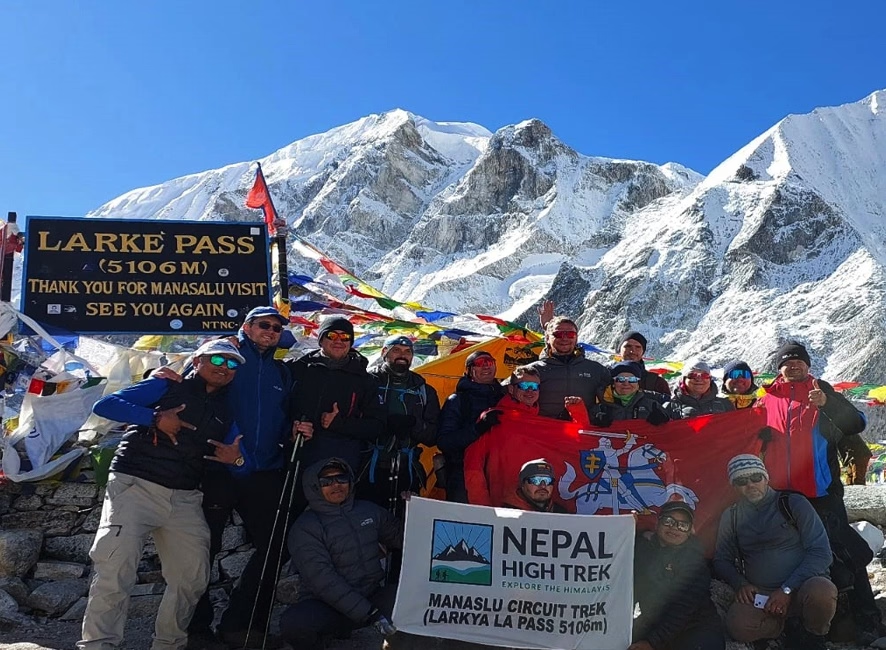
Trekkers cross the Larke La Pass (5106 m) traversing through places like Shyala, Samagaon, Samdo, and Dharmasala.

Acclimatization for Tsum Valley Manaslu Circuit Trek

There are three acclimatization rest days during the Tsum Valley Manaslu Circuit Trek in Nepal. The journey traverses as high as 5106 m. Therefore, proper acclimatization is necessary to create safe and momentous trekking experiences. The first acclimatization activity is done in Nile. Trekkers trek to Mu Gompa the oldest monastery of the region from Nile and return back for overnight sleep.

The second acclimatization is done in Samagaon. If you are not tired and wish to reach the base camp of the world’s 8th tallest mountain Mt. Manaslu then you can do this activity. Otherwise, you can hike for about 2 to 4 hours of round trip to Birendra Lake. The choice is yours. The third acclimatization is interesting as trekkers hike to the Tibetan Border at Rui La (4998 m). All these acclimatization activities help you to successfully navigate through high altitude places of the Manaslu Trekking route.

Do I need to separate permits for Tsum Valley and Manaslu Circuit Trek?

You don’t need to take separate permit for Tsum Valley and Manaslu Circuit Trek. This is the single trip and you can trek on this trekking route by using the single permit. However, you must have special immigration permit and Annapurna Conservation Area Permit too. Interestingly, for single Tsum Valley Trek you don’t require Annapurna Conservation Area Permit. Trekking journey during Tsum Valley Trek doesn’t take trekkers to the Annapurna region.

Best Time to do Manaslu Circuit Tsum Valley Trek

Months of autumn and spring season in Nepal are the best time to do Manaslu Tsum Valley Trek. During this time of the year, trekkers can get best glimpses of mountains and scenery. The weather is clear and climate is warm or cool. There is less chance of landslide and flood. The trekking route is landslide and flood risky trail. Therefore, trekking in monsoon season is not possible. Winter season is very arduous due to presence of snow and less availability of tea houses in the route.

Why Solo Trekking is not allowed in Manaslu Region?

Nepal has kept few places as a restricted trekking regions. It is to protect the unique culture and nature of the place. Therefore, the trekking trails of these restricted regions are less trekked. People may get lost while trekking solo. In order to protect the lives of people and also to maintain the sustainability of the trail, Nepal Government doesn’t allow solo trekker. Moreover, trekking without an aid of a trekking is also not possible in these restricted regions and same is the case with the Manaslu region. You must trek in a group of at least 2 trekkers and must be a guided trekking trip.

Nepal High Trek is the best Trek operator for Manaslu Region

Every year more than 75 trekking groups trek on the trekking routes of Manaslu Region by using services of Nepal High Trek. Our trekking planners and crew members are from the region. Therefore, our budget and information is trekker friendly. We provide authentic information and also provide the best success rate. Most of the agency focuses on gaining rather the Nepal High Trek focuses in providing impeccable hospitality at an affordable cost and promoting its own place. In fact, the founder of the Nepal High Trek is from the region. It is important to this agency also to maintain sustainable trekking activities in Manaslu Region.

Book the Tsum Valley Manaslu Circuit Trek package in Nepal in 2026/27 with us. You will visit the century old monasteries, cross the high altitude mountain passes, and witness the gorgeous views of gigantic snowy mountains including the sight of the world’s 8th tallest mountain.

Itinerary

Altitude profileMax 4,800 m
1,387 mD1905 mD21,410 mD32,240 mD42,386 mD53,031 mD63,361 mD73,700 mD82,470 mD91,860 mD102,660 mD113,500 mD123,560 mD134,800 mD143,860 mD154,460 mD163,690 mD17665 mD181,375 mD191,375 mD20
  1. Day 1:Arrival in Kathmandu Nepal (1387m)

    1,387 m35mHotel

    Our airport representative will receive you at the airport and transfer you to the hotel in Thamel or to an agreed hotel. All trip details and formalities will be completed. You will be introduced to your trekking guide and all the last minute shopping is done. Overnight at Hotel

  2. 02

    Day 2:Drive to Machha Khola (905 m, 160 km, 9 to 10 hrs

    905 m9/10 HrsGuest HouseB/L/D

    Early in the morning after breakfast we will take either private jeep or local bus to Machha Khola. The drive is long and about 24 kilometers is on graveled road. It may be tiring but the scenery helps you to forget about all the hassles of the road trip. Enjoy the majestic views of rivers, hills, villages, and valleys. Overnight at lodge

  3. 03

    Day 3:Trek to Jagat (1340 m, 16 km, 6 to 7 hrs

    1,410 m7/8 HrsGuest HouseB/L/D

    Today is the first day of trekking. The trail is a newly constructed hilly road. There is no uphill and the trail is alongside the shores of Budi Gandaki River. We will have lunch in Dovan and continue our trekking to Jagat. We will reach the village of Jagat which is mainly habituated by multicultural people of different castes with Gurung being a majority. Overnight at tea house

  4. 04

    Day 4:Trek to Lokpa (2240 m, 13 km, 6 to 7 hrs)

    2,240 m6/7 HrsGuest HouseB/L/D

    Early in the morning we will start our trek after breakfast. On this day we will have to do 1 hour of uphill trekking from Nyagphedi to Lokpa. Until Nyagphedi the trail is okay on a Nepalese flat terrain. The lunch stop will be at Chisapani. This day is also relatively easy for trekkers! Overnight at tea house.

  5. 05

    Day 5:Trek to Chumling (2386 m, 7 km, 4 to 5 hrs)

    2,386 m5/6 HrsGuest HouseB/L/D

    Once we start our trek from Lokpa, we will have to walk in the biggest landslide area. Make sure that you maintain your uniform pace and heed the instruction of your trekking guide. Watch out for falling stones. After crossing the landslide area, we will be walking through green lush forests of pine, fig, and coniferous trees. We will not stop for lunch today as we will reach the Chumling in about 4 to 5 hours and have our lunch in Chumling. Overnight at tea house

  6. 06

    Day 6:Trek to Chhokangparo (3031 m, 8 km, 5 to 6 hrs)

    3,031 m6/7 HrsGuest HouseB/L/D

    After breakfast, we will do small exercises and get ready for today. This is one of the risky day of trekking even if there is not steep uphill and downhill. The trail passes through ridges and we must be careful about falling stones. On this day we will have lunch on the way before heading to the village of Chhokangparo. This is the biggest village of Gurung of Tibetan origin. Overnight at teahouse

  7. 07

    Day 7:Trek Nile (3361 m, 10 km, 5 to 6 hrs)

    3,361 m5/6 HrsGuest HouseB/L/D

    On this day also there is no steep uphill but you must not feel complacent. There is a gradual ascent! We will have our lunch either in Lamagaon or we will reach Nile directly to have lunch. The decision is with trekking guide. Overnight at tea house

  8. 08

    Day 8:Acclimatization Day at Nile; Hike to Mu Gompa (3700 m, 4.3 km, 3 to 4 hrs)

    3,700 m6/7 HrsGuest HouseB/L/D

    Today we will have to walk uphill but the trail is a newly built road. However, you will not see any vehicles besides bulldozer and tractor. Mu Gompa is a century old monastery believed to have been built by Guru Rimpoche. After spending some time in the monastery, we will return back to Nile. Overnight at tea house

  9. 09

    Day 9:Trek to Chumling (2470 m, 17 km, 6 to 7 hrs)

    2,470 m6/7 HrsGuest HouseB/L/D

    We will retrace back to Chumling and the trail is relatively easy as we will be trekking to low altitude destination from high altitude places. You can enjoy the scenery of mountains and hills more while retracing back to low altitude places. Overnight at tea house

  10. 10

    Day 10:Trek to Deng (1860 m, 15 km, 5 to 6 hrs)

    1,860 m6/7 HrsGuest HouseB/L/D

    After breakfast we will have to downhill trekking to Nyangphedi. Beware of your knees as trekking downhill comes up with high risk of knee lock. Therefore, don’t over run rather trek uniformly. We will have to walk uphill for some time to reach Deng from Nyangphedi. Overnight at tea house

  11. 11

    Day 11:Trek to Namrung (2630 m, 15 km, 6 to 7 hrs)

    2,660 m7/8 HrsGuest HouseB/L/D

    Today we will have to walk for about 2 to 3 hours on a uphill trekking trail. Rest of the trekking trail consists of gentle flat, uphill and downhill. We will traverse through villages like Gaap, Rana Gaon, Bhiphedi etc. Lunch will be at Gaap. The scenery of Shyaula peak is the highlight of this day. Overnight at tea house

  12. 12

    Day 12:Trek to Shyala (3500 m, 16 km, 7 to 8 hrs)

    3,500 m7/8 HrsGuest HouseB/L/D

    We will have to walk through Nepalese flat up to Lho village and from this village we will be walking uphill up to Shyala with some gentle flat sections on ridges. Lunch will be in Lho village. We will get the iconic images of Mt. Manaslu once we have reached Lho village all the way up to Shyala village. Overnight at tea house

  13. 13

    Day 13:Trek to Samagaon after visiting Pungen Gompa (3500 m, 11 km, 5 to 6 hrs)

    3,560 m6/7 HrsGuest HouseB/L/D

    Today is an easy day to trek as we will trek in a gentle flat. Before reaching Samagaon we will visit Pungen Gompa. The monastery is one of the oldest. The major highlight of this day is the scenery of mountains like Manaslu, Himalchuli, Ngadi Chuli, etc. Samagaon is the last biggest village on this trekking route. You can visit the village and understand the lifestyle of the people. The major occupation of the people of Samagaon is potato farming. However, nowadays people are involved in tourism business too along with the rearing castles. Overnight at tea house

  14. 14

    Day 14:Acclimatization Day Hike to Manaslu Base Camp (4800 m) or Birendra Lake (3900 m) 7 to 8 hrs

    4,800 m7/8 HrsGuest HouseB/L/D

    Acclimatization is very crucial as from today we will enter places above 3500 m altitude from the sea. Decide with your trekking guide whether to visit Manaslu Base Camp (4800 m) or visit Birendra Lake. Trekking to base camp of Mt. Manaslu is strenuous but it is equally legendary and momentous. Imagine leaving your footprints at the base camp of the world’s 8th tallest mountain Mt. Manaslu. Overnight at tea house

  15. 15

    Day 15:Trek to Samdo (3860 m, 3 to 4 hrs)

    3,860 m4/5 HrsGuest HouseB/L/D

    We will walk through scattered alpine forests crossing several streams. Today’s trekking is through narrow valleys and on the ridge but the trail doesn’t have any steep uphill section. Therefore, you will easily navigate to Samdo. Overnight at tea house

  16. 16

    Day 16:Trek to Dharmashala (4460 m, 6 km, 4 to 5 hrs)

    4,460 m4/5 HrsGuest HouseB/L/D

    We will enter the treeless areas on this day and cross the 4000 m altitude. Please be careful and always state your condition to your trekking guide. Overnight at tea house.

  17. 17

    Day 17:Trek to Bhimtang (3690 m via Larke La Pass (5106 m, 16 km, 8 to 10 hrs)

    3,690 m7/8 HrsGuest HouseB/L/D

    Today is the biggest day of our trekking. Around 3:30 am in the morning we will start our quest to cross the Larke La Pass (5106 m). It is very arduous yet very rewarding in terms of scenery. We will enter the Annapurna region today. Lunch will be at Larke Phedi and we will continue our trek to Bhimtang. Overnight at tea house.

  18. 18

    Day 18:Trek to Tilje - 4/5 hrs (1960m) then drive to Besisahar by local sharing jeep - 3hrs (760m)

    665 m7/8 HrsGuest HouseB/L/D

    After breakfast, we will trek towards Tilje on a trekking trail. From Tilje we willdrive to Besisahar by local sharing jeep and it takes 3-4 hours. Therefore, it is an easy day to trek. In the evening, we will celebrate our successful completion of the trekking. We will bid farewell to our porters. Therefore, today you will have to provide tips to all trekking crew members. Tipping is not compulsory but they expect it. Overnight at the tea house in Besisahar.

  19. 19

    Day 19:Drive to Kathmandu or Pokhara (8 to 9 hrs)

    1,375 m7/8 HrsHotelB/L

    We will take whether a local bus or a jeep to Kathmandu traveling through places like Besisahar, Dumre, Mugling, and Malekhu. The agency will hold a farewell dinner and discuss the events of the trek. Overnight at Hotel

  20. Day 20:Final Departure

    1,375 m35mB/B

    Our airport representative will take you to the international airport and bid farewell.

Are you looking to customize the trip itinerary?

If the provided schedule is not suitable for you, we can create a personalized travel arrangement tailored to your preferences and requirements.

Customize Trip

Cost breakdown

What's included

  • Airport Pick up and drop off service by private car.

  • Two night boutique Hotel in Katmandu with breakfast.

  • Three times meals throughout the trip (Breakfast, lunch, and Dinner)

  • Government license holder knowledgeable and experienced trekking Guide

  • Special Tsum Valley and Manaslu trek permit.

  • Tsum Valley Rural municipality entrance fee.

  • Annapurna conservation area permit.

  • Kathmandu to Machhakhola and Besi Sahar to Kathmandu by local bus.

  • Thre times tea or coffee per day.

  • During the trek fresh fruit.

  • Nepal High Trek’s down jacket and sleeping bags, trekking pole and Tshirt.

  • The arrangement of Emergency Helicopter service which will be paid by your Travel insurance company.

  • Medical supplies (first aid kit will be available).

What's not included

  • Your Travel and rescue insurance.

  • Private jeep $200 per way and porter cost $390.

  • All the Food in Kathmandu. Also in the case of early return from the mountain.

  • All the expenses in the mountain over than scheduled itinerary (due to strike, delay or canceled flight)

  • All the Bar bills and personal expenses (phone call, laundry service, battery recharge, a bottle of water, hot water, shower.

  • Tips for the guide and porter.

Dates & Availability

Filter departures by month
07Aug

Aug 7 – Aug 26, 2026

Available
$1,600pp
09Aug

Aug 9 – Aug 28, 2026

Available
$1,600pp
12Aug

Aug 12 – Aug 31, 2026

Available
$1,600pp
15Aug

Aug 15 – Sep 3, 2026

Available
$1,600pp
17Aug

Aug 17 – Sep 5, 2026

Available
$1,600pp
19Aug

Aug 19 – Sep 7, 2026

Available
$1,600pp
22Aug

Aug 22 – Sep 10, 2026

Available
$1,600pp
24Aug

Aug 24 – Sep 12, 2026

Available
$1,600pp
27Aug

Aug 27 – Sep 15, 2026

Available
$1,600pp
29Aug

Aug 29 – Sep 17, 2026

Available
$1,600pp
31Aug

Aug 31 – Sep 19, 2026

Available
$1,600pp

Trip map

Loading map…

Useful information

Why Choose the Tsum Valley Manaslu Circuit Trek?

Look, finding absolute silence in the Himalayas is getting surprisingly hard these days. You want raw isolation? This is it! We give you the best itinerary of the Tsum Valley Manaslu Circuit Trek. We always tell our trekkers at Nepal High Trek that this combined route rips you away from the usual tea-house crowds and throws you into a gorgeously unforgiving high-altitude terrain. It demands everything you’ve got. Honestly, merging the spiritual and slowly becoming commercial trail of the Manaslu Circuit Trek with Larke La Pass with tranquil and mystical Tsum Valleys will not be found anywhere else.

What Makes the Tsum Valley Different from Other Treks in Nepal?

Time seems to be stopped here. Seriously, while other trails race to build fancy bakeries and Wi-Fi towers, this hidden Tibetan culture influenced trail shows fiercely to an ancient non-violent pact where no animal is ever hunted. It feels heavy with history. That said, wandering past 500 to 700 years old nunneries as monks chant in the freezing dawn offers a spooky, mind-bending cultural shock that totally reboots your perspective on mountain living. We think it's the closest thing to time travel left in the country. Yes, it is truly the journey where you think you are in another world or another dimension of the earth.

When is the best time to do the Tsum Valley Manaslu Circuit Trek ?

Timing is a make-or-break deal for any kinds of trekking activities in Nepal. If you show up in winter, the avalanches and waist-deep snow will literally force you to turn back before you even see the high pass. Spring offers this crazy explosion of pink rhododendrons against icy peaks. But here's the catch, autumn completely sweeps away the nasty monsoon mud, leaving us with those razor-sharp, endlessly blue skies everyone constantly dreams about while planning their trip. Avoid monsoon season and choose spring and autumn for high chances and better experiences in the trail. Please note that during winter season, you may not get chance to cross the Larke La Pass due to heavy snowfall.

Weather and Temperature by Season

Expect the absolute worst situation especially when traveling to higher elevation places of Nepal. You’ll be sweating through your shirt down in the sticky river valleys at 25°C, feeling totally invincible. As you trek higher, you are shivering inside a sleeping bag at Dharmasala while the outside temperature aggressively tanks to a miserable -15°C. Honestly, the mountains write their own chaotic rules. They flip from blistering afternoon sun to white-out blizzards in minutes. So, you can’t clearly say the exact weather and temperature of the Tsum Valley Manaslu Circuit Trek route.

How Difficult is the Tsum Valley Manaslu Circuit Trek?

It will absolutely crush you if you let it. Don't underestimate this beast. We are talking about 16 to 17 days of hard core uphill and downhill walking which is knee-grinding ascents over loose rocks and terrifyingly narrow cliff ledges. While pushing your exhausted body over a 5,100-meter pass on three hours of sleep requires a massive reservoir of mental grit. Now, as a leading trekking agency, we make sure our guides pace you perfectly, but there is simply no way to fake your way through this kind of relentless vertical punishment. Please note that the trail requires good level of physical fitness and cardio – vascular abilities.

Physical Fitness and Trekking Preparation

Start doing squats right now. Seriously, hit the stairs. If your idea of a tough workout is walking the dog around a flat park, this trail is going to tear your legs to pieces by day three. You need lungs like leather. Besides, carrying a pack at 4,000 meters feels like breathing through a wet soggy straw while somebody sits heavily on your chest. We want you to enjoy the trip, not just survive it in pure agony. Train hard. Prepare well. Make sure that you can tackle the trail and complete the journey. From logistic point of view, the Nepal High Trek will not leave a single stone unturned but you must prepare well from your side.

Trek Duration and Total Walking Distance

Most of our Nepal High Trek itineraries carve out anywhere from 18 to 24 solid days to link both the hidden valley and the massive circuit together, depending entirely on your appetite for side trips. It's a marathon. You are staring down the barrel of roughly 180 to 220 kilometers of aggressively hostile terrain, meaning you'll grind out about 10 to 15 kilometers of vertical hardship every single day.

Understanding the Restricted Area Permit Requirements

Bureaucracy rules the mountains and this trail physically rubs against the sensitive Tibetan border, the Nepali government heavily restricts access to stop unauthorized wandering. You can't just buy a ticket at a random roadside booth and start walking. We have to file your original passport details directly with the Department of Immigration in Kathmandu before you even lace up your boots. Honestly, the police checkpoints scattered along the Budhi Gandaki river will absolutely turn you around if a single stamp is missing from your paperwork. They do not mess around. You must have RAP, ACAP, MCAP, and Chhumnubri Rural Municipality entry permit for this trek.

Why a Licensed Guide is Mandatory?

Going solo is completely unacceptable for any restricted areas of Nepal. Since 2015, the government has flat-out banned foreigners from wandering into the Manaslu region without a state-licensed guide glued to their side. Is it an annoying money grab? Some think so, but when a sudden rockfall wipes out the main trail or you start coughing up pink fluid at 4,500 meters, having a local expert who actually knows the emergency protocol saves your life. Besides, navigating the unwritten cultural rules of deeply conservative Tibetan enclaves without a translator usually leads to incredibly awkward, offensive blunders you want to avoid.

Minimum Group Size for the Tsum Valley Manaslu Trek

You literally needed a buddy trekker to obtain the restricted area permit until 2026. Now, you can trek solo independently but you must hire a trekking guide from registered trekking company. The immigration office refuses to issue a restricted permit unless there are at least foreign passport holder with proper travel insurance attached to the exact same guide.

Altitude Profile and Acclimatization Tips

Your body will hate you. You kick things off sweating in subtropical dirt at 700 meters, only to slowly drag your freezing body all the way up to 5106 meters at Larkya La. You absolutely must force yourself to walk at a frustratingly slow snail's pace, constantly chanting "bistari, bistari" under your breath. Climb high. Sleep low. Never break that rule. Make sure to include Mu Gompa hike in the Tsum Valley Section and the Samagaon to Manaslu Base Camp via Birendra Lake in the Manaslu Circuit Trek section for proper acclimatization.

Crossing the Larkya La Pass: What to Expect?

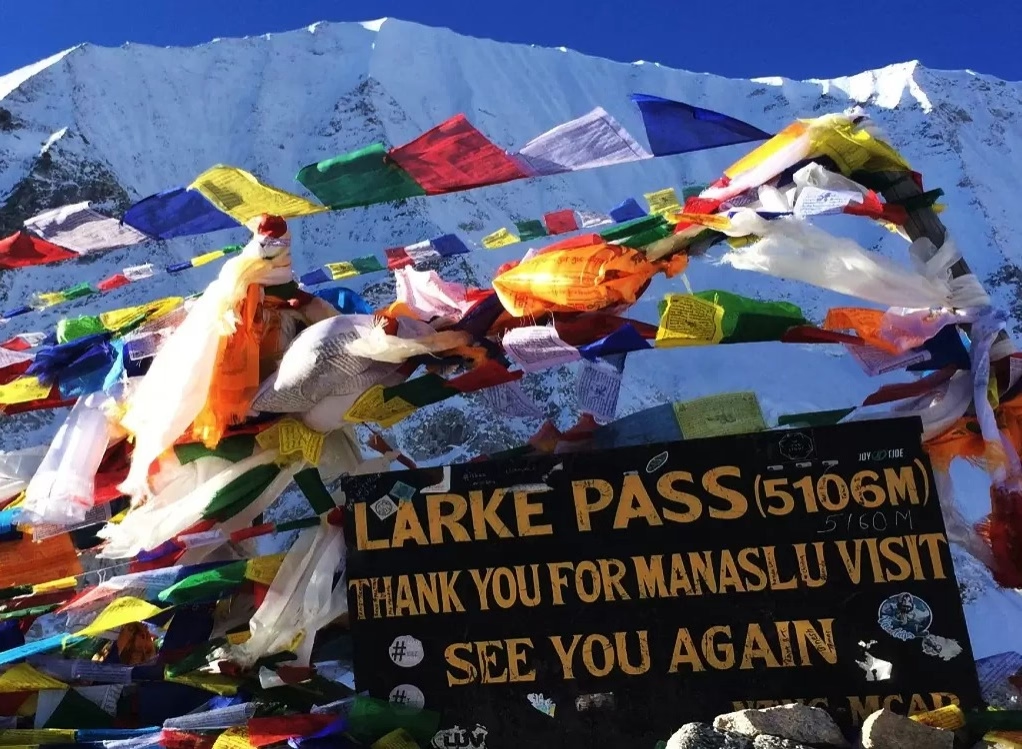
Summit day is pure, unadulterated misery mixed with magic. Your alarm sets off at 3:30 AM. You will eat very early morning breakfast before dawn before starting the trek. Every single upward step over the icy moraine feels like breathing through a thick wool blanket. But then the sun breaches the horizon. The moment those colorful prayer flags snap into view at 5106 meters, surrounded by a frozen amphitheater of jagged 7,000-meter peaks, you instantly forget the physical torture. Be ready to torture your knee for downhill trail dropping around 1400 m altitude all the way to Bimthang Village from the top of the Larke La Pass.

Accommodation and Tea House Facilities Along the Route

Forget about fluffy pillows. We are talking about glorified plywood boxes hammered together on the side of a cliff. Down low, you might snag an attached bathroom, but up high? You get two thin foam pads, a rock-hard pillow, and walls so incredibly thin you can hear the guy next door blinking. The communal dining hall is the only room holding any heat, usually radiating from an iron stove burning dried yak dung. Bring the thickest four-season sleeping bag you own. Without it, those -15°C nights will relentlessly punish your bones until dawn breaks. Nowadays, the trail is slowly building proper high quality tea houses as well especially in the Manaslu Circuit Trek route. In about 3 to 4 years, you may find the level of accommodation similar to the Annapurna Base Camp Trek route and Everest Base Camp Trek route in the trail of the Tsum Valley Manaslu Circuit Trek.

Food Options and Drinking Water Availability

Dal bhat power, 24 hours a day. It sounds like a joke, but shoveling massive mounds of rice and lentil soup into your face twice a day is the only way to sustain this calorie burn. Sure, lower villages fry up decent noodles or a sad mountain pizza, but choices vanish completely the higher you climb. Water flows freely everywhere from village taps and icy streams. Here's the catch, yaks poop everywhere. If you drink that crystal-clear glacial runoff without treating it with chlorine drops or a heavy-duty filter, you'll be squatting behind a rock for three days straight. So, either drink hot boiling water from tea houses, bottled mineral water, or tap water with purification tablets.

Internet, Wi-Fi, and Mobile Network Coverage

The digital world doesn't exist here. You might catch a faint whisper of an NTC or Ncell signal in the lower river valleys, but once you push past Philim into the deep gorge, your phone turns into a useless glass brick. Some opportunistic tea houses sell sketchy satellite Wi-Fi cards for five bucks. Honestly, they rarely work when the clouds roll in anyway. Slowly, the level of communication services are improving even in the higher elevation places of the trail.

Electricity, Charging Facilities, and Power Availability

Electricity is treated like pure gold. Higher altitude settlements rely exclusively on solar panels, meaning a cloudy afternoon completely kills the town's power grid. We always tell our clients to pack a massive 20,000mAh power bank and religiously keep their batteries stuffed deep inside their sleeping bags at night. The freezing air will suck a battery dead in hours otherwise.

Hot Showers, Toilets, and Hygiene Conditions

Cleanliness becomes wildly subjective by day five. A "hot shower" out in the wild usually translates to handing a guy some rupees for a plastic bucket of lukewarm, fire-heated water that you pour over yourself while standing in a freezing outhouse. The toilets are equally humbling. Expect squat toilets. Pack an absurd amount of wet wipes.

Cash, ATMs, and Money Exchange Information

Plastic money is completely useless. You will not find a single functioning ATM anywhere past the dusty trailhead at Soti Khola or Machha Khola. The last ATM that you will find in this trail is in the town of Aarughat. You must physically carry a fat stack of Nepali Rupees all the way from Kathmandu or withdraw in either Dhadingbeshi or Aarughat to cover every single hidden expense along the way.

Transportation to and from the Trailhead

Getting to the start line is an adventure itself. You strap yourself into a vehicle in Kathmandu and endure a grueling, bone-rattling 7 to 8 hours of ride up to Machha Khola. We heavily prioritize booking private four-wheel-drive jeeps instead of those terrifyingly crowded local buses. Why? Because the dirt roads are basically just deep muddy ruts carved directly into the side of a massive, crumbly cliff especially from Aarughat to Machha Khola. Nowadays, the road is very good and asphalted until the Aarughat. About 27 to 30 kilometers of road are bumpy and off road.  

Side Trips and Hidden Gems Along the Route

Don't just stubbornly march up the main trail. Seriously, if you lock yourself into a rigid schedule and ignore the detours, you are missing the actual magic of this entire region. Mu Gompa sits practically right on the Tibetan border in Tsum, completely silent and wrapped in clouds, offering a mind-bending spiritual detour that most standard groups skip entirely because they're too lazy. Later on, when you hit Sama Gaun, you absolutely have to drag yourself up to Manaslu Base Camp or the impossibly blue waters of Birendra Lake. Yes, it hurts. Hauling your exhausted legs up an extra 800 meters on a so-called "rest day" feels like sheer torture, but staring straight up into the hanging glaciers of an 8,000-meter giant is a religious experience.

Mountain Views You Can Expect During the Trek

Your neck is going to ache from constantly looking up. We promise. While the Annapurna side gives you distant panoramic sweeps, the Tsum and Manaslu valleys literally shove mountains right into your face. The jagged, terrifyingly steep teeth of the Ganesh Himal range completely dominate the sky during your first week, making you feel like a tiny speck of meaningless dust. Then, out of nowhere, the twin peaks of Mount Manaslu suddenly explode into view, towering 8,163 meters above the pine forests in a display of raw, unapologetic geological violence. By the time you stumble over Larkya La, you are staring down the barrel of Cheo Himal and Himlung, surrounded by an endless ocean of jagged rock and blinding ice. It ruins normal scenery for you forever.

Common Mistakes to Avoid During the Trek

Stop treating this like a race. Really, the journey of the Manaslu Tsum Valley Trek requires you to carefully choose the trekking company. Choose the company like ours, the Nepal High Trek to make sure that you are fully take care of from logistics to services. We will never make our clients loose their travel investments. The single fastest way to completely ruin your trip and end up on an expensive rescue chopper is treating the first three days like a trail-running competition. We see it constantly that arrogant hikers blast past everyone at 2,000 meters, only to physically collapse in a weeping heap of altitude sickness by the time they reach Samdo. So, heed instructions of our trekking guide and follow standard trekking guidelines. Besides that, stuffing your pack with heavy cotton jeans or refusing to break in your boots beforehand guarantees a miserable, blister-ridden nightmare. Look, listen to your guide, drink way more water than you actually want, and swallow your pride. The mountain absolutely does not care how fit you think you are.

Useful Tips for a Successful Tsum Valley Manaslu Adventure

Pack a ridiculous amount of patience. Landslides randomly wipe out dirt roads, tea house owners run out of foods, and sometimes it rains for three days straight while you huddle around a smelly yak-dung fire. That said, keeping a sense of humor separates the miserable complainers from the actual adventurers. Stash a few of your favorite chocolate bars deep in your bag for that inevitable day when morale hits absolute rock bottom. Now, as one of the best budget agencies in the country, we at Nepal High Trek handle the heavy logistical lifting so you can focus on simply putting one foot in front of the other. Just bring an open mind. We'll handle the rest.

Packing list

CLOTHING & LAYERING SYSTEM

Base Layers (Sweat Control)

2–3 Long-Sleeve Tops: Lightweight synthetic or merino wool (150–200 gsm). Leave cotton at home—it holds moisture and makes you freeze when you stop walking.

1–2 Short-Sleeve T-shirts: Great for the first few days of trekking in the hot lower elevations.

2 Thermal Bottoms / Long Johns: Merino wool or synthetic leggings for cold mornings and lounging around the lodge after walking.

4–5 Pairs Underwear: Quick-drying synthetic or merino options.

2–3 Sports Bras (if applicable): Comfortable, moisture-wicking, and without stiff wires.

Mid Layers (Warmth)

1 Fleece Jacket: A medium-weight fleece grid or pullover is your main daily layer while walking in cool air.

1 Lightweight Synthetic/Down Mid-Layer: Great for quick trail breaks or chilly morning starts before the sun hits the valley floor.1–2 Pairs Trekking Pants: Quick-dry, flexible hiking trousers. Zip-off/convertible pants actually come in handy during hot lower days.

Outer Shell (Wind & Rain Protection)

1 Waterproof & Windproof Jacket: A solid, breathable hard-shell jacket with an adjustable hood. High-altitude wind is relentless on open ridges.

1 Pair Rain Pants: Packable rain trousers to pull on over your trekking pants if a storm rolls in.

Deep Cold Layer (Pass Crossing & Teahouses)

1 Heavy Down Parka: A thick, high-fill down jacket with an insulated hood. Once the sun goes down, tea house common rooms get cold fast. You’ll practically live in this coat every evening and on the pass day.

FOOTWEAR

Trekking Boots: Sturdy, waterproof hiking boots with good ankle support and grippy soles. Put at least 30–40 miles on them before your flight—blisters in a remote region like Manaslu are a nightmare.

Microspikes: Mandatory. The descent from Larke La Pass is infamous for hidden ice, packed snow, and slick scree. Do not skip these.

Camp Shoes: Lightweight sneakers, Crocs, or down booties to change into at the end of the day.

Gaiters: Short gaiters to keep scree, small stones, and loose snow out of your boots around the pass.

Socks:

o    3–4 pairs of thick merino wool trekking socks.

o    1 pair of dedicated, super-thick wool socks saved strictly for sleeping.

MAIN TREKKING GEAR

Duffel or Main Pack: If you’re hiring a porter, grab an 80L–100L heavy-duty, water-resistant duffel bag. If you're carrying your own gear, a solid 50L–65L backpack with a good hip belt is best. Try to keep your total weight under 12–14 kg (around 26–30 lbs)—both for your back and for porter weight limits.

Daypack (25L–35L): This stays on your back all day. Keep your rain jacket, extra warm layers, water bottles, snacks, camera, and sunblock in here.

Pack Rain Cover: Sized to fit over your daypack. It rains in the lower valleys, and weather shifts fast high up.

4-Season Sleeping Bag: Aim for something rated down to -10°C to -15°C (14°F to 5°F). The high tea houses (especially in Dharmasala before the pass) are basically unheated stone huts, and indoor temperatures drop well below freezing at night.

Sleeping Bag Liner: A simple silk or fleece liner adds a few extra degrees of warmth and keeps your main sleeping bag clean.

Trekking Poles: Highly recommended. The trail up to Larke La and the massive downhill descent afterward are full of loose scree and rocks that will wear out your knees.

Headlamp: Don't forget this! You'll need a bright headlamp (200+ lumens) for the 3:00 AM start over Larke La Pass. Pack spare batteries or keep your rechargeable headlamp warm at night.

Water Storage: Two 1-liter wide-mouth Nalgene bottles. Avoid hydration bladders with long hoses—the water inside the hose freezes solid on cold mornings near the pass. (Plus, you can fill Nalgenes with hot water at night and toss them in your sleeping bag as a heater).

Water Treatment: Chlorine dioxide drops, a SteriPen, or a good squeeze filter. Tap water is untreated along the trail.

HEADWEAR & HANDWEAR

Your hands and head feel the mountain cold first, especially when the wind picks up on exposed trail sections.

Head & Face

Sun Hat or Cap: Essential for the strong sun down low and high UV rays up top.

Warm Beanie: Fleece-lined wool or synthetic hat that covers your ears.

2 Buffs / Neck Gaiters: One thin buff to block sun and keep trail dust out of your throat, and a thicker fleece buff for freezing wind near the pass.

Category 3 or 4 Sunglasses: High-protection UV sunglasses. The glare off snow and ice near Larke La can cause nasty eye strain without them.

Hands

Light Liner Gloves: Thin merino wool or synthetic gloves for mild days.

Warm Windproof Gloves or Mittens: Thick, insulated, waterproof gloves for sub-zero temperatures on pass morning.

OPTIONAL BUT HIGH-VALUE EXTRAS

Power Bank: Bring a 20,000 mAh battery bank. Electricity for charging devices becomes scarce, unreliable, and expensive as you gain elevation.

Keep Batteries Warm: Cold drains phone and camera batteries instantly. Sleep with them inside your sleeping bag at night.

Plug Adapter: Universal adapter matching C and D plug types.

Earplugs & Eye Mask: Thin wood walls mean you hear every cough and footstep in the lodge.

Pee Bottle: A dedicated, clearly marked 1-liter wide-mouth Nalgene. Trust me, at 2:00 AM in a sub-zero room, you won't want to walk out to an unheated squat toilet.

Downtime Gear: A book, e-reader, cards, or journal for long, quiet afternoons in the teahouse.

Electrolyte Packets: Great for adding to treated water daily and replacing lost salts.

Trail Snacks: Energy bars, nuts, dried fruit, or chocolate bars. Comfort foods boost morale when altitude kills your appetite.

Dry Bags / Ziplocs: Separate your clothes into lightweight dry bags before putting them in your main duffel or daypack. Keeps everything organized and 100% dry.

TOILETRIES & HYGIENE

Manaslu is less developed than EBC or Annapurna, so amenities are basic. Hot showers are rare and expensive high up.

Wet Wipes: Pack 2 to 3 large packs. This is your main "shower" once you get above 3,000 meters.

Hand Sanitizer: 2–3 small travel bottles. Keep one in your jacket pocket so it doesn't freeze or get buried in your bag.

Travel Towel: Quick-dry microfiber towel.

Sunscreen & Lip Balm: High SPF (SPF 50+ for skin, SPF 30+ for lips). Bring two lip balms because they easily get misplaced.

Toilet Paper: 2–3 rolls. Remove the cardboard cores and crush the rolls flat to save space. Tea houses rarely provide TP.

Personal First Aid Kit:

  • Blister care: Moleskin, Compeed patches, or athletic tape.

  • Altitude: Acetazolamide (Diamox) if you and your doctor decided on it.

  • Pain Relief: Ibuprofen or Paracetamol for altitude headaches.

  • Stomach: Imodium, rehydration salts (ORS), and a general broad-spectrum antibiotic from your travel doctor.

  • Throat: Medicated cough drops or throat lozenges—the dry air will make your throat raw.

Frequently asked

Look, this is basically the ultimate off-the-beaten-path adventure. We combine the classic loop around the world's eighth-highest mountain with a deep detour into a hidden Buddhist kingdom near the Tibetan border. You get massive glaciers, ancient monasteries, and crazy suspension bridges all in one massive trip. Honestly, it feels like stepping back in time a hundred years. The isolation is completely unreal.

Yes, you must hire a trekking guide if you are planning to do the Tsum Valley Manaslu Circuit Trek in Nepal. The Government of Nepal has clearly mentioned that solo trekking is now allowed but you must be guided by licensed trekking guide. Additionally, you must also make sure that you are traveling by following the trekking itinerary prepared by the licensed trekking company. In fact, you can’t obtain the Manaslu Circuit permits if you are not with the registered trekking company of Nepal.

The journey of the Tsum Valley Manaslu Circuit Trek starts from Machha Khola like regular Tsum Valley Trek or the Manaslu Circuit Trek. Nowadays, few travelers choose to start the trek from Jagat but the condition of road from Machha Khola to Jagat is not suitable for direct drive. It is recommended to drive to Machha Khola and start the trek. The trek ends in Tijle village nowadays but some trekkers choose to end the trek in Dharapani village as well. The best place to end the Tsum Valley Manaslu Circuit Trek in Nepal is in the Tilje Village from where you can get jeep to Besisahar. The road from Tilje to Besisahar is a dirt track but you can find good 4WD jeep either for private hiring or for sharing ride! s

Rawness, tranquility, mystical monasteries (built 500 to 1000 years ago), diverse landscapes, and diverse cultures of multi – ethnic people are the differences between other trekking regions of Nepal and Tsum Valley. Normally, commercial trekking routes of Nepal like the Everest, Annapurna, and Langtang regions of Nepal are slowly becoming the places where they are there to serve foreigners only. However, the Tsum Valley region still practices regular day to day activities like farming and rearing animals besides touristic activities. You feel as if the places and people are authentic in the place than in other places.

Well, Manaslu region of Nepal is rich in terms of cultural insights including the lifestyle of traditional Tibetan Tsum and Nubri People. There are countless hamlets and villages of different people living in the lower elevation places to higher elevation places. Machha Khola, Jagat, Lho, Philim, Soti Khola, Tatopani, etc. are popular villages where you can get people of different ethnic communities. Higher elevation places like Chhekamparo, Nile, Chumling, Samagaon, Shyala, and Samdo have villages of Tsum and Nubri People. However, some Gurung communities also live in these areas.

Yes, you can visit Mu Gompa during the Tsum Valley Manaslu Circuit Trek in Nepal. There are two sections in the Tsum Valley Manaslu Circuit Trek in Nepal. The first section is the Tsum Valley Trek section and the second section is the Manaslu Circuit Trek with Larke La Pass (5106 m) crossing.

Relish the chance to witness majestic mountains from the Manaslu, Annapurna, Dhaulagiri, and Ganesh Himalayan ranges. In the early phases of the trek, you will be able to witness magnificent scenery of mountains like Jugal and Ganesh. As you trek along, you will witness the Manaslu Himalayan range. Finally, after crossing the Larke La Pass, you will be able to enjoy the magnificent scenery of mountains from the Annapurna and Dhaulagiri Himalayan range.

It is seriously tough. We won’t sugarcoat it. You are walking for almost three weeks straight across some wildly uneven terrain. The daily distance isn't the real killer; the altitude is. Pushing over the 5,100-meter pass tests your lungs like nothing else. That said, if you have decent stamina and hike regularly back home, you can totally handle it. Just go ridiculously slow.

You need time for this one. We usually plan for about 18 to 22 days overall. It takes time to physically walk the 110-plus miles, plus you absolutely need proper acclimatization days built into the schedule. Rushing causes altitude sickness, pure and simple. Besides, you are paying a premium for the restricted permits. Why sprint through the most beautiful hidden valley in the Himalayas?

Autumn is unbeatable. October and November bring impossibly clear skies and crisp air. We also love the spring window—April and May—when the rhododendrons explode in color across the lower forests. Summer is a complete mud-fest with the monsoon, and winter? Forget it. The high pass gets totally blocked by deep snow. Stick to the classic peak seasons for the safest, most visually stunning experience.

You get way up there. The absolute highest point hits right at 5,106 meters. That happens when we finally push over the Larkya La pass. You will feel every single step in that thin air. Down in the hidden valley itself, Mu Gompa sits around 3,700 meters. We always remind people that spending multiple days above 3,500 meters is what makes this trip so exhausting.

Like we just mentioned, it’s Larkya La Pass. Standing at 5,106 meters, it is the undisputed climax of the entire journey. We usually start climbing at zero dark thirty just to avoid the brutal afternoon winds. When you finally reach the prayer flags at the top? The sheer drop-off and the panoramic views of the icefalls completely knock the wind out of you.

Oh, definitely. The government heavily restricts this entire region because it borders Tibet. You cannot just buy a ticket and walk in. We have to secure special Restricted Area Permits through a registered agency. Honestly, the paperwork can be annoying, but it strictly limits the crowds. That barrier to entry is exactly why the trails stay so incredibly peaceful compared to Everest.

Brace yourself, because there is a lot of paperwork. We actually need four different documents. You need the Manaslu Restricted Area Permit and the Tsum Valley Restricted Area Permit. On top of that, we have to grab the standard Manaslu Conservation Area Permit and the Annapurna Conservation Area Permit since the trail exits through that zone. Your trekking agency handles all this madness before you even leave Kathmandu.

It isn't cheap. The restricted permits alone eat up a huge chunk of your budget. Depending on the exact month, those passes run anywhere from 100 to 150 bucks just for the first week. Then you factor in a mandatory guide, food, and teahouse beds for nearly three weeks. We usually tell people to budget around 1,500 to 2,000 dollars for the full guided package.

Honestly? No. We really don't recommend this as your very first Himalayan hike. The sheer length of the trip, the rough trails, and the extreme isolation make it mentally taxing. You are far away from quick helicopter rescues if things go wrong. If you have done something like Poon Hill or Annapurna Base Camp first, then you are ready. But jumping straight into this is asking for trouble.

You need solid, functional fitness. We aren't talking about marathon-runner shape, but you must be able to walk uphill for six hours straight with a backpack. Your knees take an absolute beating on the rocky descents. We strongly suggest doing endless stair climbs and long weekend hikes for at least three months before you fly out. Trust us, your legs will thank you later.

We strongly advise against it. Seriously. Being out in the remote mountains for 20 days plays games with your head. You need to know how your body reacts to the cold, the strange food, and the thin air. Having a little bit of baseline experience helps you manage the daily grind. If you show up completely green, the sheer physical shock might ruin the whole trip.

It changes wildly depending on the terrain. On average, we cover somewhere between 10 to 15 kilometers a day. Down low, you might breeze through a longer stretch because the oxygen is thick. Higher up? A measly five kilometers feels like an absolute marathon. We focus entirely on the time spent walking rather than the actual distance, because pacing yourself is the only way to survive.

Expect to be on your feet for roughly six to eight hours a day. We usually hit the trail right after breakfast, walk for a solid chunk of the morning, and stop for a massive lunch. After that, it’s another two or three hours of pushing to the next village. The pass-crossing day is the exception; that one easily drags into a brutal ten-hour grind.

It is super basic. Don't expect luxury. We stay in local teahouses run by the village families. The rooms are practically just plywood boxes with twin beds and a foam mattress. The dining halls usually have a fire going at night, which is nice. As you push deeper into the hidden valley, things get even more rustic. Sometimes you end up sharing a squat toilet with the whole floor.

Yes, thankfully. You do not need to haul heavy camping gear anymore. A decade ago, this was strictly a tent-only expedition, but local families have built simple lodges all the way up. We love the convenience of it. Just keep in mind that beds fill up fast during the October rush, which is why your guide constantly calls ahead to secure our spot for the night.

Most packages cover three hot meals a day. We basically live on Dal Bhat—the legendary Nepali lentil and rice platter. It gives you unlimited refills, which is awesome after a long day. You can also get garlic soup, fried noodles, and oatmeal. Up high, fresh veggies disappear entirely. Meat is super risky because it sits unrefrigerated for days, so we strictly stick to the vegetarian stuff.

Barely. A few of the lower villages offer a spotty paid connection, but don't count on it. Once we cross into the upper canyons, the internet completely vanishes. We always tell trekkers to treat this as a digital detox. Tell your family you will be off the grid. Honestly, sitting around the fire talking to people beats staring at a buffering screen anyway.

It is incredibly hit or miss. Down low, Nepal Telecom works decently well. Up high? Nothing. Electricity runs mostly on tiny solar panels. Teahouses will let you charge your phone or camera for a few extra dollars, but if it snows or gets cloudy for three days, the power dies completely. We always pack a heavy-duty power bank just to avoid fighting over the single working wall plug.

The risk is totally real. You are spending a huge amount of time above 3,500 meters. The air gets incredibly thin, and your body hates it. Headaches, nausea, and weird sleep patterns hit almost everyone at some point. We take it dead seriously. If you ignore a throbbing headache and try to push higher, it turns incredibly dangerous fast. The only real cure is dropping back down.

Patience is your best weapon. We follow the golden rule: climb high, sleep low. Never rush the ascents. We drink at least four liters of water every single day because hydration forces your body to adjust. Garlic soup surprisingly helps, too. Some folks take Diamox, but honestly, walking ridiculously slowly and strictly taking your planned rest days prevents ninety percent of the issues up there.

Absolutely. Do not skip this. Teahouses give you a heavy blanket, but the rooms themselves are totally unheated. When the temperature plunges to minus fifteen outside, that blanket won't save you. We always bring a proper four-season, sub-zero down sleeping bag. Crawling into a freezing bed after a long hike is miserable. Having your own warm, clean bag is an absolute game-changer.

Yeah, you can rent almost anything in Thamel. We frequently rent the big, bulky items like down jackets and heavy sleeping bags instead of flying them across the world. It costs just a couple of bucks a day. The gear is usually decent quality. Just make sure you thoroughly check the zippers and look for holes before handing over your cash. Never rent hiking boots, though. Bring your own.

Nope. The government strictly bans solo trekking in this entire zone. Because of the sensitive Tibetan border, you absolutely must hire a registered local guide through a licensed agency. We honestly prefer it this way. The guide handles all the insane checkpoint paperwork, navigates the confusing trail splits in the dark, and secures our beds. You literally couldn't pay us to deal with that logistical nightmare alone.

Walking in the high – altitude mountain pass can never be easy. If you are asking the question about the challenging aspect of the Larkya La Pass (5106 m) crossing, then you should note down that it is not like your regular trekking difficulty. You must wake up early in the morning before dawn in Dharmasala around 3:30 am. With the help of torch light or head lamp, you traverse through the rugged trail. As you witness the sun slowly rising, you start to feel amazing but physical torture is too much. Gear up to bear this and relish the achievement of reaching the top of the Larkya La Pass. Once you cross it, be ready to bear the knee jerking 1400 m drop

Crossing Larkya La Pass is a massive day for us, but it’s completely worth it. We generally expect the whole crossing from Dharmasala to Bimthang to take about eight to ten hours. We always wake up super early—usually around 3:00 AM—to beat the harsh afternoon winds at the top. The climb itself is a slow, steady push through rocky moraines for about four or five hours. Once we soak in those crazy Himalayan summit views, we still have a steep four-hour descent ahead of us. We always remind our groups that slow and steady wins the race today.

When we head up Larkya La, expect a real adventure that will definitely test your legs. It’s freezing when we first step out in the dark, so we always bundle up in our warmest layers. As we climb, the trail turns into icy rocks and scree, and the thin air means we'll be breathing hard and moving slow. But honestly, the payoff is unreal. We'll find ourselves surrounded by massive peaks like Cho Danda and Annapurna II. The hike down is pretty steep and punishing on the knees, so we highly recommend using trekking poles to keep your balance on the loose gravel.

Yes, we definitely build acclimatization days into this trek because adjusting to the altitude is super important. When we run the Tsum Valley and Manaslu Circuit combo, we make sure to include at least two rest days. We usually take our first break around Mu Gompa or Nile, which gives us a chance to explore the amazing ancient monasteries in the valley. Then, we take another crucial day in Samagaon right below Mount Manaslu. We don't just sit in the lodge, though; we do short day hikes to higher spots like Pungyen Gompa to keep our bodies actively adjusting.

Getting ready for this trek means putting in some real effort before we ever hit the trail. Since we’ll be walking in the mountains for over two weeks, we usually suggest starting a workout routine about three months early. Focus on cardio to build up those lungs. Your legs will take a beating, so doing squats and hiking with a heavy backpack is a must. At Nepal High Trek, we love providing the best budget trekking experiences in Nepal, but you still need solid fitness to fully enjoy the journey.
From$1,500
Book Now
Chat with us