
Everest Base Camp Trek Accommodation
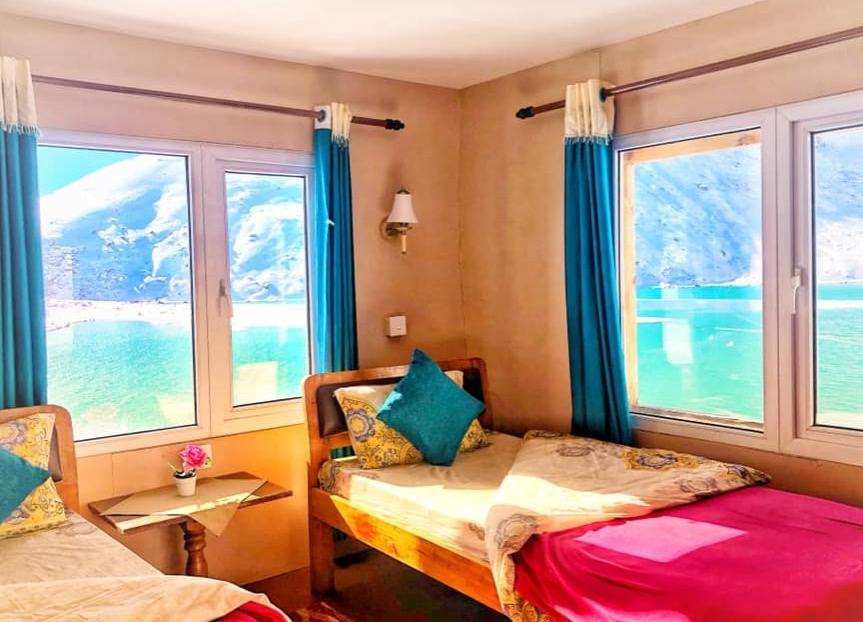
Accommodation on the Everest Base Camp Trek mainly consists of local teahouses and mountain lodges located in villages from Lukla to Gorakshep. Most offer twin-sharing rooms with basic beds, mattresses, pillows, blankets, and shared bathrooms. Lower-altitude settlements such as Lukla and Namche Bazaar also have more comfortable lodges with private bathrooms and additional in-room amenities.

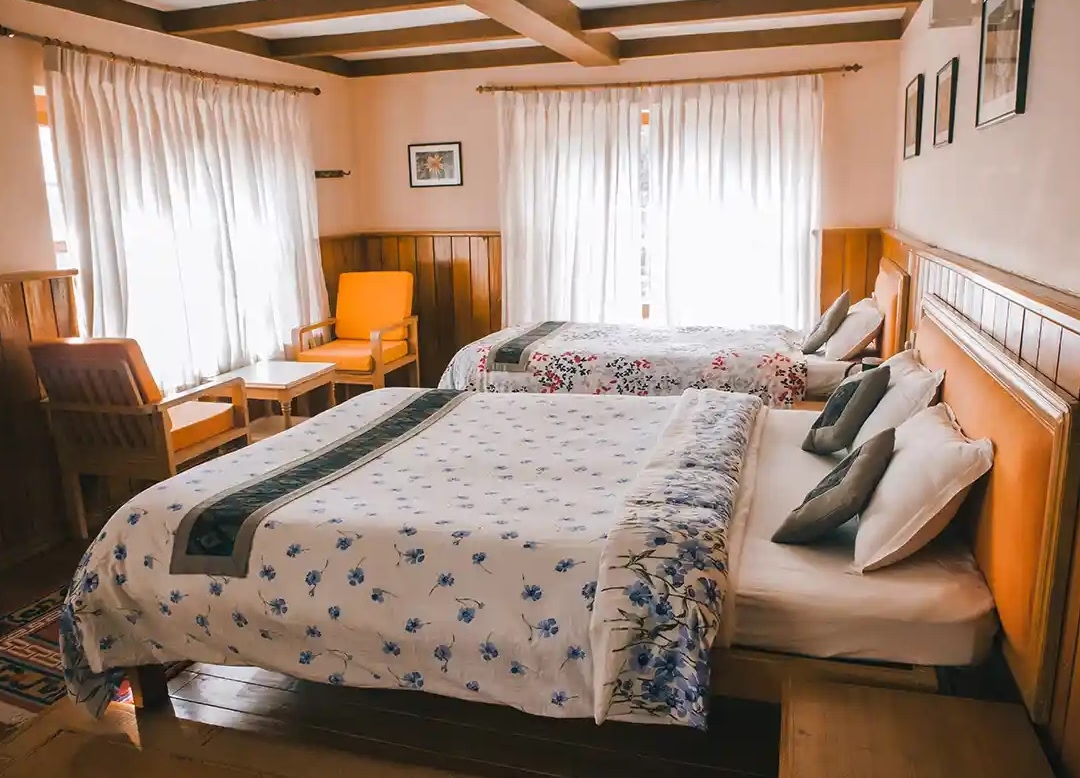
The journey of the Everest Base Camp Trek is probably the most iconic among several walking trips across the globe. The fact that the trail is to the base camp of the world’s tallest mountain makes it darling for many travelers. Therefore, it is one of the best commercial trails of Nepal. Many people from climbers to trekkers walk in the trail. Facilities must be there to support trekkers. Today’s blog is about finding out options and conditions of the Everest Base Camp Trek accommodation. We will know about luxury mountain lodges to standard tea houses as well as porter houses.
If you are heading into the Khumbu, you need to understand exactly where you are sleeping. At Nepal High Trek, we spend months on this trail every single year. The reality of sleeping on the side of the highest mountain in the world surprises almost everyone. We aren't talking about luxury resorts or high-end glamping tents.
We are talking about basic survival shelters built from stone, plywood, and corrugated tin. Yes, the trail has different options in terms of lodging facilities. You walk for hours until your legs shake. You drop your heavy pack. You crawl into a freezing room just to rest before doing it all again. It gets uncomfortable. It gets cold. But sitting in a warm dining room, swapping stories with climbers from all over the planet while drinking hot lemon tea? That is the real magic of the trail.

Everest Base Camp Trek: Leave Your Footprint at the World’s Tallest Base Camp
View detailsContents16
What Accommodation Is Like Along the Everest Base Camp Trek ?
Living on the trail revolves entirely around the teahouse. These aren't hotels. They are family-run mountain lodges that serve as your restaurant, living room, and bedroom all rolled into one stone building. You arrive in the afternoon, exhausted and dusty. The routine never changes. You drop your boots at the door, slide into your camp shoes, and grab a table in the communal dining room.
The walls are usually made of simple plywood painted in bright, jarring colors. Everything smells faintly of woodsmoke, boiling garlic soup, and damp wool socks drying by the fire. The owners live right there in the kitchen, cooking meals for dozens of hungry trekkers on tiny gas burners. It feels chaotic but incredibly welcoming. You don't get room service. You get a hot bowl of dal bhat, a thin foam mattress, and a roof that keeps the freezing Himalayan wind off your face. That is all you really need up here.
Luxury Mountain Lodges of Everest Base Camp Trek route
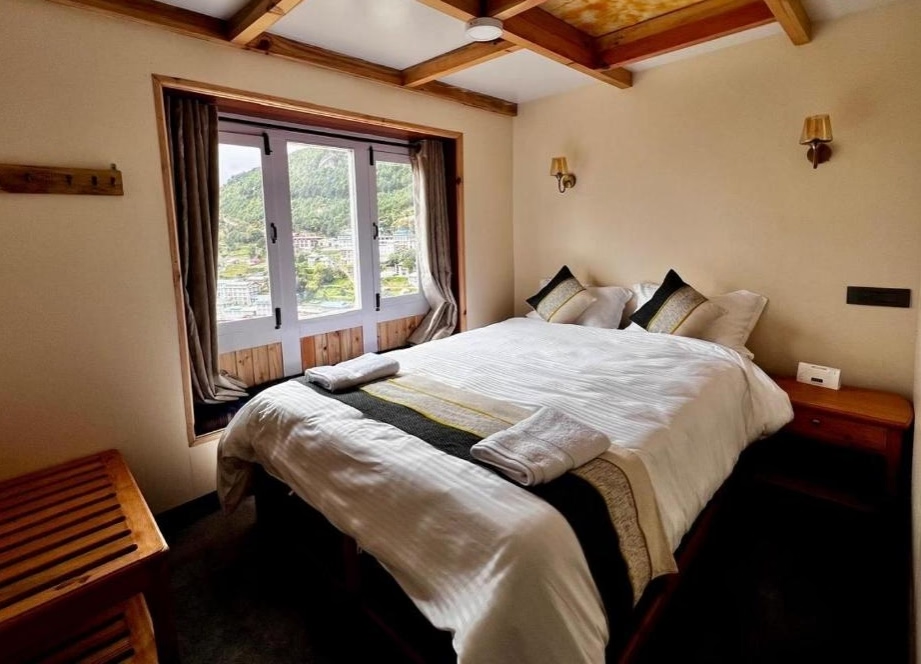
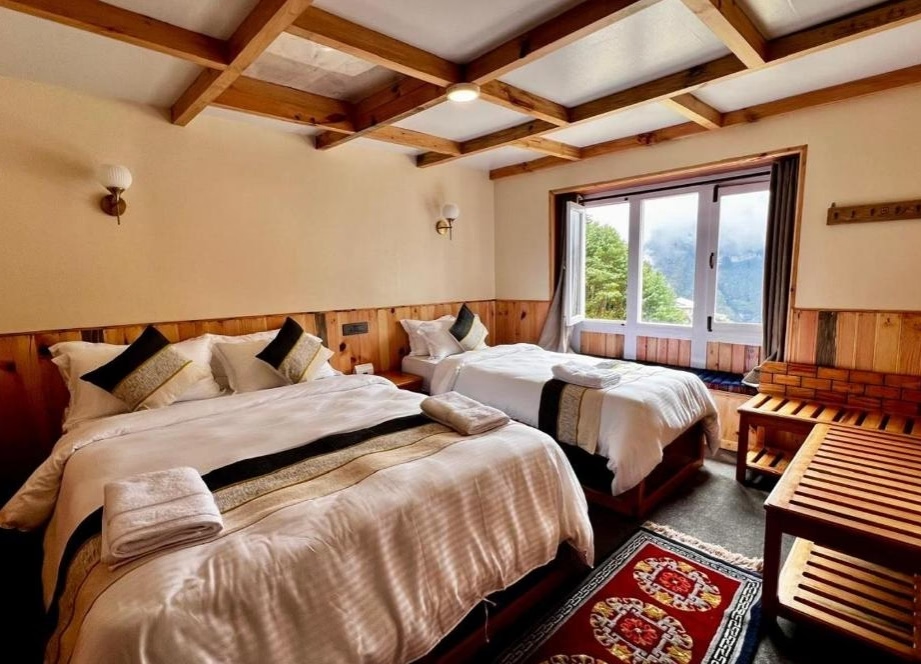
You can find quality luxury mountain lodges in the places like Lukla, Phakding, Monjo, Namche Bazaar, Debuche, Pangboche, Dingboche, and Pheriche. These lodges provide luxury services to travelers. These tea houses charge trekkers starting from 50 $ per person to more than 110 $ per person. If you are doing the Luxury Everest Base Camp Trek in Nepal, then these are the lodges that are provided for lodging. However, popular choice of lodging in the trail is definitely a standard teahouse.
From Lukla Lodges to High-Altitude Teahouses: How Accommodation Changes
The drop in comfort hits you slowly. Down in Lukla, you start off feeling completely spoiled. We usually book lodges that have attached bathrooms, running hot water, and thick blankets on the beds. You can order a decent espresso and sit in a paved courtyard. Phakding and Namche Bazaar maintain that high standard. You still get western toilets. You still get reliable electricity.
But the second we hike past Tengboche, the reality of the high mountains aggressively strips away those comforts. The buildings get smaller and much more primitive. The solid stone walls stay, but the interior partitions turn into nothing more than thin sheets of wood. Running water completely disappears because the pipes would freeze and shatter in the night. By the time we hit the upper valleys, you are essentially sleeping in an unheated wooden box built to withstand brutal alpine blizzards. If you are looking for more comfortable luxury mountain lodge, then you can hike further to Debuche, where newly opened lodges cater trekkers more comfort.
What to Expect from Teahouse Rooms on the EBC Trek?
Do not expect anything fancy when you open your bedroom door. The layout is identical almost everywhere on the mountain. You get a tiny square room. Two narrow wooden beds sit pushed against the walls. On top of the wood sits a dense foam mattress about three inches thick, covered by a simple sheet. You might get a synthetic pillow that feels like a sack of lumps. That is the entire room. There are no closets. There is no heating whatsoever.
The walls between the rooms are notoriously paper-thin. You will hear the guy next door violently unzipping his duffel bag at four in the morning. You will hear people coughing. You will hear the wind rattling the single-pane window frames. We always tell our trekkers to lower their expectations immediately. You just need a dry, flat place to roll out your heavy sleeping bag and close your eyes.
Private Rooms vs. Shared Rooms on the Everest Base Camp Route
Privacy is an absolute luxury that slowly vanishes the higher we climb. Below Namche Bazaar, securing a private twin room is standard practice. We easily get our groups into their own spaces with a door that locks. Couples stay together. Solo trekkers might pay a small single supplement. But altitude changes all the rules. When we push above 4,000 meters into places like Dingboche or Lobuche, the sheer number of available beds drops drastically. Building new lodges up there is incredibly difficult and expensive.
During the absolute peak madness of October or April, teahouse owners start cramming four or five trekkers into larger dormitory rooms just to get everyone out of the freezing wind. If you are trekking independently without a guide to book ahead, you might not even get a dorm bed. You might end up sleeping on the cold wooden floor of the dining room alongside the porters.
Everest Base Camp Luxury Trek
View detailsHow Room Allocation Works During the Everest Base Camp Trek?
Getting a bed is a ruthless game of logistics. It operates on a strict first-come, first-served basis, but there is a massive hidden catch. The local guides run the mountain. At Nepal High Trek, our guides are constantly on their phones during the morning hike, calling the lodge owners ahead of time to lock down the best rooms for our clients.
We leverage years of personal relationships to ensure you have a bed waiting. If you are hiking solo, you are at a severe disadvantage. You have to physically walk through the door of the teahouse to claim a room. If you hike slowly and roll into Lobuche at four in the afternoon, the owner will just shake their head. Every single bed will be gone. They will hand you a blanket and point to the benches in the dining hall.
What Changes About Accommodation Above Namche Bazaar?
Leaving the bustling bowl of Namche Bazaar marks the true end of comfortable mountain living. The luxury of an en suite bathroom vanishes instantly. You stop looking for hot showers because standing naked in a freezing concrete room sounds like absolute torture. The toilets downgrade from porcelain flush models to basic ceramic squat holes over a dark pit.
The food menu shrinks dramatically because yaks and porters have to physically carry every single sack of rice up the mountain. Everything gets exponentially more expensive. A roll of cheap toilet paper suddenly costs five dollars. A bottle of hot water costs three dollars. The teahouse rooms get noticeably smaller, acting like tiny wooden refrigerators holding the bitter alpine cold. You stop caring about the view from your window. You only care about how fast you can crawl into your sleeping bag and generate some body heat.
Sleeping at Dingboche and Pheriche: Choosing Between Two High-Altitude Bases
The trail splits right after Pangboche, forcing you to pick your poison. We strongly prefer taking our groups up to Dingboche. It sits tucked away in a sun-drenched lateral valley. The stone lodges there soak up the afternoon light, keeping the dining rooms marginally warmer before the sun finally dips behind the peaks. Pheriche sits slightly lower in a massive, flat valley floor. It sounds easier, but that valley acts like a giant wind tunnel. A brutal, freezing gale rips through Pheriche every single afternoon. The teahouses there feel much colder and far more isolated. Pheriche does hold the vital Himalayan Rescue Association medical clinic, making it essential for emergencies. But for spending two full nights adjusting to the agonizingly thin air, the sunny stone patios and slightly warmer rooms of Dingboche win our vote every single time.
What Accommodation Is Like at Lobuche and Gorak Shep
This is where the trek turns into a pure survival test. Lobuche and Gorak Shep are not real villages. They are temporary, freezing outposts built on shifting glacial rubble exclusively to house trekkers pushing for Base Camp. The lodges here are basic. The walls are poorly insulated. The wind aggressively punches through the cracks in the window frames. During the peak climbing season, these places turn into absolute madhouses.
Trekkers are shoved into every available corner. The dining rooms are deafeningly loud and packed shoulder to shoulder. The toilets freeze completely solid during the night, turning the simple act of going to the bathroom into a dangerous, slippery nightmare. You don't stay here to enjoy the ambiance. You stay here because you absolutely have to. You endure the freezing night, tag Base Camp in the morning, and get the hell out.
Heating and Warmth Inside EBC Teahouses
There is exactly one warm spot in the entire Khumbu region. It is a two-foot radius around the metal stove sitting directly in the center of the teahouse dining room. The owners do not fire up these stoves during the day to save precious fuel. They finally strike a match around five in the evening. They burn dried yak dung because there are no trees left to cut for firewood at this extreme altitude. The dried dung burns hot and throws off a thick, pungent smell that permanently soaks into your clothes.
Everyone immediately crowds around the hot metal, desperately trying to thaw out their freezing fingers and toes. But the owners kill the fire sharply at eight or nine o'clock. The second that fire dies, the brutal cold instantly reclaims the room. Your bedroom has absolutely zero heat. You will see your own breath hanging in the air before you fall asleep.

Three High Passes Trek
View detailsBathrooms and Showers: What Trekkers Should Actually Expect?
Forget everything you know about Western plumbing. Down low in Phakding, you might get a nice toilet that actually flushes. Up high, you get a hole in the floor. You walk outside your room, bundle up in your heavy down jacket, and step into an unheated concrete outhouse. You hover over a ceramic squat toilet. To flush, you dip a plastic jug into a massive frozen barrel of water and manually wash it down. If the water barrel is completely frozen solid in the morning, you just do your business and leave it.
Showers are equally grim. They use gas-powered water heaters, and a hot shower will cost you around five to eight dollars. But taking off your heavy layers in a freezing stone room while a weak trickle of lukewarm water hits your head is miserable. Most of us just rely entirely on wet wipes for a week straight.
Electricity, Charging and Wi-Fi in Everest Region Teahouses
Keeping your electronics alive up here is an expensive, frustrating battle against the cold. The teahouses run almost entirely on small solar panels attached to their tin roofs. They do not have power outlets in the bedrooms. If you want to charge your phone or camera battery, you hand it to the lodge owner behind the dining room counter. They charge you anywhere from three to eight dollars per device, or they charge by the hour. During the Three High Passes Trek get various experience of accommodation and at Gokyo Lake there are various hotels as per your preference and budget. However, we can run a fully Luxury trek of Everest View and it's one of the shortest and easiest treks in the Everest region compared to other treks.
The brutal cold will aggressively drain a fully charged phone battery in just a few hours. You absolutely must sleep with your phone inside your sleeping bag to keep it warm. Wi-Fi does exist through the Everest Link card system, but the connection drops constantly when the heavy afternoon clouds roll into the valley and block the satellite signals. It is weak, expensive, and completely unreliable. Nowadays, you can get mobile signals in some places. Surprisingly, you have mobile network in the Everest Base Camp.
Dining Rooms, Common Areas and Evening Life at EBC Teahouses
The dining room is the beating heart of the entire mountain experience. Because the bedrooms are essentially freezing wooden iceboxes, nobody stays in them. The moment you finish the day's hike, you dump your bag and run straight back to the dining hall. The room is always chaotic, loud, and incredibly humid from dozens of wet jackets drying by the windows. You sit at long communal tables with trekkers from Germany, Japan, Brazil, and Australia.
Everyone plays worn-out decks of cards. People aggressively compare blister remedies. The air smells strongly of garlic, fried noodles, and the unmistakable stench of unwashed bodies. You eat massive, steaming plates of dal bhat until your stomach hurts. The camaraderie in these rooms is intense and genuine. We are all suffering through the exact same headaches and the exact same cold, and that shared misery turns complete strangers into fast friends.
How Accommodation Availability Changes During Peak Trekking Seasons?
Trying to find a bed during October or late April is a completely different, savage game. The trail is absolutely slammed with thousands of hikers pushing up the valley simultaneously. Teahouses in the critical bottleneck villages like Tengboche and Lobuche hit maximum capacity by one o'clock in the afternoon. If an independent trekker rolls into town late, they are completely out of luck. We see people crying in frustration because there are literally zero beds left within a three-hour walking radius.
The lodge owners start renting out the couches along the dining room walls. They rent out space on the floor for people to throw down sleeping mats. At Nepal High Trek, our guides completely bypass this chaos by securing our rooms days in advance, but the sheer volume of humans up there forces everyone to share tables, squeeze past each other in tight hallways, and endure massive lines for the single working squat toilet.

Gokyo Lake Trek
View detailsAccommodation During Acclimatization Days on the EBC Trek
The two acclimatization days you spend in Namche Bazaar and Dingboche feel like absolute heaven. You finally get to break the relentless, exhausting cycle of packing and unpacking your heavy duffel bag in the freezing dark. You keep the exact same room for two straight nights. After coming down from your brutal, breathless morning side-hike up a nearby ridge, you actually get to relax.
You can hand a pile of filthy socks to the lodge owner to run through their washing machine in Namche. You can sit on a wooden chair out on the stone patio, close your eyes, and just let the intense high-altitude sun bake the deep chill out of your aching bones. Having a permanent home base for 48 hours gives your body and your mind a much-needed reset before we push into the truly hostile terrain of the upper glacier.
What to Pack for Comfortable Nights in Everest Base Camp Teahouses ?
You cannot rely on the teahouse to keep you warm. You must bring your own heat. The absolute most critical piece of gear in your duffel is a massive, heavy winter sleeping bag rated for at least minus twenty degrees Celsius. The thin, smelly blanket the lodge provides will not save you. You need heavy, insulated camp shoes or down booties to wear around the freezing dining room floor.
Heavy wool socks dedicated solely to sleeping are mandatory. You need a bright headlamp because the solar lights cut out completely in the middle of the night, leaving the hallways pitch black. Bring heavy-duty foam earplugs to block out the endless coughing and snoring blasting through the paper-thin plywood walls. Finally, bring a heavy plastic Nalgene bottle. You pay the kitchen to fill it with boiling water, shove it deep into the foot of your sleeping bag, and it acts as a perfect radiator all night long.
Frequently asked
Nepal High Trek
Travel writer and passionate explorer sharing stories and expert guides from the heart of the Himalaya.