
- Duration
- 15 days
- Difficulty
- Moderate/Adventure
- Max Altitude
- 5545 m
- Destination
- Nepal
- Activity
- Trekking
- Accommodation
- Hotel/Lodge
- Group Size
- 2 - 20
- Transport
- Both way Flight
- Meals
- B.D.L.
- Season
- September - December & February to June
Trip highlights
Top Highlights of the Everest Two Passes Trek Package
Check out the top highlights of the Everest Two Passes Trek in Nepal. The journey is both adventurous, cultural, and legendary. The fact that the journey takes you to the Everest Base Camp and allows you to cross two iconic mountain passes of Khumbu makes it so special. Here is the list of the highlights of the Everest Two Passes Trek in Nepal:
Cross the two spectacular Himalayan passes, Renjo La Pass (5,360 m) and Cho La Pass (5,420 m), on one unforgettable trekking adventure.
Reach the legendary Everest Base Camp (5,364 m) and stand at the foot of the world's highest mountain.
Witness an unforgettable sunrise from Kala Patthar (5,545 m) with panoramic views of Mount Everest and surrounding Himalayan giants.
Hike to Gokyo Ri (5,357 m) for one of the finest viewpoints in the Everest region.
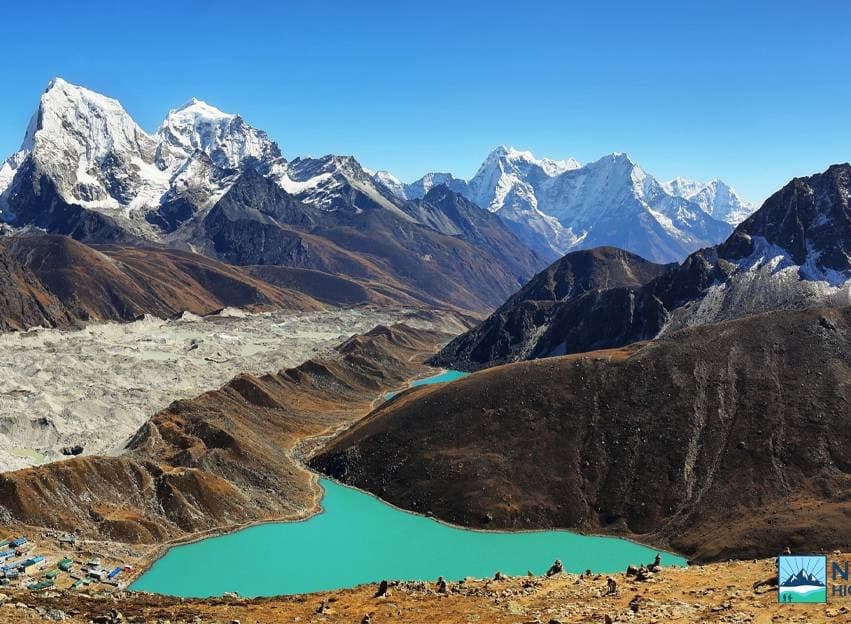
Explore the breathtaking turquoise waters of the sacred Gokyo Lakes.
Enjoy spectacular views of Everest, Lhotse, Nuptse, Cho Oyu, Makalu, Ama Dablam, Thamserku, Kangtega, Cholatse, and Taboche.
Trek through the diverse landscapes of Sagarmatha National Park, a UNESCO World Heritage Site.
Experience authentic Sherpa culture in traditional mountain villages, including Namche Bazaar, Thame, Pangboche, and Khumjung.
Visit the famous Tengboche Monastery, the spiritual heart of the Everest region.
Walk through lush rhododendron forests, alpine meadows, rocky valleys, glaciers, and high mountain passes.
Cross suspension bridges decorated with colorful prayer flags above the Dudh Koshi River.
Follow less-crowded trails through the peaceful Gokyo Valley while still visiting Everest Base Camp.
Observe unique Himalayan wildlife such as Himalayan tahr, musk deer, Himalayan monal, and various alpine birds.
Stay in traditional mountain teahouses and enjoy warm Sherpa hospitality throughout the journey.
Experience well-planned acclimatization for a safer and more enjoyable high-altitude trek.
Challenge yourself on one of Nepal's most rewarding trekking routes without completing the full Three High Passes Trek.
Capture extraordinary photographs of glaciers, pristine lakes, towering peaks, and colorful Buddhist monasteries.
Trek across glacial moraines and rugged alpine terrain that showcase the raw beauty of the Khumbu region.
Enjoy a perfect combination of adventure, culture, nature, and breathtaking Himalayan scenery in a single itinerary.
Create lifelong memories while exploring the iconic Everest region with experienced local guides and reliable trekking support.
Trip overview
Many of our trekking clients demanded the Everest Two Passes Trek package. They wanted to explore beautiful Gokyo Valley but also wanted to conquer high – mountain passes including the Everest Base Camp. Therefore, our travel planners worked relentlessly to offer the best adventure package that comprises all these attractions. We always strive to go extra mile to offer best experiences to our guests! Therefore, our trekking itinerary of the Everest Two Passes Trek is from the clockwise direction rather than traditional anti – clockwise direction.
You can surely knit a trekking memory that is safe and has high success rate. Furthermore, we strive to make sure that your every penny is returned in the form of Himalayan travel tales! Travel differently with the experienced trekking crew members of the Nepal High Trek by booking the Everest Two Passes Trek in Nepal.
Why Is the Everest Two Passes Trek One of Nepal's Most Rewarding Adventures?
As mentioned above, the Everest Two Passes Trek is the combination of adventure, legends, and Sherpa cultures! The inclusion of the village like Thame and the chance to leave footprints at the foothill of the world’s tallest mountain makes it must to do trek in Nepal. Furthermore, you can experience diversity of landscapes to vegetation in one single trip. Similarly, you can also cross the high – mountain passes besides visiting gorgeous Gokyo Valley and legendary Everest Base Camp (5364 m).
Which High Passes Are Crossed During the Everest Two Passes Trek?
Two passes which are also featured in the adventurous Everest Three High Passes Trek in Nepal are in the itinerary of the Everest Two Passes Trek. Among these three passes, the Chola Pass (5420 m) is the most popular one. Therefore, the itinerary of the Everest Two Passes Trek can surely satisfy your hunger to quench the wilderness adventure in the Himalayas of Nepal. The fact that the trek covers the world’s tallest mountain’s base camp is surely alleviate the overall trekking experiences. Besides Chola Pass (5420 m), Renjo La Pass (5360 m) is also included in the trekking itinerary of the Two Passes Trek in Nepal’s Khumbu Everest region.
Everest Two Passes Trek Distance, Duration, and Maximum Altitude
The maximum altitude during the Everest Two Passes Trek in Nepal is 5545 m which is the height of the Kalapathar Hill. People visit the top of the Kalapathar Hill for sunrise experiences. Many people believe that the scenery that you see from the top is unmatched to any vantage points. Similarly, the total trekking distance is about 125 kilometers to 135 kilometers which directly depends upon the side treks that you do!
Is the Everest Two Passes Trek Right for You?
Let’s be real—if you’re looking for a relaxing stroll where you barely break a sweat, this isn’t it. The Two Passes route is meant for hikers who actually want to work for their views. You don't need to be a professional mountaineer or know how to handle ice axes, but you definitely need good lungs, solid legs, and a bit of mental toughness.
You’ll be on your feet for 6 to 8 hours a day, navigating loose rock and pushing over 5,000 meters at both Cho La and Renjo La. If the idea of trading noisy tourist crowds for quiet trails, rugged valleys, and a real physical test gets you excited, you’ll love every bit of this trip with our crew.
What Makes the Everest Two Passes Trek Different from the Everest Base Camp Trek?
Most people head up the standard Everest Base Camp trail, walk up the main valley, hit Base Camp, and turn right back around on the exact same path. It’s iconic, sure, but it gets packed. The Two Passes trek completely breaks that mold by looping you through the quieter side of the Khumbu region.
Instead of staying on the main highway, you jump between isolated valleys over high mountain passes. You get to stand right beside the brilliant blue Gokyo Lakes, cross massive glaciers, and take in perspectives most trekkers never get to see. You still hit Base Camp and climb Kala Patthar—you just double the views and skip half the foot traffic along the way.
Scenic Landscapes and Mountain Views Along the Everest Two Passes Route
The terrain on this trek changes faster than you’d expect. One morning you’re stepping through peaceful pine forests, and a couple of days later you’re carefully picking your way across a frozen glacier high above the treeline. The sudden sight of the turquoise Gokyo Lakes against all that slate-gray rock and ice is something that stays with you forever.
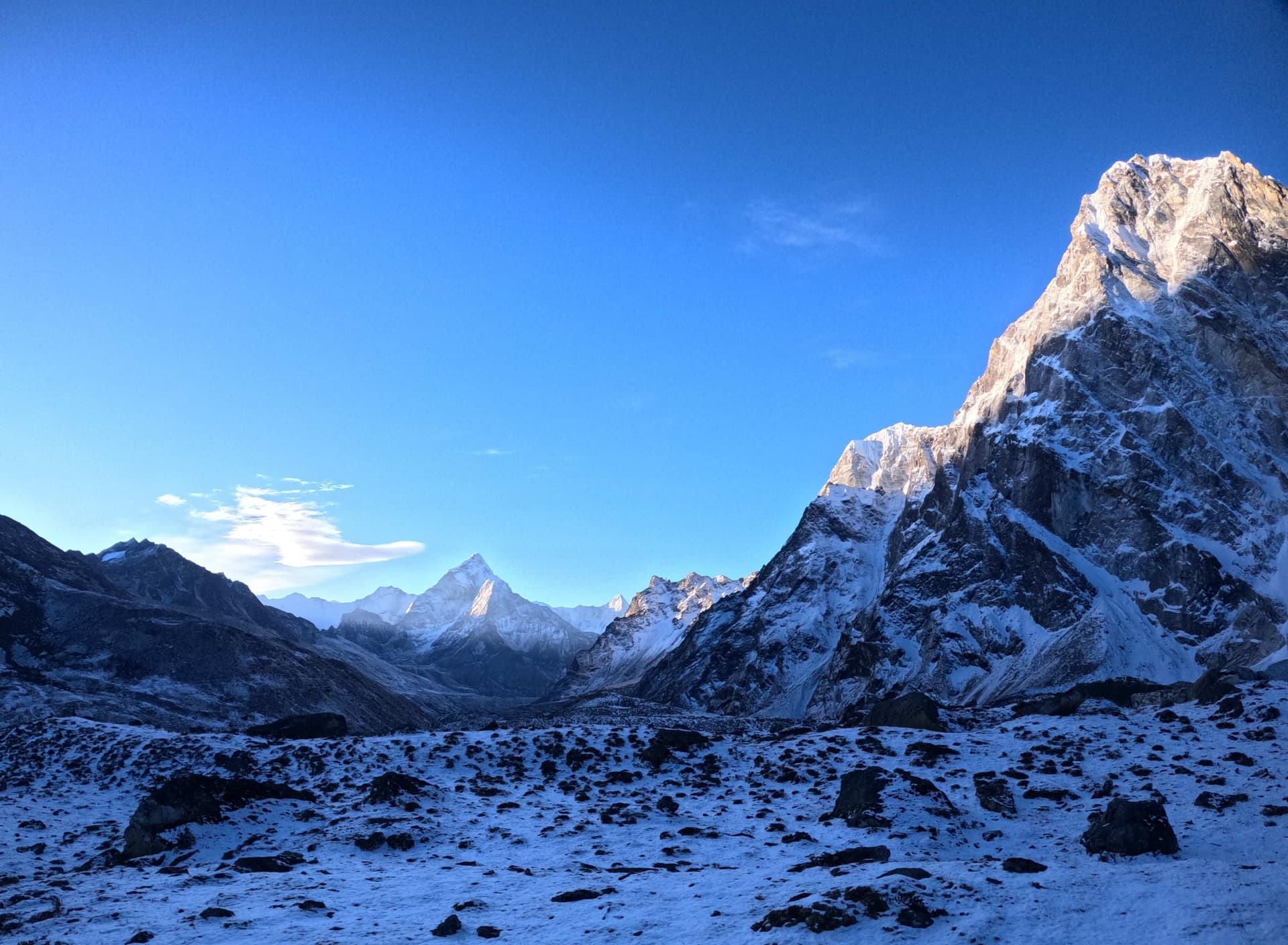
The mountain views here are just massive. Standing on top of Renjo La or Cho La puts you face-to-face with four of the world’s fourteen 8,000-meter peaks: Everest, Lhotse, Makalu, and Cho Oyu. Up there, surrounded by jagged ridges and giant ice walls, you don’t feel like you’re looking at a postcard—you feel like you’re right in the thick of the Himalayas.
Sherpa Culture, Monasteries, and Himalayan Villages
At the end of the day, the mountains are only half the story. The heart of this trek comes from the Sherpa communities that call these high valleys home. The Khumbu is famous for its warm hospitality and deep Buddhist roots, and walking through villages like Namche, Thame, and Khumjung gives you an honest look at life high up in the mountains.
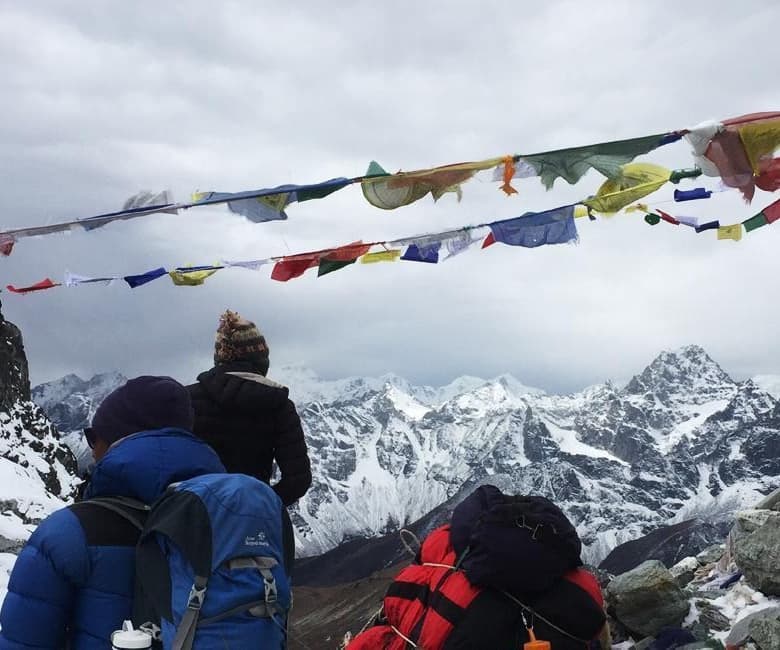
Along the trail, you’ll pass stone walls carved with prayers, spin copper prayer wheels, and walk under long strings of colorful flags fluttering in the wind. Stopping in at older monasteries like Tengboche or Thame gives you a quiet moment to slow down. Grabbing a hot tea in a family-run teahouse and chatting with your guide makes this feel less like a checklist tour and more like an actual journey.
Wildlife and Natural Beauty Inside Sagarmatha National Park
The entire route sits inside Sagarmatha National Park, a protected region that somehow stays full of life despite the high altitude and harsh weather. Lower down, you walk under tall birch, juniper, and rhododendron trees. If you trek in the spring, those forests burst into bright reds and pinks.
Keep your eyes open while walking quietly along the trail. It’s fairly common to spot Himalayan tahr scaling steep cliff faces, deer hiding in the woods, or bright Danphe birds taking off from the bushes. If luck is really on your side, you might even spot signs of higher-altitude wildlife like snow leopards up near the crags.
Accommodation and Meals During the Everest Two Passes Trek
Out here, you won't find high-end luxury hotels, but local teahouses offer a surprisingly cozy setup. You’ll be staying in small, family-run lodges along the trail. The rooms are basic—usually two twin beds with clean mattresses and pillows—so as you climb higher toward the passes, having a solid sleeping bag is key to keeping warm at night.
The food is hot, fresh, and made to keep your motor running. You can stick with local staples like Dal Bhat (a filling dish of rice, lentil soup, and vegetable curry with free refills) or order Western classics like pasta, pancakes, soups, and fried rice. You burn through a lot of fuel at high altitude, so we make sure you're eating well and staying hydrated every day.
When is the best Seasons for the Everest Two Passes Trek ?
When you’re crossing passes over 5,000 meters, timing is everything. You want clear skies and manageable weather, which makes Spring and Autumn the two best windows for this trek.
Spring (March to May): The weather starts warming up, days grow longer, and the lower trails are covered in blooming flowers. Conditions on the passes are stable, making crossings much safer and smoother.
Autumn (September to November): This is prime mountain-viewing season. Once the summer rains clear out, the air becomes crystal clear, giving you incredibly sharp views of the peaks and reliable weather days.
Winter brings heavy snow that can block passes like Cho La completely, and Summer brings monsoon rains and leeches. Sticking to Spring or Autumn gives you the best safety margin and the best views.
How Challenging Is the Everest Two Passes Trek?
We’re not going to sugarcoat it: this is a demanding trek. You spend several days above 4,000 meters, reaching peak spots higher than 5,300 meters at Cho La, Renjo La, and Kala Patthar. Thin air is the real test here, which is why keeping a steady, manageable pace is so important.
The ground underfoot shifts from clear dirt trails to loose scree, slippery glacier paths, and steep climbs up icy passes. On pass days, you might be walking for 8 or 9 hours, starting before sunrise. But if you put in the cardio work before leaving home and follow our acclimatization plan, it’s completely doable—and incredibly rewarding.
Why Choose This Everest Two Passes Trek Package?
Here at Nepal High Trek, we don't do pre-packaged, factory-style mountain tours. We’re a local agency based in Kathmandu, run by people who grew up in these mountains and know the Khumbu inside and out. Our Two Passes route is planned around safety, proper rest days, and real local connections.
When you hit the trail with us, you’re guided by licensed, local Sherpas who know these paths like their own backyards. We take care of all the logistics—Lukla flights, park permits, teahouse arrangements, and porter support—so you can just focus on taking in the experience. We pay our crew fairly, keep our group sizes personal, and make sure you get back home safely with unforgettable memories.
Itinerary
Day 1:Day 01: Arrival in Kathmandu (1,350m / 4,428ft)
1,350 mWhen you step out of the airport terminal in Kathmandu, look for our team holding the Nepal High Trek sign. We’ll grab your luggage, load up the car, and drive straight into the city to your hotel in Thamel. After you drop your bags and take a shower, we’ll grab a tea and run through the trek plan. We’ll check over your gear to make sure you have everything for the cold, sort out your permits, and clear up any questions on your mind. You’ll have time to walk around Thamel, grab last-minute snacks or socks, or just rest after your long flight. In the evening, we’ll take you out for a proper local welcome dinner. Overnight in hotel
- 02
Day 2:Day 02: Fly to Lukla (2,860m / 9,383ft) and Trek to Phakding (2,610m / 8,562ft)
2,860 mIt’s an early alarm today. We head to the airport for the short flight to Lukla, which is an experience all on its own as you fly right past the white peaks. After landing on that famous slanted runway, we’ll meet up with our porters, get breakfast, and finally put our boots on the ground. The trail starts with a nice downhill stretch following the Dudh Koshi river. We cross a couple of suspension bridges, walk past prayer stones, and ease into the rhythm of the trail through small hamlets like Ghat. It’s an easy 3 to 4 hour walk today to help your body ease into things before the bigger climbs start. Overnight in teahouse.
- 03
Day 3:Day 03: Trek from Phakding to Namche Bazaar (3,440m / 11,286ft)
3,440 mWe get moving right after breakfast, crisscrossing the river over high swaying suspension bridges—including the iconic Hillary bridge hanging way above the water. At Monjo, we stop briefly so the team can check us into the national park. After stopping for lunch in Jorsalle, the real work starts. The trail turns up and doesn't stop climbing for a few hours. We take it real slow, sip water, and catch our breath in the pine shade. If the weather plays nice, we get our first peak at Everest through the trees. By late afternoon, we round the corner into Namche Bazaar, the mountain town tucked right into the hill. Overnight in teahouse
- 04
Day 4:Day 04: Acclimatization Day in Namche Bazaar (3,440m / 11,286ft)
3,440 mDon't be tempted to sit in bed all day—moving around today actually helps your body adjust to the thin air much faster. After breakfast, we walk up the steep ridge above town toward the Everest View Hotel. The climb makes you huff and puff, but the view of Everest, Lhotse, and Ama Dablam from the top makes every step worth it. On the way down, we can loop through Khumjung village, drop into the monastery, and check out the local school. We’ll head back down to Namche for lunch. You’ll have the whole afternoon to chill out, hit a bakery for coffee, or just watch local life in the market. Overnight in teahouse.
- 05
Day 5:Day 05: Trek from Namche Bazaar to Thame (3,800m / 12,467ft)
3,800 mToday we leave the main, noisy Base Camp highway behind and branch off west toward Thame. You’ll notice right away how much quieter it gets. The trail meanders through pine woods, past small farm plots, and along the river bank. This used to be an old trade route for yak caravans coming over from Tibet, so the villages around here have deep roots. We take a nice easy pace as the trees start getting thinner. Once we get into Thame and drop our bags at the lodge, we’ll walk up to the old monastery perched on the cliff side above town. It’s quiet, peaceful, and gives you a real look at local life. Overnight in teahouse.
- 06
Day 6:Day 06: Trek from Thame to Lungden (4,380m / 14,370ft)
4,380 mWe head further up the Bhote Koshi valley today, heading higher into the alpine zone. Trees completely vanish here, replaced by low shrubs, dry grass, and wide rocky river beds. It feels properly wild and remote—you won't see nearly as many hikers out here. We’ll pass stone yak pastures and quiet summer shelters used by herders. Because we are breaking above 4,000 meters, we keep the pace super slow and steady to keep altitude sickness away. Lungden sits right below our first big pass. The lodge here is simple and small, perfect for getting a good meal, drinking tons of hot water, and turning in early for tomorrow's big push. Overnight in teahouse
- 07
Day 7:Day 07: Trek from Lungden to Gokyo (4,790m / 15,715ft) via Renjo La Pass (5,360m / 17,585ft)
4,790 mWe turn on our headlamps way before the sun comes up. Today is a long, tough push, but it’s easily one of the best days on the mountain. The trail up to Renjo La is steep and rocky, so we just focus on placing our feet carefully and keeping a slow rhythm. When you finally top out on the pass at 5,360 meters, the view will knock your socks off. You get Everest, Lhotse, Makalu, and Cho Oyu lined up right in front of you, with the bright blue Gokyo lakes sitting far below. After taking photos and high-fiving, we start the careful downhill trek toward Gokyo village, resting right on the lake shore. Overnight in teahouse.
- 08
Day 8:Day 08: Rest / Exploration Day in Gokyo - Climb Gokyo Ri (5,357m / 17,575ft)
5,357 mAfter yesterday's massive effort, we stay put in Gokyo for the day. For sunrise, we make the climb up Gokyo Ri. It takes about two or three hours of steady grinding up the dirt path, but the view from the peak is insane. You get a direct look over the Ngozumpa Glacier—the biggest ice mass in Nepal—plus those four massive 8,000-meter peaks up close. Once we scramble back down, we’ll get a hot breakfast at the lodge. You can spend the rest of your day sitting by the edge of the lake, reading, talking with other trekkers, or taking a long afternoon nap to prep for the next pass. Overnight in teahouse.
- 09
Day 9:Day 09: Trek from Gokyo to Thagnak (4,700m / 15,420ft)
4,700 mThis is a much shorter day on the trail, which gives your legs a break. Right after breakfast, we walk out of Gokyo and head straight across the Ngozumpa Glacier. There isn't a fixed paved path here—we cross over loose rock, dirt mounds, ice patches, and around small gray pools. You can hear the ice groaning underneath the rocks as it slowly shifts. Our team guides you through the safest route across the debris. Once we pop off the glacier on the other side, it's a short, easy walk into Thagnak. This tiny spot is basically just a few lodges tucked under the mountain, where we rest up for Cho La tomorrow. Overnight in teahouse.
- 10
Day 10:Day 10: Trek from Thagnak to Dzongla (4,830m / 15,846ft) via Cho La Pass (5,420m / 17,782ft)
4,830 mAnother early alarm today. We head up a narrow boulder valley, slowly climbing toward the base of Cho La. The last section up to the saddle gets steep and can be pretty icy, so we take our time and watch every step. Crossing the flat glacier at the top of the pass is an amazing feeling. At 5,420 meters, you’re standing right beneath huge rock spires like Ama Dablam and Cholatse. After enjoying the high point, we start the long descent. The top part is steep over loose scree, but then it turns into a nice, gentle valley path that leads us into the quiet village of Dzongla for the night. Overnight in teahouse.
- 11
Day 11:Day 11: Trek from Dzongla to Lobuche (4,940m / 16,207ft)
4,940 mCompared to crossing Cho La, today feels almost easy. We leave Dzongla and follow a high contour trail along the side of the mountain, looking across at the blue waters of Cholatse lake down below. The peak of Ama Dablam keeps us company the whole morning. The path eventually meets up with the main Everest Base Camp trail coming up from Dughla. From there, we join the main route and walk a gentle incline alongside the Khumbu glacier moraine up to Lobuche. We get into the lodge early in the afternoon, leaving plenty of time to rest, order hot drinks, and get mentally ready for Base Camp tomorrow. Overnight in teahouse
- 12
Day 12:Day 12: Trek from Lobuche to Gorak Shep (5,164m / 16,942ft) and Hike to Everest Base Camp (5,364m / 17,598ft)
5,164 mBig day today. We leave Lobuche early, picking our way over the rocky moraine trails alongside the Khumbu Glacier until we reach Gorak Shep. We grab a quick lunch, drop our big packs at the lodge, and keep moving right toward Everest Base Camp. The trail runs along the side of the glacier, weaving up and down over loose gravel. Finally walking up to the famous Base Camp rock at 5,364 meters is a feeling you won't forget. You’re standing right at the edge of the Khumbu Icefall, watching tents set up on the ice. After taking tons of photos, we walk back to Gorak Shep for dinner and sleep. Overnight in teahouse
- 13
Day 13:Day 13: Hike to Kala Patthar (5,555m / 18,225ft) and Trek to Pheriche (4,371m / 14,340ft)
5,555 mWe pull on our down jackets before sunrise and start the steep scramble up Kala Patthar. It’s a tough, cold climb up the dark hill, but standing at the top (5,555m) gives you the ultimate view of Everest. Watching the first sunlight hit the peak of Everest and Nuptse is something special. Once we scramble back down to Gorak Shep for breakfast, we sling our packs on and start heading down the valley. Dropping down in altitude feels amazing—your lungs suddenly feel like they have endless oxygen. We pass back through Lobuche and Dughla, crossing the climber memorial, before stopping for the night in Pheriche. Overnight in teahouse
- 14
Day 14:Day 14: Trek from Pheriche to Namche Bazaar (3,440m / 11,286ft)
3,440 mWith all that thick air lower down, walking feels way easier today. We trek through Pangboche village, cross the river, and walk back up to Tengboche Monastery to take one last look back up the valley at Ama Dablam. From Tengboche, we drop down through the forest, cross the river bridge, and make the last short climb back up to Namche Bazaar. Coming back into Namche feels like hitting a big city after two weeks in the high mountains. You can finally get a warm shower, grab a burger or a fresh coffee, and celebrate the fact that both high passes are officially behind you. Overnight in teahouse
- 15
Day 15:Day 15: Trek from Namche Bazaar to Lukla (2,860m / 9,383ft)
2,860 mIt’s our last day putting miles in on foot. We drop down the steep hill out of Namche, crossing those high suspension bridges over the Dudh Koshi river one last time. We cruise through Monjo, Phakding, and Ghat, with strong legs and plenty of oxygen in our blood. The final hour into Lukla is a bit of an uphill push, but finishing the loop feels incredible. Tonight, we throw a little party at the lodge with our porters and guides. It’s a great evening to buy a round of drinks, tip the local team, and laugh over all the crazy moments from the trail. Overnight in teahouse
- 16
Day 16:Day 16: Fly from Lukla to Kathmandu and Transfer to Hotel
We head over to the Lukla airstrip early to catch our morning flight back to Kathmandu. As the plane takes off, you can look out the window for one last glance at the white peaks up high. Once we touch down in Kathmandu, our driver meets us at the airport and brings you right back to your hotel in Thamel. The rest of the day is totally yours. Get a massage, wash all your dirty trekking clothes, sit by a cafe, or wander the shops buying gifts and souvenirs. In the evening, we can catch up for drinks and hear all about your favorite parts of the trip. Overnight in hotel.
Day 17:Day 17: International Departure / Final Departure
Today is the end of the line for our journey together. Our Nepal High Trek staff will take you to the airport and bid you farewell with promise to meet again for another adventure in Nepal. Safe travels home!
Are you looking to customize the trip itinerary?
If the provided schedule is not suitable for you, we can create a personalized travel arrangement tailored to your preferences and requirements.
Cost breakdown
What's included
What's included
All ground transportation.
Both way airfare (Kathmandu – Lukla – Kathmandu or Ramechhap-Lukla-Ramechhap)
Two nights at a boutique hotel in Kathmandu with breakfast.
Meals in the mountain: Breakfast, Lunch & dinner.
Sagarmatha National Park permit.
Khumbu rural municipality entrance fee.
14 night tea houses accommodation during the trek. A room for every 2 trekkers.
Trekking gear, Down jacket, sleeping bag and duffle bag.
Government license holder mountain guide including salary, insurance, accommodation and meal.
A strong porter for every two clients (No porter for solo traveler)
The arrangement of Emergency Helicopter service which will be paid by your Travel insurance company.
Medical kit bag.
What's not included
What's not included
Your Travel insurance.
Porter cost and extra nights in Kathamndu.
All the Bar bills and personal expenses (phone call, laundry service, battery recharge, a bottle of water, hot water, shower.
Tips for the guide and porter.
.avif&w=3840&q=75)