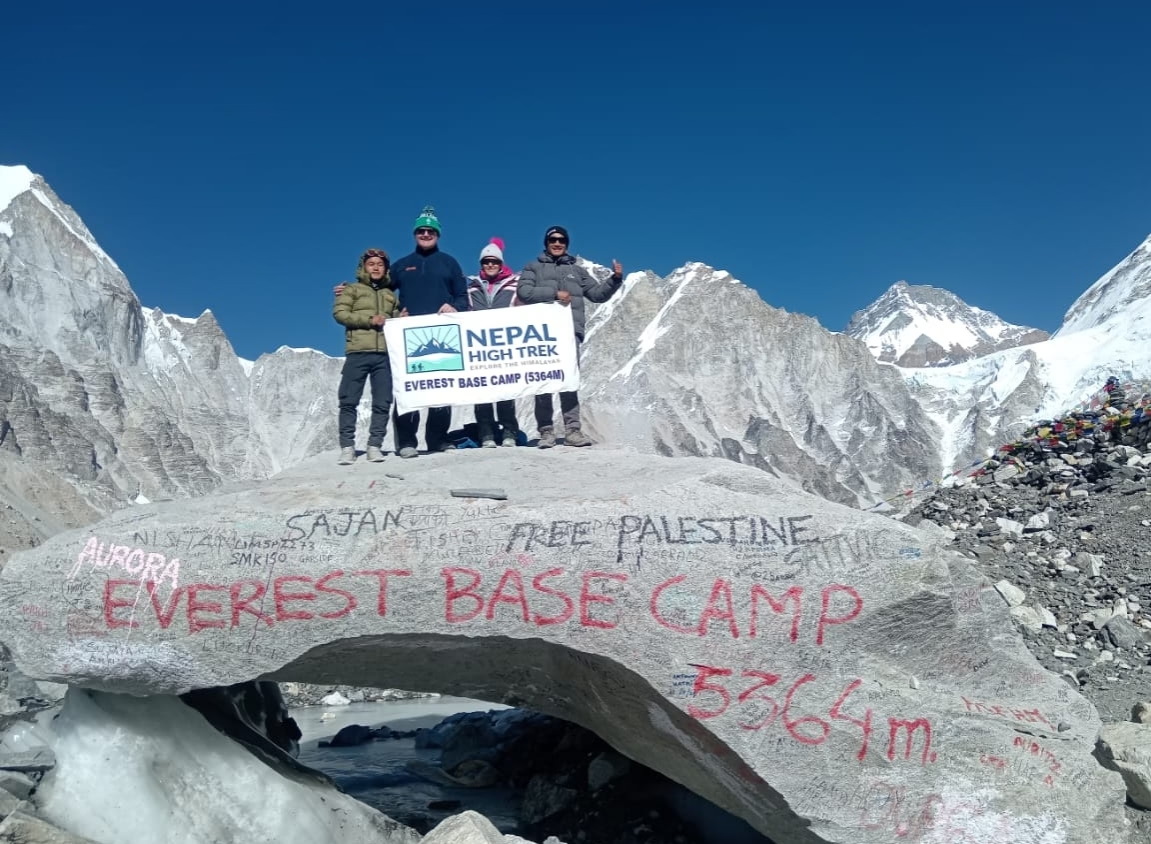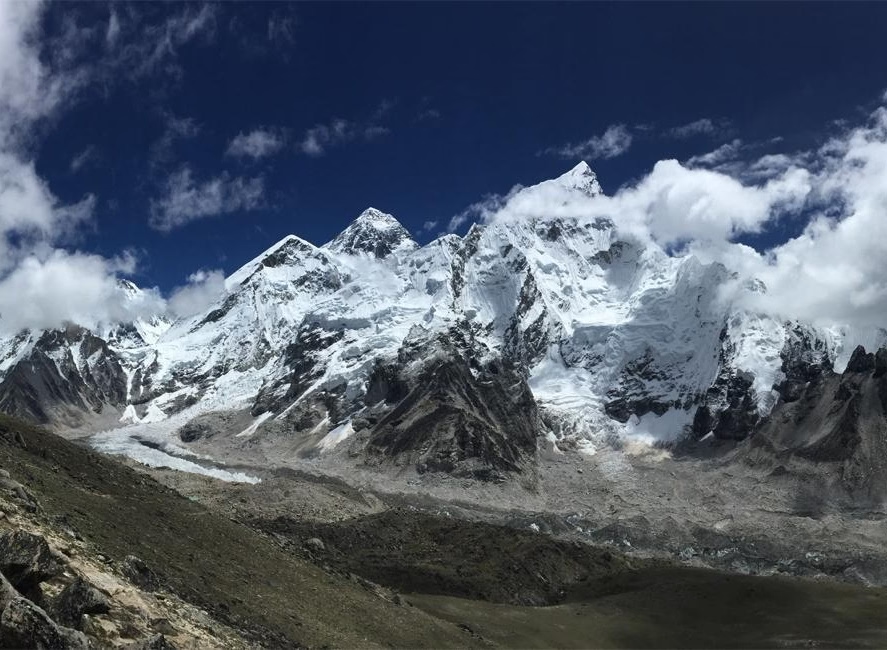
Everest Base Camp Budget Trek is an affordable way to experience one of Nepal’s most iconic Himalayan journeys without sacrificing the essential adventure. The trek follows the legendary trail through Lukla, Namche Bazaar, Tengboche, Dingboche, Lobuche, and Gorak Shep before reaching Everest Base Camp (5,364 m).
- Duration
- 14 days
- Difficulty
- Moderate/Adventure
- Destination
- Nepal
- Activity
- Trekking
- Accommodation
- Hotel/Lodge
- Transport
- Flight/Drive
- Meals
- B.D.L.
- Season
- Sep-Dec & Mar-May
Trip overview
The idea of the Everest Base Camp Budget Trek may sound odd! The journey to the foothill of the world’s tallest mountain, Mount Everest, can never be a budget trip. Up in the mountains, everything is expensive. It is said that the things that you eat or use have trekked before you! So, it is comparatively expensive and it is understandable. Fortunately, our travel planners at the Nepal High Trek are highly experienced and know about the trail inside – out. Therefore, we give you the best Everest Base Camp Budget Trek package. Enjoy the trek in least possible budget that you ever imagine.
Look, standing at the foot of the world's highest mountain shouldn't bankrupt you. It really shouldn't. With Nepal High Trek, you get the raw, unfiltered Himalayas without the inflated price tag attached to luxury lodges and helicopter rides. We strip away the unnecessary fluff, leaving just you, the trail, and the mountains. Ready to pull the trigger? Most folks think you need to drain your savings account just to catch a glimpse of the Khumbu icefall. You don't. We built this specific package to make the legendary EBC achievable for backpackers, students, and everyday folks who'd rather spend their cash on experiences than hot towels. It's gritty, authentic, and absolutely worth it.
So, what exactly are we talking about here? Basically, it's the classic route up to the 5,364-meter mark, just engineered to keep your wallet happy. Nepal High Trek handles the logistics—flights to Lukla, permits, bed spaces—but we skip the pricey extras. Think cozy teahouses instead of heated resort rooms. Dal bhat rather than imported steak. You walk the exact same dusty trails, cross those terrifyingly beautiful suspension bridges, and gasp for the identical thin air as the luxury crowds. Honestly, it’s a purist’s approach to the Khumbu region. You get the whole staggering mountain experience, just distilled down to its absolute essentials. Less pampering but with impeccable hospitality and more trekking with quality services from the staffs of the Nepal High Trek.
Why Choose a Budget Everest Base Camp Trek?
Note down that the Nepal High Trek is the best company for a budget Everest Base Camp Trek in Nepal. By booking a budget trek with Nepal High Trek, you end up sitting in the communal dining halls rubbing elbows with locals and fellow trekkers or climbers from across the globe. That shared suffering and joy over a hot cup of lemon tea can’t buy with the luxury mode trekking styles. You meet more authentic friends when you travel backpacking! Please note that we never downgrade our services in any types of trekking and tour journeys. We have same motto and working principle that is equity based!
Cost of Everest Base Camp Budget Trekking Package
Let's talk numbers, since that's what you're really here for. The Nepal High Trek budget package generally floats somewhere between $1,100 and $1,350. Sounds like a steal, right? That chunk of change covers your round-trip domestic flights from Kathmandu to Lukla, standard teahouse beds, three square meals a day, plus your indispensable guide. Here's the catch though and things you must understand before booking the Everest Base Camp Budget Trek. It doesn't cover your personal bar tab, fancy coffees, or those random hot shower fees the higher villages love to charge. You'll definitely want a stash of extra rupees in your pocket for charging your phone and maybe grabbing a celebratory beer once you make it back down to Lukla.
Everest Base Camp Trek Route and Distance
You'll cover roughly 130 kilometers round trip. That sounds like a long marathon, but remember, you're doing this over nearly two weeks. Starting in Lukla, the Nepal High Trek crew leads you up through Phakding, straight into the steep climb to Namche Bazaar. From there, it's a relentless push higher. Tengboche, Dingboche, Lobuche, and finally the rocky moraines of Gorak Shep. You hit Base Camp, take your photos, and then? You turn right around and retrace your steps downward. The descent is blindingly fast compared to the uphill slog. Your knees will probably complain a bit on the way down. Just pack some trekking poles.
Best Time for Everest Base Camp Budget Trekking for better price
If you gamble a bit and book with Nepal High Trek during the shoulder months, you can score some serious deals. Think late February or early December. Yeah, it’s going to be teeth-chattering cold. I won't lie to you. The trade-off is that you get empty trails, your pick of the best teahouse rooms, and zero wait time on those terrifying suspension bridges. Monsoon season is insanely cheap, but honestly, dodging leeches and staring at clouds all day isn't worth the discount. Stick to the cold shoulder months. The best part about booking the budget EBC Trek with Nepal High Trek is that we can operate the same trek in the same price even during peak trekking season. Yes, you can book the Everest Base Camp Budget Trek in Nepal for peak spring season (March – May) and autumn season (September – November).
Accommodation During the Budget EBC Trek
The teahouses are basic, functional, and mostly built from stone and plywood. Early on in the trek, you might get a room with an attached bathroom, which feels like a lottery win. But as you climb higher, it is two twin beds, heavy blankets and a shared squat toilet down the freezing hallway. That said, the dining halls are incredible. They have these big yak-dung stoves in the center where everyone huddles to thaw out after a brutal day of walking. It’s rustic, sure, but after trekking for seven hours, a foam mattress feels like absolute heaven. Everest has the best lodging facilities in comparison to other trekking trails of Nepal. In fact, the Annapurna Circuit Trek, the Langtang Valley Trek, and the Annapurna Base Camp Trek routes have similar kind of good level lodging facilities like in the Everest Base Camp Trek route.
Meals and Food on the Everest Base Camp Trek
You are going to eat a large amount of Dal Bhat. It's the national dish with saying popular as “Dal Bhat Power 24 Hour” meaning you get energy throughout a day with the meal. Rice, lentil soup, curried veggies and the best part is they offer endless refills if you choose the Dal Bhat option from menu. The Nepal High Trek usually includes three meals a day in the budget, meaning you pick from the teahouse menus. Breakfast is usually porridge, eggs, or Tibetan bread. Dinner might be garlic soup, which locals swear fights off altitude sickness, or maybe some greasy fried noodles. Now, meat is a tricky subject. Everything is carried up on the backs of porters or yaks, so by the time a chicken reaches Dingboche, it's hard to explain, so it is recommended to skip the meat. Stick to vegetarian options.
Everest Base Camp Trek Permits and Fees
You'll need two main documents. First is the Sagarmatha National Park entry permit, which costs around thirty bucks (NRs. 3000). Then there's the Khumbu Pasang Lhamu Rural Municipality ticket, setting you back another thirty dollars or so which is hiked since 2026 from NRs. 2000 to NRs. 3000. Sounds confusing? Don't stress it. The guides from Nepal High Trek sort all this red tape out in Kathmandu or at the Lukla checkpoint before you even lace up your boots. You just need to hand over your passport details and maybe a few passport-sized photos. They handle the permit obtaining task. You just worry about walking up the hill.
Guide and Porter Services for a Budget Trek
Even on a tight budget, going completely solo is a massive gamble. Nepal High Trek pairs you with a local guide who knows every rock, cloud pattern, and teahouse owner on the route. They keep you safe when the altitude hits hard. As for porters? A budget package usually means you carry your own backpack. It’s tough. Hauling fifteen kilos at 4,000 meters feels like dragging an anchor. If you realize halfway up that you’ve made a terrible mistake, you can usually hire a porter on the fly to take the load off, but it'll cost extra out of pocket. Better start doing some squats now.
The package of the budget Everest Base Camp Trek doesn’t include porter service but you can ask our travel planners to add one if you need. A porter may charge around 25 $ to 30 $ per day and he or she carries not more than 22 kilograms as per the policy of Nepal Government.
Everest Base Camp Trek Difficulty for Budget Package
Is it a technical climb? Absolutely not as you don't need ropes, ice axes, or any climbing background. But is it hard? To be honest with you, the difficulty level of the Everest Base Camp is hard. It's a relentless physical grind. You're walking for five to eight hours a day on steep, rocky, unforgiving terrain. Mental toughness matters way more than how many miles you can run at sea level. If you can handle discomfort and keep putting one foot forward, you'll make it. Furthermore, you also need proper physical fitness level with strong cardio – vascular ability to survive higher elevation places with thing oxygen level.
Altitude and Acclimatization on the EBC Trek
The air up there is incredibly thin, holding about half the oxygen you're used to breathing. Altitude sickness doesn't care if you're a triathlete or a couch potato; it hits totally at random. Nepal High Trek builds mandatory rest days into the budget itinerary, usually at Namche Bazaar and Dingboche, to let your red blood cells catch up. Drink insane amounts of water. Walk slower than you think you need to. If your head starts pounding like a bass drum and you feel nauseous, tell your guide immediately. Going down is the only real cure. Don't be a hero and don’t underestimate the risks of higher elevation trekking.
Don’t think too much while booking the Everest Base Camp Budget Trek in Nepal. Our travel planners have knitted the best package full of services that worth every penny that you spend. Even if you are booking the budget trek package, our way of service and our character of impeccable hospitality never leave you! Try us and find the difference. You will know why the Nepal High Trek is considered as the best trekking company for budget traveling in Nepal.
Itinerary
Itinerary at a glance
| Day | Route | Altitude at destination | Walking | Stay | Meals |
|---|---|---|---|---|---|
| 1 | Kathmandu | 1,440 m (4,724 ft) | 40 min | — | — |
| 2 | Kathmandu → Lukla/Phakding | 2,651 m (8,698 ft) | 3–4 hrs | — | — |
| 3 | Phakding → Nancge Bazaar | 3,438 m (11,280 ft) | 7–8 hrs | — | — |
| 4 | Namche Bazar → Day Hike Everes View | 3,440 m (11,286 ft) | 4–5 hrs | — | — |
| 5 | Namche Bazar → Tengboche | 3,870 m (12,697 ft) | 6–7 hrs | — | — |
| 6 | Tengboche → Dingboche | 4,360 m (14,304 ft) | 5–6 hrs | — | — |
| 7 | Dingboche → Nangkashung viewpoint | — | 3–4 hrs | — | — |
| 8 | Digboche → Lobuche | 4,910 m (16,109 ft) | 5–6 hrs | — | — |
| 9 | Lobuche → Gorakshep/EBC | 5,170 m (16,962 ft) | 7–8 hrs | — | — |
| 10 | Gorakshep → Pheriche | 5,545 m (18,192 ft) | 7–8 hrs | — | — |
| 11 | Pheriche → Namche Bazar | 3,440 m (11,286 ft) | 7–8 hrs | — | — |
| 12 | Namche Bazar → Lukla | 2,800 m (9,186 ft) | 7–8 hrs | — | — |
| 13 | Lukla → Namche Bazar | — | 30 min | — | — |
| 14 | Kathmandu → TIA Kathmandu Nepal | — | 35 min | — | — |
Day 1:DAY 01: ARRIVAL IN KATHMANDU (1440m)
Welcome to Nepal for an amazing Everest Base Camp Budget Trek! You will be welcomed by our airport representative and transfer you to your agreed hotel. All the trip details will be completed and you will also be introduced to your trekking guide. In the evening, if time permits, you can do shopping in Thamel or just stroll around. Overnight in a hotel
- 02
Day 2:DAY 02: FLY TO LUKLA, TREK TO PHAKDING (2,651M/8,700FT) 3 – 4 HOURS
Note down that our flight may not take place from Kathmandu. It will be notified to you during the time of trek booking. If it is scheduled from Ramechhap, then we will drive at around 1 or 2 am in the morning from Kathmandu to Manthali for the flight to Lukla. Upon reaching Lukla, we will stop for a short tea or coffee break. In the meantime, our local crew members will assemble baggage and we will start the trek to Phakding. Immediately after trekking past the EBC Trek trail gate, we will obtain the Pasang Lhamu Rural Municipality Entry permit. Today’s trail is easy as we descend majority of times and walk in the Nepalese flat trail all the way to Phakding. Overnight in a tea house
- 03
Day 3:DAY 03: PHAKDING TO NAMCHE BAZAAR (3,438M/11,280 FT): 11KM, 5 – 6 HOURS
Today is the day we reach the most beautiful place of the Everest Base Camp Trekking route. We will also cross multiple suspension bridges and the most iconic is the Hillary Twin Bridge in the foothill of Namche Bazaar in the confluence between Dudhkoshi River and Imja River. Before reaching the bridge, we will also enter the Sagarmatha National Park officially near Jorsalle. After crossing the Hillary Twin Bridge, we will trek uphill through green lush forests of pine trees and rhododendron. On the way, we may encounter Himalayan monal and other birds along the way. If the weather is clear, then we may see Mount Everest for the first time in this journey. Upon reaching Namche Bazaar, we will either rest in our tea house or you can stroll around the marketplace. It is the vibrant place in the Everest Base Camp Trek route. Overnight in a tea house
- 04
Day 4:DAY 04: ACCLIMATIZATION DAY – NAMCHE BAZAAR: (3,440M/11,284FT)
The first acclimatization takes place on this day. We will start our acclimatization hike after breakfast in our tea house. At first, we will visit the Sagarmatha National Park visitor center and Sherpa Museum located on the top of the Namche Bazaar. The sight of the mountains (Tabuche, Lhotse, Nuptse, Everest, Ama Dablam, Thamserku, Kwangde, Kusum Kangaru, and Kangtega looks spectacular from the place. You will be amazed to see the stone lifted from the top of the Mount Everest and the stone lifted from Israel the lowest point of the world in one statue in this park. We will also be amazed by the scenery of cascading hills, Namche Bazaar, Mountians, and Lower Dudhkoshi Valley from the park. We will continue our uphill trekking to the Everest View Hotel via Syangboche Airport. After spending quality time in the Everest View Hotel, we will descend back to Namche Bazaar for overnight sleep. Overnight in a tea house
- 05
Day 5:DAY 05: NAMCHE BAZAAR TO TENGBOCHE (3,870M/12,694FT): 10KM, 5- 6 HOURS
Early in the morning we will have breakfast and head towards Tengboche. At first until we reach Kyangjuma Village, the trail is Nepalese flat trail with beautiful scenery of mountains including Mount Everest. We will descend down to Phungi Thanga where we will have lunch in a restaurant on the bank of a river. After lunch, our permit will be checked once again by the Army official and we will trek uphill through green lush forests. Upon reaching Tengboche, we will check in to our tea house and visit the monastery in the evening. Overnight in a tea house
- 06
Day 6:DAY 06: TENGBOCHE TO DINGBOCHE (4,360 M/14,300 FT): 9KM, 5 – 6 HOURS
Today is the beautiful day of trekking and also diverse. The first phase of trekking until we reach Pangboche Village via Debuche is through alpine forests and farmlands of Sherpa people. After lunch in Somare Village, the landscape changes drastically. We will enter the open barren valley and reach the Dingboche Village, the last densely populated village in the Everest Base Camp Trek route located in the raised land on the banks of the Imja River. The sight of Mount Amadablam is so majestic from the village. You can stroll around the village or rest in the tea house to prepare for the acclimatization hike tomorrow. Overnight in a tea house
- 07
Day 7:DAY 07: DINGBOCHE ACCLIMATIZATION DAY
On this day, we will do our second acclimatization activity by climbing the Nagarshan Peak (5100 m). After breakfast, we will climb the hill and it takes about 2 to 4 hours to complete the round trip depending upon our trekking pace. After the hike, we will return back to our tea house for lunch. In the afternoon and evening, you can stroll around the village and talk with the locals, trekkers, guides, and porters. This is the most happening village as it is in the cross roads of many trekking trails and climbing trails. Island Peak Climbing, Lobuche Peak Climbing, EBC Trek, and the Everest Three High Passes Trek make this the base village. Therefore, it is always bustling. Moreover, two nights trekkers spend in the village and make it more crowded village in the Everest Base Camp Trek journey after Namche Bazaar. Overnight in a tea house
- 08
Day 8:DAY 08: DINGBOCHE TO LOBUCHE (4910 M) 5/6 HOURS
Early in the morning, we will have breakfast and climb the ridge to the Chorten place for our steady gentle uphill hike along the ridge towards Thukla Village. The sight of mountains like Pumori, Lobuche, and Tabuche become our friend and we will have lunch in Thukla. After lunch, the trail is steep uphill all the way to Thukla Pass where we will pay tributes to those who lost their lives during peak climbing in Everest region. From Thukla Pass, the trail becomes rugged and rusty as we walk along the banks of Lobuche River all the way to the village. Overnight in a tea house
- 09
Day 9:DAY 09: LOBUCHE TO GORAK SHEP (5170 M/16,961FT), VISIT EVEREST BASE CAMP (5364 M/17,594 FT)
Finally, the day of reaching the Everest Base Camp is today. We will start to walk along the banks of Lobuche River until we reach the Lobuche Pass foothill. The uphill trek of about 30 minutes will take us to the summit and we start the treacherous walking through Khumbu Moraine all the way to Gorakshep. In Gorakshep, we will stop for quick lunch and continue the trek towards Everest Base Camp. After walking for about 2 hours from Gorakshep, we will reach base camp where we will capture all the memories and pictures. After spending for about 30 minutes in the base camp, we will retrace the same trail back to Gorakshep. We will head to our bed early to prepare us for morning hike to Kalapathar for sunrise experiences. Overnight in a tea house
- 10
Day 10:DAY 10: GORAK SHEP TO KALA PATTHAR (5,545M/18,192FT) TO PHERICHE 7-8 HOURS
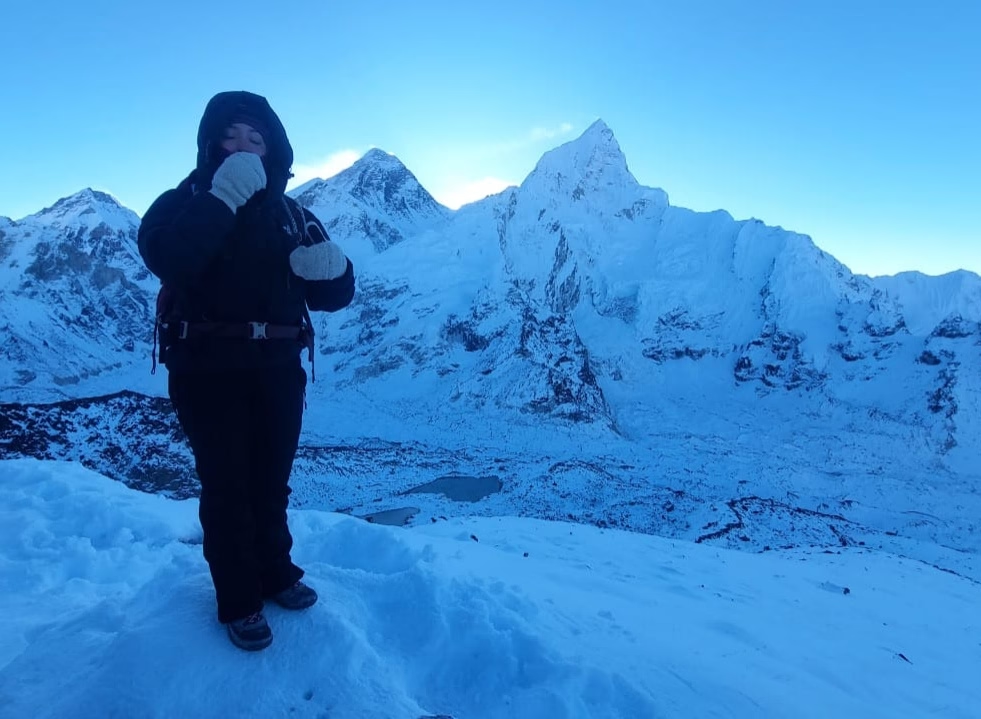
Early in the morning before dawn, we will start our hike to the top of the Kalapathar. Your trekking guide will decide whether to hike to the top or not according to the weather conditions. If weather condition is not good for sunrise experiences, then we will retrace the same trail back to Pheriche via Lobuche and Thukla. The sight of sun rising from the casement of mountains is the sight to behold. It is unmatched and incomparable to any Himalayan excursions! We will have breakfast after returning back from Kalapathar and continue our journey to Pheriche. Overnight in a tea house
- 11
Day 11:DAY 11: PHERICHE TO NAMCHE BAZAAR (3440M.) 7 - 8 HRS
We will retrace the same trail via Pangboche and Tengboche back to Namche Bazaar. You can enjoy in various eateries and bars of the town as it is after the successful journey of the Everest Base Camp. The return trek is always nice and comfortable due to decrease in altitude and easiness in breathing. Overnight in a tea house
- 12
Day 12:DAY 12: NAMCHE BAZAAR TO LUKLA (2800M) 7/8 HRS
After breakfast, we will retrace the same trail back to Lukla via Jorsalle, Monjo, and Phakding. In the evening, you can enjoy with the local crew members to celebrate our successful journey to the Everest Base Camp. This is also the time when you give tips to your trekking guide and porters. It is truly the best time to enjoy by dancing in the local tunes and chumping local foods or sometimes drinking the local brewers or praise yourself in completing the legendary journey of the Everest Base Camp in Nepal. Overnight in a tea house
- 13
Day 13:DAY 13: FLY TO KATHMANDU 30 MINUTES
Early in the morning, you will be transferred to the airport for the flight to Kathmandu. If the route is from Manthali, then we will take a jeep back to Kathmandu from Ramechhap. Upon reaching Kathmandu, you will be welcomed by our office representative. Farewell dinner will be organized and the office will ask for reviews about the trek. We will share our memories over a dinner. Overnight in a tea house
Day 14:DAY 14: FINAL DEPARTURE
We will take you back to the International Airport in Kathmandu for final departure. We will bid farewell with heavy heart but with promise to meet again for another adventure in Nepal.
Are you looking to customize the trip itinerary?
If the provided schedule is not suitable for you, we can create a personalized travel arrangement tailored to your preferences and requirements.
Cost breakdown
What's included
Government license holder mountain guide, including salary, meal, accommodation, and insurance.
One strong porter for each two clients to carry your luggage.
Sagarmath National Park Permit.
Pasang Lhambu Rural municipality entrance fees.
What's not included
Travel insurance.
Lukla flight, meals and drinks.
Local accommodation during the trek.
All personal expenses.
Tipping for Guide and Porter