Nepal High Trek
Contact Us
Traveler 1

💚 99% Recommended

by verified travelers

The Gokyo Lake Trek in Nepal is the walking journey to the blue turquoise lakes listed in the Ramsar Conservation Site. Explore five lakes formed from the seepage of Choyou Mountain near the world’s longest Ngozumpa glacier. The sunset or sunrise from Gokyo Ri and Sherpa villages are added bonus of the trek. The difficulty level of the trek is lower than the Everest Base Camp Trek and it is possible in about 10 Days’ Itinerary. The trail offers best spectacles of alpine forests, glacial lakes, vantage point, and Khumbu Himalayan allures.
Duration
12 days
Difficulty
Moderate/Adventure
Max Altitude
5340 m
Destination
Nepal
Activity
Trekking
Accommodation
Hotel/Lodge
Group Size
1
Transport
Both way Flight
Meals
B.D.L.
Season
Sep - December & Mar-May

Trip overview

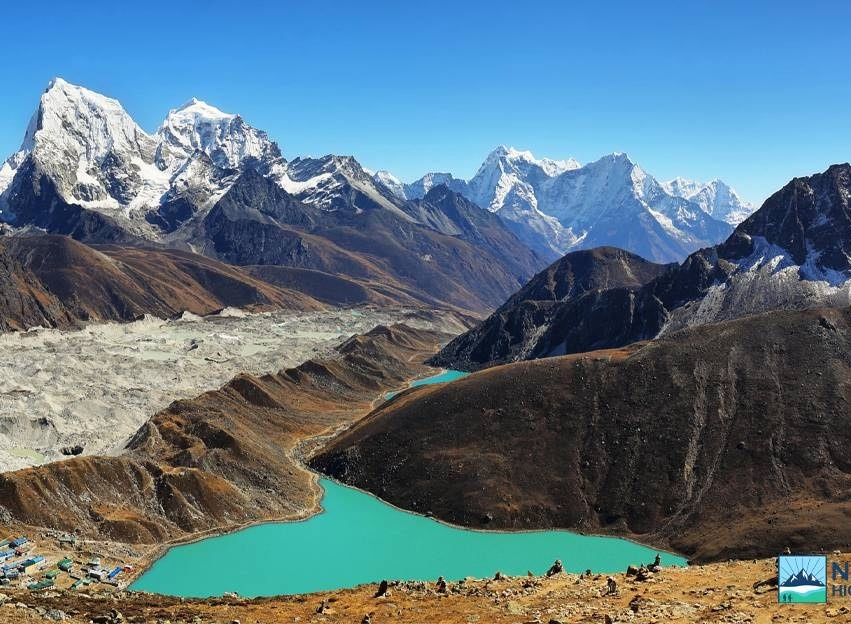
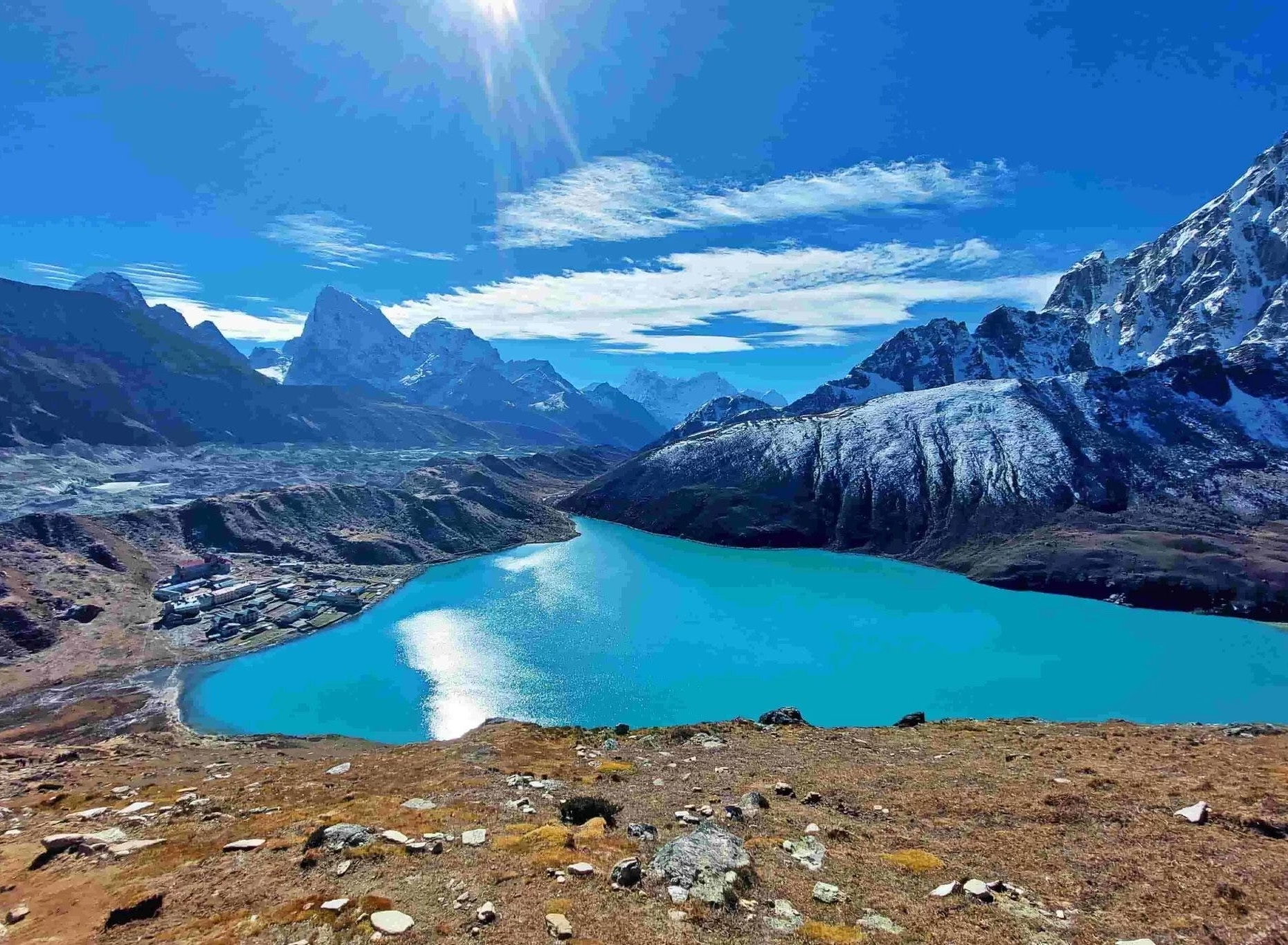
Up in the mountains, there is a gorgeous blue-turquoise glacial lake. With an image of gigantic mountains on the lake water, the scenery looks purely fictitious and mythic. Sherpa, mountains, myth, and lakes present splendid holiday moments. Gokyo Lake Trek in the Everest region of Nepal is probably the most beautiful trekking route of Khumbu. This trek offers adorable scenarios of Gokyo lakes, glaciers, and fabled mountains with hidden Sherpa cultures.

The Everest region of Nepal is the epitome of all trekking adventures. It is probably the most kept travel bucket list destination. After Everest Base Camp Trek, Gokyo Lake Trek is the most eminent trekking route in the Khumbu region of Nepal.  However, you can extend the trek to Everest Base Camp as well via Chola Pass (5420m). Nepal High Trek & Expedition has probably the latest and correct itinerary of the Gokyo Valley Trek. The major reason behind this is the trekking crew members. All of our guides and porters for the Khumbu trekking are either Sherpa or locals.

Blue Turquoise Lake and Sherpa Hamlet

At an altitude of 4700 m from sea level, you can find five outstanding lakes. These lakes are listed in the Ramsar Site as well. Even if there are five lakes, the most popular one is the third lake. However, people explore all three lakes including the Gokyo Ri hiking during the trip. The lake is not only beautiful but also has religious significance. Sherpa people worship the lake every year as they believe the god resides in the lake. Interestingly all five lakes are connected underground as well. However, it is just a myth.

1st, 2nd, and 3rd Lakes are on the way to the teahouse area. However, the fourth and fifth lake is above the teahouse valley. Earlier the place was the pasture land used by the Sherpa people of Khunde and Khumjung. Nowadays, a small hamlet is there but no houses. The shores of the lake are full of teahouses.

A Mesmerizing Gokyo Ri Viewpoint in the Khumbu

Probably, Gokyo Ri Viewpoint is one of the best and most marvelous viewpoints in the Khumbu region. The highlight of the Gokyo Lake Trek in Nepal is the hiking of Gokyo Ri as well. Witness either sunrise or sunset from the top of Gokyo Ri (5357 m/17575 ft). You can get the outstanding scenery of mountains as far as Mount Everest, Mount Makalu, Mount Choyou, and Mount Lhotse, and panoramic views of the stunning Himalayas. Bask in the fantastic vantage point from where you can get the view of four of the top ten mountains of the world. The panoramic view of the mountains helps trekkers forget all the journey’s hardships.

Gokyo Fifth Lake – The Place for a Unique Everest View

During the Everest Base Camp Trekking journey, trekkers get a glimpse of Mt. Everest. However, it is through a small window in between the Lhotse and Nuptse walls. But the view of Mount Everest from Fifth Lake is outstanding. Therefore, lots of people trek to Gokyo Lake for the splendid and different view of Mount Everest.

Route Overview of Gokyo Lake Trek

Almost every trekking trip in the Khumbu region starts from Lukla except for some classical treks. It is similar to Gokyo as well. Check out the Everest Base Camp Trek itinerary for more information on the route up to Kyangjuma nearby Namche Bazaar. Trekkers leave the main Everest Base Camp Trail in Kyangjuma and head to the Mongla Danda route. After the acclimatization rest in Namche Bazaar, trekkers have to stay overnight in places like Dole and Machhermo before reaching the Gokyo Valley.

Altitude Sickness, Travel Insurance & Acclimatization

Trek to Gokyo Lake is also one of the high-altitude trekking in Nepal. The highest point on this trip is 5357 m from sea level. However, overnight high altitude resting place is an altitude of 4700 m. Therefore, the trail is prone to altitude sickness. Interestingly, trekkers don’t need to worry about altitude sickness during this trek. The acclimatization rest in Namche Bazaar is enough for the trekkers to continue walking higher.

The Gokyo Lake Trek in Nepal requires travel insurance. Trekkers must buy an insurance plan. The plan must include helicopter rescue, accidents, flight delays, and medical expenses.

Sherpa Culture & Diverse Forests

The trail is good for understanding the Sherpa people and the diverse forest environment of Khumbu. Trekkers start the trek from the deciduous forests belt and reach high up to the alpine forests belt. Therefore, vegetation lovers can find wonders on the trail.

As for the cultural attractions, Sherpa villages and monasteries are the highlights. There are many pagodas, Mane walls, and monasteries along the way. Moreover, a visit to the Sherpa villages offers an authentic chance to understand these intrepid mountain climbers. Understanding them in their comfort is always fascinating. Imagine yourselves interacting with the fierce mountain climbers. Well, it is a truly remarkable experience to view mountains and their conquering beast in just one single trip.

Can I go to the Everest Base Camp via Gokyo Lake Trek?

Yes, it is possible to do Everest Base Camp Trek after the Gokyo Lake excursion. Moreover, you can buy the Everest Base Camp Chola Pass Trek package. It includes Everest Base Camp, Everest Three High Passes Trek, Chola Pass, and Gokyo Valley. Therefore, if you wish to add the base camp then it is wise to get the EBC Chola Pass Trek package.

Apart from the Everest Base Camp, Gokyo Valley is also the focal point during the Everest Three High Passes Trek. After crossing the Renjo La Pass, trekkers can reach the Gokyo Lake area. The Khumbu Circuit Trek consists of Gokyo Valley as well. The place is at a crossroads. Therefore, you can add either adventure three-pass trek or Everest Base Camp to your itinerary.

Nepal High Trek – A reliable Trekking partner for Everest Region Travel Activities

It’s been more than a decade since the company is operating trekking in the Everest region of Nepal. Our guides and porters are from Khumbu. Therefore, we have the latest information and authentic data about mountains, people, culture, and climate. For high-altitude trekking, it is essential to have the perfect guidance and itinerary. We have the highest success rate. So, without any delay contact our travel planners. Plan your Gokyo Lake Trek in Nepal with Nepal High Trek And Expedition.

Itinerary

Altitude profileMax 4,790 m
1,350 mD12,660 mD23,440 mD33,880 mD44,010 mD54,470 mD64,790 mD74,015 mD83,440 mD92,860 mD101,350 mD11130 mD12
  1. Day 1:Arrival TIA in Kathmandu - 1350 m then transfer to hotel - 30m

    1,350 m35mHotel

    The representatives from Nepal High Trek & Expedition Pvt. Ltd. will welcome you to Tribhuwan International Airport. Then we will take you to the hotel arranged by our company for the overnight stay. We will discuss trekking and will check the all gear.

  2. 02

    Day 2:Fly to Lukla 2,860m and trek to Phakding village 2,640 m – 3/4 hrs.

    2,660 m4/5 HrsGuest HouseB/L/D

    The Gokyo Lake Trek begins with a sweeping short scenic flight to Tenzing Hillary Airport Lukla Solukhumbu District. It takes half an hour to reach at Lukla. If the weather gets clear you can see Mount Everest with the majesty Himalayas of Khumbu. We suggest you stay in the left line inside the plane and there is no seat system.

    After receiving the Khumbu entrance ticket we will head to Phakding and it takes  3 to 4 hours to get there. The journey starts on a winding downhill path with a short climb passing many traditional Sherpa villages with views of stunning peaks. After a pleasant walk reach Phakding for an overnight stop near the glacier-fed Dudh Kosi (river).

  3. 03

    Day 3:Trek from Phakding to Namche Bazaar (3,440 m) – 7/8 hrs.

    3,440 m7/8 HrsGuest HouseB/L/D

    After a pleasant overnight stop in Phakding, we'll head to Namche Bazar. After breakfast, the trails go through the Dudh Kosi River, traditional Sherpa villages, suspension bridges, and crossing the Sagarmatha National Park. At Monjo, we should buy the Sagarmatha national park permit and then go to Jorsale village. At Jorsale we'll have lunch there and between Jorsale and Namche not available the lunch place. After lunch, the trail goes through the bank of the  Dudhkoshi River and reaches at the popular Hillary suspension bridge. After crossing the Hillary suspension bridge the trail is quite tough and gradually up to Namche Bazar. Along the trail, you can the Everest with other beautiful peaks too. The Namche Bazar is a massive Himalayan town throughout the Everest base camp trail where you can get most of the amenities too. This place is extremely beautiful to stay immersed in nature and culture.

  4. 04

    Day 4:Acclimatization Day ( Hike to Hotel Everest View with Khumjung Village) - 5 Hrs

    3,880 m4/5 HrsGuest HouseB/L/D

    When you cross above the 35oo meters acclimatization is very crucial to adjust on high altitude. So today after breakfast we'll hike up to Hotel Everest View and Khumjun Village. You must climb around 400 meters to reach Hotel Everest View and it's the best viewpoint to see the numerous peaks like Everest, Lhotse, Nupte, Amadablam, Thamserku, Khangtenga, Tauche, and mesmerizing view too. The Khumjun village is one of the beautiful and massive authentic villages where you can see the local Sherpa culture, Buddhist monasteries, Hillary school, and various landscapes.

  5. 05

    Day 5:Trek from Namche Bazar to Dole 4,010 m – 6/7 hrs.

    4,010 m6/7 HrsGuest HouseB/L/D

    After a pleasant stop at Namche Bazaar our journey to Dole. The trail leads to the gentle winding trail with eye-catching views as the walk leads to Shanasa village. From this spot, our route diverts away from the main Namche-Everest base camp trail towards quiet areas towards Gokyo Lake. The path climbs with a steep climb to reach a Mong 3,973 meters with amazing views and then a downhill walk to Dudh Kosi River at Phortse Thanghka for lunch.

    After Phortse Thanga, continue to walk to Dole as the trail climbs steeply out of the valley through a patch of rhododendron forest with landscape. Where you see the juniper and conifer trees. In the springtime, this place will be magic with wildflowers in full bloom. This path passes summer Yak pastures. The trek leads past Tongba and Gyele villages to reach at Dole with a super view of Khumbila and Tawache 6,542m.

  6. 06

    Day 6:Trek from Dole to Machhermo 4,470 m - 6/7 hrs.

    4,470 m4/5 HrsGuest HouseB/L/D

    Morning walk from Dole climbs along the side of the beautiful valley with stunning peaks. Where the rhododendron forest stops, giving way to smaller bushes of juniper as you gain altitude slowly. Finally, the walk leads on the level path for an hour to Lhabarma Kharka and Luza at 4,390 m. After that skirting around a ridge downhill to Macherma village. Arriving at Machhermo for lunch and overnight stop with time in the afternoon for a short walk or just relax. You can walk around the beautiful valley in the Evening.

  7. 07

    Day 7:Trek from Machhermo to Gokyo 4,790m - 4/5 hrs.

    4,790 m3 HrsGuest HouseB/L/D

    From this small settlement, our walks continue to Gokyo 3rd Lake, following a scenic path to Pangka small area and then slightly ascending to Gokyo Lakes. You will go through the glacial-fed rivers which flow from Ngozumba Glacier of high world 6th highest Cho-Oyu and other adjoining peaks.

    The walk leads to a climb by the side of a glacier, passing the first lake and the second lake. As well as crossing the path to reach the third lake known as Dudh Pokhari or Gokyo Lake a summer settlement with fantastic views of Mt. Cho Oyo and Gyachung Kang that reflects on the emerald green waters of Gokyo Lake.

  8. 08

    Day 8:Morning hike to Gokyo Ri - 1 Hrs (5357 m) then back to down Dole -4010 m (6/7 Hrs)

    4,015 m6/7 HrsGuest HouseB/L/D

    In the early morning hike uphill to Gokyo Ri viewpoint and it the best vantage place to see the world's eight thousand meters mountains like Everest, Lhotse, Makalu and Cho Oyu. Besides this mountain, you can explore the numerous peaks, gokyo lakes, and Ngozumpa glacier with breathtaking views too

    After a wonderful stop at Gokyo Ri, head downhill to Gokyo for breakfast then back to down 5 to 6 hours. The trail is completely downhill with beautiful views of peaks.

  9. 09

    Day 9:Trek from Dole to Namche Bazar 3,440 m – 6/7 hrs.

    3,440 m6/7 HrsGuest HouseB/L/D

    Today we're going downhill to Namche Bazar. The trail is mostly downhill and will go through the Mongla Danda, Kyanjuma then will reach Namche Bazar. Yo can walk around the majesty mountains with a thrilling landscape and local ethnic culture too. An overnight stay at Namche and you can visit the local bars in Namche.

  10. 10

    Day 10:Trek from Namche Bazar to Lukla (2860 m) - 7/8 Hours

    2,860 m7/8 HrsGuest HouseB/L/D

    After an enjoyable time in Namche Bazar, we will back to Lukla through the separate villages of Sherpa. Today you must walk 17km from Namche to reach Lukla and it takes 7 - 8 hours. We will be coming back to Lukla through the Hillary Suspension Bridge, Sagarmatha National Park, and Dudhkoshi River. We will have lunch on the way to Phakding or somewhere in a suitable place. At the last overnight stop within the Everest region, after lunch free and celebrate dinner with fellow members, staff, and guides.

  11. 11

    Day 11:Fly back to Kathmandu and transfer to hotel.

    1,350 m40mHotelB/L/D

    If the weather gets clear at Lukla airport we will back to Kathmandu by flight and it will take half an hour. However, you must prepare mentally for unseen flight cancellation in Luka due to bad weather.

  12. Day 12:Final International Departure

    130 m35mHotelB/L/D

    Your last day in Nepal, the amazing country of Himalayan wonders with Nepal High Trek. As per your flight time leaving to airport before 3 hours. Our crew will drop you at the airport. We hope you had a wonderful trip to Nepal with us and can not wait for the next adventure.

Are you looking to customize the trip itinerary?

If the provided schedule is not suitable for you, we can create a personalized travel arrangement tailored to your preferences and requirements.

Customize Trip

Cost breakdown

What's included

  • All ground transportation.

  • Meals During Trek:  (Breakfast, Lunch, and Dinner).

  • Two-night hotel in Kathmandu with breakfast.

  • Three cups of tea during the trek.

  • Sagarmatha National Park Permit.

  • Khumbu Rural Municipality Entrance Ticket.

  • Domestic Flight Ticket From Kathmandu to Lukla / Kathmandu.

  • Good Accommodation on the trek.

  • Fresh fruit during the trek

  • NHTE’S Dawn jacket, sleeping bag & duffle bag. (If required )

  • An experienced, expert, helpful and friendly Guide and Their well-paid Salary, Food, Drinks, Accommodation, Transportation, and Insurance for the Guide.

  • One strong porterfor  each two clients (No porter for solo traveler)

  • An arrangement of Emergency Helicopter service which will be paid by your Travel insurance company.

  • Medical kit bag.

What's not included

  • Your Travel insurance.

  • All the Food in Kathmandu. Also in the case of early return from the mountain (due to any reason) then the scheduled Itinerary.

  • All the expenses in the mountain over than scheduled itinerary (due to strike, delay, or canceled flight)

  • Extra night Hotel in Kathmandu if arrive early or late departure than scheduled Itinerary.

  • All the Bar bills and personal expenses (phone call, laundry service, battery recharge, a bottle of water, hot water, shower.

  • Tips for the guide and porter.

Dates & Availability

Filter departures by month
16Aug

Aug 16 – Aug 27, 2026

Available
$1,099pp
19Aug

Aug 19 – Aug 30, 2026

Available
$1,099pp
22Aug

Aug 22 – Sep 2, 2026

Available
$1,099pp
24Aug

Aug 24 – Sep 4, 2026

Available
$1,099pp
27Aug

Aug 27 – Sep 7, 2026

Available
$1,099pp
29Aug

Aug 29 – Sep 9, 2026

Available
$1,099pp
31Aug

Aug 31 – Sep 11, 2026

Available
$1,099pp

Trip map

Loading map…

Useful information

What is the Gokyo Lake Trek?

Think of it as the ultimate alternative to the standard Everest Base Camp Trek in Nepal. Instead of tracking straight toward the chaotic base camp, we branch off at Kyangjuma and head straight into a high alpine glacial valley via Mongla Danda instead via Tengboche to Everest Base Camp. You hike alongside shimmering, turquoise glacial lakes framed by massive peaks. It’s remote. It’s quiet. We love how dramatically different the terrain feels compared to the dusty Khumbu valley. You get world-class views of Cho Oyu and Everest without fighting through giant crowds of hikers every single hour.

Is the Gokyo Lake Trek Harder Than Everest Base Camp?

Honestly, they are pretty comparable in difficulty, but Gokyo has its own challenges. The climb up to Gokyo Ri is significantly steeper and looser than the gradual walk into Everest Base Camp. Your calves will burn. That said, the daily distance on the way up through Dole and Machhermo is slightly gentler. We find the mental strain is lower because the trails are so peaceful. If you can handle standard high-altitude trekking, you can definitely handle Gokyo. In short, the EBC Trek is challenging than the Gokyo Lake Trek.

How High are the Gokyo Lakes and Gokyo Ri?

The lakes sit shockingly high up. The main village of Gokyo rests right beside the third lake at roughly 4,790 meters. You definitely feel the thin air. From there, we scramble up to the summit of Gokyo Ri, which punches up to 5,357 meters. That’s almost identical to Everest Base Camp’s altitude. Sleeping right at 4,800 meters tests your body. We always make sure to spend two nights acclimatizing down in Machhermo before pushing all the way up.

What Permits Do We Need for the Gokyo Trek?

Paperwork is actually pretty simple. You need the exact same two permits as the standard Everest Base Camp Trek route. First comes the Khumbu Pasang Lhamu Rural Municipality entry permit, which we grab in Lukla. Second is the Sagarmatha National Park entry ticket, sorted out at the Monjo - Jorsalle checkpoint.

Can We Hike Gokyo Lakes Without a Guide?

Nope, the rules are clear across Nepal now since 2026 even if it is not absolutely executed diligently. Solo trekking without a licensed local guide is officially banned but unfortunately many are doing it with lots of risks. We actually think this is a huge blessing on this particular trail. The path through the Gokyo valley can get sketchy fast, especially when crossing the moving scree of the Ngozumpa Glacier. A guide spots rockfall hazards long before you do. Plus, they handle snagging the best rooms in tiny villages like Machhermo where lodge space gets tight.

What is the Best Time of Year to Trek to Gokyo?

Autumn is unbeatable. October and November bring crystal-clear skies, bright turquoise lake water, and crisp sunny days. Spring season especially April and May are also stunning because the wildflowers bloom down low, though the lakes might still have a thin sheet of winter ice. We usually avoid winter because the lakes freeze solid and snow blocks the high passes. Monsoon season in summer brings rain and thick fog, completely hiding the massive 8,000-meter peaks behind stubborn gray clouds. If you are choosing the Gokyo Lake Trek only, then you can do the trek throughout the year.

Can We Do Gokyo Ri and EBC Together via Cho La Pass?

Yes! This is the legendary Gokyo Lake Chola Pass Everest Base Camp Trek circuit. It’s an absolute beast of a trek. You link both famous valleys by climbing over the icy Cho La Pass at 5,420 meters. Is it exhausting? Absolutely as you need microspikes for the slippery glacier on top of the pass. But combining both routes gives you the best of everything in the Khumbu region. We always tell experienced hikers to go for the full circuit if their schedule allows it.

How Many Lakes are There in the Gokyo Valley?

There are six major glacial lakes in the chain but it is believed that there are more than 19 Gokyo Lakes. You hike right past the first, second, and third lakes on your way into Gokyo village. The third lake, Dudh Pokhari, sits right in front of the lodges with its insane milky-blue water. We love taking an extra day to hike further up the valley to explore the fourth, fifth, and even sixth lakes but it is sometimes non reachable but you can visit the Scoundrel’s Viewpoint instead.

What Can We Expect From the View at Gokyo Ri?

It blows Base Camp right out of the water. Seriously. When you stand on top of Everest Base Camp, you are too close to actually see Everest's summit. On Gokyo Ri, you get an unmatched panoramic view of four distinct 8,000-meter giants: Everest, Lhotse, Makalu, and Cho Oyu. Below you sits the enormous, winding Ngozumpa Glacier and the glowing blue lakes. We think it is easily the single greatest mountain viewpoint in the entire Himalayas.

Is Altitude Sickness a Serious Risk in Gokyo Valley?

Yes. Never underestimate the altitude here. The climb out of Namche Bazaar gains height quite fast once you pass Mong La. We often see trekkers get hit with headaches around Dole or Machhermo. Drink tons of water. Take a dedicated acclimatization day before sleeping at the lakes. If you experience nausea or intense dizziness, tell your guide immediately. Never push through serious AMS symptoms; dropping down a few hundred meters makes a massive difference right away.

How Do We Reach the Trailhead for Gokyo?

You take the classic mountain flight from Kathmandu or Ramechhap directly into Lukla's famous runway. From Lukla, we follow the main Everest trail through Phakding up to the Sherpa hub of Namche Bazaar. Just past Namche, the trail splits. The busy crowds head right toward Tengboche and Base Camp, while we swing left, climbing steeply over the Mong La ridge into the tranquil Gokyo valley. From that split point on, everything gets wonderfully peaceful.

Are Teahouses Along the Gokyo Trail Any Good?

They are cozy, though slightly more rustic than the larger lodges in Namche. Settlements like Dole, Luza, and Machhermo are quite small, featuring just a handful of wooden lodges. In Gokyo village itself, lodges sit directly on the lakeshore. Rooms are unheated, basic wooden twins, but the central dining halls stay warm with yak-dung stoves in the evenings. We always carry our own sub-zero sleeping bag because those high-altitude nights get bitterly cold fast.

What Kind of Food Do Teahouses Serve in Gokyo?

Expect standard trekking comfort food. Dal Bhat remains our daily staple because it offers unlimited refills of rice, lentil soup, and cooked greens. You can also order hot Sherpa potato stew, fried garlic noodles, porridge, and momos. Fresh meat is generally a bad idea this high up since porters haul everything up without refrigeration. Stick to vegetarian meals, sip hot lemon ginger honey tea, and your stomach will stay perfectly happy throughout the journey.

How Cold Does It Actually Get at Gokyo Lakes?

Brutally cold at night. During sunny autumn afternoons, you can comfortably hike in a long-sleeve base layer while temperatures hover around 10°C. But the second the sun ducks behind the high mountain ridges, temperatures plummet rapidly. At Gokyo village, nights easily drop to -10°C or even -15°C in late autumn. We always pack a heavy-down jacket, thermal underwear, and a warm beanie just to hang out comfortably in the teahouse dining room.

Can We Cross the Ngozumpa Glacier Safely?

Yes, but you have to be extremely alert. The Ngozumpa is Nepal’s longest glacier, covered in shifting gray rocks, sandy scree, and hidden meltwater pools. The trail across to Dragnag changes constantly as the ice moves beneath the dirt. We never attempt crossing it without our guide leading the way. Watch out for rolling stones, stick strictly to the marked cairns, and cross early in the morning when the ground is still frozen.

How Long Does the Entire Gokyo Lake Trek Take?

A classic return trek to Gokyo Lakes usually takes about 11 to 13 days round-trip from Kathmandu. This includes two vital rest days along the way, plus an extra day to explore the upper fourth and fifth lakes. If you choose to add the Cho La Pass and continue onward to Everest Base Camp, plan for at least 16 to 18 days. We always suggest adding a couple of buffer days for Lukla flight delays.

Is There Wi-Fi and Electricity in Gokyo Village?

Yes, but don't expect blazing speeds. Most lodges in Gokyo village connect to local networks like Airikshya or Everest Link prepaid Wi-Fi cards. The signal works for basic messaging, though bad weather knocks it out instantly. Electricity runs mostly on solar power up here. Lodges charge a small fee—usually a few hundred rupees—to charge your phone or camera batteries in the common dining area. We always carry large power banks to avoid paying daily charging fees.

Why Choose Gokyo Lakes Over the Classic EBC Trek Route?

Because it trades dusty paths for pure, unblemished beauty. The standard EBC trail has turned into a busy highway of trekkers, yaks, and helicopters. Gokyo offers silence. The scenery is radically different, replacing rocky moraines with glowing neon-blue waters and sweeping 360-degree summits. We think Gokyo gives you a far more authentic, wild Himalayan experience. You still get to see Everest, but you don't have to share the trail with a hundred people at once. But, note that you may not get chance to leave your footprint at the base camp of the world’s tallest mountain if you choose only the Gokyo Lake Trek.

Packing list

Clothing & Khumbu Layering

Weather in the Khumbu valley swings wildly: scorching sun at midday, freezing winds coming off Thamserku and Ama Dablam in the afternoon, and frost at night.

  • 2 Quick-Dry Merino or Synthetic T-Shirts: Avoid cotton like the plague. Sweat from the Namche climb will freeze on your back the minute you stop walking.

  • 1 Mid-Layer Fleece or Grid-Fleece: Perfect for hiking during brisk mornings or around Namche in the late afternoon.

  • 1 High-Loft Packable Down Jacket: Mandatory. You'll pull this out the moment you stop hiking, during evenings in the tea house, and for early morning viewpoint walks.

  • 1 Windproof & Waterproof Outer Shell: The wind funneling down the Dudh Koshi river valley can be intense. A wind-blocking shell is crucial.

  • 2 Pairs of Hiking Pants: One lightweight pair for lower elevations (Phakding) and one slightly thicker/wind-resistant pair for Namche and above.

  • 1 Thermal Base Layer Set (Top & Bottom): Keep one set 100% dry inside your bag for sleeping in and wearing under your trousers on cold mornings.

 Hygiene, Medical & "Khumbu Survival

  • Wet Wipes (2 Packs): Hot showers cost $4–$6 in Namche/Phakding and are less appealing when the bathroom air is freezing. Wet wipes are your primary cleaning option.

  • 2 Rolls of Toilet Paper: Flattened into Ziploc bags. Teahouses in the region rarely supply TP.

  • Sunscreen (SPF 50+) & Lip Balm with SPF: Reapply constantly.

  • Water Purification (Aquatabs / SteriPEN / Filter): Buying bottled water on the trail is expensive and bad for the environment. Treat local tap water instead.

  • Khumbu Medical Kit:

    • Diamox (Acetazolamide): You reach ~3,880m at Everest View Hotel / Tengboche. Consult your doctor beforehand regarding altitude medication.

    • Throat Lozenges / Cough Drops: Soothes dry throat irritation from trail dust.

    • Ibuprofen & Paracetamol: For altitude-induced tension headaches or muscle pain.

    • Compeed Blister Pads & Rehydration Salts: Crucial for multi-day ascents.

Main Gear & Flying Essentials

  • 30L to 40L Duffel or Ruck: If you hire a porter, a soft, durable duffel bag works best. If you're carrying your own load, stick to a 35L–40L backpack.

  • 15L–20L Light Daypack: For your flight hand-carry (camera, passport, wallet, down jacket, water bottle).

  • Sleeping Bag (-5°C to -10°C rated): Even though you aren't going all the way to Base Camp, tea houses in Namche and Tengboche are drafty and unheated at night. A solid sleeping bag makes all the difference when temperatures drop below freezing.

  • Trekking Poles: Non-negotiable. The famous "Namche Hill"—a relentless 2-hour steep switchback climb—and the suspension bridge descents will test your legs.

  • 2 Reusable Nalgene Bottles (1L each): Plastic water bottles are discouraged in Sagarmatha National Park. Wide-mouth Nalgenes are great because you can also fill them with boiling water at night and slide them into your sleeping bag as a foot warmer.

Extremities & Dust Protection

The Khumbu trail is heavily traveled by yaks, mules, and hikers, making it notoriously dry and dusty.

  • 2 Buffs / Neck Gaiters: Absolute necessity. Pull one over your nose and mouth on dry trail sections. This protects your throat from the dreaded "Khumbu Cough" caused by dust and dry alpine air.

  • Warm Fleece Beanie & Sun Hat: High-altitude UV rays at 3,800 meters will burn you fast.

  • UV Polarized Sunglasses: Snow or high-altitude glare can give you a nasty headache without proper eye protection.

  • 1 Pair Windproof / Fleece Gloves: Keeps your hands comfortable during early morning starts and photography stops.

  • Broken-In Hiking Boots: Mid-cut boots with good traction for rocky, uneven trails and dusty steps. Break them in well before your flight to Lukla.

  • 3 Pairs Wool Trekking Socks: Merino wool manages sweat best and reduces friction blisters.

Electronics & Local Cash

  • Headlamp: Crucial for early morning walks and navigating tea house hallways during power cuts.

  • Power Bank (10,000–20,000 mAh): Teahouses charge $3–$7 to charge phones or cameras at higher elevations. Charging off your own bank saves money.

  • Local Cash (Nepali Rupees): Bring all the cash you need from Kathmandu. While Namche Bazaar technically has ATMs, they are notoriously out of service or out of cash. Budget around 4,000–5,000 NPR per day for food, hot water, Wi-Fi, and charging.

  • Passport Copies & Permit Photos: Keep passport originals, Sagarmatha National Park permit cash, and TIMS/local entry card details accessible in your daypack.

Frequently asked

Nepal is a landlocked country and there are four major seasons such as winter, spring, monsoon and autumn. Among these seasons spring and autumn seasons are the best time to do any activities in Nepal. However, March is a more favorable time to do trekking, climbing, and other activities too. Usually, spring season begins from March to May and autumn begins from September to November. In this season weather will remain stable and comfortable temperatures too. If you’re willing to do the treks or climbing in Nepal we would highly recommend the spring and autumn seasons.

Besides the some places you can get mobile network access during the trek. The NTC and NCELL network access is available till Dole then any kind of network access is null. However, you can use paying wifi service at each tea house, and 1GB wifi costs 700 rupees.

In the Everest region, the major transportation is flight but if you have ample time you can drive to near the Surkhe. More than 90% of trekkers go to Gokyo Lake via flight and you can take a short flight to Tenzing Hillare airport Lukla. We suggest you take both way flight from Kathmandu to Lukla and return.

Regarding the cuisines throughout the trip, you can choose whatever you like. The local guest houses have various meal items like Italian, Chinese, Western, and local Nepali cuisines too. We prefer to taste local cuisines like Sherpa stew, Dalbhat, Aalu Roti, and local hygienic soups too.

For a long time in the Everest region, the accommodation is getting much better and you will get good accommodation along the trail. The accommodation depends on your budget and you can choose as per your choice. A per night accommodation charge would be $10 to 250 along the trail and we assure you that you will get better accommodation than other trekking routes in Nepal.

Throughout the journey, you’ll reach a maximum height of 5367 meters at Gokyo Ri Viewpoint. It’s one of the best viewpoints to explore the world’s iconic mountains like Everest, Cho Oyu, Makalu, and Lhotse. Besides these peaks you’ll extremely soak into the massive glaciers, gokyo lakes with the giant Khumbu Himalayas. Also, everybody must sleep at 4800 at Gokyo Lake and it will be the highest elevation sleep during the trek.

Wherever you traveling around the world travel insurance is mandatory but this trip requires high-altitude travel insurance to cover an emergency evacuation. If you buy travel insurance you can travel without hassle and the journey will be memorable too.

Generally, the Gokyo Lake Trek can be completed within 10 days from Kathmandu but the trip itinerary can be amended as per your preference plan, holiday length, and desire. We prefer 10 days trip program from Kathmandu to Kathmandu including one day acclimatize in Namche.

The Gokyo Valley Trek is a moderate trekking route in the Everest region and it requires a good walking pace. However, most trekkers easily accomplish the journey without hassle. We suggest you all do some exercise before to go Gokyo lake and you will reach a maximum height of 5367 meters at Gokyo Viewpoint.

What travellers say

Rated 5.0/5 from 1 reviews.

TripAdvisor
5.0
Google
4.9
Facebook
5.0
Trustpilot
5.0
Gokyo Lake Trek
We spent 10 amazing days trekking to Gokyo Ri, and it was truly a wonderful experience! The scenery was breathtaking – majestic mountains, turquoise lakes, and beautiful little villages along the way.The sunrise from Gokyo Ri, with a view of the 8,000-meter peaks - Mount Everest, Lhotse, and Nuptse – is a moment we will never forget. The turquoise glow of Gokyo Lake in the morning light was simply impressive.A huge thank you to our guide Ramesh, who made the trip so special. He was extremely kind, caring, and reliable, always found cozy lodges with beautiful rooms for us. We felt safe and well looked after the entire time – both on the way up and down.We also had a lot of fun together, and by the end of the trek, our guide had become a true friend.An unforgettable adventure that we can recommend to everyone!
Himalayas Nepal Franziska M

You may also like

Classic itineraries with hundreds of happy travellers under their belts.

From$1,099
Book Now
Chat with us