- Duration
- 12 days
- Difficulty
- Moderate
- Max Altitude
- 5545 m
- Destination
- Nepal
- Activity
- Trekking
- Accommodation
- Hotel/Lodge
- Group Size
- 1
- Transport
- Both way Flight
- Meals
- B.D.L.
- Season
- Sep-Nov & Mar-May
Trip overview
Everest Base Camp Trek 12 Days lead you to an exciting and scenic culture within a short timeframe. Besides the EBC Trek is an amusing adventure destination in the world and it’s discovering the mythical peaks with the astonishing Khumbu Himalayas. Roaming around the lovely Sherpa villages and observing impressive colorful Buddhist culture is the major part of the Everest trek. Everest Base Camp Trek we have set and designed the itinerary of eleven nights with 12 Days including a short scenic flight both ways from Kathmandu to Kathmandu.
A Blissful Adventure Journey to Base Camp of Everest
An adventure to the foot of the world’s tallest Mt. Everest often revised as 8,850 m with a new survey scale, is more common and popular with the original early height. Everest Base Camp Trek 12 Days is a well-organized trekking adventure accompanied by our professional team, expert guide, and strong cheerful porters.
Using pack animals like Yaks or half-breed animals called the “Jokyo”. Flying in, at Lukla small airstrip from Kathmandu as the walk starts towards our higher destination to reach the very foot of Mt. Everest at base camp. Everest Base Camp is also a pleasant trek on a nice trail following the Dudh Kosi River.
Mount Everest
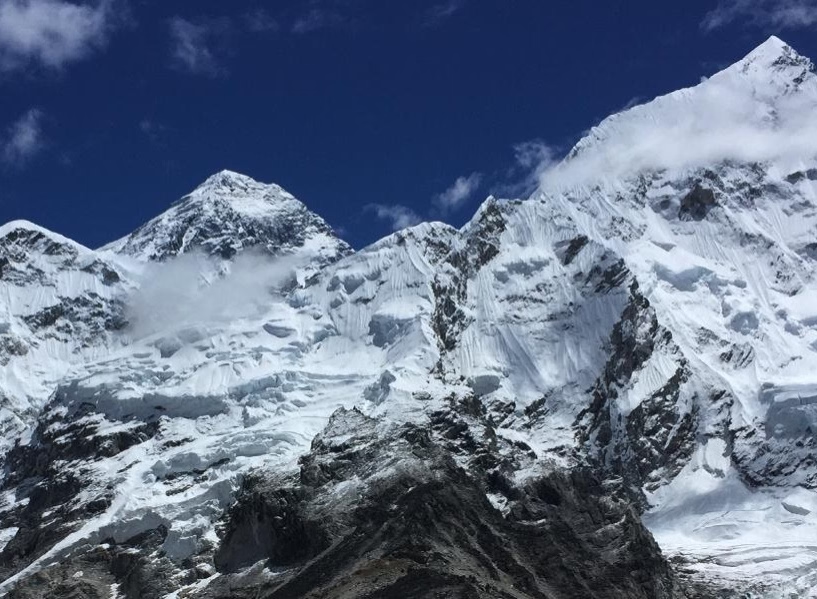
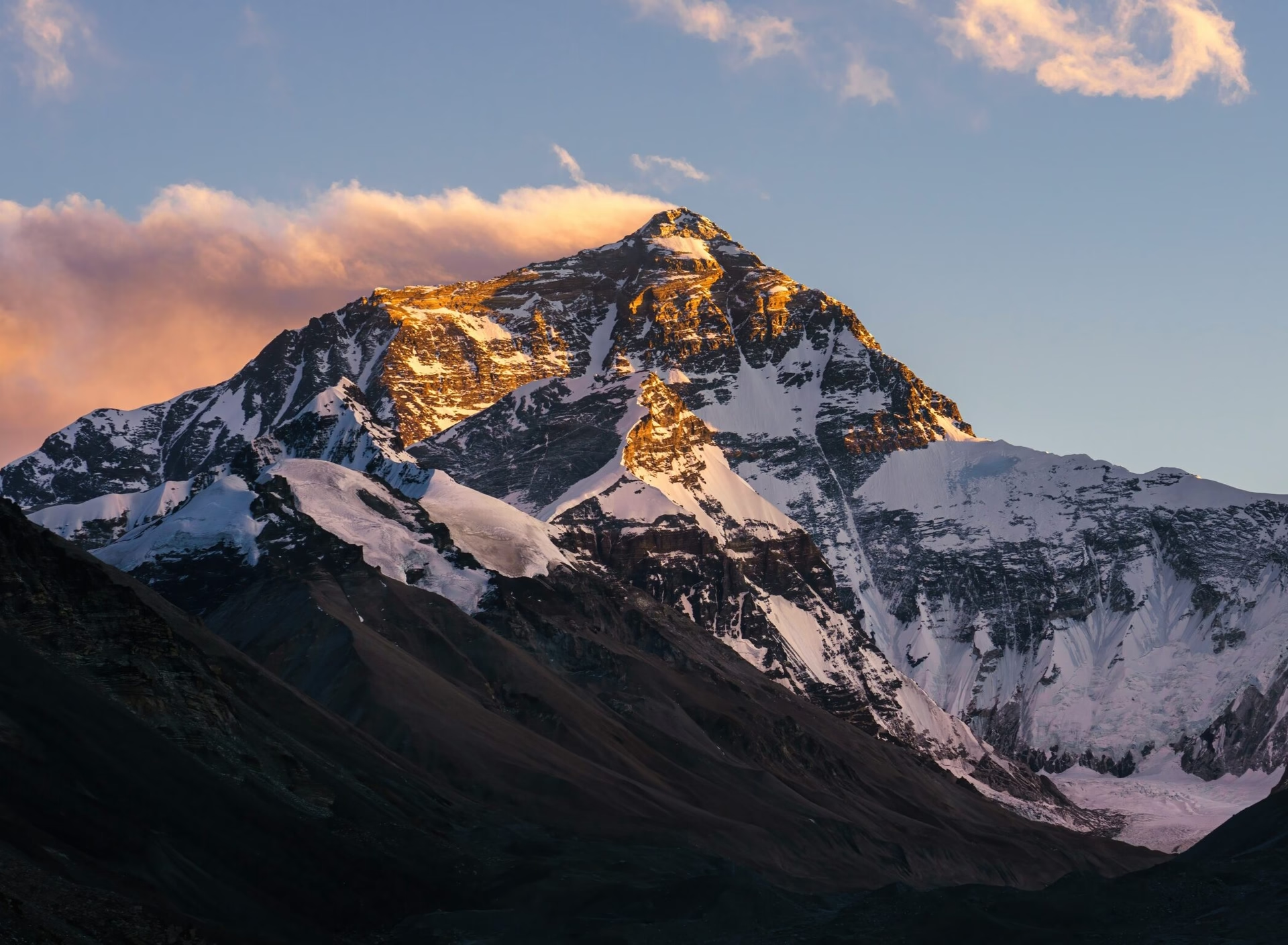
The primary attraction of the EBC Trek is the opportunity to witness the majestic Mount Everest up close. Standing at 8,848 meters (29,029 feet), Everest is the highest mountain in the world. Trek to Everest Base Camp allows you to admire its grandeur and experience the awe-inspiring presence of this legendary peak.
Kala Patthar Golden Viewpoint:
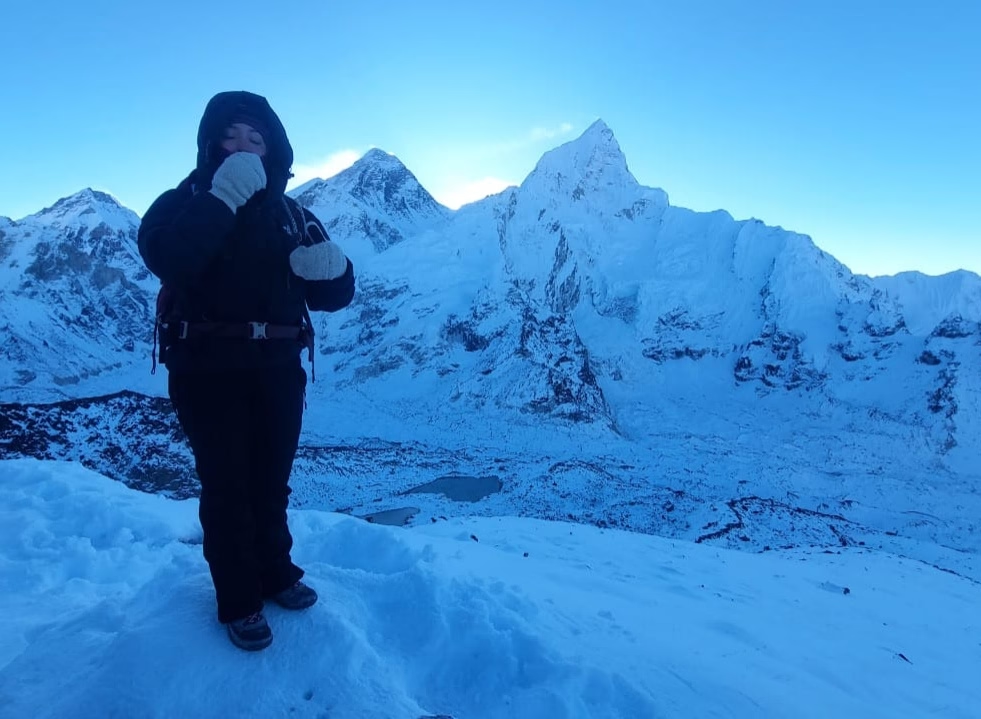
At an altitude of 5,545 meters (18,192 feet), Kalapatthar is a stunning viewpoint soaking into a spectacular view of Everet. It’s an ideal place to capture the majestic scenarios of Khumbu Valley. Likewise, it offers a stunning panoramic view of Everest, along with the surrounding peaks, making it a must-visit spot for trekkers to capture breathtaking sunrise or sunset views. It is always tough to reach at the viewpoint of Kalapathar but it would be worth a place throughout your journey.
Sagarmatha National Park – UNESCO World Heritage Site
As the walk progresses and enter Sagarmatha National Park which is part of the UNESCO World Heritage Site since 1979. You will find treasures of exotic rare endangered flora and fauna within some world’s highest peaks. Sagarmatha is a name in Nepal for Mt. Everest and for Sherpa known as Chomolungma of Tibetan origin language. From here walk amidst lovely woodland of tall rhododendrons, pine, firs, and oak trees. Slowly adventure takes you on a slow climb uphill to the famous Namche Bazaar the gateway to Everest base camp and other various adventure destinations around the high scenic Khumbu valley.
Namche Bazaar: The most beautiful town and a gateway to Everest
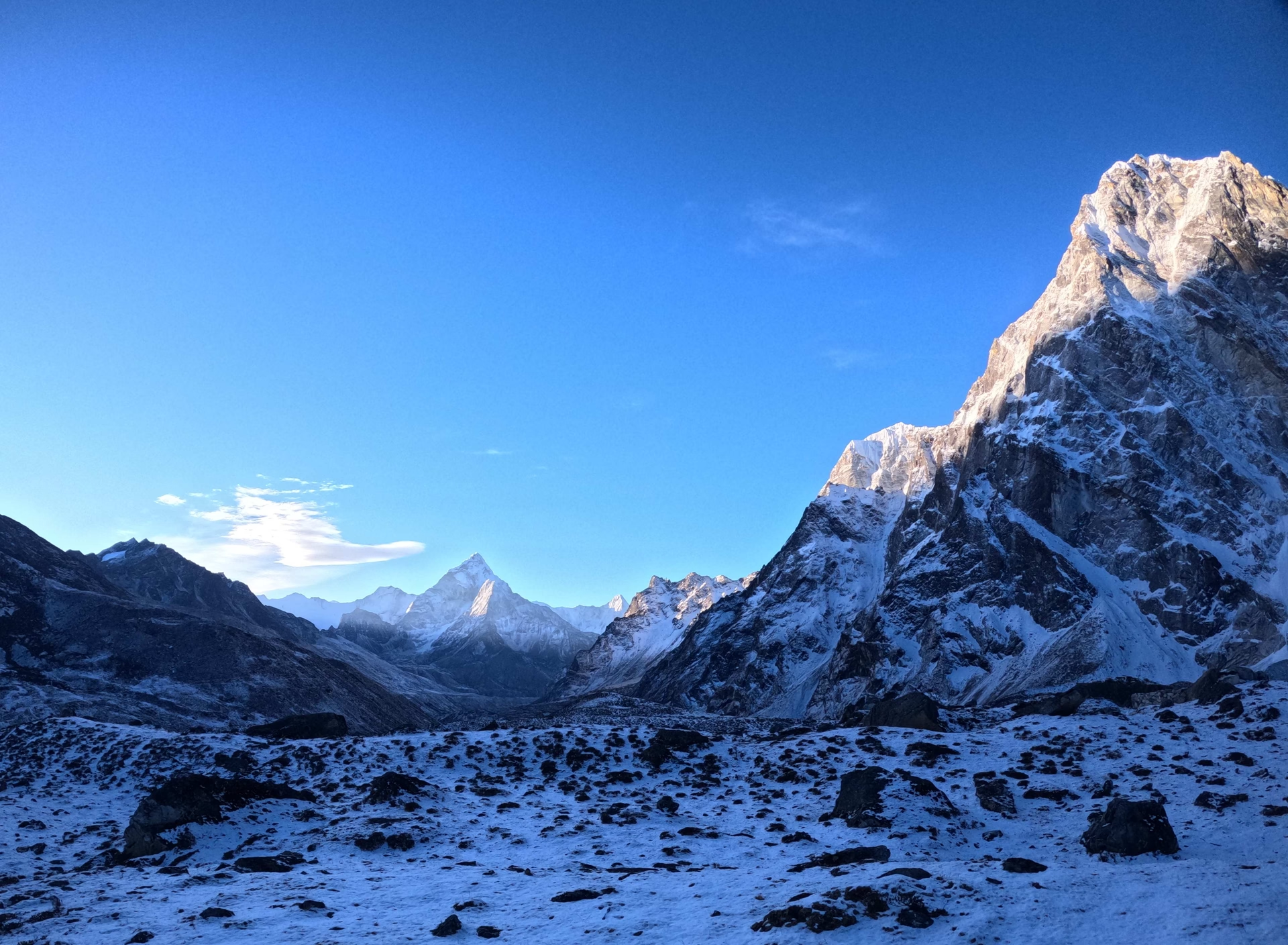
At Namche Bazaar rest day for acclimatization, is the most important and safe precaution. Highly recommend hiking to Hotel Everest View (3880 m). You must climb up approximately 400 m from Namche. Before heading much higher area on this leisure day, enjoy exploring the streets of Namche. It is a small charming town lined with many shops, stores, banks, restaurants, and a good many hotels and lodges. From Namche onward, the way to Everest base camp provides grand views of the sibling peaks Everest, Lhotse, and Amadablam. Furthermore, a beautiful scenic spot Tengboche Monastery from the highest altitude appears in your sight.
Oldest & Largest Tengboche Monastery (Dawa Choling Gomba)
Tengboche is the monastery, located on a high ridge surrounded by snow peaks and green forest facing views of Mt. Everest and majestic Amadablam. Many trekkers come here to visit the monastery of great religious and cultural interest. The adventure continues towards the high windswept and dry country. The tree lines and lush green vegetation fade for complete mountain wilderness to reach the main highlight at Everest base camp.
The World’s Highest Base Camp and Fasching Places:
Enjoy the most exciting views of the journey, as you stand beneath towering Mt. Everest, Lhotse, Amadablam, Pumori, Nuptse, and massive Ice-Fall, after a great fabulous lifetime experience at base camp return journey back to Lukla. Before heading back to Lukla, with one more adventure climb on top of Kalapathar Viewpoint, the highest point of the trek at above 5, 643 m high facing a breathtaking panorama of giant mountains that surrounds you with closet views of Mt. Everest and Mt. Pumori.
Lastly, the journey continues from the high valley of Khumbu heading back into the lush green forest and then at Lukla for the last final overnight stop around the Everest region. Where next early morning sweeping scenic flight land you at Kathmandu, after a marvelous adventure and great experience on 12 Days Everest Base Camp Trek.
Trek at a Glance
Mode of Trekking: Accommodation in the best local lodge available
Trek Grade: Moderate to Adventurous walks.
Highest Altitude: On top Kalapathar is 5555 m / 18,514 feet and Everest Base Camp at 5,364 m and 17,600 feet high.
Trekking Region: Nepal North Mid-East around Khumbu / Everest region.
Trekking Duration: 11 Nights / 12 Days (Lukla-Kathmandu-Lukla).
When to trek to Everest Base Camp?
Nearly all months of the year round for Everest base camp trekking, except summer during monsoon heavy rainy and the worst time to walk around the mountains. Furthermore, where dark clouds and much rain obstruct the views and muddy trails. However, the best time initiates from March to May and September to early December months during the spring and autumn/fall to early winter seasons. We would highly recommend the spring and autumn are the best time to do treks in Nepal. In these seasons the weather remains stable and comfortable temperatures too.
Throughout the spring season, various wildflowers are in bloom including the national flower of Nepal, the rhododendron of various species. Most days are fine and clear with longer sunlight hours, however cold morning and late afternoon till night time, with chances of rain and snow sometimes. The next best season is during early autumn ( September, October & November) /fall till mid-winter when days are clear for views and walking. But winter bitter cold morning and night times with a clear bright starry night sky. Chances of snowfall sometimes around high altitudes.
Itinerary
Itinerary at a glance
| Day | Route | Altitude at destination | Walking | Stay | Meals |
|---|---|---|---|---|---|
| 1 | Fly to Lukla 2,820 m from Kathmandu trek to Phakding 2,645 m – 04 hrs. | 2,820 m (9,252 ft) | — | — | — |
| 2 | Trek to Namche Bazaar 3,440 m / 11, 350 ft – 06 hrs. | 3,440 m (11,286 ft) | — | — | — |
| 3 | At Namche for acclimatization and short scenic hike to the viewpoint. | — | — | — | — |
| 4 | Trek to Tengboche 3,867 m -05 hrs. | 3,867 m (12,687 ft) | — | — | — |
| 5 | Trek to Dingboche 4,340 m – 05 hrs. | 4,340 m (14,239 ft) | — | — | — |
| 6 | At Dingboche rest day for an acclimatization hike. | — | — | — | — |
| 7 | Trek to Lobuche 4,960 m – 05 hrs. | 4,960 m (16,273 ft) | — | — | — |
| 8 | To Mt. Everest Base Camp 5,380 m via Gorakshep 5,180 m-06 hrs. | 5,380 m (17,651 ft) | — | — | — |
| 9 | Climb Kalapathar 5,643 m and trek to Pangboche 3,900 m – 06 hrs. | 5,643 m (18,514 ft) | — | — | — |
| 10 | Trek to Namche Bazaar via Tengboche – 06 hrs. | — | — | — | — |
| 11 | Last day walk to Lukla – 06 hrs. | — | — | — | — |
| 12 | Fly from Lukla to Kathmandu and transfer to hotel. | — | — | — | — |
Day 1:Fly to Lukla 2,820 m from Kathmandu trek to Phakding 2,645 m – 04 hrs.
As per scheduled flight time for Lukla in the morning, transfer to Kathmandu domestic airport terminal, after security check then board in a small aircraft (Dornier, Twin Otter, or similar type of small plane). During 35 minutes on air superb panorama of Himalayan peaks with Mt. Everest In view, as the plane makes landing on the unique runway of Lukla airport.
On arrival at Lukla an interesting busy town, where walk beings through a nice Sherpa farm enriched with immense Buddhism culture encountering Mani (prayer) monuments with large spinning prayer wheels. Walk follows above Dudh Kosi River to reach at Phakding for an overnight stop with time for afternoon tea and dinner in this lovely village.
- 02
Day 2:Trek to Namche Bazaar 3,440 m / 11, 350 ft – 06 hrs.
The morning after breakfast walk lead on a nice trail with a short up and down crossing over Dudh Kosi on the suspension bridge to reach Monjo village and then enter Sagarmatha National Park with views of Tharmasarku peaks.
Sagarmatha National Park starts from here, the park listed in world heritage sites, from the park entrance cross over Dudh Kosi River to Jorsalle, the last village before Namche Bazaar. After a refreshing lunch stop, walk on the riverside and from the last high bridge climb starts to Namche Bazaar for two overnight stops.
- 03
Day 3:At Namche for acclimatization and short scenic hike to the viewpoint.
Free day for acclimatization at Namche Bazaar, where once a week Saturday market takes place, hence the name bazaar, on this spare day enjoy a short hike for grand views of Mt. Everest, Lhotse, and Amadablam with an array of peaks.
At Namche visit an interesting museum with an option for a hike to Everest View Hotel (the first luxury hotel around the Khumbu area), perched on a high hill above Namche Bazaar. Namche with many facilities from stocked shops, stores, and banks with international standard hotels and restaurants.
- 04
Day 4:Trek to Tengboche 3,867 m -05 hrs.
After a pleasant stop at Namche trek continues on a good scenic trail with grand views of Everest with an array of peaks as walk lead down to Imjatse River at a small settlement called PhunkiTenga, afternoon few hours climb through a forest of pine, juniper, and rhododendron trees then reach on top of an open ridge at beautiful Tengboche monastery.
At Tengboche enjoy super views Mt. Everest, Lhotse, and Amadablam with a chain of the snow mountain range, after checking into a lodge enjoy a short tour of the monastery enriched with great Buddhism religion and interesting Sherpa culture.
- 05
Day 5:Trek to Dingboche 4,340 m – 05 hrs.
Enjoy breakfast with grand views of Everest and Amadablam at close distance with a series of peaks, and then head downhill through nice lovely woodland to cross over a bridge. From here on tree lines drop, as the route leads to a gradual climb to reach the last permanent village of Pangboche, further on are small settlement with the lodge to cater the travelers on route Everest base camp.
From Pangboche short climb to a small settlement at Somare for a possible lunch stop, afternoon walk on dry and windy terrain to reach at scenic Imjatse valley in Dingboche for overnight stops. Dingboche a large settlement located right at the beneath towering North Face of Amadablam with views of Lhotse, Nuptse, and Island Peak a popular and stunning looking trekking peak.
- 06
Day 6:At Dingboche rest day for an acclimatization hike.
Another rest day to support acclimatization on this beautiful scenic spot, morning enjoy a short hike up to Nakarjung Hill, adding more heights with super views of surrounding high mountains with Mt. Makalu in the east direction.
- 07
Day 7:Trek to Lobuche 4,960 m – 05 hrs.
After Dingboche, a morning short climb to a hilltop festooned with Buddhist prayer monuments and a Stupa, from here on gradual slow uphill on a winding trail to reach at Thugla, a small place with a few small lodge and shops.
At Thugla where Khumbu glacier melts into a raging river, after lunch a steep climb for an hour or less to reach on Thugla pass, a small open ground with many stone memorials of unfortunate mountaineers who risk their life climbing Mt. Everest and other high Khumbu mountains.
After a short break an easy walk of an hour with a slow walk to reach Lobuche for an overnight stop with views of Nuptse and Lobuche peak, a place with some nice lodge.
- 08
Day 8:To Mt. Everest Base Camp 5,380 m via Gorakshep 5,180 m-06 hrs.
Today’s walk leads to our main highlight of the adventure, as the morning route takes you on a pleasant high trail and with a short climb above Khumbu glacier. After few hours of morning walk reach at Gorakshep, a place with few lodge as morning walk continues towards Everest base camp as a faint rocky path heads through moraine and glacier to Everest base camp.
Enjoy breathtaking scenery of arctic-like landscaped of ice and glaciers with towering peaks that surround the base camp, located beneath Nuptse, Lhotse, and Everest. After an exciting moment and great experience return to Gorakshep for an overnight stop on completing our major highlight and goal of the adventure.
- 09
Day 9:Climb Kalapathar 5,643 m and trek to Pangboche 3,900 m – 06 hrs.
Our next adventure starts early morning with a steep climb to reach Kalapathar rocky hilltop, the highest point of the adventure at 5, 643 m (in the past few years it was recorded 5, 545 m high, but the latest measurement shows the present height).
From the top enjoy the amazing panorama of giant towering mountains with close views of Mt. Pumori and Mt. Everest at near distance, after a glorious scenery head downhill to Gorakshep, having breakfast continue to walk on the same trail to Thugla, where Dingboche and Pheriche trail joins.
After Thugla downhill to Pheriche windy valley to reach at Pheriche settlement with many nice lodges, a place where the HRA post stationed (Himalaya Rescue Association). Having lunch break walk down to a river and a short climb to a ridge with a long descend to Pangboche village for an overnight stop.
- 10
Day 10:Trek to Namche Bazaar via Tengboche – 06 hrs.
From Pangboche walk leads on the same scenic route with a climb to Tengboche and then downhill to Imjatse River, where steep climb for an hour to reach Shanasa village and Kyanjuma a small settlement facing views of Amadablam and Mt. Everest, from here on the nice wide path to Namche Bazaar for overnight.
- 11
Day 11:Last day walk to Lukla – 06 hrs.
After a wonderful time on the high valley of Khumbu, our last day walk continues with downhill to Dudh Kosi River and through Sagarmatha National Park exit point as walk follows Dudh Kosi River to Phakding village.
From Phakding on nice pleasant trail with an hour climb to Lukla, and then check into a nice lodge for last overnight around Everest and Khumbu area.
Day 12:Fly from Lukla to Kathmandu and transfer to hotel.
Start the early morning with a short walk to Lukla airport, named after great Mountaineers late Tenzing and Hillary, as soon the plane arrives from Kathmandu and then board in a small aircraft for the sweeping scenic flight back to Kathmandu. On arrival at Kathmandu domestic air-terminal short transfer to your hotels, after a wonderful adventure on Everest base camp trek.
Are you looking to customize the trip itinerary?
If the provided schedule is not suitable for you, we can create a personalized travel arrangement tailored to your preferences and requirements.
Cost breakdown
What's included
All ground transportation.
Meals During Trek: (Breakfast, Lunch, and Dinner).
Two-night boutique hotel in Kathmandu with breakfast.
Three cups of tea during the trek.
Everest National Park Permit.
Khumbu Rural Municipality Entrance Ticket.
Sagarmatha National Park permit.
Domestic Airfare ( Kathmandu – Lukla -Kathmandu)
11 nights of Good Accommodation throughout the trek.
Fresh fruit during the trek
Trekking equipment, Dawn jacket, sleeping bag & duffle bag. (If required )
An experienced, expert, helpful and friendly Guide and Their well-paid Salary, Food, Drinks, Accommodation, Transportation, and Insurance for the Guide.
Adventure Certificate: NHTE provides Adventure Certificate.
1 Assistance Sherpa above the 7 people.
An arrangement of Emergency Helicopter service will be paid by your Travel insurance company.
Medical kit bag.
What's not included
Your Travel and rescue insurance.
All the Food in Kathmandu. Also in the case of early return from the mountain (due to any reason) than the scheduled Itinerary.
Porter cost $25 per day.
Extra night Hotel in Kathmandu if arrive early or late departure than scheduled Itinerary.
All the Bar bills and personal expenses (phone call, laundry service, battery recharge, a bottle of water, hot water, shower.
Tips for the guide and porter.
.avif&w=1920&q=75)