Nepal High Trek
Contact Us

Everest Base Camp Trek 9 Days

Traveler 1Traveler 2

đź’š 99% Recommended

by verified travelers

Duration
9 days
Difficulty
Moderate
Max Altitude
5545 m
Destination
Nepal
Activity
Trekking
Accommodation
Hotel/Lodge
Group Size
1
Transport
Both way Flight
Meals
B.D.L.
Season
Sep-Nov & Mar-May

Trip highlights

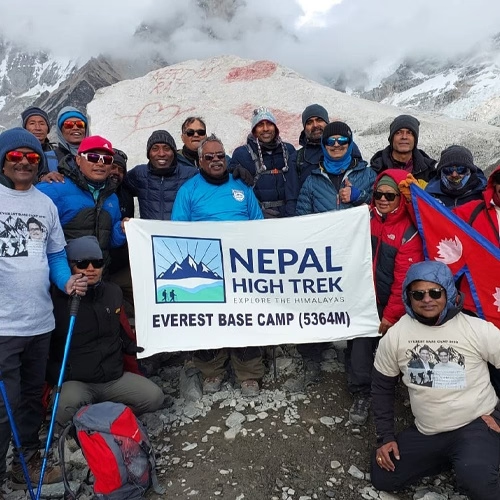
  • Trek to the legendary Everest Base Camp (5,364 m) and stand at the foot of the world's highest mountain.

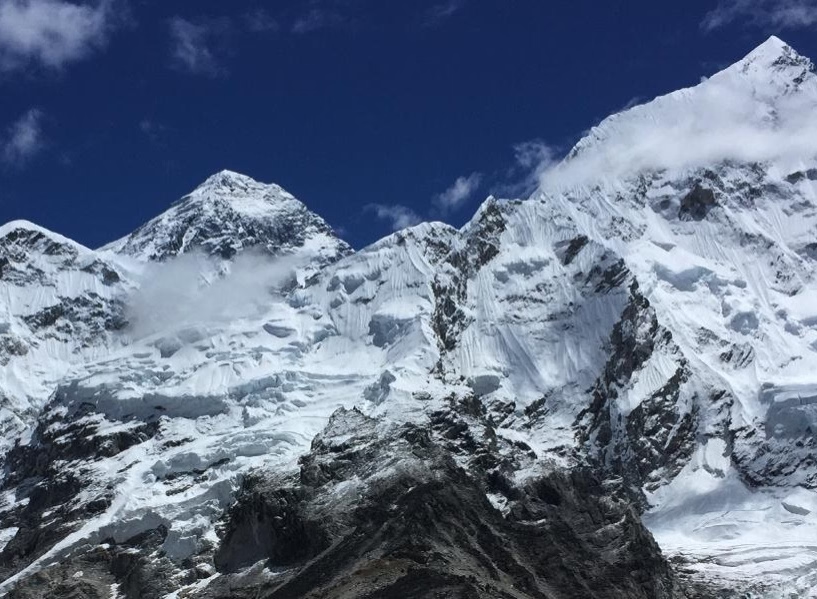
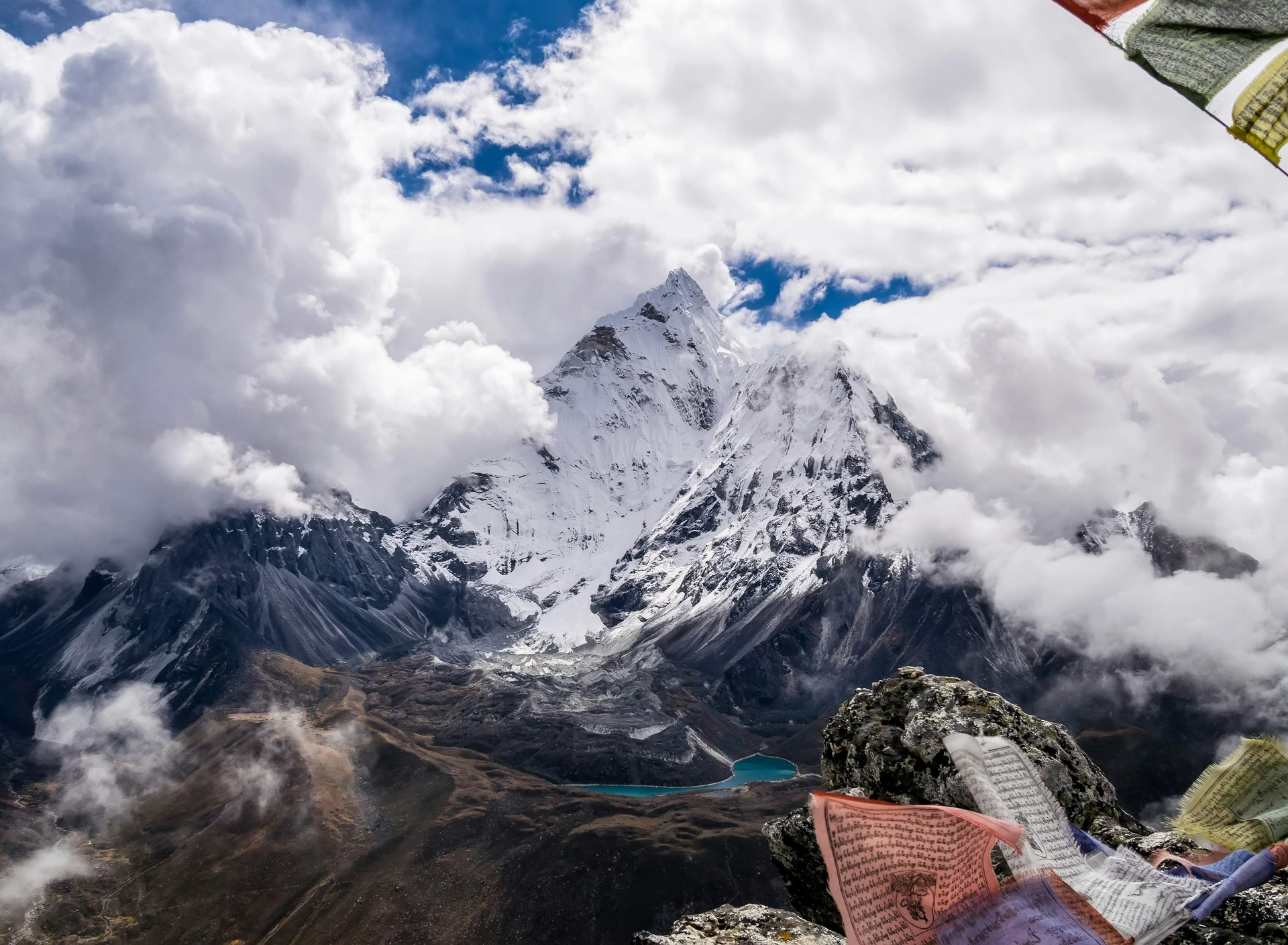
  • Witness breathtaking Himalayan panoramas, including Mount Everest, Lhotse, Nuptse, Ama Dablam, and Pumori.

  • Hike to Kala Patthar (5,545 m) for the most spectacular sunrise and the closest panoramic views of Mount Everest.

  • Experience the rich Sherpa culture, visit ancient monasteries, and explore the vibrant mountain village of Namche Bazaar.

  • Save time with helicopter transfers, allowing you to complete the iconic Everest Base Camp adventure in just 9 days without missing the highlights.

Trip overview

Everest Base Camp Trek 9 Days is another name of the Short Everest Helicopter Trek. It is a sumptuous way of exploring the Everest region of Nepal. Trek to the base camp of the world’s tallest mountain Mt. Everest and fly back to Kathmandu on a helicopter. Upon doing this trip in Nepal, you will experience the Khumbu region of Nepal from both air and land. Therefore, travel smart and choose to do the trekking in Nepal by following our itinerary.

You may have to allocate at least a month’s holiday to explore almost every region of Khumbu. Everest Base Camp is not the only destination to visit during your trip to the region. There are places like Gokyo Valley, Thame Valley, and Chhukung Valley. These places are not possible to visit during Everest Base Camp Trek alone. Therefore, Nepal High Trek has knitted an itinerary that encompasses the jewels of the Khumbu region including Everest Base Camp.

Highlights

  • Everest Base Camp (5364 m)

  • Numerous mountains

  • Sunrise from Kalapathar (5545 m)

  • Tengboche Monastery (Dawa Choling Gompa)

  • Authentic Sherpa Villages and local culture

  • Diverse vegetation

  • Glacial Rivers & Suspension Bridges

  • Sagarmatha National Park

  • The Edmund Hillary Airport in Lukla

  • Glaciers & Moraines

  • Namche Bazaar and Everest View Hotel

Helicopter Tour vs Everest Heli  Base Camp Trek

There is a provision for helicopter tours in the Everest region of Nepal. Most of the people who don’t have much vacation prefer to do the helicopter tour. For some people with less physical abilities, it is the best way to quench their thirst of reaching the base camp of the world’s tallest mountain Mt. Everest. Interestingly, it may not help travelers achieve the adventure Himalayan wilderness.

If you want to achieve an authentic experience of the Himalayan landscape and lifestyle, it is better to trek. However, trekking smartly is also an option. Upon reaching the Everest Base Camp (5364 m), trekkers have to return back to Lukla following the same trail. Therefore, some people don’t enjoy the same view and they don’t want to spend their physical energy by walking the same trail.

Experience what it’s like to walk on the trail of Everest Base Camp. Relish the bird’s eye view of the Khumbu region while returning. Therefore, the Everest Base Camp Trek 9 Days is the complete version of the Everest Base Camp Trek and Everest Helicopter Tour amalgamated together.

What is the cost of an Everest Base Camp Trek 9 Days?

The cost of the Everest Base Camp Trek 9 Days is slightly higher than the regular Everest Base Camp Trek. It is because of the services provided during the trip. The itinerary encompasses both trekking and helicopter flight. If you add the helicopter flight from 5100 m to Kathmandu, the cost is bound to get higher. The Everest Base Camp Trek 9 Days also known as the Everest Helicopter Trek price ranges from 2000 USD to 4700 USD. Plan as per your requirements.

Everest Base Camp Trek 9 Days Difficulty – What to expect during a normal trekking day?

The trail to the Everest Base Camp and Kalapathar is fairly moderate. You will not have to walk long uphill or downhill but the altitude plays a crucial role in determining the difficulty of Everest Base Camp Trek 9 Days. Looking at the itinerary of the Everest Helicopter Trek, trekkers return back to Kathmandu directly from Gorakshep after the visit of Everest Base Camp (5364 m) and Kalapathar (5545 m). Therefore, it won’t be much tiring as 4 days of walking is shortened due to the helicopter tour.

You will be staying in the teahouses or lodges for overnight sleep. The food is from the choice menu that has food items ranging from local delicacies to Western food items. The accommodation on the trail ranges from luxury to Spartan. If you would like to do luxury trekking in the Everest region of Nepal, consult our travel planners beforehand. Nowadays, there are many regal establishments on the trail. However, beyond Tengboche, trekkers have to share a room or spend overnight in normal lodges.

Experience the Himalayan Sherpa Lifestyle and Culture elegantly

Solukhumbu district of Nepal is the home of Bhotes, Sherpas, Limbus, and Rai ethnic people along with some minority Brahmins, Chhetris, and Dalits. On the Everest Base Camp Trek 9 Days, you can get along with the locals who are welcoming. Traversing through the villages, you can gaze into the lifestyle of these people, especially of the Sherpa community. Life in the mountains is not easy but these people offer great hospitality and always smiling. You can understand the essence of life by observing these happy people living up in the mountains.

Diverse Landscape & Mountain Vistas

The journey of Everest Base Camp Trek 9 Days starts from Kathmandu (1300 m) and reaches up to Kalapathar (5545 m). During the 9 days trip, trekkers can experience countless differences in the landscape and vegetation. The lower section of the trekking trail has deciduous temperate forests whereas the middle section of the route has alpine vegetation and the top section has the tundra vegetation. The cascading hills and river banks along with the moraines and glaciers offer diverse landscape experiences.

On the Everest Base Camp Trek 9 Days route, witness these famous mountains:

  • Everest (8,849 m)

  • Makalu (8,463 m)

  • Lhotse (8,516 m)

  • Cho Oyu (8,188 m)

  • AmaDablam (6,812 m)

  • Pumori (7,161 m)

  • Cholatse (6,440 m)

  • Thamserku (6,608 m)

  • Island Peak (6,160 m)

  • Nuptse (7,861 m)

Overall, the Everest Base Camp Trek 9 Days offer the complete experience of Khumbu. Moreover, the presence of the helicopter tour activity from Gorakshep to Kathmandu adds a luxurious dimension to the trekking. The view of the Everest Base Camp Trekking trail along with the Gokyo Lake Valley from the helicopter is stunningly beautiful. Knit the travel tales of sumptuous type both walking on the trail and flying above the lofty hills in one single trip to Nepal.

When is the best time to trek to Everest Base Camp?

Nearly all months of the year-round for Everest Base Camp except summer during the monsoon wet rainy season. Where dark clouds and much rain obstructs the views and muddy trails. The best time is from March to May and September to December months are the favorable times to trek in the Himalayas of Nepal. Hence highly recommend the spring and autumn seasons for treks in Nepal.

Most days are fine and clear with longer sunlight hours, however cold morning and late afternoon till night time, with chances of rain and snow sometimes. The next best season is during early autumn/fall till mid-winter, days are clear for views and walks, but very cold morning and night times with a clear bright starry night sky. Chances of snowfall sometimes around high altitudes. Get in touch with our travel planner for trip information and packages.

Itinerary

Altitude profileMax 5,180 m
2,645 mD13,440 mD23,440 mD33,875 mD44,320 mD54,320 mD64,970 mD75,180 mD81,400 mD9
  1. Day 1:Fly to Lukla 2,860 m from Kathmandu and trek to Phakding 2,645 m – 04 hrs.

    2,645 m4 Hours

    As per the scheduled flight time for Lukla in the morning, transfer to Kathmandu domestic airport terminal, as the plane makes landing at Lukla airport. On arrival at Lukla town, walk beings through nice Sherpa farm villages adorned with Buddhist Mani (prayer) monuments with large spinning prayer wheels.

    The walk follows above Dudh Kosi River to reach at Phakding for an overnight stop with time for afternoon tea and dinner in this lovely village.

  2. 02

    Day 2:Trek from Phakding to Namche Bazaar 3,440 m / 11, 350 feet – 7/8 hrs.

    3,440 m7/8 Hours

    Morning on a nice trail with a short up and down cross over Dudh Kosi on the suspension bridge to reach Monjo village, then enter Sagarmatha National Park with views of Tharmasarku peaks. Sagarmatha National Park starts from here, the park listed in world heritage sites, from the park entrance cross over Dudh Kosi River to Jorsalle, the last village before Namche Bazaar.

    After a refreshing lunch stop, walk on the riverside and from the last high bridge climb starts to Namche Bazaar for two overnight stops.

  3. 03

    Day 3:Acclimatization Day Hike to Everest View or Khumjung/Khunde Village

    Free day for acclimatization at Namche Bazaar, where once a week Saturday market takes place, hence the name bazaar, on this spare day enjoy a short hike for grand views of Mt. Everest, Lhotse, and Amadablam with an array of peaks.

    At Namche visit an interesting museum with an option for a hike to Everest View Hotel (the first luxury hotel around the Khumbu area), perched on a high hill above Namche Bazaar. Namche with many facilities from stocked shops, stores, and banks with international standard hotels and restaurants. As well you can visit the stunning Khumbu village and Khunde village. Where you can discover the authentic Sherpa culture, traditional houses, Buddhist monasteries and beautiful numerous peaks.

  4. 04

    Day 4:Trek from Namche Bazar to Tengboche 3,875 m - 6/7 hrs.

    3,875 m6/7 Hours

    After a pleasant stop at Namche continue the trek on a scenic trail facing views of Everest with an array of peaks, as the walk head down to Imjatse River at PhunkiTenga, after lunch few hours climb into a forest of pine, juniper, and rhododendron trees to reach at Tengboche monastery.

    At Tengboche enjoy views of Mt. Everest, Lhotse, and Amadablam with a chain of snow peaks, check into a lodge and enjoy a short tour of the monastery enriched with great Buddhism religion and interesting Sherpa culture.

  5. 05

    Day 5:Trek from Tengboche to Dingboche 4,320 m – 5/6 hrs.

    4,320 m5/6 Hours

    At the Morning enjoy super views of Everest and Amadablam within close distance, walk downhill within a lovely forest and cross a bridge.

    From here on green vegetation and tree lines fades, as the route leads up to Pangboche, the last permanent village on route Everest base camp. From Pangboche short climb to Somare for a possible lunch stop, and an afternoon walk on the windy landscape to enter the scenic Imjatse valley where Dingboche located our overnight stop.

  6. 06

    Day 6:At Dingboche acclimatization hike.

    4,320 m

    Another rest day to support acclimatization on this beautiful scenic spot, Dingboche a large settlement located right beneath the towering North Face of Amadablam with views of Lhotse, Nuptse, and Island Peak a popular and stunning-looking trekking peak. Morning short hike up to Nakarjung Hill, for super views of surrounding high mountains with Mt. Makalu in the east direction.

  7. 07

    Day 7:Trek from Dingboche to Lobuche 4,970 m – 5/6 hrs.

    4,970 m5/6 Hours

    After Dingboche, morning climb to a hilltop lined with Buddhist prayer monuments, from here walks on gradual uphill to reach at Thugla, a place with a few small lodges and shops. Khumbu glacier melts into a raging river near Thugla, having lunch stop continue with a steep climb for an hour or less to reach Thugla pass, with many stone memorials of unfortunate climbers who died on Mt. Everest and other high mountains around the high Khumbu region.

    From here an hour slow walk to Lobuche for an overnight stop facing views of Nuptse and Lobuche peak, a place with some nice lodges.

  8. 08

    Day 8:Trek from Lobuche to Gorakshep (5180 m) - 3 Hrs then Hike to Mt. Everest Base Camp (5364m) - 4 Hrs

    5,180 m3 Hours

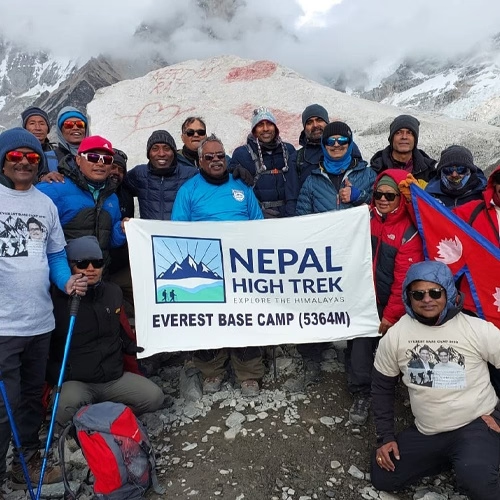
    From here our major highlight of the adventure, a morning walk on a high trail and with climb above the Khumbu glacier. After hours a good morning walk reaches Gorakshep Located on a large sandy field en route to Everest base camp and high Kalapathar Hilltop, from here follow a vague path through moraine and glacier to reach at Everest base camp. Enjoy a great moment of a lifetime experience within the dramatic scenery of the mountainous landscape of ice and glaciers, standing beneath Nuptse, Lhotse, and Everest. After a marvelous time at Everest base camp, return walk to Gorakshep for an overnight stop

  9. Day 9:In early morning hike up to Kalapathar 5545 m / 18,514 feet and then fly in a Helicopter to Kathmandu from Gorakshep.

    1,400 m

    Our last and final day of the adventure starts early morning with a steep climb uphill on top of rocky Kalapathar hill, the highest point of the adventure at above 5, 643 m (earlier recorded 5, 545 m high, but the latest measurement shows the present height).

    From Kalapathar top enjoy amazing views of the high mountain range with close views of Mt. Pumori and Mt. Everest at a close distance, after a mind-blowing scenery of giant peaks descends to Gorakshep.

    Enjoy breakfast at Gorakshep in the backdrop of high snow peaks with Everest, and then board a chopper for a panoramic flight back to Kathmandu. On arrival at Kathmandu domestic air-terminal short transfer to your hotels, after a wonderful adventure on Everest base camp 9 days trek.

Are you looking to customize the trip itinerary?

If the provided schedule is not suitable for you, we can create a personalized travel arrangement tailored to your preferences and requirements.
Customize Trip

Availability

budget Everest Base Camp Trek 9 Days

A cost-effective Everest Base Camp adventure with comfortable teahouses, shared transport, and essential services for value-conscious trekkers.

Group sizePrice per person
2 - 3 Pax$2,795
4 - 7 Pax$2,500

What's included

  • Airport pick-up and drop-off by private vehicle

  • Domestic flight from Kathmandu to Lukla (or Ramechhap–Lukla when applicable)

  • Shared helicopter return from Gorakshep to Kathmandu (or Lukla/Kathmandu, depending on flight operations)

  • One night accommodation in a 3-star hotel in Kathmandu with breakfast

  • Standard teahouse accommodation during the trek

  • Three meals a day (breakfast, lunch, and dinner) during the trek

  • Fresh seasonal fruits after dinner

  • Licensed English-speaking trekking guide

  • One porter for every two trekkers (maximum 20–22 kg combined luggage)

  • Guide and porter salary, insurance, food, accommodation, and equipment

  • Sagarmatha National Park Entry Permit

  • Khumbu Pasang Lhamu Rural Municipality Permit

  • Sleeping bag and down jacket (rental, if required)

  • First aid kit carried by the guide

  • Government taxes and service charges

  • Trek completion certificate

What's excluded

  • International airfare

  • Nepal entry visa fee

  • Travel insurance (mandatory)

  • Emergency helicopter evacuation (covered by personal insurance)

  • Lunch and dinner in Kathmandu

  • Personal trekking equipment

  • Hot showers, Wi-Fi, battery charging, laundry

  • Tea, coffee, soft drinks, bottled water, alcoholic beverages

  • Personal expenses

  • Tips for guide and porter

  • Any expenses caused by flight delays, weather, strikes, natural disasters, or itinerary changes

Departure Dates

50 scheduled dates available

Filter departures by month
22Aug

Aug 22 – Aug 31, 2026

Available
$2,500pp
22Aug

Aug 22 – Aug 31, 2026

Available
$2,500pp
24Aug

Aug 24 – Sep 2, 2026

Available
$2,500pp
25Aug

Aug 25 – Sep 3, 2026

Available
$2,500pp
25Aug

Aug 25 – Sep 3, 2026

Available
$2,500pp
26Aug

Aug 26 – Sep 4, 2026

Available
$2,500pp
27Aug

Aug 27 – Sep 5, 2026

Available
$2,500pp
28Aug

Aug 28 – Sep 6, 2026

Available
$2,500pp
29Aug

Aug 29 – Sep 7, 2026

Available
$2,500pp
29Aug

Aug 29 – Sep 7, 2026

Available
$2,500pp

Request a Private Date?

Secure payment
24/7 support

Trip map

Loading map…

Useful information

The Everest Base Camp Trek – 9 Days is a shorter version of the classic trek, made possible by using helicopter transfers to reduce travel time. While it covers all the major highlights—including Everest Base Camp, Kala Patthar, and Namche Bazaar—it follows a faster itinerary with fewer acclimatization days. This trek is best suited for fit and experienced hikers who are comfortable trekking at high altitudes. Weather in the Everest region can affect flight schedules, so it's wise to keep one or two extra days in your travel plan. Following your guide's advice, staying hydrated, and trekking at a steady pace will help you enjoy a safe and rewarding Himalayan adventure.

Packing list

CLOTHING & LAYERING SYSTEM

Base Layers (Sweat Management)

  • 2–3 Long-Sleeve Tops: Lightweight synthetic or merino wool. Leave all cotton at home—once cotton gets wet with sweat, it stays wet and chilled.

  • 2 Thermal Bottoms / Long Johns: Merino wool or warm synthetic leggings for cold mornings and lounging around the lodge after walking.

  • 4–5 Pairs Underwear: Quick-drying synthetic or merino options.

  • 2–3 Sports Bras (if applicable): Moisture-wicking and comfortable without rough seams.

Mid Layers (Warmth)

  • 1 Fleece Jacket: A good medium-weight fleece grid or pullover is your everyday workhorse while walking.

  • 1 Lightweight Synthetic/Down Mid-Layer: Great for throwing on during lunch breaks or cool morning starts before the sun hits the trail.

  • 1–2 Pairs Trekking Pants: Quick-dry, flexible hiking trousers.

Outer Shell (Wind & Elements)

  • 1 Waterproof & Windproof Jacket: A breathable shell with a sturdy hood. High-altitude wind cuts right through mid-layers, so a good windbreaker is crucial.

  • 1 Pair Rain Pants: Packable, lightweight rain trousers to pull over your trekking pants if a storm rolls in.

The Big Cold Layer (Evening & Base Camp)

  • 1 Heavy Down Parka: A thick, high-fill down jacket with an insulated hood. Once the sun drops, teahouse common rooms cool off quickly. You will practically live in this coat every evening and on the morning walk up to Kala Patthar.

FOOTWEAR

  • Trekking Boots: Sturdy, waterproof hiking boots with solid ankle support and good grip. Crucial rule: Put at least 30–50 miles on them before your flight to Nepal. Getting fresh blisters on day two will ruin the trip.

  • Camp Shoes: Lightweight sneakers, sandals, or down booties to switch into as soon as you finish trekking for the day. Getting out of sweaty boots feels amazing.

Socks:

  • 3–4 pairs of thick merino wool trekking socks.

  • 1 pair of dedicated, super-thick wool socks saved strictly for sleeping in.

MAIN TREKKING GEAR

  • Duffel or Main Pack: If you’re hiring a porter, get an 80L–100L heavy-duty duffel bag (the rugged, splash-proof vinyl ones are gold standard here). If you’re carrying your own load, a solid 50L–65L backpack works best. Try to keep your packed weight under 12–14 kg (around 26–30 lbs)—your back or your porter will thank you.

  • A Good Daypack (25L–35L): This stays with you all day. You’ll keep your rain shell, extra mid-layers, water, camera, lip balm, and daily snacks in here.

  • Rain Cover: Make sure you have a waterproof cover fitted specifically for your daypack. Weather changes fast.

  • 4-Season Sleeping Bag: Aim for something rated around -10°C to -15°C (14°F to 5°F). Lodge bedrooms aren't heated, and by the time you reach Lobuche or Gorak Shep, the indoor air will be well below freezing at night.

  • Sleeping Bag Liner: A simple silk or fleece liner is a game-changer. It adds a few extra degrees of warmth and keeps your main sleeping bag clean.

  • Trekking Poles: Get a sturdy, adjustable pair. Your knees take a beating on the long downhill stretches back to Namche, and poles save an incredible amount of joint wear.

  • Headlamp: Don't skip this or buy a cheap one. You’ll need a reliable, bright headlamp (around 200+ lumens) for the dark, freezing climb up Kala Patthar before sunrise.

  • Water Bottles: Bring two 1-liter wide-mouth Nalgene bottles. Avoid bladder systems with long hoses—the water inside the exposed tube freezes solid on chilly mornings above Namche. Plus, you can fill Nalgenes with hot water at night and toss them into your sleeping bag as a heater.

  • Water Purification: Chlorine dioxide drops or tablets, a SteriPen, or a lightweight squeeze filter. Tap water isn't safe to drink untreated.

HEADWEAR & HANDWEAR

Head & Face

  • Sun Hat or Cap: High altitude means intense UV rays. A wide-brim hat or standard cap is essential during sunny midday walks.

  • Warm Beanie: Fleece-lined wool or synthetic hat that comfortably covers your ears.

  • 2 Buffs / Neck Gaiters: One thin buff to protect your neck from sun and keep trail dust out of your lungs (helps prevent the infamous "Khumbu cough"). Bring a second, thicker fleece buff for freezing air.

  • Category 3 or 4 Sunglasses: Polarized or dark UV-blocking glasses are non-negotiable. Sunlight bouncing off dry rock and ice higher up will give you a nasty headache if your eyes aren't shielded.

Hands

  • Light Liner Gloves: Thin merino or synthetic gloves for milder days or when you just need to handle gear without bare skin touching cold metal.

  • Warm Windproof Gloves: Thick, insulated, windproof gloves for freezing morning starts and icy winds higher up.

TOILETRIES & HYGIENE

Keep in mind that running water freezes overnight at higher elevations, and hot showers become rare (and expensive) the higher you go.

  • Wet Wipes: Pack 2 to 3 large packs. This will basically be your daily "shower" above 3,500 meters.

  • Hand Sanitizer: 2–3 small travel bottles. Keep one in your jacket pocket so it doesn't freeze or get lost in your main bag.

  • Travel Towel: A small-to-medium quick-dry microfiber towel.

  • Sunscreen & Lip Balm: High SPF is mandatory (SPF 50+ for skin, SPF 30+ for lips). Bring two lip balms because they have a habit of rolling away.

  • Oral Care: Toothbrush, small tube of toothpaste, and travel-sized mouthwash.

  • Toilet Paper: 2–3 rolls. Pro tip: Pull out the inner cardboard cylinder and crush the rolls flat so they slide easily into your pack. Teahouses don't provide TP.

Personal First Aid Kit:

  • Blister care: Compeed patches, leukotape, or moleskin (fix hot spots the second you feel them).

  • Altitude: Acetazolamide (Diamox) if you and your doctor decided on it.

  • Pain Relief: Ibuprofen or Paracetamol (altitude headaches happen to almost everyone at some point).

  • Stomach: Imodium, rehydration powder/salts, and a general broad-spectrum antibiotic from your doctor.

  • Throat: Medicated cough drops or throat lozenges—dry mountain air makes your throat feel raw.

TOILETRIES & HYGIENE

Keep in mind that running water freezes overnight at higher elevations, and hot showers become rare (and expensive) the higher you go.

  • Wet Wipes: Pack 2 to 3 large packs. This will basically be your daily "shower" above 3,500 meters.

  • Hand Sanitizer: 2–3 small travel bottles. Keep one in your jacket pocket so it doesn't freeze or get lost in your main bag.

  • Travel Towel: A small-to-medium quick-dry microfiber towel.

  • Sunscreen & Lip Balm: High SPF is mandatory (SPF 50+ for skin, SPF 30+ for lips). Bring two lip balms because they have a habit of rolling away.

  • Oral Care: Toothbrush, small tube of toothpaste, and travel-sized mouthwash.

  • Toilet Paper: 2–3 rolls. Pro tip: Pull out the inner cardboard cylinder and crush the rolls flat so they slide easily into your pack. Teahouses don't provide TP.

Personal First Aid Kit:

  • Blister care: Compeed patches, leukotape, or moleskin (fix hot spots the second you feel them).

  • Altitude: Acetazolamide (Diamox) if you and your doctor decided on it.

  • Pain Relief: Ibuprofen or Paracetamol (altitude headaches happen to almost everyone at some point).

  • Stomach: Imodium, rehydration powder/salts, and a general broad-spectrum antibiotic from your doctor.

  • Throat: Medicated cough drops or throat lozenges—dry mountain air makes your throat feel raw.

Frequently asked

Yes, there are medical facilities in the Everest View Trek route in case of emergencies. There are health posts and clinics in the villages like Namche Bazaar, Phakding, Monjo, and Lukla. Trekkers don’t need to worry about the availability of medical help during the Everest View Trek in comparison to the Everest Base Camp Trek.

An average cost to do the Everest View Trek in Nepal starts from 1100 $ per person for the standard trekking package. However, you have to pay more if you choose to do the Luxury Everest View Trek enjoying stay at the luxury lodges and using the premium services.

Yes, it is possible to stay overnight at the Everest View Hotel. An average cost to stay overnight starts from 150 $ per person per night on BB basis.

You can enjoy the scenery of mountains like Tabuche, Nuptse, Lhotse, Everest, Thamserku, Amadablam, Kusum Kangaru, Kangtega, Kwangde, etc. during this trek.

Major highlights of the Everest View Trek are the Sherpa villages, monasteries, Lukla airport, diverse forests, diverse landscapes, the Everest View Hotel, Tengboche Monastery, Mountain vista, and the Namche Bazaar.

Don’t worry about the meals and accommodation in the Everest View Trek route. There are multiple options for lodging and food while on this trekking trip. Trekkers can get the choices of the standard lodging in tea houses as well as in the luxury mountain lodges. Allocate around 35 $ to 50 $ for food and around 5 $ to 20 $ for standard lodging. Remember that the luxury mountain may charge you around 100 $ to 300 $ per night on BB basis.

Yes, it is highly advised to you to obtain the travel insurance before embarking on the Everest View Trek journey. Make sure that you leave the copy of the insurance plan to the city office of your trekking company which can later be used in times of emergency. Don’t forget to add the helicopter rescue in your travel insurance plan.

Make sure that you are well prepared to walk for about 5 to 6 hours in an average in the higher elevation places. Build up the physical fitness level and cardio vascular abilities at least one month prior to the trek. Do exercises like running, cycling, swimming, and walking to boost the stamina. Don’t underestimate the trail even if it is the least risky trail in the Everest region in terms of the altitude sickness.

The route of the Everest View Trek is the starting phase of the Everest Base Camp Trek route and it is also at the heart of the Everest region. Therefore, there are possibilities of doing countless side trips. You can do the Everest Base Camp Trek, the Amadablam Base Camp Trek, the Everest Three High Passes Trek, the EBC Gokyo Lake Trek, the Gokyo Lake Trek, Renjo La Pass Trek from Thame Village, etc.

Yes, it is possible to fly to Lukla from Kathmandu, but flights to Lukla are often more expensive and subject to weather conditions due to the challenging geography of the region. Most trekkers typically fly from Kathmandu to Lukla as it is the quickest way to reach the start of the Everest region treks. The flight from Kathmandu to Lukla takes around 30-40 minutes and offers breathtaking views of the Himalayas. However, the weather in the region is often unpredictable, with frequent flight delays and cancellations due to cloud cover or poor visibility. On the other hand, Ramechhap is an alternative airport, located about 4-5 hours drive from Kathmandu, and flights from Ramechhap to Lukla are often less expensive and more reliable during certain months. Many trekkers prefer flying from Ramechhap to avoid the congestion and delays at Kathmandu’s Tribhuvan International Airport, though it requires additional travel time from Kathmandu. Nowadays, during the peak trekking season the flights to Lukla take place from Ramechhap instead from the Kathmandu airport. If you travel to Lukla from Kathmandu, then you can avoid the hassle of the road trip to Manthali which takes about 4 – 5 hours in a private vehicle.

The Everest View Trek typically takes about 5 to 7 days to complete, depending on your pace and acclimatization needs. It is a relatively short and moderate trek that begins with a flight from Kathmandu to Lukla, followed by trekking through Phakding to Namche Bazaar. From there, the route continues to Tengboche and then to the famous Everest View Hotel or nearby viewpoints for panoramic views of Mount Everest and other surrounding peaks. The trek is designed for trekkers who want to experience the Everest region without committing to the more strenuous and time-consuming Everest Base Camp trek. The duration of the trek can vary based on weather conditions, the health of the trekkers, and how many rest days are taken for acclimatization. The trek provides a perfect blend of cultural immersion, scenic views, and relatively moderate walking.

The Everest View Trek is generally not recommended during the monsoon (June to August) or winter (December to February) seasons, due to the harsh weather conditions and potential risks. In the monsoon season, heavy rainfall can cause landslides, muddy trails, and poor visibility, which makes trekking dangerous and uncomfortable. The paths become slippery, and the risk of altitude sickness increases because the wet conditions make it harder for trekkers to acclimatize. In winter, the temperatures can drop significantly, especially at higher altitudes, with heavy snow and freezing conditions. This can make the trek difficult, as some trails may be covered in snow, and teahouses may be closed. Additionally, many of the stunning views of Mount Everest and surrounding peaks are obscured by clouds or snow. The best times to trek are during the spring and autumn seasons when the weather is stable, and the views are clear.

Yes, it is possible to do the Everest View Trek during the Mani Rimdu Festival, which is one of the most important Buddhist festivals in the Khumbu region. The festival typically takes place in October or November, depending on the lunar calendar. During this time, the villages in the Everest region, particularly Tengboche and Namche Bazaar, host vibrant celebrations, including religious ceremonies, dances, and rituals that are a unique cultural experience for trekkers. The Mani Rimdu Festival is celebrated at the Tengboche Monastery, which is an important stop on the Everest View Trek. If you are trekking during the festival, you’ll have the chance to witness traditional masked dances, prayer rituals, and the spiritual atmosphere of the Sherpa people. However, it’s important to note that the festival can also attract a larger number of visitors, so accommodations and permits may be in higher demand. It’s a good idea to plan and book in advance if you want to experience the festival during your trek.

Yes, it is possible to extend your Everest View Trek to the Everest Base Camp (EBC), though it will require additional days and more physical effort. The Everest View Trek itself is a relatively short trek that takes you to Tengboche or Namche Bazaar, offering stunning views of Mount Everest without going all the way to the Base Camp. However, if you wish to continue to the Everest Base Camp, you can simply extend your itinerary by adding a few more days to the trek. From Tengboche, you can continue to Pheriche, then Lobuche, and finally reach the Everest Base Camp after a challenging but rewarding ascent. The entire extended trek will take about 12-14 days depending on your pace and acclimatization needs. Keep in mind that the additional time will allow you to properly acclimatize to avoid altitude sickness, and the trek will require a higher level of fitness and preparation.

The best time to do the Everest View Trek is during the pre-monsoon (spring) and post-monsoon (autumn) seasons, specifically from March to May and September to November. During these months, the weather is typically stable and clear, providing the best conditions for trekking. The spring season is particularly beautiful, as the rhododendrons and other flowers are in full bloom, creating a colorful landscape. The autumn season offers clear skies, crisp air, and stunning views of the surrounding peaks. These seasons also offer the best chance of good visibility, making the views of Mount Everest and other peaks even more spectacular. The summer monsoon season (June to August) brings heavy rainfall and the risk of landslides, while winter (December to February) can be cold, with snow and freezing temperatures, making the trek more difficult and less comfortable.

The Everest View Trek passes through a variety of ecological zones, each with its own unique vegetation. At the lower elevations (around 2,500 to 3,500 meters), you’ll encounter lush subtropical forests with a rich diversity of plant life, including oak, pine, rhododendron, and birch trees. As you ascend, the vegetation changes, and at higher elevations (around 3,500 to 4,500 meters), you’ll find more alpine flora such as juniper and dwarf shrubs.

The Everest View Trek takes you through several Sherpa villages, offering a rich cultural experience. Some of the key villages along the trail include Namche Bazaar, which is the gateway to the Everest region and a bustling hub of local life, markets, and Sherpa culture. You’ll also visit Khunde and Khumjung, two traditional Sherpa villages known for their beautiful monasteries and incredible views of Everest. In these villages, you can learn about Sherpa traditions, visit Buddhist stupas, and interact with the locals. Tengboche is another important village, known for the iconic Tengboche Monastery, one of the most famous in the region. These villages are not only culturally rich but are also strategically located to help trekkers acclimatize to the altitude. The warm hospitality of the Sherpa people is an essential part of the Everest View Trek experience, making it not only a physical but also a cultural journey.

Yes, the Everest View Trek is suitable for both senior citizens and kids, but it requires careful consideration of fitness levels, health conditions, and preparation. The trek is relatively short and less strenuous compared to the full Everest Base Camp trek, making it more accessible. However, the altitude can still be challenging, so it’s crucial for seniors and kids to be physically fit and accustomed to walking for several hours a day. It is recommended to consult with a doctor beforehand, particularly for seniors, and to take frequent breaks along the way. Moreover, kids should be well-prepared for walking at high altitudes, and parents should ensure they stay hydrated and warm. The trek offers breathtaking views of Mount Everest and other peaks, making it an enjoyable and memorable experience for families. Nevertheless, proper acclimatization, pace, and the availability of guides and porters will contribute to a safer experience.

The maximum altitude that a trekker reaches during the Everest View Trek in Nepal is 3880 m above sea level. This is an altitude of the world’s highest situated hotel, the Everest View Hotel. However, the maximum altitude a trekker spends overnight during this trek is at 3860 m above sea level which is the altitude of the Tengboche Monastery. There are tea houses around the monastery where trekkers spend the overnight. The sight of the Pangboche Valley, Everest mountain range, and the Lower Dudhkoshi Valley looks spectacular from the Tengboche Monastery area.

Another name of the Everest View Trek is the Tengboche Monastery Trek or the Mani Rimdu Festival Trek. The final destination in this journey is the Tengboche Monastery. Therefore, the trek is also popularly known as the Tengboche Monastery Trek. The monastery is one of the iconic monasteries of the Khumbu region where the Sherpa people celebrate their biggest festivals like the Dumji festival, Gyalpo Lhosar festival, and the Mani Rimdu Festival. So, don’t get confused about these names as both the terms mean for the same trek.

Yes, the Everest View Trek in Nepal is the best altitude sickness risk free trek in Everest region. Alongside the Pikey Peak Trek, the Everest View Trek is also the iconic trek to do without any risks of the altitude sickness for an amazing sighting of Mt. Everest. Trekkers can complete this trek in less than a week’s time and has gradual altitude gain including the acclimatization activities. Therefore, you can say that the Everest View Trek is the best alternative trek to do in the Everest region without any concerns of the altitude sickness. You must understand that the altitude sickness happens above 2500 m above sea level. The trek reaches up to 3860 m which is also the sickness prone altitude. Therefore, you must be careful and do the acclimatization activity diligently. In addition to the acclimatization activity, you also need to heed the instructions of your trekking guide and you have to stay hydrated.

The Everest View Trek in Nepal is the best short trekking trip to do in the Everest region. The trail is taken by the trekkers who wish to experience what it’s like to trek in an abode of the world’s tallest mountain Mt. Everest but also don’t want to risk the demands of the higher elevation. It is the best trek which can be done by every age group of people. Relish the mesmerizing scenery of the mountains from the Mahalangur Himalayan range including the experience of visiting the Sherpa Villages and century’s old monasteries in the short itinerary. Moreover, the Everest View Trek is created to make sure that all kinds of people can enjoy the trekking experience in the Khumbu region of Nepal. Similarly, the trek is possible throughout the year. Comparatively the cost of the trek is lower than the epic Everest Base Camp Trek.

What travellers say

Rated 5.0/5 from 2 reviews.

TripAdvisor
5.0
Google
4.9
Facebook
5.0
Trustpilot
5.0
Adventure Trip to Everest Base Camp with NHT
If you are looking for the best company to book your EBC trip in Nepal, I highly recommend Nepal High Trek & Expedition. I did this trip solo so was a little nervous doing this by myself, but Anjan and his team were fantastic.Anjan was excellent in responding to any questions or queries that I had prior to booking. From the first day of arrival at the airport in Kathmandu, I was greeted with warm hospitality by Anjan and his team. After a few days of sightseeing in the city (which was brilliantly organized), we then headed off by plane to start the trek from Lukla to EBC for the next 10-12 days.We trekked to the most incredible places that really showed the beauty of Nepal. Everything was wonderfully organized and went very smoothly, including when staying at lodges, having food, permits and flights arranged for me. The views were stunning and the people are magnificent.Throughout the trip, I was always looked after and met incredible people along the way. I will definitely return and…
Gill BenGill Ben
Everest Base Camp Trek
Thank you Nepal High Trek for the most unforgettable experience! Buddhi, Durga and Nima were the best guides we could have asked for, they really went above and beyond for everyone of us to ensure we all had the best time. They were so knowledgeable and could answer every random question we asked. Despite all the chaos Mother Nature threw at all they still kept spirits high. I cannot wait to come back to Nepal and do more trekking I’ll definitely be booking with Nepal High Trek again! Our porters were also so hands on and we would not have gotten to there and back without them, they were amazing and I couldn’t speak more highly of them. I felt so safe and that I could truly rely on everyone. Can’t recommend them enough!
Yasmin Larry (UK)Yasmin Larry (UK)
From$2,795
Book Now
Chat with us