
Everest Base Camp
Everest Base Camp Trek is an ideal lifetime adventure that leads to the stunning Khumbu region, combining Himalayan scenery with Sherpa culture. Winding through mountain villages, ancient monasteries, and glacial valleys, the trail reaches Everest Base Camp at approximately 5,364 metres. Highlights include Namche Bazaar, Tengboche Monastery, and panoramic views from Kala Patthar. This challenging journey offers a memorable encounter with the landscapes and traditions surrounding the world’s highest mountain.
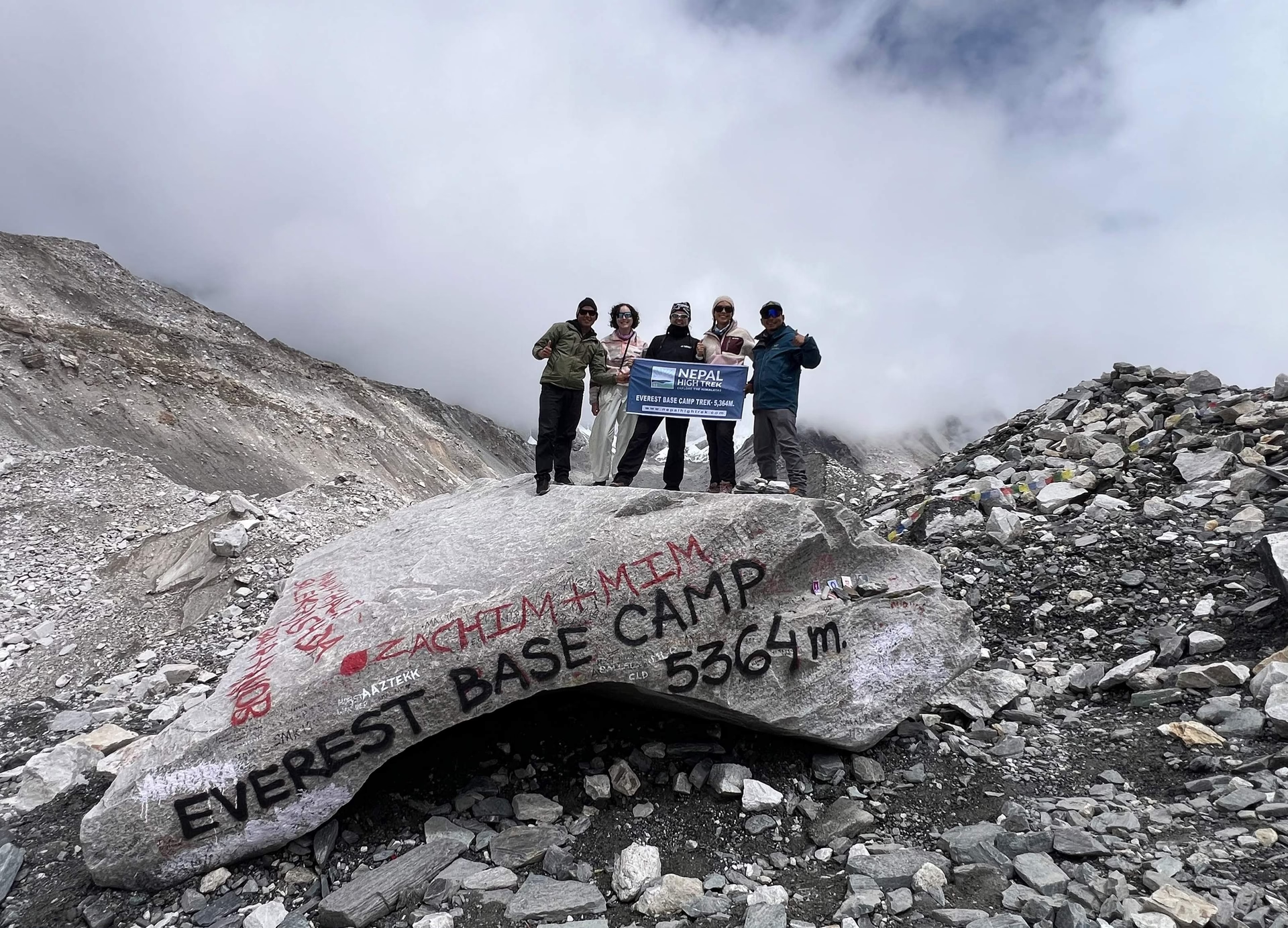
Everest Base Camp (5364 m) is the foothills of the world’s tallest mountain Mt. Everest. It is probably the best place on earth to explore once in a lifetime if you are a traveler. The base camp is also the gateway to the summit of either Mt. Everest or Mt. Lhotse. These two mountains are among the top ten mountains in the world. There are two Everest Base Camps. One is on the southern side of Mt. Everest and other is in the northern side of the Mt. Everest. Southern side is in Nepal and the Northern Base Camp is in China.
Accessing to these base camps is possible in different ways. The Northern Everest Base Camp is possible to reach by road as the Chinese government has constructed the road to the base camp. However, the Southern Everest Base Camp is not connected to the road as it is reached either by helicopter or by walking.
How to reach the Base Camp of Everest?
The most popular medium to reach the Base Camp of Everest is by trekking and helicopter flight. If you people across the globe think about the base camp of Mt. Everest, they think about the base camp of the southern side that lies in Nepal. Therefore, this blog will not focus more about the Northern Everest Base Camp. The most famous medium to reach the Sagarmatha base camp is by trekking. You can do the EBC Trek starting either from Lukla or from Phaplu or Jiri. The latest is from Lukla. Trekkers reach the Lukla either by flight or by helicopter. Nowadays, trekkers use road trips too. The road trip is up to Phaplu and trekkers start their trek to Everest Base Camp by walking.
Another popular way to reach EBC or Gokyo Lake is by helicopter. However, the landing in Sagarmatha Base Camp is prohibited except for the climbing season. Travelers can reach the Everest Base Camp by helicopter during the peak climbing season but in rest of the time of the year, trekkers have to either land in Gorakshep or Kalapathar; further, they have to trek to the Everest Base Camp.
Best Time to Visit Mount Everest BC
Throughout the year, travelers can visit the Mount Chhomolungma Base Camp. However, the trail up to the base camp and because of the weather conditions; an ideal time to visit the Everest Base Camp is the months of spring and autumn season. It is similar to the best season to do the EBC Trek. If you have not read the blog about Everest Base Camp Trek details; please visit our blogs and surf through it. During this time, travelers will not have any worries about the scenery and hardships of the trekking route leading up to the base camp. So, if you are planning to visit the Everest Base Camp, book the trek to Everest Base Camp for the months of spring (March, April, May) and autumn (August, September, & October).
Weather in Everest Region of Nepal
You will not find the stable weather in Everest Base Camp. The weather changes every 15 minutes in the mountain so one should well prepared in maentally and physically. The altitude and surrounding Himalayan monuments make the weather of Everest Base Camp unpredictable. Due to the unpredictable nature of the weather in Everest Base Camp, travelers find it hard to reach here. Therefore, reaching to the base camp of Mt. Everest and leaving footprints on the foothills of the world’s tallest mountain is not an ordinary travel activity.
Lots of cancellation of flights hinders the original plan of trekking to the Base Camp of mount Everest. Therefore, people often suffer while doing the Everest Base Camp Trek. Lukla airport is the only gateway to the EBC. Flight to Lukla is the most reliable way to get there. Therefore, the unpredictable weather affects the flight pattern to Lukla either from Kathmandu or from Ramechhap. So, weather in Everest Base Camp plays a vital role in the successful completion of the EBC Trek. The temperature at night time is below zero degrees but during day time the temperature may vary but overall it is less than 8 degrees.
Uses of Everest Base Camp Tour
Everest Base Camp is not just a destination for travelers to visit to knit a beautiful memory of reaching the base camp of the world’s tallest mountain but the place also acts as the logistics support for the Everest Expedition. During the Mountaineering season, the place seems like a global village. There will be lots of tents of the climbers and support crew members. Besides acting as the final destination of Mount Everest Tour. The place is also crucial for recording information and acting as an anchor for the Everest Expedition.
Spending a night at Everest BC
If you wish to spend overnight without an Everest Expedition permit then it is not possible. Nepal Government doesn’t allow individual trekkers or the group trekkers to spend overnight at the base camp during regular trekking activity. They have to spend overnight at Gorakshep which is 2 hours before the base camp. So, don’t think about spending a night at Base Camp of Everest if you don’t have a climbing permit.
Everest Base Camp vs Kala Patthar: What Is the Difference?
The difference is basically about the view versus the bragging rights. Base Camp sits tucked right on the grinding ice, totally obscuring the actual mountain you came to see behind the massive bulk of Nuptse. It’s iconic. But Kala Patthar? That’s just a glorified, freezing hill standing opposite the giant Himalayas. You drag your exhausted body up there specifically to stare Everest right in its terrifying face. At Nepal High Trek, we push you to do both. Hit the camp to touch the raw glacier. Then summit the dark hill to actually see the roof of the world.
What Trekkers Actually See When They Reach Everest Base Camp?
You don't see Everest. Funny, right? You essentially stare at a chaotic, freezing jumble of grey rocks and fractured blue ice. It’s a massive debris field. During spring, the place explodes into a neon tent city crawling with nervous climbers and heavy logistics gear. Outside of that window? It’s just an empty, hauntingly quiet pile of glacial rubble marked by faded prayer flags. The Khumbu Icefall dominates the entire background, looking like a frozen, terrifying waterfall ready to snap. We always warn our Nepal High Trek groups not to expect a neat little tourist viewpoint up there.
How Long Does It Take to Walk From Gorakshep to Everest Base Camp?
The distance is not much but it takes around 2 to 2.5 hours. Some strong trekkers and locals can cover the distance in about 1 hour to 1.5 hours. Look, you will move ridiculously slow after resting in Gorakshep. The amount of time largely depends upon the fitness level of a trekker.
Why Gorakshep Is the Final Overnight Stop for Most EBC Trekkers?
Because Base Camp itself legally doesn't allow random trekkers to sleep there. Honestly, Gorakshep is barely a settlement. It’s a harsh, dusty little outpost sitting on a frozen lakebed completely devoid of actual life. You sleep there simply because it's the absolute closest cluster of wooden lodges to the glacier. Breathing inside those drafty plywood rooms is a miserable chore. You'll spend the entire night violently shivering and gasping for thin air. We heavily manage our Nepal High Trek itineraries so you only endure one singular, torturous night in this godforsaken dirt pit before sprinting back down to oxygen.
What Makes the Khumbu Glacier Important to the Everest Base Camp Route?
It literally is the route at the very end. The glacier isn't just pretty scenery. It’s a living, groaning river of ice that you blindly walk right alongside—and eventually on top of. It continuously shifts. You can actually hear the deep, violent cracking noises bouncing around the valley walls at night. The ice totally dictates where the tents go and where you can safely step. Please read our blog about Khumbu Glacier and Ngozumpa Glacier of the Everest region to know more about the glacier. After the recent Rasuwa Flash Flood incident, lots of international communities are siding with Nepal for climate justice. Glaciers are melting rapidly and we need to work on this very sincerely.
Effects of Climate Change in the Khumbu Region
Global warming and climate change is the biggest topic of debate nowadays. The increase in pollution and environmental degradation the climate change effects are seen throughout the world. The Everest region of Nepal is also not an exception. Due to climate change, the landscape of Everest Base Camp is ever-changing. Not only the landscape of Everest region is changing but the surrounding hills and mountains are also changing. People used to say that before 10 – 20 years the snow-filled sites had changed into barren hills. The shape and location of the base camp are also moving due to the effects of climate change. So, it is very essential for the travelers and travel operators along with the government to act seriously in protecting the environment.
What Is the Difference Between Reaching Everest Base Camp and Seeing Mount Everest?
To reach the base camp is an achievement to everyone. It is also the final destination in mind. Seeing the mountain requires a totally different vantage point. Base Camp is physically shoved too close to the massive wall of Nuptse, so the actual summit of Everest is completely blocked from view. It’s the ultimate irony of this whole trip, isn't it? You walk for eight days to the base of a mountain you can't even see. That said, we make sure Nepal High Trek clients bag Kala Patthar the very next morning.
How Sherpa Culture Shapes the Experience Around Everest Base Camp?
It dictates literally everything. The teahouses you sleep in, the food keeping you alive, and the trails you cautiously walk on were entirely built by Sherpa muscle and grit. You'll constantly spin heavy brass prayer wheels on the left side of the trail. Why? Because local Buddhist tradition demands it. The deep respect for the mountains as sacred deities completely saturates the air up here. At Nepal High Trek, we don't just use local staff as a quirky backdrop. We use their cultural background and mountaineering prowess to make our clients experience them firsthand.
What Should You Do If You Cannot Reach Everest Base Camp as Planned?
You just turn around. Immediately. If your lungs are rattling violently in Lobuche or your head feels like it’s splitting open with a rusty axe, pushing forward is incredibly stupid. The mountain doesn't care about your ego. Look, altitude sickness kills stubbornly proud people every single year. Our Nepal High Trek guides are trained to brutally cut the trip short if you show severe red flags. Safety comes first. So, you should return back to safer lower elevation places.
Responsible Trekking Practices at Everest Base Camp and in Khumbu
Stop leaving your garbage everywhere. It’s that simple. The freezing temperatures up here perfectly preserve every single candy wrapper and wet wipe you drop for decades. You have to carry your trash all the way back down to Namche. Besides that? Don't blindly buy plastic water bottles at the lodges. Bring a tough water filter. At Nepal High Trek, we strictly enforce a pack-in, pack-out mentality because this fragile high-altitude environment is actively choking on tourist waste. Stay on the designated dirt paths. Don't go kicking fragile alpine shrubs just to snag a slightly better photo angle. The Everest Base Camp trail links to Island Peak, Lobuche Peak, Three High Passes and the Everest View Trek too. You can tailor the trip itinerary as per your preferred plan and schedule. Let's discover the majestic Everest Himalayas once time in your life.
Frequently asked
Nepal High Trek
Travel writer and passionate explorer sharing stories and expert guides from the heart of the Himalaya.