Nepal High Trek
Contact Us

Annapurna Circuit Trek: Explore the world’s longest Thorong La Pass

Traveler 1Traveler 2

💚 99% Recommended

by verified travelers

The oldest trekking trail is the cornerstone of Nepalese Trekking industry. The trail ushered in the arrival of thousands of trekkers from across the globe to this Himalayan nation. The Annapurna Circuit Trek connects gorgeous valleys of Manang and Mustang with the challenging Thorong La Pass (5416 m). Majority of the trail sections are easy to walk except the crossing of the pass. So, a trekker with good physical fitness can easily complete the trek. Besides trekking, you can also do the cycling holiday in the trail. Trek from Chame to Muktinath Temple or extend the trek up to Nayapul via Ghorepani Poon Hill following the classical itinerary.
Duration
15 days
Difficulty
Adventure/Expedition
Max Altitude
5416m
Destination
Nepal
Activity
Trekking
Accommodation
Hotel/Lodge
Group Size
1
Transport
Flight/Drive
Meals
B.D.L.
Season
Sep-Nov & March-May

Trip overview

Annapurna Circuit Trek is the best destination to explore the beautiful mountains and multicultural ethnic groups around the Annapurna region. Walking around the small authentic villages, stunning landscape, and south face of the massive Annapurna Mountains is a happy feeling itself. You will witness huge diversity in the lifestyles of the locals throughout the trek. The Annapurna Region lies between the Gandaki and Dhaulagiri Zones. The total length has been apprehended between 160 – 230 km. The area covers a total of six districts. They are Baglung, Kaski, Lamjung,Manang, Mustang and Myagdi. The region is also famous for its Annapurna Circuit Trek and Annapurna base camp trek, amongst other treks.

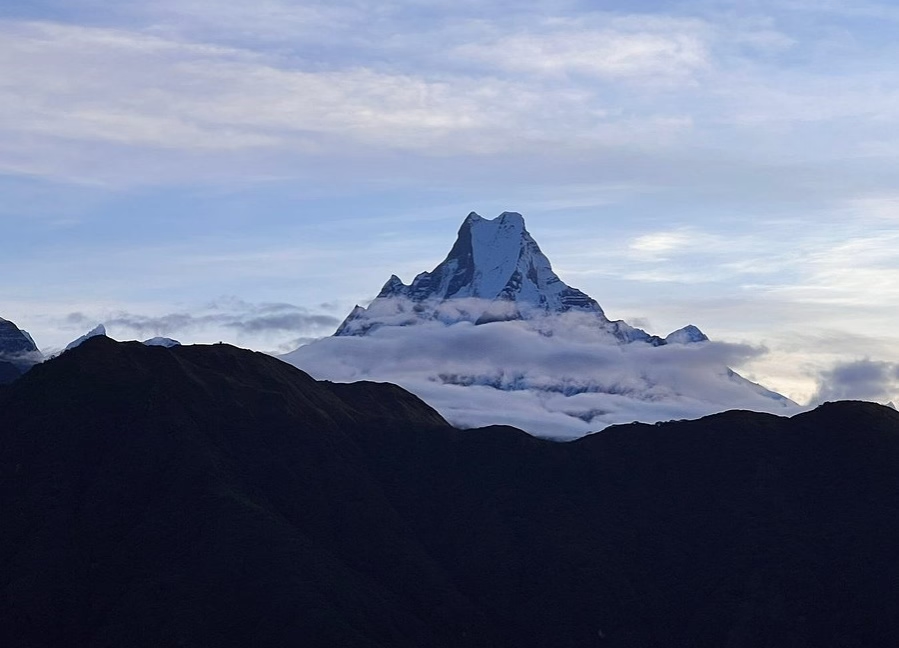
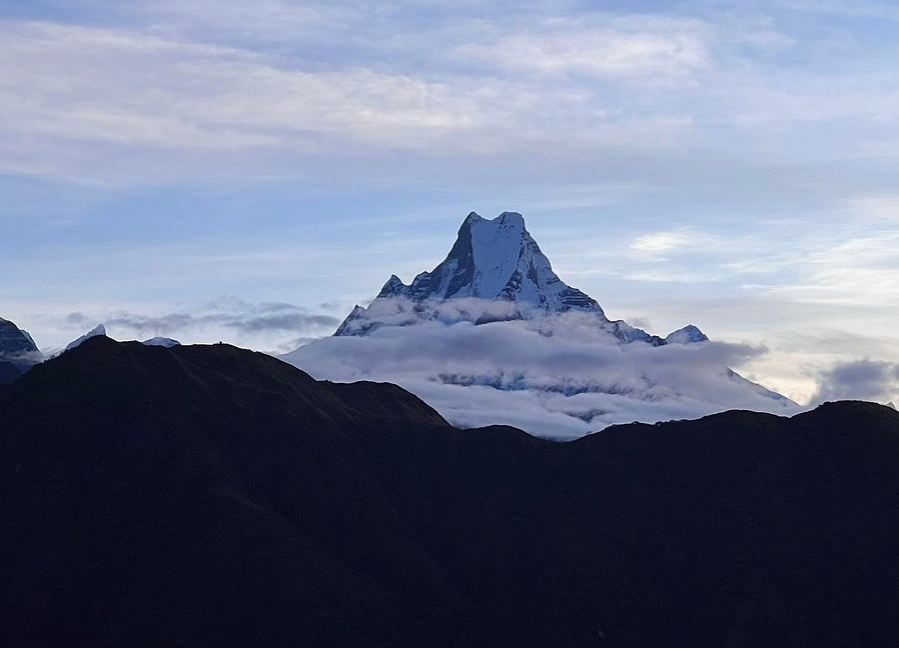
The snowcapped mountain scenery, seen at close quarters includes the Annapurna Massif (Annapurna I-IV), Dhaulagiri, Machhapuchhre, Manaslu, Gangapurna, Hiuchuli, Tukuche Peak, Tilicho Peak, Pisang Peak, Thorong Peak, and Paungda Danda. Numerous other peaks of 6000-8000m in elevation rise from the Annapurna range.

What to expect in Annapurna Trekking Trail?

Annapurna Circuit Trek 14 Days itinerary offers you constant views of sparkling peaks from the start to the end of the journey. If you are a person who loves to see the authentic part of Nepal then Annapurna Circuit would be a perfect ever option. Annapurna Circuit Trek covers a large area which is from Besisahar to Pokhara.

Annapurna circuit route heads to a long descent from Thorang-La pass (5416 m) to reach Mustang areas at the holy Muktinath Temple and Buddhist religions including the numerous historical massive monasteries. From Muktinath, the path goes through the Kali Gandaki River and the beautiful desert valley to Jomsom headquarters. Thorong la Pass Trek takes you to explore the fascinating culture of Manang Valley and its old impressive monastery of Buddhist religion with ancient customs and colorful traditional life.

The Longest Popular Enchanting Thorong La Pass (5416 m)

The Thorong La pass (5416m) is one of the most popular and beautiful Passes in the Annapurna trekking region. It’s located between the Manang and Mustang districts. The trek can be started from both sides but more than 80% of trekkers start from Besi Sahar. However, sometimes Thorong la Pass would be challenging if heavy snow fall in the winter season from December to February. Approximately it takes 7 to 8 hours to complete the Thorong La Pass and better to cross the pass from high camp.

Are there beautiful places in Annapurna Circuit?

On these scenic walks, you will witness the impressive villages of Jagat-Dharapani, Chame, Upper Pisang, Gyaru village, and Manang Village. Small lodges, a deep gorge, a suspension bridge, fresh watersheds, and nurturing greeneries will surely amaze you during the Annapurna circuit trekking.

But it’s surprising in the Muktinath area where you will witness the rough and dry desert-like terrain. Mustang District is famous in Nepal for its desert-like landscapes. Moreover, in winter snowfalls in Mustang and Manang districts where even the waterfalls will freeze.

Why is Mustang so popular in this Circuit?

Many trekkers, sportsmen, and adventurers love the Mustang district as they can go on trekking as well as biking adventures too. It is also very popular for the production of the apple around Marpha, Shang, Jhore, and Kagbeni villages.

Not only the local products but also the desert landscapes themselves are the major attractions of the Mustang. People go there to visit the holy Muktinath temple and Rinpoche statues with numerous oldest Buddist monasteries.

Where does the Annapurna Circuit Trek end?

The 14 days Classic  Annapurna Circuit Trek continues to the world’s deepest gorge of the Kali-Gandaki River.  It is in between towering Mt. Dhaulagiri and Mount Annapurna. After, ascending Muktinath the trails will follow that gorge.

Further, walks continue to the warmer areas at Tatopani village. A natural hot spring is located there and one can enjoy a hot water bath at (Tatopani) hot springs Myagdi. Finally, the way leads to high alpine areas at the Ghorepani Poon Hill Trekking route. A magnificent panorama of mountains with stunning sunrise views will arise after reaching Ghorepani villages.

The Ghorepani path leads into a dense green forest full of rhododendron trees and on a downhill walk to warm areas where a short drive leads to picturesque Pokhara. The most popular scenic city of Nepal and probably on this planet Earth where Annapurna Circuit Trek.

Short Annapurna Circuit trekking goes through green vegetation and tall tree lines to the windswept dry, Dhukur Pokhari, Lower Pisang, Upper Pisang, Ghyaru village, Manang village, Gunsang village, YakKharka, Thorong Phedi and crossing the Throng La pass.

Book the Annapurna Treks with Nepal High Trek And Expedition for 2026/2027

10 Days Short Annapurna Circuit Trek Cost includes three times meals, permits, transportation, trekking guide service, and trekking gear as well. We arrange itineraries according to the comfort of our clients. Besides the itinerary, we also offer special discounts for students and volunteers.

Our Trekking guides have been trekking on these routes for nine years and more. So, there is no doubt about service and facing dangers.

 Annapurna Circuit with Tilicho Lake Trek

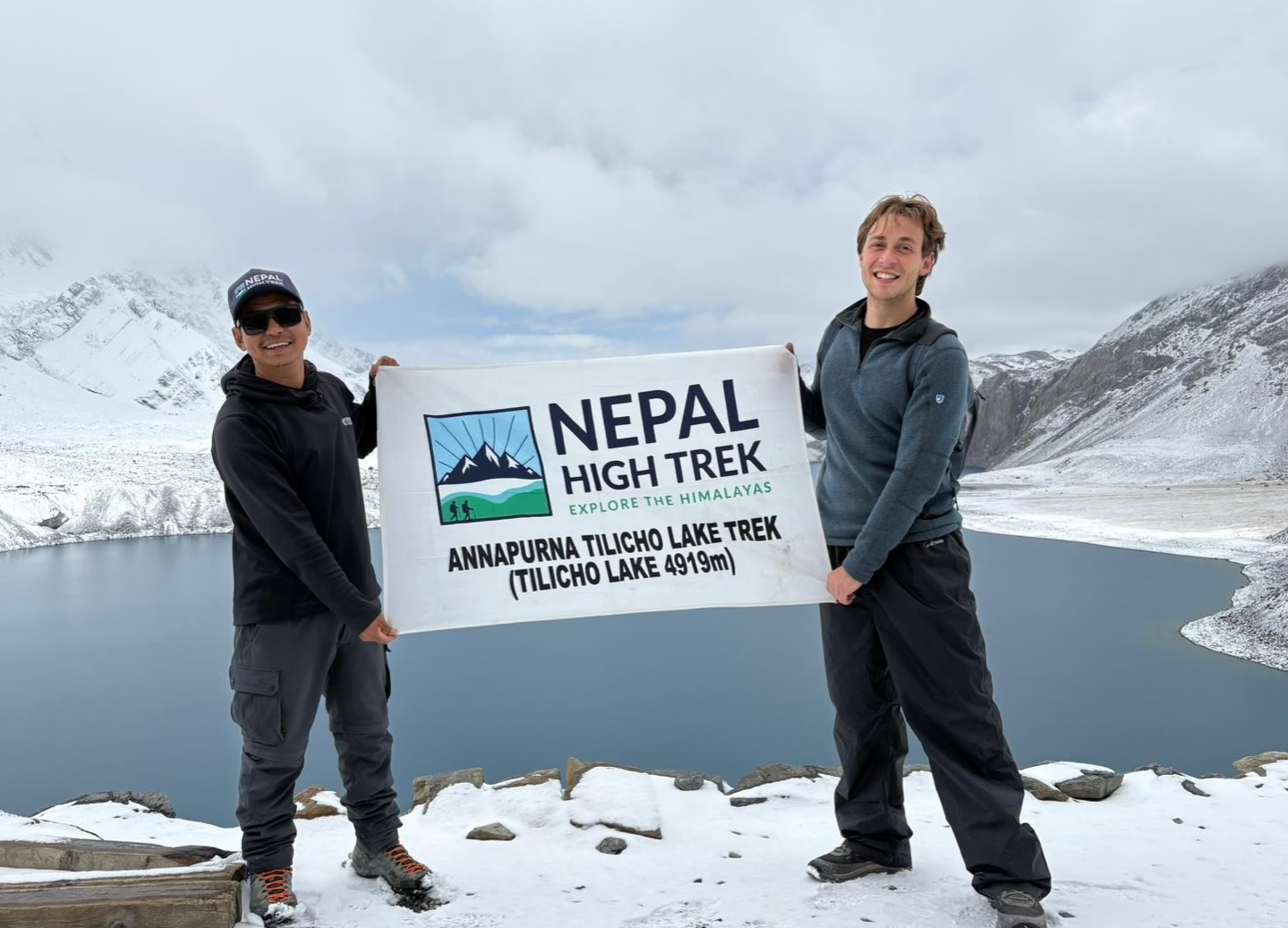
The 16 Days Annapurna Circuit Trekking Trail combines the Annapurna Tilicho Lake trek if you are interested you can towards the world’s highest Tilicho Lake (4949m). The Tilicho Lake is located at 4949m above sea level and it’s an astonishing lake in the world.

Not only Annapurna Circuit but also Annapurna Tilicho Trekking is also regarded as a world-popular adventure destination. They are on the Top Ten list as leading and renowned Travel Magazines and Travel Guide Books. The Annapurna circuit with Tilicho Lake Trek is a beautiful journey to experience a mind-blowing adventure too.

However, the Round Annapurna Trek is an extremely beautiful and the finest journey in the Annapurna region. This trip offers unexpectedly superb scenarios of the massive nature and hidden elements of the diverse culture of the mountain region. We assure any kind of traveler meets their expectations and extremely soaks into the hidden elements of nature. Lastly, if you’re an adventure enthusiast or willing to discover numerous sparkling peaks with multi-ethnic culture Annapurna Trek would be a perfect trip for everyone. Leave your footprint on the world’s ideal Annapurna Himalayas and create unforgettable memories.

Itinerary

Altitude profileMax 4,600 m
1,350 mD1760 mD22,670 mD33,270 mD43,450 mD54,470 mD64,010 mD74,600 mD83,800 mD9650 mD102,850 mD11822 mD121,350 mD131,350 mD14
  1. Day 1:Arrive in TIA Kathmandu and transfer to the hotel - 25 m (1350 m)

    1,350 m35mHotelB/B

    Welcome to Nepal for an outstanding Annapurna Circuit Trek! Our airport representative will receive you at the airport and transfer you to the agreed hotel. All the trip details will be discussed and finalized. You will be introduced with the trekking guide and you can get assistance from the guide to do last minute shopping before the trek. Remember that the basic gear like sleeping bag, down jacket, duffle bag, t-shirt, and cap are provided by the company. If time permits, you can stroll around the marketplace of Thamel enjoying its clamor as it is the touristic hub of Kathmandu. Overnight in a hotel

  2. 02

    Day 2:Drive from Kathamndu to Besisahar – (07hrs - 175km) (760 m)

    760 m6/7 HrsGuest HouseB/L/D

    We begin the classical Annapurna Circuit Trek today! You will be picked up from your hotel and transfer you to the bus park. The road trip lasts for about 5 to 6 hours depending upon the highway traffic. On the way to Besisahar, you can experience the highway towns, rivers, cascading hills, terraced farmlands, and local way of traveling around Nepal. The lunch will be on the way and upon reaching the Besisahar, you can stroll around the place which is also the district headquarter of Lamjung district. Overnight in a lodge

  3. 03

    Day 3:Drive from Besisahar to Chame by local sharing jeep (2,670 m - 67km)) – 05 hours.

    2,670 m4/5 HrsGuest HouseB/L/D

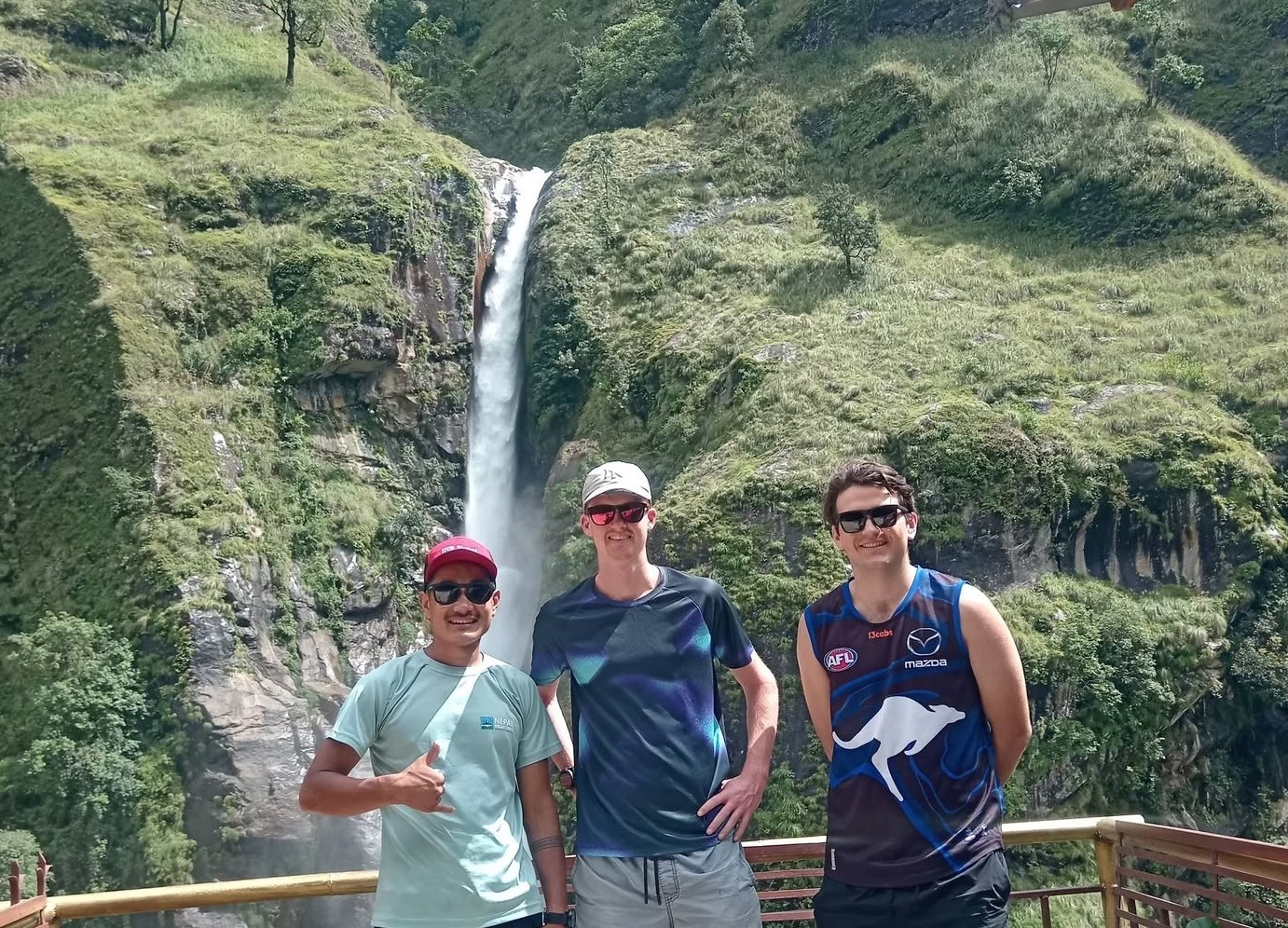
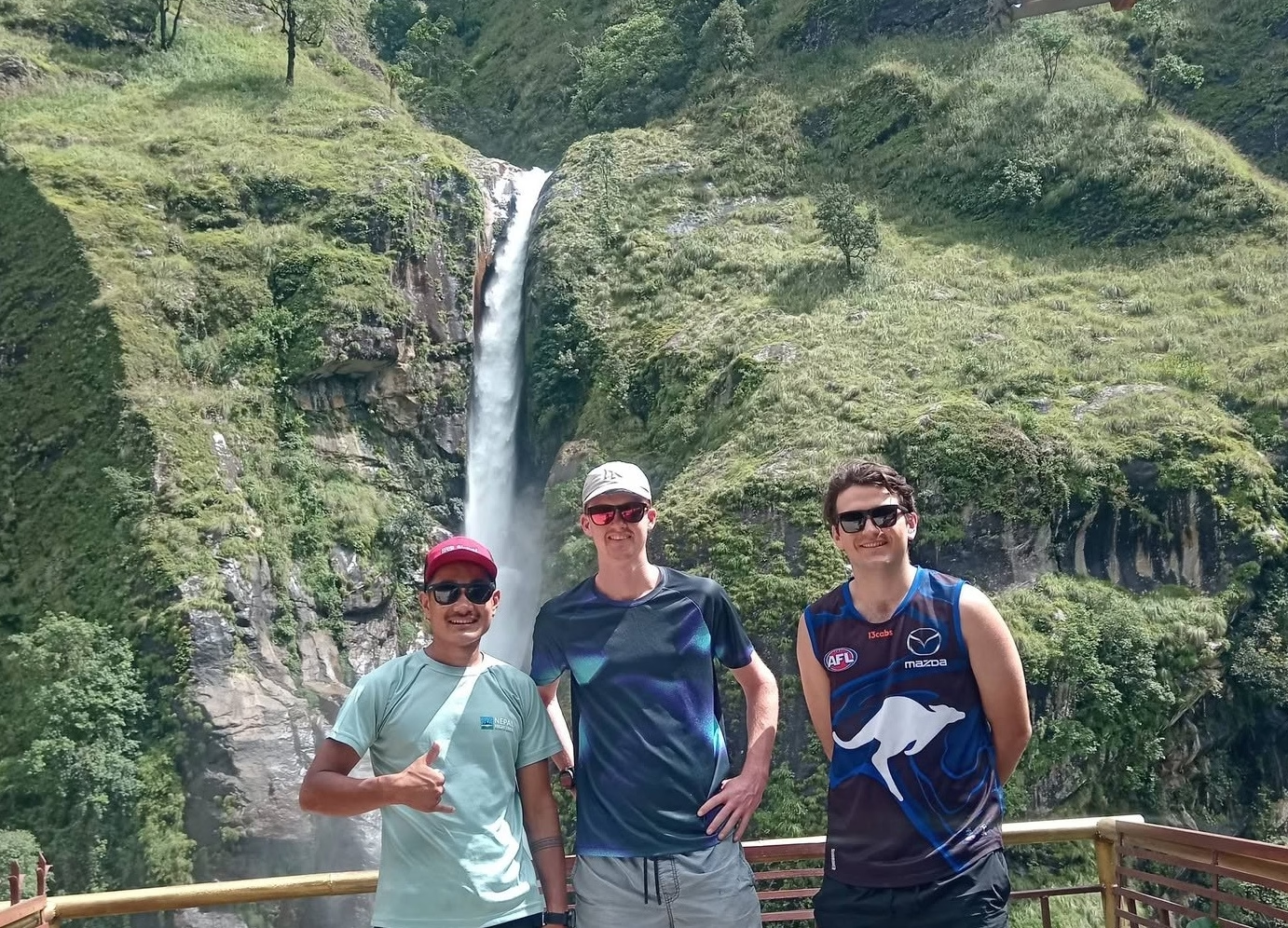
    Early in the morning after breakfast, we will drive to the village of Chame. We will begin the jeep drive after checking in at the check post just outside the Besisahar. This is the jeep drive to Chame but full of outstanding attractions. The road can be bumpy but the attractions can help you forget the bumpy ride and relish the natural beauty that you see from the jeep window. We will stop in two iconic waterfalls before heading to Chame. These stops are in Bung Waterfall and Octopus Waterfall. We can have lunch on the way but the trekking guide will decide whether to have lunch on the way or in Chame Village. Our journey will go through places like Bhulbhule, Syange, Jagat, Chamje, Taal, Dharapani, and Timang villages. Overnight in a tea house.

  4. 04

    Day 4:Trek From Chame to Upper Pisang (3, 270 m - 14km ) – 7/8 Hours

    3,270 m7/8 HrsGuest HouseB/L/D

    Today is the start of the complete trekking day. Therefore, we will wake up early in the morning and do some stretching before breakfast. We will walk on the off road almost all the time to reach Upper Pisang with few off road trekking trail which is near the Upper Pisang Village. On the way, we will enjoy the breathtaking scenery of Chulu East, and Chulu West, Pisang Peak, and Annapurna II. The prayer wheels and the stories of heaven’s gate (Sworga Dwari) can be fascinating to experience while on this trekking trip. Major highlights of today’s trek is stop at the apple farm resort in Bhartang Village and lunch at Dhukur Pokhari Village. Overall, today’s trek is joyous without much steep ascent. Overnight in a tea house.

  5. 05

    Day 5:Trek From Upper Pisang to Manang via Ghyaru Nawal (3,450 m/19km) – 8/9 Hours

    3,450 m8/9 HrsGuest HouseB/L/D

    We will begin the trek after breakfast. Today’s trek is so mystical and amazing due to the presence of Guru Rimpoche cave and the majestic Ngawal Village. We will take the arduous upper route rather than the easy Humde route to go to Manang Village. This way via Ngawal is the most scenic and also offers the classical feel of the Annapurna Circuit Trek. It is challenging but rewarding. After walking for about 45 minutes from Upper Pisang, we will reach the Green Lake and then start our uphill trek to Ghyaru Village where we will have lunch before departing to Manang Village via Ngawal. While on the Ngawal village, you can visit the Rimpoche Cave which is believed to have been connected with the Mustang Valley. Overnight in a tea house.

  6. 06

    Day 6:Rest Day at Manang for a short excursion and Acclimatization. (Optional Hike to Ice Lake 4600 m - 16km) - 8/9 Hrs

    4,470 m7/8 HrsGuest HouseB/L/D

    We will do the acclimatization activity on this day to adjust to the demands of the higher elevation places beyond Manang Village. After the breakfast, we will walk towards the Gangapurna View Point and the Gangapurna Lake. At first, we will walk through the farmlands behind the Manang Village and cross the river before trekking uphill to the Gangapurna View Point. You will be surprised to see the scenery where the green lush alpine forests ends in the snowline including the view of the mountains and glaciers. We will spend about half an hour at the viewpoint and descend down to the shores of Gangapurna Lake where we will stop for a while to have lunch or short tea break before returning back to Manang Village. In the evening, you can stroll around the village and know about the cultural and traditional aspects of the Manangi People. Overnight in a tea house.

  7. 07

    Day 7:Trek from Manang to Ledar (4,010 m - 10km ) – 4/5 hours.

    4,010 m5/6 HrsGuest HouseB/L/D

    We will formally enter the arid desert like landscape today. After breakfast, we will begin our trekking and the most challenging part is to climb uphill towards the village of Ghunsang. The trekking guide will decide whether to have lunch in this small village or continue to Yak Kharka or Ledar. The trail offers great scenery of mountains like Gangapurna, Chulu East and Chulu West. The narrow valley and the grassy meadows we walk can be so enticing. Remember that this section is considered as the ideal place to spot the snow leopard. After Ghunsang village, the trail is in the Nepalese Gentle flat all the way to Ledar via Yak Kharka Village. In comparison to the Yak Kharka village, Ledar village has few tea houses but offers tranquil stay up in the mountains. Overnight in a tea house.

  8. 08

    Day 8:Trek from Ledar to Thorong Phedi (4600m) or High Camp 4920m) - 5/6 Hrs (9km)

    4,600 m6/7 HrsGuest HouseB/L/D

    We will be walking in the gentle uphill trail all the way to the Thorang Phedi. The trail is narrow and we can enjoy the breathtaking scenery of mountains, cascading hills, and river valley while walking on this trail. After walking through the several ridges, we will have to cross the river and trek uphill to the Thorong Phedi. Your trekking guide will decide whether to go to the High Camp or stay in the Thorong Phedi. Enjoy the best view of the mountains like Gundang, Syagang, Thorong Peak, Khatungkan, etc. If we decide to stay in the Thorong Phedi, we will do short uphill hike for about an hour and then return back to the tea house as an acclimatization hike. Overnight in a tea house.

    We'll head towards to Thorong Phedi via beautiful landscapes and numerous peaks. The trail is cozy with and gradual up to the Thorong phedi or high camp. It takes about the 5 hours to Phedi but if highly recommend to stay at the high camp. However, high camp is quite higher than Thorong phedi but if you are not feeling well better to stay at Thorong Phedi but we have to start early the next day. You will have time to discover hidden gems of nature.

  9. 09

    Day 9:Trek from Thorong Phedi to Muktinath via Thorong La Pass 5416m ( 7/8 hrs- 17km)

    3,800 m7/8 HrsGuest HouseB/L/D

    We will wake up around 4:30 am and have early breakfast. Our trekking starts later by 5 am in the morning as today’s trek is very long. We will walk uphill with the help of torch light and as we cross High Camp the morning light starts to come lighting the entire landscape. It takes about 2 to 3 hours to reach the top of the Thorong La Pass where we will enjoy the majestic scenery of mountains on all sides. This is the maximum altitude that we will reach during the Annapurna Circuit Trek. Therefore, we have to be more careful and heed the instructions of a trekking guide. After the pass, we will descend down to Phedi, and continue the journey towards the Muktinath Village via temple. We will visit the temple and monastery area before heading to our tea house in Muktinath. Overnight in a tea house.

  10. 10

    Day 10:Drive to Tatopani by local bus and fun with natural hot spring (650m-57km): 3/4 hours

    650 m4 HrsGuest HouseB/L/D

    In the morning time, we will visit the temple and then have breakfast. After the breakfast, we will hop on the jeep and head towards the village of Tatopani. On the way, we will stop at the Kagbeni Village, Jomsom Village, Marpha Village, and Rupse Waterfall. Upon reaching Tatopani, we will check in our tea house and then head towards the natural hot springs site to dip in for relaxation. Overnight in a tea house.

  11. 11

    Day 11:Trek from Tatopani to Ghorepani (2,850m - 13km) - 7/ 8 hours

    2,850 m6/7 HrsGuest HouseB/L/D

    Today’s trek is completely uphill for about 7 to 8 hours. Therefore, we will wake up early and have breakfast. At first, we will walk through the village until we reach Ghar Khola Valley. The trail passes through lush green forests. Some sections are extremely steep but it is manageable. We will stop in the village of Sikha for lunch and then continue our trek towards the Ghorepani village. Once at the village, we will relish the sight of the cascading hills and mountains. We will sleep early for majestic sunrise experiences tomorrow in the Poon Hill. Overnight in a tea house.

  12. 12

    Day 12:Early morning Hike to Poon Hill Viewpoint 3210m then trek to Ulleri - 2 hrs then drive to Pokhara by local sharing jeep.

    822 m6/7 HrsHotelB/L/B

    Before dawn around 5 am in the morning, we will begin the uphill trek to Poon Hill. We will obtain the ticket and then climb the stairs through the green lush forests. As the morning light approaches, the trail becomes extremely enticing. The sight of the mountains before and after the sunrise can be so fascinating sight to compare. We will enjoy the sights of the mountains from the Dhaulagiri and Annapurna Himalayan range. The time we spend at the top of the Poon Hill (3210 m) is so amazing as we wait for the sun to rise near the Machhapuchhre Mountain. The golden colors of the snowy mountain tip can be the photographer’s paradise which is so adorable and memorable. After spending about an hour at the top, we will descend back to Ghorepani for breakfast and continue to trek downhill via Banthanti to Ulleri Village. We will have lunch in the Ulleri Village and hop on the jeep back to Pokhara. The jeep drive is about 2 hours via Tikhedhunga, Birethanti, and Nayapul. In the evening, you will have free time to explore the clamor of Lakeside Pokhara. Overnight in a hotel.

  13. 13

    Day 13:Drive from Pokhara to Kathmandu by sofa tourist bus: 8/9 hours - 202km by tourist bus ( By flight 25 m)

    1,350 m6/7 HrsHotelB/L/D

    Early in the morning, you will be picked up from your hotel and transfer you to the tourist bus park. We will drive back to Kathmandu along the Prithivi Highway. It takes about 7 to 8 hours to reach Kathmandu from Pokhara. Upon reaching Kathmandu, you will check in at the hotel and in the evening, the company representative of the Nepal High Trek will host the farewell dinner and review about the trek. Overnight in a hotel.

  14. Day 14:Final Departure

    1,350 m35mHotelB/B

    Finally, we will take you to the international airport in Kathmandu for the final departure. We will bid you farewell with promise to meet again for yet another exciting adventure in Nepal.

Are you looking to customize the trip itinerary?

If the provided schedule is not suitable for you, we can create a personalized travel arrangement tailored to your preferences and requirements.

Customize Trip

Cost breakdown

What's included

  • Airport pick up and drop off service.

  • Two night boutique Hotel in Kathmandu with breakfast

  • One night hotel in Pokhara with breakfast

  • Full board meals throughout the trip (Breakfast, Lunch, and Dinner)

  • Government license holder mountain guide as included his salary, food, accommodation, and insurance.

  • Annapurna Conservation Area Project Permits.

  • Trekking permit: ‘Trekkers’ Information Management System (TIMS)

  • Kathmandu to Besi Sahar by local bus and Pokhara to Kathmandu Sofa tourist bus.

  • Besisahar to Chame by local sharing jeep.

  • Nayapul to Pokhara by private vehicle.

  • Private local tea house accommodations during the trek.

  • Three times tea or coffee during the trek

  • Fresh fruit during the trek

  • NHT’S Dawn jacket, sleeping bag, and duffle bag (To be returned after the trek)

  • Medical first aid kit box.

What's not included

  • Your Travel and rescue insurance.

  • All the Food in Kathmandu. Also in the case of early return from the mountain (due to any reason).

  • All the expenses in the mountain over than scheduled itinerary (due to strike, delay or canceled flight)

  • Extra night Hotel in Kathmandu if arrive early or late departure than scheduled Itinerary.

  • All the Bar bills and personal expenses (phone call, laundry service, battery recharge, a bottle of water, hot water, shower.

  • Tips for the guide and porter.

Dates & Availability

Filter departures by month
04Aug

Aug 4 – Aug 18, 2026

Available
$1,150pp
07Aug

Aug 7 – Aug 21, 2026

Available
$1,150pp
10Aug

Aug 10 – Aug 24, 2026

Available
$1,150pp
15Aug

Aug 15 – Aug 29, 2026

Available
$1,150pp
19Aug

Aug 19 – Sep 2, 2026

Available
$1,150pp
23Aug

Aug 23 – Sep 6, 2026

Available
$1,150pp
27Aug

Aug 27 – Sep 10, 2026

Available
$1,150pp
31Aug

Aug 31 – Sep 14, 2026

Available
$1,150pp

Trip map

Loading map…

Useful information

Why Choose the Annapurna Circuit Trek?

The Annapurna Circuit stands as one of the world’s ultimate bucket-list adventures because of its unmatched geographical diversity. Very few trails on Earth allow you to start your journey in lush, sub-tropical terraced rice fields at 760 meters and finish in a stark, high-altitude alpine desert reminiscent of the Tibetan plateau. Along the way, you are treated to front-row views of towering giants like Annapurna I (8,091m) and Dhaulagiri (8,167m). It offers the perfect marriage of deep cultural immersion and raw Himalayan scenery that younger, more uniform trails simply cannot replicate.

Note down that Nepal High Trek never fails to provide authentic trekking experiences. We always take our trekkers to witness the best wonders of Nepal. Even in the Annapurna Circuit Trek route, we include more places which are not affected by road constructions. For example, we prefer Ngawal Village route than the Humde Route to go to Manang Village. These are smaller things that make the company best for any kinds of trekking activities or tour activities with unique experiences.

Is This Trek Right for You?

If you possess a healthy sense of adventure, a solid baseline of physical fitness, and a love for changing landscapes, this trek is an exceptional fit. It is highly customizable, making it accessible to both ambitious first-time Himalayan hikers and seasoned mountaineers alike. However, you must be comfortable with rustic living, unpredictable mountain weather, and basic tea house amenities. The journey is suitable to all kinds of travelers if you can resist higher elevation especially during Thorong La Pass crossing. If you have severe knee issues that flare up on long, steep descents, or if you cannot handle spending multiple days completely disconnected from modern luxuries, you may want to opt for a shorter, less demanding route.

Best Time to Trek the Annapurna Circuit

Timing is everything in the Himalayas, and two main windows dictate peak trekking conditions. Autumn (September to November) is universally considered prime time; the monsoon rains have completely cleared the air, offering crisp, clear skies and the most reliable photography conditions. Spring (March to May) is our second premium window, characterized by warmer daytime temperatures and hillsides blanketed in blooming red, pink, and white rhododendron forests. Winter brings heavy snow that routinely blocks the high passes, while summer brings heavy monsoon rains, mud, and intense landslide risks.

Trek Route Overview

The classic route forms a massive horseshoe-shaped loop around the entire Annapurna Massif. Historically starting at Besisahar, the modern trail typically begins slightly higher up the valley at Dharapani or Chame to bypass the newly built dirt roads. From there, you follow the plunging Marshyangdi River valley upward through beautiful Buddhist villages like Pisang and Manang. After conquering the formidable Thorong La Pass, the trail plummets into the arid, rain-shadow district of Mustang, passing the sacred temples of Muktinath before tracing the Kali Gandaki Gorge down toward Jomsom and Pokhara.

Distance, Duration & Daily Walking Hours

Depending on your exact entry and exit points, the total trekking distance spans between 160 and 230 kilometers (99 to 142 miles). A standard, well-paced itinerary takes anywhere from 12 to 18 days to complete comfortably. You can expect to walk between 5 and 7 hours per day, covering roughly 10 to 18 kilometers each session. The glaring exception to this routine is the grueling pass-crossing day, which requires a pre-dawn start and demands 8 to 10 hours of intense, continuous moving over highly challenging, steep mountain terrain.

Highest Point of the Trek

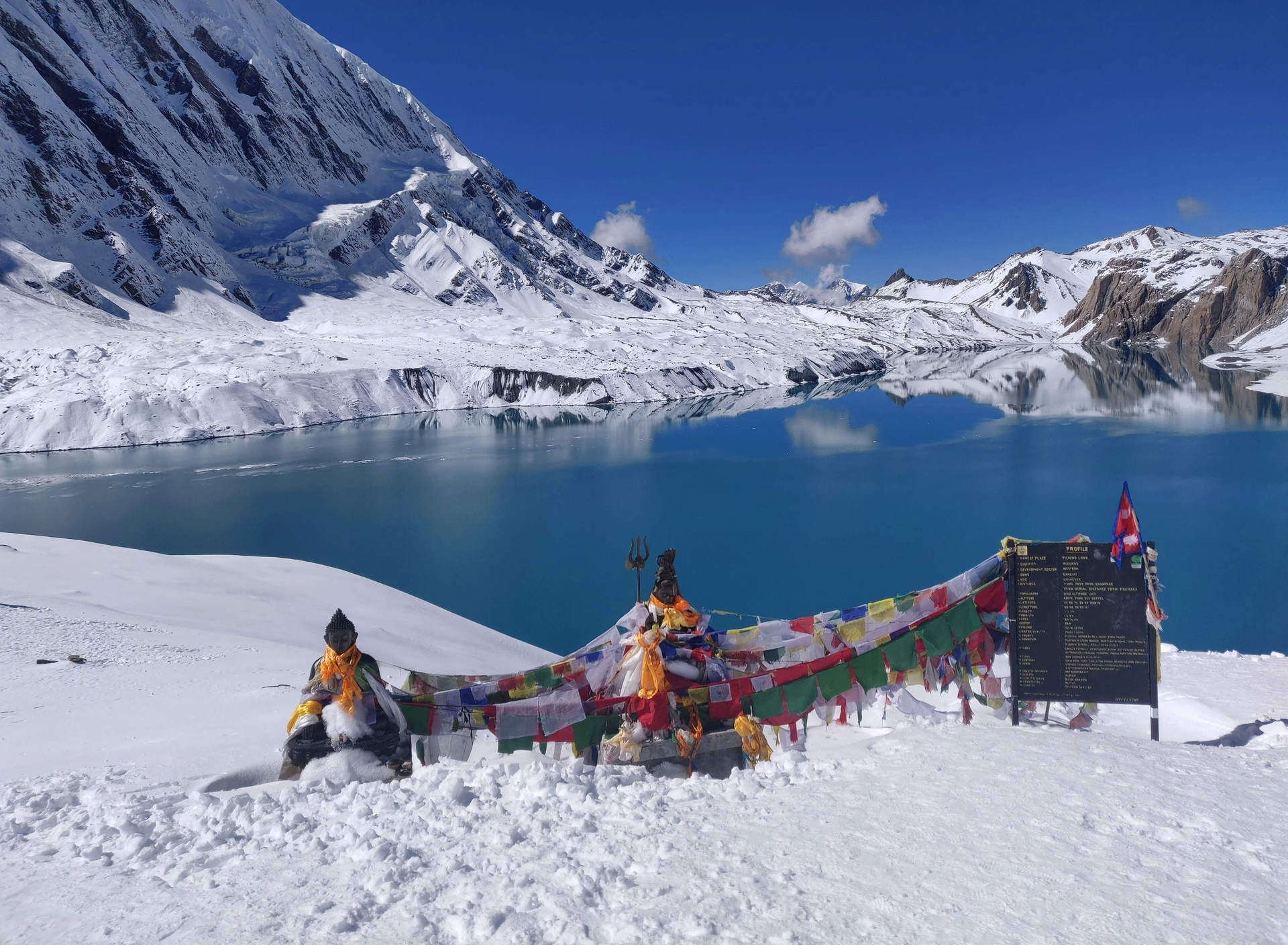
The absolute crown jewel and highest physical point of the journey is the world-famous Thorong La Pass. Standing at an imposing altitude of 5,416 meters (17,769 feet) above sea level, reaching this milestone is a profound physical achievement. At this elevation, the available oxygen in the atmosphere drops to roughly 50% of what you experience at sea level. The summit is decorated with hundreds of fluttering, colorful Buddhist prayer flags and offers a sweeping, unobstructed panorama of the surrounding snow-capped peaks and the vast, barren hills of the Mustang region below.

Crossing Thorong La Pass

Crossing the pass is the most intensely demanding phase of the trek. The day begins with an alpine start around 3:30 AM from Thorong Phedi or High Camp to ensure you clear the summit before the notoriously fierce midday winds pick up. You will hike using a headlamp in freezing temperatures, often dropping well below, navigating steep, icy moraines and loose scree. After celebrating your achievement at the top, you face a relentless, knee-jarring 1,600-meter vertical descent down to the valley floor of Muktinath.

Altitude & Acclimatization

Ascending safely past the 5,000-meter mark requires a strict, non-negotiable approach to acclimatization. Our itineraries feature a mandatory rest and adaptation day in the large village of Manang (3,540m). This day is intentionally used for "climbing high and sleeping low" side hikes to places like Ice Lake or Gangapurna Glacier. Pacing yourself is essential; you must walk at a slow, deliberate pace (known locally as bistari, bistari), avoid alcohol completely, and drink plenty of fluids to give your body the best chance to naturally adjust to the thinning air.

Weather and Seasonal Conditions

The weather along the circuit is a study in extreme contrasts. At lower elevations, you will happily trek in a simple T-shirt and shorts through warm, humid valleys. However, as you climb above the tree line past 4,000 meters, conditions change instantly. Daytime temperatures drop rapidly, and the nights become bitterly cold, routinely plunging well below freezing. The high-altitude segments are also highly prone to sudden snowstorms and biting winds, meaning a sunny morning can turn into a full alpine winter storm by afternoon. High-quality layering is imperative.

Trek Difficulty Explained

The Annapurna Circuit is officially graded as a "moderate to strenuous" trek. It does not require any technical climbing skills, ropes, or ice axes, making it a walking trek. However, the true difficulty lies in the sheer longevity of the trip and the sustained exposure to high altitudes. Walking uphill for consecutive days heavily taxes your endurance. The combination of rocky, uneven trails, steep stone steps, freezing temperatures, and thin air makes it a genuine physical and mental challenge that requires proper physical preparation well in advance.

Required Permits

To legally enter and trek through this region, you need two primary government documents. First is the Annapurna Conservation Area Project (ACAP) permit, which costs roughly 3,000 NPR (approx. $23 USD). Second is the Trekkers' Information Management System (TIMS) card, priced at 2,000 NPR (approx. $15 USD). These permits are critical for your safety, as they register your itinerary in the national database. They must be arranged beforehand in Kathmandu or Pokhara through a registered trekking agency and are checked at multiple military and police checkpoints along the trail.

Transportation to and from the Trail

The journey begins with an overland drive from Kathmandu to the starting point. The 200-kilometer drive to Besisahar or Dharapani takes roughly 8 to 11 hours, split between paved highways and bumpy, winding dirt roads cliffside. You can travel via budget-friendly public buses or opt for a private 4WD jeep for a faster, more comfortable ride. At the end of the trek in Jomsom or Muktinath, you can choose to take a local jeep down to Pokhara or book a scenic 20-minute domestic flight from Jomsom to Pokhara to skip the rough road.

Accommodation Along the Route

You will spend your nights in classic mountain teahouses, which are family-run alpine lodges. The lower villages feature surprisingly modern amenities, offering attached bathrooms and hot gas showers. As you ascend into higher territory, accommodations become far more basic. Rooms are typically unheated twin-sharing spaces with two simple wooden beds and foam mattresses. The communal dining room is the only heated space in the lodge, warmed by a central wood or pellet stove in the evenings, creating a wonderful, cozy social atmosphere for weary trekkers.

Meals During the Trek

Teahouse menus are surprisingly extensive and operate on a fixed-price system regulated by the local tourism committee. You can find everything from pancakes and eggs to pasta, spring rolls, and pizza. However, the ultimate trekking fuel remains Dal Bhat—a traditional platter of steamed rice, lentil soup, vegetable curry, and pickles. It is nutritious, freshly cooked, and comes with unlimited free refills. We highly advise sticking to a vegetarian diet above 3,000 meters, as all meat must be carried up by porters without proper refrigeration.

Drinking Water & Hydration

Proper hydration is one of your primary defenses against altitude sickness; you must drink between 3 and 4 liters of water every single day. Drinking untreated tap or river water will quickly result in a severe stomach infection. To stay safe, you can buy boiled water directly from your teahouses, or bring reusable, heavy-duty bottles paired with personal water purification tablets, a UV purifier, or a reliable filtration pump. Buying single-use plastic water bottles is strictly banned in many parts of the conservation area to prevent environmental pollution.

Guide & Porter Information

While Nepal's regulations surrounding solo trekking can fluctuate, hiring a licensed guide and a dedicated porter is the smartest investment you can make. A professional guide navigates the trails seamlessly, manages lodge bookings in crowded peak seasons, and monitors your oxygen levels for altitude safety. A porter carries your heavy main luggage bag (typically up to 15-20kg shared between two trekkers), allowing you to walk with just a light daypack. This significantly reduces physical strain on your body, dramatically increasing your chances of successfully crossing the pass.

Communication & Internet Access

Staying connected has become significantly easier along the circuit, but it remains highly unpredictable. Both Nepal Telecom (NTC) and Ncell SIM cards provide decent cellular coverage and mobile data in the lower valleys, but signals vanish entirely as you approach the high camps. Many teahouses offer satellite-based Wi-Fi services (like Everest Link or local routers) for a small daily fee of $2 to $5. However, these connections are notoriously slow, highly erratic, and can cut out completely during cloudy or stormy weather.

Electricity & Charging Facilities

Most villages along the circuit are powered by local micro-hydro projects or solar arrays. You can easily charge your smartphones, cameras, and power banks in the communal dining hall, but lodge owners will charge a fee ranging from $2 to $5 per device as you climb higher. Because solar power becomes unreliable during cloudy days or freezing nights, bringing a high-capacity power bank (20,000mAh or greater) is an essential packing strategy to keep your electronic devices and camera batteries alive throughout the trek.

Cash, ATMs & Personal Expenses

You must carry an ample supply of Nepalese Rupees (NPR) in cash before leaving Kathmandu or Pokhara. While there are a couple of ATMs in larger hubs like Manang and Jomsom, they are notoriously unreliable, frequently running out of cash or losing power. Your trekking package typically covers your room and standard meals, but you will need out-of-pocket cash to pay for trail luxuries. Budget roughly $15 to $25 USD equivalent per day in cash to cover hot showers, Wi-Fi, device charging, snacks, sodas, and tips.

Health & Safety Tips

Your health on the trail requires proactive management. The most common physical issues include painful blisters, minor stomach bugs, and the dry "Khumbu cough" caused by inhaling freezing, thin mountain air. Pack a comprehensive personal medical kit containing blister tape, rehydration salts, throat lozenges, rehydration powders, ibuprofen, and a broad-spectrum antibiotic. Always prioritize personal hygiene by using hand sanitizer frequently, and make sure to wear a buff or lightweight neck gaiter to protect your lungs from dust and cold air while walking.

Altitude Sickness Awareness

Acute Mountain Sickness (AMS) is a serious risk when traveling above 3,000 meters. Early symptoms include a persistent headache, mild dizziness, loss of appetite, nausea, and sleeplessness. It is crucial to be entirely honest with your guide about how you are feeling. Minor symptoms can often be managed by resting, staying hydrated, or taking Diamox (acetazolamide). However, if your symptoms worsen or fail to improve after a night of rest, the only cure is immediate descent to a lower altitude. Never attempt to push upward through a severe headache.

Emergency Rescue & Evacuation

In severe cases of altitude sickness, or if a trekker suffers a serious physical injury on a remote section of the trail, the only viable method of evacuation is via a charter helicopter rescue. These operations are highly complex and extremely expensive, often costing upward of $3,000 to $5,000 USD. Helicopter companies in Kathmandu will not deploy a aircraft unless they receive immediate credit card confirmation or a verified payment guarantee from your insurance provider. Your guide will handle the satellite logistics to coordinate the rescue smoothly.

Travel Insurance Requirements

Standard holiday travel insurance policies will not cover an adventure of this magnitude. Before arriving in Nepal, you must purchase a specialized adventure policy. Double-check the fine print to ensure it explicitly covers medical expenses and emergency helicopter rescue up to an elevation of 5,500 meters (to safely clear the 5,416m Thorong La Pass). It is highly recommended to email a digital copy of your insurance policy and emergency contact numbers to your trekking agency before your trip begins.

Local Culture & Traditions

The Annapurna Circuit provides a fascinating window into ancient cultures. The lower valleys are primarily inhabited by Hindu Gurung and Magar communities. As you ascend past Chame, the architecture and culture transition into Tibetan Buddhism. You will walk past ancient monasteries, spinning brass prayer wheels, and long mani walls made of carved stones. Always pass these religious monuments on their left-hand side, remove your shoes before entering temple shrines, and always ask for explicit permission before taking photos of local people or monks.

Responsible Trekking Practices

Preserving the pristine beauty of the Himalayas is a shared responsibility. We strictly follow a "Leave No Trace" philosophy. Avoid buying single-use plastic water bottles, and ensure you pack out all non-biodegradable waste (such as used batteries, wet wipes, and plastic wrappers) back to Kathmandu. Stick strictly to the designated trails to prevent soil erosion, avoid disturbing the mountain wildlife, and support the local economy by purchasing locally made goods and staying at locally owned, sustainable mountain teahouses along your route.

Wildlife & Natural Landscapes

The route passes straight through the protected Annapurna Conservation Area, the largest protected zone in Nepal. This vast sanctuary features an incredible array of biodiversity. As you hike, keep an eye out for unique wildlife, including herds of blue sheep (bharal) grazing on high cliffs, Himalayan tahrs, langur monkeys, and rare birds like the golden eagle or the colorful Danphe. If you are incredibly lucky, you might spot signs of the elusive snow leopard that roams the high-altitude, craggy rock deserts of Manang.

Nepal High Trek: Best Company for Trekking in Nepal

When it comes to executing a safe, flawless Himalayan adventure, Nepal High Trek is the premier choice. As a fully authorized, local agency boasting over a decade of operational excellence, they specialize in custom itineraries led by wilderness-certified, English-speaking guides. Their deep local roots guarantee the best teahouse rooms, prompt logistics, and a highly reliable safety backup system. By choosing Nepal High Trek, you are partnering with an ethical, responsible team dedicated to transforming your Annapurna dream into an unforgettable, flawlessly organized reality.

Trip video

Packing list

Clothing – Layering System

Base Layer (2 sets): Thermal tops and bottoms. Use one lighter set for trekking on cold days, and keep one clean set strictly dry in your bag just for sleeping.

Mid-Layer (1–2 tops): A breathable grid fleece jacket or lightweight synthetic pullover. This is your workhorse layer for hiking in cool daytime temperatures.

Insulation Layer: A heavy-duty down jacket (800-fill power is ideal). You will practically live in this during evenings in the unheated dining halls.

Outer Shell: Quality waterproof and windproof jacket (GORE-TEX or similar) plus lightweight rain pants. The wind coming up the Kali Gandaki Valley can be ferocious.

Trekking Pants: 2 pairs of lightweight, quick-dry stretch pants. Convertible zip-offs are surprisingly useful here since lower elevations get warm during the day.

Toiletries & Hygiene

Wet Wipes / Baby Wipes: Running hot water is rare and expensive at high altitudes. A quick wipe-down in your room is often the most realistic way to "shower."

Hand Sanitizer & Biodegradable Soap: Keep a small sanitizer bottle clipped to the outside of your pack.

Sunscreen & Lip Balm: High SPF (50+). UV exposure at high altitude is intense and will burn exposed skin fast.

First Aid Kit: Blister cushions (Compeed), ibuprofen, rehydration salts (ORS), Diamox (altitude sickness medication—talk to your doctor beforehand), and anti-diarrhea tablets.

Toilet Paper: 2–3 rolls packed safely in Ziploc bags. Teahouse restrooms don't provide it.

Main Trekking Gear

Backpack: A 45–55 liter pack if you’re carrying your own gear. If you hire a porter, bring a 20–30 liter daypack for your daily needs (water, camera, rain jacket, snacks, layers) and put the rest in a durable duffel bag for your porter.

Sleeping Bag: A solid 4-season bag rated down to -10°C or -15°C (14°F to 5°F). Teahouses give you blankets, but up near Thorong Phedi or High Camp, the unheated rooms get bitterly cold at night.

Trekking Poles: Absolutely mandatory for this trek. They'll save your knees on the brutal 1,600-meter descent from Thorong La down to Muktinath, and give you balance on loose scree.

Headlamp: Essential for the early morning push over Thorong La Pass (you’ll usually start walking around 3:00 AM or 4:00 AM in pitch darkness) and for late-night bathroom runs in teahouses.

Water Purification: Bring a Sawyer Squeeze filter, Katadyn BeFree, or purification tablets (Aquatabs). Buying plastic water bottles gets ridiculously expensive higher up and creates massive environmental waste.

Headwear & Handwear

Sun Cap / Wide-Brim Hat: Crucial for the long, sun-baked stretches in the lower valley and the high-altitude desert of Mustang.

Warm Beanie: Fleece or merino wool that covers your ears for cold mornings and nights.

Lightweight Liner Gloves: Great for cool morning starts when full winter gloves are overkill while using poles.

Heavy Insulated Gloves / Mittens: Waterproof, windproof, and thick. You will need these for the icy, windy climb up to Thorong La Pass.

Buff / Neck Gaiter (2x): Protects your throat and lungs from the notorious "Dust Bowl" wind in the Kali Gandaki section and cold alpine air.

Optional But Recommended Items

High-Capacity Power Bank: 10,000 to 20,000 mAh. Teahouses charge fees to plug into outlets higher up, and freezing temperatures drain phone batteries twice as fast.

Dry Bags / Ziplocs: Pack all your clothes in waterproof dry sacks inside your pack. If you get caught in a high-mountain storm, your dry clothes remain safe.

Snacks: Energy bars, trail mix, peanut butter, and dark chocolate. Buying these in Pokhara or Kathmandu before setting off saves a lot of cash.

Entertainment: Playing cards, a Kindle, or downloaded podcasts/audiobooks. Teahouse evenings get very quiet once the sun goes down.

Toiletries & Hygiene

Wet Wipes / Baby Wipes: Running hot water is rare and expensive at high altitudes. A quick wipe-down in your room is often the most realistic way to "shower."

Hand Sanitizer & Biodegradable Soap: Keep a small sanitizer bottle clipped to the outside of your pack.

Sunscreen & Lip Balm: High SPF (50+). UV exposure at high altitude is intense and will burn exposed skin fast.

First Aid Kit: Blister cushions (Compeed), ibuprofen, rehydration salts (ORS), Diamox (altitude sickness medication—talk to your doctor beforehand), and anti-diarrhea tablets.

Toilet Paper: 2–3 rolls packed safely in Ziploc bags. Teahouse restrooms don't provide it.

Frequently asked

Don’t do solo trekking of Annapurna Circuit Trekking in Nepal. The trekking trail of the Annapurna Circuit Trek is well signed and there is very little chance that trekkers get lost in the trekking trail. Even if this is the case, the blogger highly recommends trekkers across the globe follow the protocol and hire a guide. Please don’t do solo trekking of Annapurna Circuit Trekking in Nepal even if it is possible to do!

You can reach up to Chame village by using jeep. However, the construction of road is up to Pisang village of Manang. It is way risky in terms of altitude sickness to go directly to Manang village on jeep. So, please avoid jeep drive to Manang directly. Instead, choose to do the trekking with gradual ascent!

The trekking trail head on this trekking route is either Besisahar or Chame. However, the construction of the new road up to Manang Village ensured that trekkers can cover almost 25 % of trekking route in a jeep. During the Annapurna Circuit Trek Classical route trekkers started the journey from Besisahar. The place is just about 6 to 7 hours of drive from Kathmandu and district headquarter of Lamjung district. The average distance of Annapurna Circuit Trek ranges from 160 kilometers to 230 kilometers. There are different ways to do this trek. Nowadays, trekkers use driving, trekking, and resting on this trekking trip. If you include all the activities then the total distance covered on this trekking trip is about 230 kilometers. The classical Annapurna Circuit Trek in Nepal includes Thorong La Pass crossing from Manang Valley and entering the Lower Mustang region’s places like Muktinath. Trekkers then follow the trail of Tatopani to Ghorepani and eventually reach to Pokhara via Nayapul or Birethanti. However, this itinerary is not common nowadays!

Food and Accommodation during the trek of Annapurna Round or Circuit is diverse. You can find the logistics ranging from basic to luxury. The Annapurna Circuit Trek in Nepal is the most commercial trekking package after the Everest Base Camp Trek, the Annapurna Base Camp Trek, and the Langtang Valley Trek. However, the trekking route was opened back in 1977 A. D. Please make sure to inform your travel planners before heading to trek about your expectations. According to your trekking trip price the guide works. Therefore, you don’t need to worry as the trekking guide of Nepal High Trek performs immense hospitality and working ethics even if the guests show no sign of thankfulness. Most of the trekking tea houses, lodges, and hotels have their own rooms and eating area. Therefore, they are fully equipped to serve their guests. However, my plan is different in terms of food and accommodation. I desire to open my own trekking agency and restaurant to ensure that all the trekkers or foreign tourists visiting Nepal feel at home. In overall, the conditions of food and accommodation during the trek is up to the par standard. Normal people may not have to raise the question as very high ranking officials are involved!

Yes, the Annapurna Circuit Trek with the alternative name as either the Annapurna Round Trek or as the Ghost Trail run by Arya Stark in the famous Game of the Thrones episode presenting similar traits. Trekkers shouldn’t miss out the fact that the trekking route was opened in 1977 A. D. Today’s date is 2024 then you can easily figure out that how experienced the team of Nepal High Trek is? We offer you the best amenities and information while doing this classical trekking trip in Nepal.

The journey to the base camp of the world’s 10th tallest mountain is the journey of lifetime. You can easily knit the momentous travel tales that you can share with generations to come. However, the journey may inspire you to do other destinations of Nepal. The trip of Annapurna Base Camp takes trekkers to the foothill of the world’s 10th tallest mountain Mt. Annapurna. However, the trip of the Annapurna Circuit Trek encompasses almost every villages on the multi-ethnic villages of Annapurna region. Moreover, the journey is full of mountain wilderness as well as cultural diversity. In this journey trekkers can immerse into Gurung, Magar, Tibetan, and Thakali people’s culture in Nepal. Yes, the mountain and hilly scenery is there but at the same time they will be able to experience at least culture and traditions of more than three ethnic group of Nepal.

The shortest time to cross Thorong La Pass along with the trail head and trail end places is about 10 to 11 days. However, regular Annapurna Circuit Trek with Thorong La Pass ranges from 14 to 16 days. If these trekkers add Tilicho Lake then another 4 days will be added in the original itinerary.

Upon crossing the Thorong La Pass, trekkers reach the Lower Mustang region. Once they have reached the Muktinath area above Kagbeni village, trekkers can decide to extend their trekking to Upper Mustang region. However, they need to inform the travel planners of Nepal High Trek. The Upper Mustang region of Nepal is the restricted trekking region. It requires special permit from the immigration office. It is because that the region is classed under the restricted region of Nepal. Please inform our travel planners beforehand to book the trekking trip to Upper Mustang. If you don’t want to confirm then the team of Holy Garden School is capable to organize the trip but guardian has to pay for the extra activities.

The altitude of Thorong La Pass is 5416 m. This is the highest altitude that trekkers have to walk through during Annapurna Circuit Trekking in Nepal. This pass is the world’s longest and challenging pass too.

Permits required for the Annapurna Circuit Trek are Trekkers’ Information Management System (TIMS), Annapurna Conservation Area Project (ACAP) permit etc. are the major permits required to do this trek. However, if you wish to do trekking to restricted regions like Upper Mustang and Nar Phu Valley around Annapurna Circuit Trek route then your permits doesn’t allow to operate the trekking. Moreover, you need to get the special immigration trekking permit.

A porter carries load of two guests. In normal scenario a porter carries baggage of two trekkers. The trekking agency provide a porter to two trekkers. Therefore, it is highly advised to all the trekkers that don’t pack unnecessary things while trekking in Nepal. Please pack inside a duffle bag the things that are required during the trek. Rest of the luggage can be stored in the store room of the hotel that you stayed in upon arrival in Nepal. The Nepal High Trek will ensure that all your luggage are safe and in the same condition that you have left. However, for this you need to inform to the agency that you will be keeping your luggage at the airport or your hotel before embarking on the trekking trip in Nepal.

The best season to do Annapurna Circuit Trek in Nepal is either spring season or autumn season. During spring season in Nepal, the flower blooms and you will be welcomed by the green lush forests. Majority of the blooming flowering trees look amazing during this time of the year. Moreover, the scenery is clear and you will be able to see amazing vista of mountains and hills. As for the autumn season in Nepal, it is similar to spring season in terms of availability of green lush forests environment. Moreover, the autumn season is the time when Nepal celebrates its biggest festivals like Dashain and Tihar. During this time of the year, trekkers can enjoy the majestic attractions of the mountains and at the same time they can fully immerse into the deep roots of their culture and traditions.

Thorongphedi is safer in comparison to Thorong High Pass but you must not decide to stay whether to stay at high camp or Thorongphedi on your own. Trekking guide will decide whether to keep you for overnight in Phedi or High Camp. Therefore, on this trekking route make sure that you fully heed the instructions of your trekking guide. Even if the trekking route is the classical trekking route and one of the oldest trekking route of Nepal, you must need a trekking guide to navigate you in terms of geography and cultural information. Overnight sleep at high camp is relatively chaotic than while sleeping in Thorong Phedi. However, if you choose to stay at High camp you can easily trek through Thorong La Pass (5416 m) but it is not exasperation to say that while staying overnight at Thorong Phedi too you can cross the pass and enter Lower Mustang area of Muktinath Temple.

Valid travel insurance is needed for travelers to do trekking in Nepal. You must buy travel insurance package in your home country. Make sure to provide copy of your travel insurance to your trekking agency based in Kathmandu. If you do this then in case of emergency they can activate clause of your insurance and carry our the rescue activities. Even if you don’t have insurance the agency will activate your rescue procedures but it may results in your personal expenses. Therefore, getting a travel insurance assures your own safety. Staff insurance is done by the agency itself. It is covered within the package costs. Nepal High Trek ensures that all its staff are insured and they can freely serve the guests without any kinds of hassles in case of altitude sickness. You don’t have to be worried about the safety of the staffs. All you need to do is to take care of your insurance and you shouldn’t forget to send the copy of your insurance to Nepal High Trek city office.

You can add Tilicho Lake Trek Itinerary in your Annapurna Circuit Trek itinerary. The journey to the shores of Tilicho Lake is adventurous. The trail is less trekked and it is through rugged terrain. Most of the trekking route to the Tilicho Lake is through landslide area. Therefore, it is hard for the trekkers to navigate on their own. In order to maintain the safety standards, you must inform our travel planners to include itinerary of Tilicho Lake Trek. Overall, it is possible to add Tilicho Lake Trek itinerary in the regular itinerary of the Annapurna Circuit Trek.

Yes, Annapurna Circuit Trek is also known as Annapurna Round Trek. The journey encircles Annapurna Massifs. It is one of the most intriguing detour to walk in the Annapurna region of Nepal. You can find different name of the Annapurna Circuit Trek. These different names are Thorong La Pass Trek, Annapurna Round Trek, Annapurna Circuit Trek, Tilicho Lake Trek with Annapurna Circuit Trek etc. Even if the trekking route has different names, the essence is the same. You can book the trekking trip around the Annapurna Massifs by booking under any name that you deem okay. In fact, whichever name that you prefer to call the trip is the Annapurna Circuit Trek in Nepal.

What travellers say

Rated 5.0/5 from 2 reviews.

TripAdvisor
5.0
Google
4.9
Facebook
5.0
Trustpilot
5.0
Exllent Trek to Annapurna Circuit with Nepal High Trek
In 2024 I completed the Annapurna Circuit Trek walk over about 21 days with two friends (we are all over 50 years old) and with Pawan as our guide. As a professional tour guide in Australia, I know how hard it is to make such a trip work and I recommend him without reservation. We had the best time of our lives and throughout the walk, Anjan was a complete professional making it one of the most carefree holiday of my life. Apart from being a great and friendly source of information on the country and its people, he smoothed out all the little problems that come up on this kind of adventure. Thanks so much, Anjan and Nepal High Trek& Expedition Team.Date: 05/03/2024Contact Email: cfhobden@hotmail.com
Cliff HobdenCliff Hobden
Annapurna Circuit With Anos
I honestly couldn’t have asked for a better experience than I had with Anos and Tenjen as my guide and porter on the Annapurna Circuit. From day one to the very end, everything ran incredibly smoothly — no problems, no stress, just a well-organized and enjoyable journey through some of the most incredible mountains on earth.Anos delivered truly top-tier service the entire time. Every detail was handled with care, from pacing and daily planning to making sure I was comfortable, safe, and well looked after. I always felt informed about what to expect each day, and completely confident in his experience and decision-making. That peace of mind made a huge difference, especially at higher elevations. Tenjen is a kind, loving soul with great determination…a very strong young man.What stood out most was how personally invested he was in my experience. I never felt like just another client — I felt genuinely cared for and supported the whole way. Watching other groups along the route made it…
Annapurna Himalayas Nepal Hudson Kemp

You may also like

Classic itineraries with hundreds of happy travellers under their belts.

From$915
Book Now
Chat with us