
- Duration
- 22 days
- Difficulty
- Moderate/Adventure
- Max Altitude
- 5420 m
- Destination
- Nepal
- Activity
- Trekking
- Accommodation
- Hostels & Guesthouses
- Group Size
- 2
- Transport
- Flight/Drive
- Meals
- B.D.L.
- Season
- Sep-Dec & Mar-May
- Start / End Point
- Bhadarpur - Bhadarpur
Trip overview
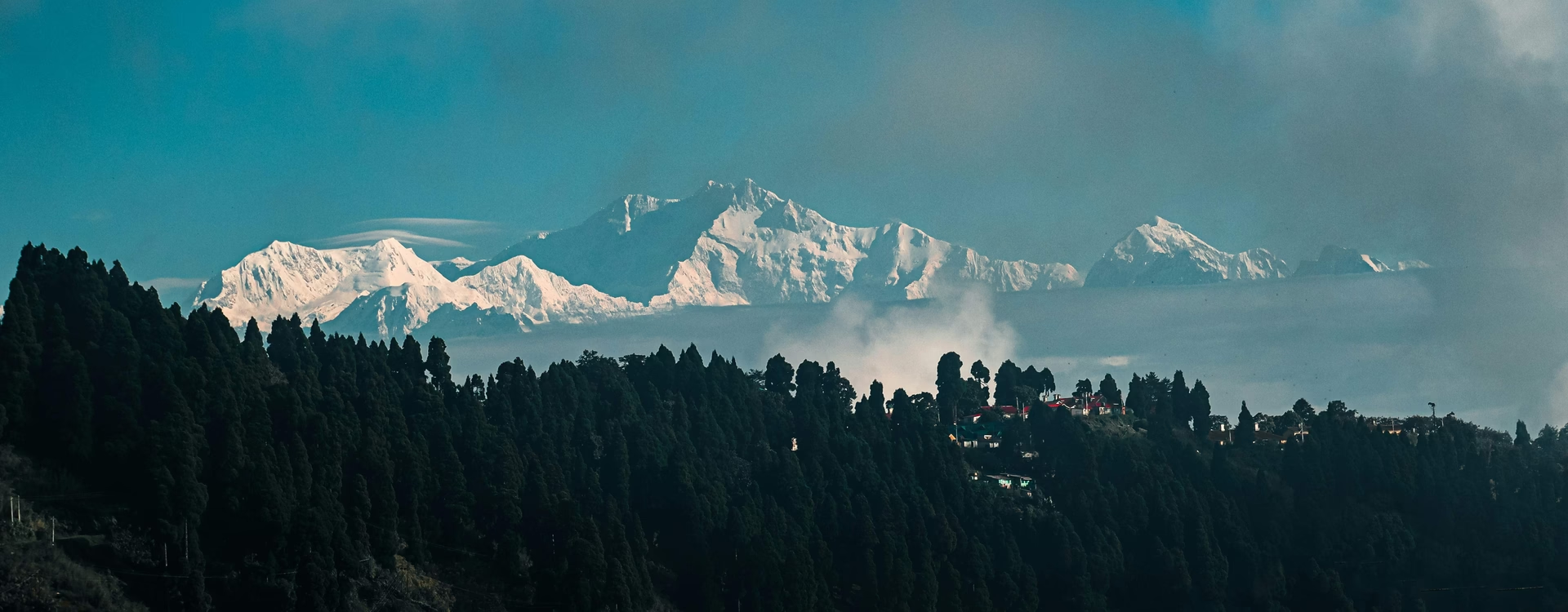
Come and explore the home of the world’s 3rd tallest mountain Mt. Kanchenjunga (8586m)! Leave your footprints in two base camps of the mountain and explore the authentic high altitude villages of Eastern Nepal! Make memories inside the beautiful Tri-Nation Park, the Kanchenjunga National Park, that extends to Tibet China and India. The trekking experience inside this majestic region is purely blissful and serene. In fact, the Nepal Government has declared the region as the gift to earth. The bio – diversity and diverse landscape of the region can provide you the spectacular memories and take you closer to the beauty of Mother Nature. Yes, the Kanchenjunga Circuit Trek worth millions with its grandeur of Mother Nature and ancient culture of people.
Escape from the mental drabness and getaway from the crowded trekking trails! Trek in the trail that is tranquil, spiritual, and serene. The Nepal High Trek has knitted the best updated itinerary of the Kanchenjunga Circuit Trek in Nepal.
Updated Itinerary of Kanchenjunga Circuit Trek
The popularity of the Kanchenjunga Circuit Trek is slowly increasing. Therefore, lots of people started to place an inquiry about the trek. However, there are very less information about the region. In addition, all the information found in the internet are not accurate. In order to provide the updated itinerary of the Kanchenjunga Trek, the Nepal High Trek recently sent its travel planners. Therefore, our trekking itinerary is scientific and provide lots of acclimatization options. Additionally, our itinerary includes the exploration of hidden lakes and vantage points for the trekkers without letting them exhaust!
Trek starts from Sekathum and traverses through villages like Amjilosa, Gyabla, Ghunsa, Khambachen, Lonak, Sele La, Tseram, Yamphuding, Torangden, and Ramjar. Trekkers can get good amount of rest with proper acclimatization rest days. Moreover, these villages are picked in our itinerary to provide you the chance to immerse into the culture and traditions of people of Nepal’s Eastern Highlands.
Trek to Kanchenjunga North Base Camp (Pang Pema 5142 m)
The first iconic activity to do during the Kanchenjunga Circuit Trek in Nepal is the hike to the Kanchenjunga North Base Camp. The base camp is locally known as the Pang Pema. It takes about 3 to 4 hours for trekkers to reach the base camp from the village of Lonak which is the last village on the trekking trail to base camp. The scenery of the glacier, mountains, and valleys is spectacular. After 7 days of trekking, trekkers reach the base camp. It is the first base camp of the Kanchenjunga Circuit Trek journey!
Sele La Pass and Hidden lakes of Kanchenjunga
Capture the most astonishing scenery of lakes, landscapes, mountains, and grassy meadows including green lush alpine forests while trekking. The mid section of the Kanchenjunga Trek is the area of Sele La Pass. There are three mountain passes between Kanchenjunga North Base Camp and Kanchenjunga South Base Camp Trek. In this trekking trail, trekkers can visit more than 3 alpine lakes. These lakes are blue turquoise in color and offers the serene image of mountains. On the way, the encounter with the wildlife (Himalayan Thar and Mountain Goats) can provide thrilling wilderness adventure experiences!
Trek to Kanchenjunga South Base Camp (Ottang Viewpoint 4700 m)
The journey of Kanchenjunga South Base Camp takes about 3 to 4 hours from the Tseram village. The base camp is also known locally as the Ottang View Point. The sight of the Kanchenjunga Mountain range is spectacular from this place in comparison to the North Base Camp View. Therefore, you should not miss out the trek to Kanchenjunga South Base Camp during the Kanchenjunga Circuit Trek! Relish the chance to observe high – altitude farming as well while trekking in this final section of the trek
Trekkers take the different route to return back to Taplejung to complete the circuit trek. It is truly the most fulfilling trek to cover almost every corner of the Kanchenjunga National Park.
Which is better Kanchenjunga Circuit or Annapurna Circuit Trek?
The Annapurna Circuit Trek is the commercial trekking in comparison to the Kanchenjunga Circuit Trek. In terms of difficulty the Kanchenjunga Trek is slightly difficult than the Annapurna Circuit Trek. The availability of amenities in the Annapurna Circuit Trek makes it more easier and accessible. The Kanchenjunga Circuit Trek is off the beaten trail. Therefore, the standard of the tea houses in this trekking route is basic! Comparing these two circuit treks in terms of maximum altitude; 5416 is the highest point of the Annapurna Circuit Trek and 5142 is the highest point of the Kanchenjunga Trek.
How difficult is Kanchenjunga Round Trek?
There are not many steep uphill and downhill sections in the Kanchenjunga Circuit Trek route. Therefore, it is easy to walk if you are physically fit person. However, the biggest hurdle in this trekking trip is that trekkers have to stay overnight in high – altitude places for most of the time. The acclimatization activities must be done diligently. Trekkers must follow the meticulous plan of the trek in order to avoid the risk of altitude sickness. The day of crossing the Sele La Pass is the most difficult as it involves trekkers to cross three mountain passes. In addition, hike to the base camps is also tiring as trekkers have to trek through landslide area trail full of rugged rocks!
Things to Know before trekking in Kanchenjunga
The Kanchenjunga Trek is off the beaten journey into the wilderness areas high up in the mountains. There are very limited tea houses and villages are also in the long distance! Therefore, you must be careful while trekking in this trekking route until the trail becomes commercial.
Here are few things to know before trekking in the Kanchenjunga region of Nepal:
Required Trekking Permits
Special Restricted Area Permit is required for the trek as it is listed as the restricted zone of Nepal. Besides restricted area permit, trekkers have to take the Kanchenjunga National Park Entry permit. The cost of the restricted permit is 500 $ per week per person. The Kanchenjunga National Park entry permit costs Nrs. 3000 for foreigners and Nrs. 1500 for SAARC nationals.
Accommodation and Meals
The facilities of lodging and meals are very basic in this trekking route. At times, you may have to sleep in the tent as well. Night time is very cold in this trail. Therefore, carry sleeping bags and packed food for the trek. You can find limited choice of menu and simple room to sleep. The trail is off the beaten and it is slowly increasing in terms of popularity. The people of the region are upgrading the facilities but don’t expect the accommodation and meals like some other commercial trekking routes of Nepal.
Trekking Guide
Trekking without a guide is not possible for the Kanchenjunga Trek. It requires a guide assigned by the trekking agency to get the special permit. In addition, a guide can help you traverse through the trail with safety and lots of authentic information. While traversing in the wilderness areas where you don’t have lots of human settlement high in the mountains, you should always get help from the guide! It enhances the trekking experiences. The guide will handle all the trek hassles for you to enjoy the majestic and serene Kanchenjunga region.
Altitude Sickness and Travel Insurance
The biggest hurdle of the Kanchenjunga Trek is the altitude sickness. Trekkers have to spend more than 6 nights in the places above 3000 m height. Therefore, the chances of altitude sickness are very high. You must not skip the acclimatization activities. There are two acclimatization rest days in this trek. Ghunsa acclimatization and Khambachen acclimatization are needed for the safe trekking. In addition, the reserve day is also included in the itinerary to avoid any kinds of delays! You must get the travel insurance before the trek. The plan must include emergency rescues, accidents, medical expenses, and miscellaneous.
Cost of Kanchenjunga Trek
The Kanchenjunga Circuit Trek cost ranges from 1900 $ to 2500 $ depending upon the number of days and preferences! The cost depends upon the size of the group as well. The more the number of the trekkers the less is the price of the trekking package. Please contact our travel planners to know more about the price breakdown. We will provide you the detail information about the Kanchenjunga Trek budget as well. Book our trekking package to get maximum services and impeccable hospitality at the most reasonable rate.
Why Nepal High Trek is the best trekking agency for Kanchenjunga Trekking?
The Nepal High Trek is the only trekking agency that sent its travel planners to find out the updated itinerary of the Kanchenjunga Circuit Trek. The trail is off the beaten with limited accommodation facilities. Therefore, updated itinerary is highly necessary. In addition, the agency deploys local trekking guide who has more than a decade of experience in the field of Nepal Trekking. The cost factor, experience fact, information factor, and Eco – friendly trekking style make the Nepal High Trek the best trekking agency for Kanchenjunga Trekking.
Itinerary
Itinerary at a glance
| Day | Route | Altitude at destination | Walking | Stay | Meals |
|---|---|---|---|---|---|
| 1 | Day 1: Arrival at Tribhuvan International Airport, Kathmandu; 1,400 m | 1,400 m (4,593 ft) | — | — | — |
| 2 | Day 2: Trek Permit Processing & Preparation in Kathmandu; 1,400 m | 1,400 m (4,593 ft) | — | — | — |
| 3 | Day 3: Fly Kathmandu to Bhadrapur & Drive to Phidim (45-min flight + 6 to 7 hours drive); 1,200 m | 1,200 m (3,937 ft) | — | — | — |
| 4 | Day 4: Drive Phidim to Sekathum via Taplejung (6 to 7 hours drive); 1,650 m | 1,650 m (5,413 ft) | — | — | — |
| 5 | Day 5: Trek Sekathum to Amjilosha (5 to 6 hours); 2,498 m | 2,498 m (8,196 ft) | — | — | — |
| 6 | Day 6: Trek Amjilosha to Gyabla (4 to 5 hours); 2,725 m | 2,725 m (8,940 ft) | — | — | — |
| 7 | Day 7: Trek Gyabla to Ghunsa (5 to 6 hours); 3,415 m | 3,415 m (11,204 ft) | — | — | — |
| 8 | Day 8: Acclimatization Day in Ghunsa / Side Hike (3 to 4 hours); 3,415 m | 3,415 m (11,204 ft) | — | — | — |
| 9 | Day 9: Trek Ghunsa to Kambachen (5 to 6 hours); 4,050 m | 4,050 m (13,287 ft) | — | — | — |
| 10 | Day 10: Trek Kambachen to Lhonak (4 to 5 hours); 4,780 m | 4,780 m (15,682 ft) | — | — | — |
| 11 | Day 11: Excursion to North Base Camp (Pangpema) & Return to Lhonak (6 to 7 hours); 5,143 m | 5,143 m (16,873 ft) | — | — | — |
| 12 | Day 12: Trek Lhonak to Ghunsa (6 to 7 hours); 3,415 m | 3,415 m (11,204 ft) | — | — | — |
| 13 | Day 13: Trek Ghunsa to Sele La Kharka (5 to 6 hours); 4,290 m | 4,290 m (14,075 ft) | — | — | — |
| 14 | Day 14: Trek Sele La Kharka to Tseram via High Passes (6 to 7 hours); 3,870 m | 3,870 m (12,697 ft) | — | — | — |
| 15 | Day 15: Excursion to South Base Camp / Oktang & Return to Tseram (6 to 7 hours); 4,730 m | 4,730 m (15,518 ft) | — | — | — |
| 16 | Day 16: Trek Tseram to Tortong (5 to 6 hours); 2,990 m | 2,990 m (9,810 ft) | — | — | — |
| 17 | Day 17: Trek Tortong to Yamphudin (6 to 7 hours); 2,080 m | 2,080 m (6,824 ft) | — | — | — |
| 18 | Day 18: Trek Yamphudin to Khebang (5 to 6 hours); 1,740 m | 1,740 m (5,709 ft) | — | — | — |
| 19 | Day 19: Drive Khebang to Birtamode (7 to 8 hours drive); 300 m | 300 m (984 ft) | — | — | — |
| 20 | Day 20: Fly to Kathmandu (45-min flight); 1,400 m | 1,400 m (4,593 ft) | — | — | — |
| 21 | Day 21: Contingency / Reserve Day in Kathmandu; 1,400 m | 1,400 m (4,593 ft) | — | — | — |
| 22 | Day 22: Departure from Kathmandu International Airport; 1,400 m | 1,400 m (4,593 ft) | — | — | — |
Day 1:Day 1: Arrival at Tribhuvan International Airport, Kathmandu; 1,400 m
Nepal High Trek welcomes you to Nepal for an amazing trekking trip to an abode of the world’s 3rd tallest mountain, Mount Kanchenjunga. Our airport representative will meet you at the airport and transfer you to your hotel in Thamel. You will meet your trekking guide and all the trip details will be briefed to you. Overnight in a hotel
- 02
Day 2:Day 2: Trek Permit Processing & Preparation in Kathmandu; 1,400 m
Today is a free day for you! Our office staff will process for the restricted area permit from the immigration department. Meanwhile, you can choose to explore different UNESCO WORLD HERITAGE sites of the Kathmandu Valley. It is not included in your trekking package but we can arrange transport and guide services upon your request with additional cost. You can inform our travel planners to book a Kathmandu Day tour or you can simply tour on your own to various touristic or local places of the valley. Overnight in a hotel
- 03
Day 3:Day 3: Fly Kathmandu to Bhadrapur & Drive to Phidim (45-min flight + 6 to 7 hours drive); 1,200 m
Early in the morning, you will be picked up from your hotel and we will travel to domestic airport in Kathmandu for our flight to Bhadrapur. Upon reaching Bhadrapur, we will meet our rest of the crew members and drive to Phidim. The route is through tea garden hills to Phidim where we will stop for a while to enjoy this majestic queen hills of Eastern Nepal. Overnight in a lodge.
- 04
Day 4:Day 4: Drive Phidim to Sekathum via Taplejung (6 to 7 hours drive); 1,650 m
After breakfast, we will hop on the jeep and head to Sekathum. Before we start the dirt mountain track road drive, we have to reach Taplejung where you can buy last minute things before the trek. Our road trip drops down along the Tamor River Valley all the way to a small hill town of Sekathum. It is also the trailhead of the Kanchenjunga Circuit Trek. Overnight in a tea house.
- 05
Day 5:Day 5: Trek Sekathum to Amjilosha (5 to 6 hours); 2,498 m
Today is the first day of the trek. We will begin our trekking after breakfast. Our trekking guide will conduct short stretching session before starting the trek. We will Cross suspension bridges over river confluences and hike up steep forest gorges and narrow stone steps to the Sherpa village of Amjilosha. Overnight in a tea house
- 06
Day 6:Day 6: Trek Amjilosha to Gyabla (4 to 5 hours); 2,725 m
We will gradually gain altitude on this day. Today’s trek features waterfalls, streams, hamlets, and forests. Therefore, we will have joyous walking events on this day. Our journey starts after breakfast and we ascend through dense bamboo, oak, and rhododendron forests along roaring mountain streams and waterfalls before arriving at Gyabla. Overnight in a tea house.
- 07
Day 7:Day 7: Trek Gyabla to Ghunsa (5 to 6 hours); 3,415 m
Today’s highlights include our trek crossing wooden bridges over roaring glacial streams along the way. We eventually arrive at Ghunsa, the main Sherpa or Tibetan settlement in the valley where we are greeted by painted wooden houses, prayer flags, and well equipped tea houses. We will begin our trek with a gentle descent toward the riverbank before starting a steady climb into dense rhododendron, fir, and pine forests after breakfast. As we gain altitude, the gorge starts to open up to reveal expansive grassy alpine meadows around us. The village of Ghunsa is the largest Tibetan influenced village on the northern side. Overnight in a tea house.
- 08
Day 8:Day 8: Acclimatization Day in Ghunsa / Side Hike (3 to 4 hours); 3,415 m
Early in the morning, we will start to feel the mountain adventure on this day. We will be staying another day and a night for acclimatization. After breakfast, we will begin our acclimatization activity. It is to help our body to adapt in higher elevation place. We will walk toward Yamatari Glacier and visit the local monastery. Before our push above 4000 m, it is important to take this acclimatization day seriously.
Our activity includes standard acclimatization route by ascending toward the Yamatari glacier through dense larch forests so we can practice the classic climb high and sleep low strategy of acclimatization. We spend our time exploring and understanding the ancient local cultures by visiting local monastery as well as interacting with the local people. The sweeping views of the surrounding ice walls as our bodies naturally adapt to the higher elevation can surely alleviate our overall trekking experiences. Overnight in a tea house.
- 09
Day 9:Day 9: Trek Ghunsa to Kambachen (5 to 6 hours); 4,050 m
We start our morning leaving Ghunsa and quickly find ourselves heading up into rugged alpine country. The path leads us right alongside rushing glacial riverbanks where the sound of moving water follows our every step. We have to watch our footing closely as we navigate across open boulder fields and areas where landslides have washed away parts of the trail. It requires full focus and steady legs, but every time we look up, the views take our breath away. Standing directly above us is the gigantic, sheer north face of Mt. Jannu, also known as Kumbhakarna. Its massive rock walls loom over the valley in a way that feels almost unreal. As the elevation climbs to over 4,000 meters, the landscape grows rougher and wilder with every mile we cover. We take slow, steady steps to conserve our energy while taking in the high-mountain air. By the time we arrive in Kambachen, we are tired but completely awed by the scale of these giant peaks. Overnight in a tea house.
- 10
Day 10:Day 10: Trek Kambachen to Lhonak (4 to 5 hours); 4,780 m
Leaving Kambachen behind, we continue our push higher into the mountains as we head toward Lhonak. Today we hike right along the lateral moraine of the massive Kanchenjunga Glacier. As we gain elevation, we watch the last of the trees completely disappear from the landscape. The scenery shifts into open alpine tundra filled with low-growing shrubs, grey rock, and vast gravel beds. The air is noticeably thinner up here, so we keep a comfortable, measured pace.
On the dry hillsides above us, we keep our eyes peeled and often spot herds of wild blue sheep grazing peacefully on the sparse grass. The trek takes us about four to five hours of steady walking until the valley suddenly opens up into Lhonak. This place is a vast, isolated plateau sitting at nearly 4,800 meters, completely surrounded by towering ice peaks and swept by cold mountain winds. We drop our gear, stretch our legs, and take in the total peace of this remote high-altitude wilderness. Overnight in a tea house
- 11
Day 11:Day 11: Excursion to North Base Camp (Pangpema) & Return to Lhonak (6 to 7 hours); 5,143 m
We roll out of our sleeping bags early today for our big trip up to North Base Camp, also known as Pangpema. The air is freezing, but our excitement keeps us warm as we head out along the edge of the Kanchenjunga Glacier. We follow narrow glacial ridges and scramble across loose, rocky scree trails that require careful step placement. It takes us several hours of hard, steady climbing to reach an elevation of over 5,100 meters. When we finally step onto the flat ground at Pangpema, the effort pays off instantly. We are standing directly across from the sheer, icy North Face of Mt. Kanchenjunga, the third-highest mountain on Earth.
The giant wall of ice and rock dominates the entire horizon, leaving us completely speechless. We spend plenty of time taking photos, drinking hot tea from our flasks, and soaking in one of the most famous mountain vistas in the world. Afterwards, we turn around and retrace our steps back down the moraine to Lhonak to rest up. Overnight in a tea house.
- 12
Day 12:Day 12: Trek Lhonak to Ghunsa (6 to 7 hours); 3,415 m
After spending time in the deep freeze of the high plateau, today we begin our journey back down the valley toward Ghunsa. We retrace the very path we came up, winding past Kambachen as we descend. Overnight in a tea house.
- 13
Day 13:Day 13: Trek Ghunsa to Sele La Kharka (5 to 6 hours); 4,290 m
Today we leave the main valley trail behind and branch off onto a much quieter, remote path toward Sele La Kharka. The trail immediately begins to climb up through dense, mossy pine and rhododendron forests that feel completely untouched by the outside world. The ground beneath our boots is soft, and the smell of pine fills the cool mountain air. We take our time making our way up the steep switchbacks, listening to the quiet sounds of the woods.
After a few hours of climbing, the thick forest suddenly opens up into high alpine pasturelands, locally known as a Kharka. We have left all the big permanent villages behind now, and the total tranquility of the wilderness surrounds us. Sele La Kharka sits at nearly 4,300 meters and acts as our quiet staging ground for the big pass crossing scheduled for tomorrow. We spend the afternoon resting our muscles, drinking plenty of fluids, and checking our gear to make sure we are fully ready for a long day on the high ridges. Overnight in a tea house.
- 14
Day 14:Day 14: Trek Sele La Kharka to Tseram via High Passes (6 to 7 hours); 3,870 m
We wake up before dawn to tackle what is easily the most physically demanding day of our entire trek. Today we traverse a high, exposed mountain ridge and cross three major passes in a single go: Sele La, Mirgin La, and Sinion La. The climb up to the first pass is steep and relentless, testing our stamina right out of the gate. As we reach the top of the pass at over 4,600 meters, the views wipe away all our tiredness.
On a clear day, the panoramas extend for miles, letting us spot iconic giant peaks like Makalu and Mt. Everest standing sharp against the blue sky. We trek along the rocky ridge lines, carefully navigating the high-altitude terrain while battling the mountain winds. After successfully crossing all three passes, we begin a long, knee-jarring descent down into the Simbua Khola valley. The trail drops sharply over rocks and scree until we finally reach the small settlement of Tseram. We arrive feeling exhausted, proud, and ready for a heavy meal and early sleep. Overnight in a tea house.
- 15
Day 15:Day 15: Excursion to South Base Camp / Oktang & Return to Tseram (6 to 7 hours); 4,730 m
Even though our legs are tired from yesterday's pass crossings, today offers another incredible highlight as we make a day hike toward South Base Camp. We set off from Tseram and trek past the small pasture of Ramche, following the lateral moraine of the Yalung Glacier. The path leads us along elevated, high-alpine trails flanked by towering rock walls and hanging glaciers. After a steady three-hour walk, we reach the famous Oktang viewpoint.
Standing here, we look straight up at the massive, icy South Face of Mt. Kanchenjunga, which towers thousands of meters above us. Neighboring peaks like Rathong and Kabru rise up beside it, forming a huge wall of snow and granite that blocks out the sky. We stand at the viewpoint taking in the sheer power of the landscape and snapping photos to capture the moment. After spending a quiet hour enjoying the sights at South Base Camp, we turn around and take a easy stroll back down to Tseram for our second night. Overnight in a tea house
- 16
Day 16:Day 16: Trek Tseram to Tortong (5 to 6 hours); 2,990 m
Today is all about going down and getting warm as we begin our long descent out of the high mountains toward Tortong. We join the river trail following the Simbua Khola, which rushes and tumbles alongside our path. The trail drops steadily, and with every hour of walking, we can physically feel the temperature rising around us.
The barren grey rocks of the high altitudes quickly disappear, replaced by ancient oak, pine, and dense rhododendron woodlands. Sunlight filters through the thick canopy above, and the air smells rich with wet earth and green leaves. The walking feels pleasant and rhythmic as we stroll under the shade of massive trees. By the time we reach the small riverside stop of Tortong, we feel warm, relaxed, and fully energized by the lush greenery around us. It is a wonderful change of pace after so many days spent up in the cold ice and scree. Overnight in a tea house.
- 17
Day 17:Day 17: Trek Tortong to Yamphudin (6 to 7 hours); 2,080 m
We start our day with one last proper mountain climb as we head out from Tortong toward Lasiya Bhanjyang pass. The trail leads us up through steep, dense jungle terrain where heavy moss hangs from the trees and thick vegetation crowds the path. Pushing up through the humidity makes us sweat, but we keep a steady rhythm until we top out at the pass around 3,310 meters. Once over the top, the trail begins a long, steep descent down into the warmer, lower agricultural valleys. As we lose elevation, the landscape transforms from wild jungle into neat, green terraced farming fields.
By late afternoon, we reach Yamphudin, one of the most charming villages on the entire route. This vibrant mountain community is home to a rich blend of Limbu, Rai, and Gurung families living side by side. We walk past traditional wooden houses, smiling children playing in the yards, and fields of growing crops. It is wonderful to be back among local culture and warm human hospitality after our time in the wilderness. Overnight in a tea house
- 18
Day 18:Day 18: Trek Yamphudin to Khebang (5 to 6 hours); 1,740 m
Our final day of actual foot travel is a beautiful, easy walk through the mid-hill countryside from Yamphudin to Khebang. The trail winds through vibrant rural farmland, bright green terraced rice fields, and peaceful hamlets sitting along quiet riverbeds. We pass local farmers working their crops, water mills spinning in the streams, and livestock grazing along the dirt paths. The walking is gentle and mostly downhill, allowing us to stroll at an easy pace and chat as we go. It gives us a fascinating, up-close look at everyday life in the remote hill regions of eastern Nepal. There are no massive ice walls or snowy passes today, just warm sunshine, colorful countryside views, and friendly waves from locals as we pass through their villages. By the time we step into Khebang, we have officially completed the entire walking circuit of our adventure. We kick off our dusty trekking boots, stretch our sore feet, and celebrate finishing one of the most rugged and remote treks in the Himalayas. Overnight in a tea house
- 19
Day 19:Day 19: Drive Khebang to Birtamode (7 to 8 hours drive); 300 m
We will travel back to Birtamode on a 4WD jeep for a scenic ride out of the mountain foothills down to the flatlands around Birtamode via Illam known for its tea plantation hills. Overnight in a lodge
- 20
Day 20:Day 20: Fly to Kathmandu (45-min flight); 1,400 m
We will fly to Kathmandu from Bhadrapur. Upon reaching Kathmandu, the officials of the Nepal High Trek will meet you and review about the trek. You will have free to roam around Kathmandu valley’s cultural attractions. Overnight in a hotel.
- 21
Day 21:Day 21: Contingency / Reserve Day in Kathmandu; 1,400 m
Today is a reserve day! We always keep a reserve day at the Nepal High Trek to make sure that you don’t miss your international schedule. We can work on our trekking itinerary flexibly to adjust according to your demands. Overnight in a hotel
Day 22:Day 22: Departure from Kathmandu International Airport; 1,400 m
We bid farewell to Nepal, concluding our incredible adventure with the team of the Nepal High Trek in the home of the world’s 3rd tallest mountain, Mount Kanchenjunga. We will depart with promise to meet again for another adventure in Nepal.
Are you looking to customize the trip itinerary?
If the provided schedule is not suitable for you, we can create a personalized travel arrangement tailored to your preferences and requirements.
Cost breakdown
What's included
All ground transportation.
Two night boutique hotel in Kathmandu with breakfast.
Full board meals throughout the trek (Breakfast, lunch, and Dinner)
Both way airfare (Kathmandu – Bhadrapur – Kathmandu)
Government license holder mountain guide including salary, transportation, accommodation, meals and insurance..
3 cup hot tea per day during the trek.
During the trek, seasonal fresh fruit.
17 night Local private accommodation (Twin sharing basis beds)
Local transportation from Bhadrapur to Taplejung and Taplejung to Sekathum)
Local transportation from Helok to Taplejung and Bhadrapur.
Adventure Certificate of Nepal High Trek.
Nepal High Trek’s down jacket and sleeping bags (if you needed)
The arrangement of Emergency Helicopter service which will be paid by your Travel insurance company.
Medical supplies (first aid kit will be available).
What's not included
Nepal entry visa fee.
Your Travel insurance.
All the Food in Kathmandu. Also in the case of early return from mountain (due to any reason) Than the scheduled Itinerary.
All the expenses in mountain over than scheduled itinerary (due to strike, delay or canceled flight)
All the Bar bills and personal expenses (phone call, laundry service, battery recharge, a bottle of water, hot water, shower.
Tips for the guide and porter.