Nepal High Trek
Contact Us

5 Days Annapurna Base Camp Trek

Traveler 1Traveler 2

💚 99% Recommended

by verified travelers

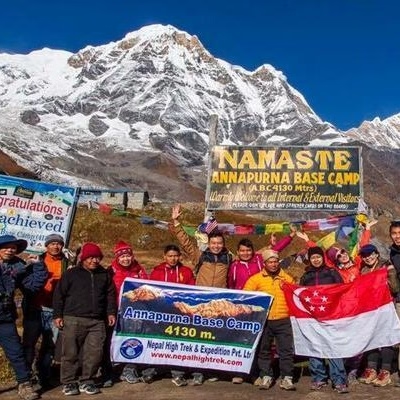
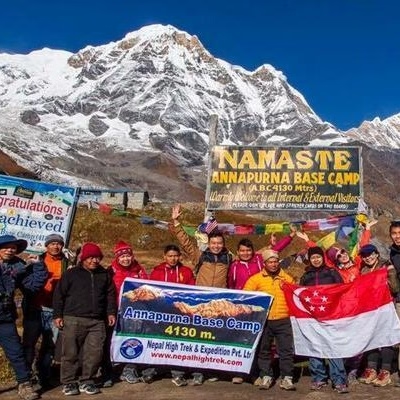
The journey of the 5 Days Annapurna Base Camp Trek in Nepal is designed for trekkers with limited time. Book Pokhara to Pokhara style of exploring the Annapurna Sanctuary. It is the shortest possible way to reach the Annapurna Base Camp (4130 m). The itinerary uses efficient transportation and expertly planned walking days by the travel planners of the Nepal High Trek. Despite its shorter duration, trekkers can experience the beauty of the Annapurna region and the thrill of standing on the foothill of the world’s 10 th tallest mountain, Mt. Annapurna (8091 m). If you are in Pokhara, then the less than week’s 5 Days Annapurna Base Camp Trek is an ideal choice.
Duration
5 days
Difficulty
Moderate
Max Altitude
4130 m
Destination
Nepal
Activity
Trekking
Accommodation
Hostels & Guesthouses
Group Size
1
Transport
Drive
Meals
B.D.L.
Season
Sep - Dec & Feb- June
Start / End Point
Samrung Khola and Jhinu Danda

Trip overview

Mt. Annapurna (8091 m) is the 10th tallest mountain of the world. Therefore, the journey to its base camp has become one of the hottest wish lists for people across the globe. Every year thousands of trekkers reach the base camp and leave their footprints at the foothill of the world’s 10th tallest mountain Mt. Annapurna (8091 m). Nepal High Trek is one of the leading trekking agencies based in Nepal. We knit diverse itineraries of Annapurna Trekking routes. It is to accommodate all kinds of trekkers. Our 5 Days Annapurna Base Camp Trek itinerary is beautifully crafted by our expert travel planners. In less than a week’s time you can complete the famous Annapurna Base Camp Trek route. The regular itinerary of the trek consists of about 12 and 14 days. The trail passes through famous vantage point the Poon Hill section of Ghorepani Village. Many trekkers may not have long holidays yet they want to do the trek. So, we knitted the itinerary for people who wish to do the trek in less number of days.

Cost of 5 Days Annapurna Base Camp Trek

The cost of Annapurna Base Camp Trek 12 days ranges from 950 $ to 1050 $ per person. As the number of days decreases the price too decreases. Nepal High Trek has many Annapurna Base Camp Trek itineraries. 10 days Annapurna Base Camp Trek costs 850 $ and the cost of 5 Days Annapurna Base Camp Trek is about 425 $ to 450 $. The group will get two way transportation from Pokhara to Samrung Khola. A guide and a porter as well as lodging – food during the trek. Therefore, it is an ideal trekking package to book if you wish to do the Annapurna Base Camp Trek in less than a week’s time and at low cost!

Difficulty to do Shortest Annapurna Base Camp Trek

This is an ideal itinerary of the shortest Annapurna Base Camp Trek. The number of trekking days is very less. In addition, trekkers have to walk more hours each day in comparison to regular ABC Trek. So, difficulty level of the trek is very high. If you are physically fit and can walk continuously for about 7 to 8 hours then you can easily complete this trek. The trekking crew members of Nepal High Trek have successfully operated the trek following this itinerary several times. Yes, there are many uphill and downhill sections in the trekking route. Prepare yourself for long walking hours and high altitude!

When is the best time to do Annapurna Short Trek?

Months of spring and autumn seasons are suitable time to do the Annapurna Short Trek. During this time of the year the sky is clear and there is less chance of snowfall or rainfall. In short period of time you can enjoy the warm and clear weather. It is crucial for trekkers taking shorter route and more arduous way of trekking to have a perfect weather conditions. The trekking atmosphere will become hectic and chaotic if you choose to do the Annapurna Base Camp Trek in 5 days during monsoon or winter season.

What are the requirements to do Short 5 Days of Annapurna Himalaya Trekking?

You need an Annapurna Conservation Area Project (ACAP) permit to do the trek. If you are found entering the trekking route without an ACAP permit then you will be fined about Nrs. 12000 or more. Therefore, don’t think that short trek doesn’t require permit. Make sure to have physically fit body and sound mental condition. The more shorter the trek the harder it becomes! Pack necessary things only! A valid travel insurance is mandatory. Your insurance plan must include medical expenses, helicopter rescue, accidents, and miscellaneous.

How High is Annapurna Base Camp?

The altitude of Annapurna Base Camp is about 4130 m. The place is risky zone in terms of altitude sickness. However, a careful planning and good guidance will help trekkers to avoid any kinds of sickness. The short ABC Trek requires strenuous walking and trekkers should be well physical fitness level too.

Pokhara to Annapurna Base Camp Distance

The normal Annapurna Base Camp Trek length from Pokhara is about 110 kilometers. However, 5 Days Annapurna Base Camp covers around 59 kilometers to 61 kilometers of trekking and 30 kilometers of road drive. Therefore, during this trekking trekkers will cover approximately 85 kilometers to 90 kilometers.

Which Mountains are seen during Annapurna Sanctuary Trekking in Nepal?

The journey inside the Annapurna region of Nepal is scenic and full of mountain vistas. Therefore, you will be amazed by the sheer beauty of Mother Nature. Apart from mountains, trekkers will also get chance to witness the diverse flora and fauna within the trekking route. You can see lots of mountains and the most famous ones are Annapurna South, Annapurna I, Annapurna IV, Annapurna II, Himchuli, Gangapurna, Tharpu Chuli, Machhapuchhre, and Dhampus Peak.

Hot Springs after Annapurna Base Camp Trek

Our itinerary is prepared in such a way that trekkers will get enough healing time after quick trekking. 5 days itinerary is indeed a tiring way to do the trek. Therefore, our body needs proper care after such an arduous trekking. Once the trekkers finish the trekking, they will dip into natural hot water springs in Jhinu. This is the most relaxing and natural healing technique to wash out all fatigue.

Who dares to complete the Annapurna Base Camp Trek in 5 Days?

Are you a wilderness adventure lover? Do you love to challenge yourself? If you are both then 5 Days Annapurna Base Camp Trek is an ideal trekking trip to do in Nepal. Your mental and physical condition will be tested! Interestingly, this short ABC Trek offers the chance to reach the base camp of the world’s 10th tallest mountain in less budget and in less number of days.

Book the Short Annapurna Base Camp Trek 5 Days with us! Our team of expert travel planners and highly skilled trekking guides will ensure that you are safe. We assure you that all your expectations will be exceeded and we will help you knit mesmerizing trekking memories!

Itinerary

Itinerary at a glance

Day-by-day route, altitude at each day's destination, walking time, accommodation and meals. Highest point in this table: 4,130 m (13,550 ft).
DayRouteAltitude at destinationWalkingStayMeals
1Pokhara → Upper Sinuwa2,350 m6–7 hrsGuest HouseB/L/D
2Upper Sinuwa → Deurali3,700 m7–8 hrsGuest HouseB/L/D
3Deurali → Annapurna Base Camp4,130 m5–6 hrsGuest HouseB/L/D
4Annapurna Base Camp → Upper Sinuwa2,350 m7–8 hrsGuest HouseB/L/D
5Upper Sinuwa → Samrung Khola/Pokhara825 m5–6 hrs—B/L
Altitude profileMax 4,130 m
2,350 mD13,700 mD24,130 mD32,350 mD4825 mD5
  1. Day 1:Drive to Samrung Khola 3 hrs by local sharing jeep then Trek to Upper Sinuwa Village (2680 m) 3 - 4 hrs

    2,350 m6/7 HrsGuest HouseB/L/D

    Trekking guide will meet you at your hotel and we will get on jeep to travel to Samrung Khola. The road until Birethanti is well pitched but expect bumpy rides from Birethanti to Samrung Khola. The scenery from jeep will definitely help you overcome the bumpy ride! Once we reach Samrung Khola we start to walk. The first thing that we do is the crossing of long suspension bridge. For about 3 hours we will do our first warm up trek to Sinuwa Village passing by Jhinu village. On the way back we will spend about 1 to 2 hours in this village soaking into the natural hot water springs! Overnight at tea house

  2. 02

    Day 2:Trek to Deurali (3700 m) 7 - 8 hrs

    3,700 m7/8 HrsGuest HouseB/L/D

    Early in the morning we will take our breakfast and start the trek. Today is the most tiring day among other days of trekking. We will have to walk through villages like Bamboo, Dovan, and Himalaya. The trail is through narrow valleys and through green lush forests of pine and rhododendron trees. Lunch will be either in Dovan or Himalaya according to the situation. About 15 minutes before reaching the village of Deurali, we can get the mystical sight of Hinku Cave. This is one of the highlight of the Annapurna Base Camp Trekking. Overnight in tea house

  3. 03

    Day 3:Trek to Annapurna Base Camp (4130 m) 7 - 8 hrs

    4,130 m5/6 HrsGuest HouseB/L/D

    Today is the most important day of our trekking. We will reach our final destination on this day. After about half an hour we will reach the Eden Garden naturally formed on the bank of river and between tall hills thus forming a valley. We will walk for about an hour in this beautiful valley. Uphill walking is when we are approaching Machhapuchhre Base Camp (3900 m). After lunch stop in MBC we will continue our journey to Annapurna Base Camp. It takes about 2 hours to reach the ABC! The trail is gentle flat and the scenery of mountains as well as the landscape make it an amazing experience. Overnight in Tea house.

  4. 04

    Day 4:Trek back to Sinuwa from Annapurna Base Camp 7 - 8 hrs

    2,350 m7/8 HrsGuest HouseB/L/D

    Early in the morning we will wake up and walk to nearby high hill to witness gorgeous sunrise. We will take pictures and savor the moment in the foothill of the world’s10th tallest mountain Mt. Annapurna. You can see 360 degrees view of mountains. Therefore, the base camp is called a sanctuary of mountains! After breakfast, we will retrace the trekking trail back to Sinuwa village. Overnight in tea house.

  5. Day 5:Trek to Samrung Khola with Jhinu Hot Springs 3 - 4 hrs; Drive to Pokhara 3 hrs

    825 m5/6 HrsB/L

    After breakfast, we will trek downhill to Jhinu Village via Chhomrong. In this village we will spend about 2 hours to enjoy magnificent and healing natural hot springs water! We will dip into the water and get relieved from all the tiredness of trekking. You will feel refreshed! After lunch we will then again trek to Samrung Khola and get on jeep to Pokhara.

Are you looking to customize the trip itinerary?

If the provided schedule is not suitable for you, we can create a personalized travel arrangement tailored to your preferences and requirements.

Customize Trip

Cost breakdown

What's included

  • Government license holder mountain guide for the whole trip from Pokhara.

  • 3 times meals during the trek (Breakfast, Lunch & Dinner)

  • 3 time cup of tea/coffee per day.

  • Annapurna Conservation Area Project Permit.

  • ‘Trekkers’ Information Management System (TIMS)  and ACAP Permit.

  • Pokhara to Jhinu Danda and back to Pokhara by sharing jeep.

  • 4 Night tea house accommodation during the trek

  • Fresh fruit during the trek

  • Medical kit bag.

What's not included

  • Your Travel and rescue insurance.

  • Porter wages $150 for the whole trip.

  • All the Bar bills and personal expenses (phone call, laundry service, battery recharge, a bottle of water, hot water, and shower.

  • Tips for the guide

Dates & Availability

Filter departures by month
17Oct

Oct 17 – Oct 21, 2026

Available
$425pp
19Oct

Oct 19 – Oct 23, 2026

Available
$425pp
21Oct

Oct 21 – Oct 25, 2026

Available
$425pp
24Oct

Oct 24 – Oct 28, 2026

Available
$425pp
26Oct

Oct 26 – Oct 30, 2026

Available
$425pp
29Oct

Oct 29 – Nov 2, 2026

Available
$425pp
31Oct

Oct 31 – Nov 4, 2026

Available
$425pp

Trip map

Loading map…

Useful information

Best Time for the 5 Days ABC Trek

Seasonal changes are unpredictable over the years. It may be due to adverse effects of climate change. September to November seems the best time to do the 5 Days Annapurna Base Camp Trek but consider months like April, May, October, and November for best experiences. The monsoon rains have effectively made the sky clean, leaving the air biting and crystalline. Winter is technically possible, but honestly, you’ll be dodging avalanches and freezing your water bottles solid. Don't risk the summer monsoon. Leeches everywhere mud slides. You get the idea that you must have better experiences after all investment in your trekking.

Who Is the 5 Days ABC Trek Suitable For?

Are you stubborn, physically primed, and severely short on vacation days? Then this express way of reaching the Annapurna Base Camp has your name written all over it. This isn't a lazy, tea-sipping cultural tour where you slowly meander through the foothills. It just isn't. We cram a week's worth of brutal elevation gain into five days, which means your quads are going to burn constantly. That said, active travelers absolutely devour this challenge. If you run half-marathons, hit the stair-stepper religiously, or have previous high-altitude experience, you’ll crush it. Couch potatoes? Stay away. Your knees will violently protest the relentless stone staircases by day two.

Starting and Ending Points of the Trek

We skip the boring stuff. Instead of walking the dusty, sweaty lower sections from Nayapul, we throw you straight into a 4x4 jeep in Pokhara. You’ll bounce along wild dirt tracks until we literally run out of road at Samrung or Sewai. That’s your launch pad. You step out of the vehicle, grab your poles, and instantly start fighting gravity. Boom. You're in the thick of it. On the final day, after your knees have absorbed thousands of downward stone steps, you stumble into Jhinu Danda. Guess what? The jeeps are waiting right there to haul your exhausted body back to Pokhara.

Daily Walking Hours and Trekking Pace

Prepare for a grind. You are looking at a minimum of six to eight hours of relentless forward motion every single day. There’s no sugarcoating the reality of a compressed itinerary; you have to earn every single meter of altitude. Your guide will enforce this agonizingly slow rhythm—we call it the "bistari" pace—which feels ridiculously sluggish at first until you hit 3,000 meters and suddenly realize you can barely breathe. Here's the catch: you can't sleep in. We hit the trail by 7 AM sharp to outrun the afternoon clouds. Keep moving. That's the only rule that matters.

Maximum Altitude and Altitude Gain

Hitting 4,130 meters feels totally alien if you've never been above the clouds. Annapurna Base Camp sits exactly at that raw, oxygen-starved ceiling. You start down in the subtropical warmth at around 1,500 meters, which means you are blasting through nearly 2,600 meters of vertical ascent in just three days. That is aggressive. Look, your body is going to panic slightly as the air thins out past Machhapuchhre Base Camp. Your heart rate spikes. Your head might throb. This massive vertical jump requires serious hydration because the thin atmosphere literally sucks the moisture straight out of your lungs. Drink water constantly. It saves your trip.

Accommodation Along the ABC Route

You are sleeping in basic, cinder-block or wood-plank tea houses clinging to the edges of massive gorges. They are delightfully simple. You get a twin bed, a foam mattress that has definitely seen better days, and a thin pillow. The walls are paper-thin, so you will absolutely hear your neighbor snoring three rooms down in the places above Deurali. Below this place like in Bamboo, Chhomrung, Himalaya, and Dovan you can find decent accommodation to stay overnight.

Meals and Drinking Water During the Trek

Dal bhat powers the mountain. Honestly, you will eat a staggering amount of this lentil-and-rice combo because it’s unlimited, calorie-dense, and guarantees you won't starve on the steep inclines. The menus surprisingly offer everything from garlic soup which supposedly fights altitude sickness to decent wood-fired pizzas, though the quality drops drastically the higher you climb. Stay away from the meat. It's carried up in baskets under the beating sun for days. Don’t use single use plastic bottles for water. You can carry water bottle which you can fill up in the tea house or you can also use the water purification tablet. Make sure that you are hydrated all the time.

Hot Shower, Electricity and Wi-Fi Availability

You pay for every single services like hot showers, battery charge, and internet. Want a steaming hot shower after a brutal ten-hour hike? Hand over a few hundred rupees, and pray the gas geyser actually works. Down low, the showers are fantastic, but at the base camp, you’ll be aggressively scrubbing yourself with wet wipes to avoid freezing naked. Electricity is entirely solar-dependent above Bamboo. If it's cloudy for two days, the charging strips in the dining hall go completely dead. Bring a massive power bank. Wi-Fi exists, surprisingly. You buy internet in the tea houses. In lower sections, you can also use either NTC or NCELL data.

Mobile Network and Internet Connectivity

Your phone becomes a glorified camera by day three. Look, NTC and Ncell SIM cards work brilliantly when you are staring at the lower valleys around Chhomrong. You can casually call home while dodging mule trains. But once you plunge into the deep, shaded Modi Khola gorge past Bamboo? The signal just vanishes. The towering rock walls physically block the cell towers, leaving you wonderfully isolated from the chaos of the outside world. Base camp itself occasionally catches a rogue 3G signal if the wind blows right, but seriously, just put the device on airplane mode. Save your precious battery. Enjoy the actual mountains instead.

Porter and Guide Support on the Trek

We always provide local support crew members at the Nepal High Trek. Here in Annapurna Base Camp, you can surely use their help. You may be surprised to see porters strapping thirty kilos to their heads and literally run up stone stairs while you are gasping for a single breath. It’s wild to witness. Your guide? They are your lifeline. They negotiate beds when lodges overbook, force you to drink garlic soup when your head hurts, and monitor the chaotic weather patterns sweeping over the sanctuary. You could try navigating the express route alone, but having a seasoned local crew members fixes everything. Don't be a hero. Let the experts carry the heavy burdens.

Permits Required for Annapurna Base Camp

You absolutely cannot step foot on this trail without the ACAP (Annapurna Conservation Area Project) permit. If you show up empty-handed, they will slap you with massive fines or just turn you around immediately. Here's the good news. When you book the five-day package with us, we handle all the permit paperwork in Kathmandu while you drink coffee in Pokhara. Simple, you just grab your packed duffel bag and start walking toward the mountains.

Weather Changes and Temperature at ABC

Higher elevation temperature changes unpredictably. Usually, you get better scenery and visibility in the morning time. Therefore, we suggest you to wake up early to soak in the best scenery of mountains before breakfast. Once the evening appears, you may not get proper visibility. It gets fiercely cold. Up at the base camp, night temperatures easily plummet to negative ten degrees Celsius, freezing condensation on the inside of your windows. You need serious down gear. Trust me, the wind whipping off the South Annapurna glacier shows absolutely zero mercy. Pack heavy thermal base layers. You will definitely sleep in them every single night.

Altitude Sickness and Basic Trekking Safety

Your brain needs oxygen, and this express route starves it quickly. Because we are rushing the ascent, Acute Mountain Sickness (AMS) is a very real, lurking threat. You might feel a dull headache creeping in around Deurali. Ignore it, and you’ll be vomiting by the time you reach the Machhapuchhre snowline. Always remain hydrated by drinking water and eating soupy foods. If your guide is saying you to descend, then you must. Make sure that you tell your guide about your condition honestly. Evacuation helicopters are insanely expensive, and a stubborn attitude isn't worth a pulmonary edema. We watch you constantly. Your safety always beats the summit.

Private Trek, Transportation and Flexible Itinerary Options

Private Trek means that you are following the itinerary prepared by our travel planners for yourself only. You will get to maintain your pace and you can also enjoy the time with the people you know. At the Nepal High Trek, we recommend private trek the most to ensure that you get proper hospitality and attention from our crew members. Furthermore, it is also important to note that you will get services that you are seeking only. Well, group join trek is also okay if you are looking to make friends from different backgrounds. The cost of the private trek can be different from the group join trek. As for transportation, you can get private vehicle to and from the trailhead and trail end.

Packing list

Clothing

Clothing – Layering System

The golden rule on the ABC trail: No cotton. It holds moisture, takes forever to dry, and will make you freeze the second you stop walking. Stick to merino wool or synthetic materials.

Base Layer (2 sets): Lightweight merino wool or synthetic thermal tops and bottoms. One set for hiking on cold days, and one clean set kept strictly dry for sleeping in teahouses.

Mid-Layer (1–2 tops): A breathable grid fleece jacket or lightweight synthetic pullover. This is your go-to layer while moving through cooler forests.

Insulation Layer: A high-loft down jacket (800-fill power is ideal). You’ll throw this on the moment you drop your pack at a teahouse as your body temperature plunges.

Outer Shell: Quality waterproof and windproof jacket (GORE-TEX or similar) plus lightweight rain pants. The Modi Khola valley is famous for afternoon rain showers and sudden snow near base camp.

Trekking Pants: 2 pairs of lightweight, quick-dry stretch pants. Zip-off convertible pants work surprisingly well here as temperatures fluctuate wildly between valley floors and high ridges.

Footwear

Footwear

Trekking Boots: Waterproof, mid-to-high ankle support, and thoroughly broken in weeks before your flight. Fresh, rigid boots will turn the thousands of stone stairs into a blister nightmare.

Camp Shoes: Lightweight sandals, Crocs, or slip-on sneakers. Your feet will desperately want to breathe after 6–7 hours in boots, and you'll need something easy to slip on for late-night bathroom trips.

Hiking Socks: 4–5 pairs of high-density merino wool socks. They cushion your feet, manage moisture, and don't stink after two days of heavy use.

Gaiters (Optional): Short trail gaiters are handy if you’re trekking during shoulder seasons when trail dust or light snow around ABC can work its way into your boots.

Gear

Main Trekking Gear

Backpack: A 40–50 liter pack is plenty if you're carrying your own load. If you're hiring a porter, bring a lightweight 20–30 liter daypack for your daily essentials (water, rain shell, camera, snacks) and give the rest in a duffel bag to your porter.

Sleeping Bag: Aim for a bag rated down to -10°C (14°F). Teahouses provide quilts, but rooms at ABC and Deurali have zero insulation. Having your own cozy bag makes the difference between sound sleep and shivering all night.

Trekking Poles: Non-negotiable for ABC. You’ll be tackling thousands of steep stone steps (especially around Ulleri and Chhomrong), and poles will save your knees on the descent.

Headlamp: A decent headlamp (around 200–300 lumens) with spare batteries or a USB charging cable. You’ll need this for early morning pushes to Poon Hill or the final stretch into ABC for sunrise.

Water Purification: Bring water purification tablets, a Steripen, or a Sawyer Squeeze filter. Buying plastic water bottles on the trail is expensive and creates huge waste problems in the sanctuary.

Headwear

Headwear & Handwear

Sun Cap / Wide-Brim Hat: Protects your face and neck during long, exposed midday stretches.

Warm Beanie: A fleece or wool hat that covers your ears for chilly mornings and cold nights in the dining halls.

Lightweight Liner Gloves: Great for cool mornings when full winter gloves are too hot while hiking with poles.

Warm Insulated Gloves or Mittens: Waterproof and wind-resistant. Needed once you hit Deurali, Machhapuchhre Base Camp (MBC), and ABC.

Buff / Neck Gaiter (2x): Crucial for keeping dust out of your lungs and protecting your throat from the dry, cold air.

Miscellaneous

Optional But Recommended Items

High-Capacity Power Bank: 10,000 to 20,000 mAh. Teahouses charge a fee per device to plug into wall outlets above Chhomrong, and cold air drains phone batteries fast.

Dry Bags / Ziplocks: Pack your clothing inside dry sacks or heavy-duty Ziploc bags inside your pack. If an unexpected mountain downpour hits, your sleeping gear stays dry.

Snacks: Energy bars, trail mix, electrolyte tablets, and dark chocolate. Buying snacks in Pokhara before heading up-valley saves a lot of money.

Book, Kindle, or Playing Cards: Teahouse dining halls get quiet after dark. Having a deck of cards or something to read helps pass the hours before bed.

Toiletries

Toiletries & Hygiene

Keep this category light—you carry every ounce!

Wet Wipes / Baby Wipes: High-altitude teahouse showers get pricey and cold fast. A wet-wipe wash down in your room is often much more practical.

Biodegradable Soap & Hand Sanitizer: Keep a small sanitizer bottle accessible on your pack belt.

Sunscreen & Lip Balm: High SPF (50+). UV rays at 4,000 meters through thin alpine air are intense.

First Aid Essentials: Blister plasters (Compeed works miracles), ibuprofen, rehydration salts (ORS), a small supply of Diamox (if advised by your doctor for altitude), and anti-diarrhea meds.

Toilet Paper: Bring 2–3 rolls packed in zip-top bags. Teahouse restrooms almost never provide paper.

Quick-Dry Towel: A small micro-fiber towel.

Frequently asked

Yes, you can complete the 5 Days Annapurna Base Camp Trek but you must consider pacing the trek and also you must consider having the best fitness level. The air gets remarkably thin up there. You are jumping straight into the deep end by squeezing what usually takes a week into a compressed timeframe. Honestly, the real trick is mastering the art of walking painfully slow. We call it the "bistari" pace. Your body needs time to figure out why oxygen suddenly feels rare, so hydration becomes your absolute best friend. Sip constantly. Will it burn? Yes it is hard but strong physical and mental strength can surely make your trek possible.

Regular Annapurna Base Camp Trek goes through Poon Hill section. In this trekking itinerary we cut the fluff. You hop in a jeep, bypass the lower foothills entirely, and start hiking right where the valleys turn steep. Honestly, you still get every single massive mountain view without burning all your vacation days in one go. It’s a rapid-fire assault on the senses. From Pokhara to Pokhara way of the trek is probably this is the shortest one by taking care of the trail conditions and difficulty level. Yes, it is rush itinerary but you can complete the trek with 6 to 7 hours of average walking per day starting from Jhinu.

Bamboo is Without a doubt the best place to spend overnight. Let's say you're coming back down from the base camp on day four and your legs are literally screaming. Instead of pushing all the way through to Sinuwa, you just stay at Bamboo. It sits right in this dense, moody forest gorge where the air is thick and warm again. Sure, stopping early means day five turns into a slightly longer slog to reach the jeep pick-up, but sometimes your joints just need to stop absorbing impacts. Now, keep in mind tea houses here fill up crazy fast during peak season. But if your tank is empty, we throw the itinerary out the window and grab a bed where we can.

Most of the road sections are asphalted but monsoon has made the road full of pot holes. The road from Birethanti to Jhinu Danda has both smooth sections and off road sections. During the dry season, the ride up to Jhinu or Samrung is bone-rattling but pretty dependable. We squeeze you into a 4x4 and shave literal days off the hike. But when the monsoon hits? Forget about it. Those dirt tracks turn into absolute slip-and-slides, and landslides can wipe out a mile of access in ten minutes. If the jeeps can’t make it, your five-day trek instantly becomes a massive headache because you suddenly have to walk the valley floor. We monitor the local drivers constantly, but mountain logistics always have a mind of their own.

Please do. Seriously, bring only what you need to during the trek. Every extra sweater feels like a bag of bricks once you pass 3,000 meters. Pokhara hotels practically run on storing trekkers' excess baggage; they have dedicated, secure lock rooms specifically designed for this. You just dump your city clothes, laptop, and whatever else you dragged on the plane into a duffel, lock it up, and walk away. That said, make sure you take all your valuables and cash up the mountain with you. Honestly, traveling light isn't just about saving your back; it completely shifts your mindset. You realize how little you actually need to exist happily in the wild for a week.

There are plugs, but they come with strings attached. Almost every single tea house up to the base camp has solar-powered charging strips in the communal dining hall. Here's the catch and you are going to pay for the electricity especially battery charge. It usually costs a few hundred rupees per device, and when the weather turns cloudy for two days straight, the solar batteries drain flat.

The mountains don't care about your flight schedule, and pushing through a whiteout blizzard or an avalanche warning zone is a fast way to get yourself killed. If the sanctuary gets dumped with heavy snow, the trail police literally lock the route at Deurali. No arguments allowed. When that happens, we reroute. Maybe we hit Poon Hill instead, or drop down to explore the hot springs early and take our time winding through the Gurung farming villages. Will it sting to miss the main prize? Oh, it hurts. Honestly though, walking away with a good story and all your toes intact beats a helicopter rescue any day of the week. You roll with the punches.

You can, but it’s going to cost you sweat. The Jhinu Danda hot springs sit right at the bottom of a brutal descent on your final day. So, if you want to soak your screaming muscles in natural hot springs water, you have to earn it by hiking at a relentless clip all morning. The pools are located a good twenty-minute walk down to the riverbank from the main trail, which means you eventually have to climb back up wet and tired. Look, dipping into that warm water while staring up at the jungle canopy feels like absolute magic. But keep a tight eye on your watch. Your jeep driver back to Pokhara won't wait around forever.

It largely depends upon your stamina and fitness level. We can provide porter for you that costs 20 $ to 30 $ per day. One porter carries about 22 kilograms. But remember, this is an express short itinerary and consider packing very less. You are walking up to eight hours a day, constantly fighting an aggressive incline. Even a measly seven kilos starts feeling like a dead body strapped to your spine by day three. Hiring a local porter doesn't make you weak and it means you are directly injecting cash into the local mountain economy while actually freeing yourself to look at the sky instead of your boots. Let them handle the weight while you handle the altitude.

Day Four is the marathon drop from the base camp back down to Sinuwa and it is a brutal test of endurance. We are talking about 18-kilometers descent that will easily chew up seven or eight hours of continuous pounding on your knees. If you stumble out of bed at 8 AM and casually sip coffee, you will end up navigating slick, shadowy stone steps in the pitch black with a headlamp. Don't do that. You want boots on the trail by 6:30 AM at the absolute latest. Getting ahead of the midday heat on the lower elevations changes everything. Besides, the morning air up in the sanctuary is criminally crisp and quiet. You want to be walking through that.

Honestly, I wouldn't risk it. The five-day version is basically a speed run. You are gaining massive elevation far too quickly for small lungs or aging hearts to comfortably adapt. Kids are incredibly resilient, sure, but they also mask symptoms of altitude sickness until they suddenly crash hard. Older folks with iron willpower still run into serious joint issues on those never-ending stone staircases. If you are dead set on bringing the whole family, you need the buffer days. Take the ten-day route instead. It builds in necessary breathing room and turns a stressful forced march into an actual vacation where nobody ends up crying on the side of a cliff. Keep the fast track for solo thrill-seekers.

Pacing the trek and it’s entirely about velocity and skipping the preamble. The traditional week-long walking wanders through blooming rhododendron forests at lower altitudes, forcing you to spend time in villages like Ghorepani and Tadapani while slowly letting your body adjust. The five-day trip? It just rips the band-aid off. We head directly to trail head from Pokhara and start the trek straight. You sacrifice leisurely afternoons reading books in tea houses for relentless forward momentum. The mountain scenery is identical, but the physical tax is significantly heavier. Look, if you treat mountain climbing like a slow cultural immersion, stay away. But if you want to punch a ticket straight to the glaciers, this is your ride.

What travellers say

Rated 5.0/5 from 2 reviews.

TripAdvisor
5.0
Google
4.9
Facebook
5.0
Trustpilot
5.0
5 Days Annapurna Base Camp Trek
I went to Annapurna Base Camp Trek with Nepal High Trek & Expedition with my friends. It was our first time in Nepal, and of course first time attempting the mountain in the beautiful country.Anjan was our guide. He and his team of porters took great care of us and gave us such assurance throughout the journey. Anjan speaks well and we had a great conversation getting to know more about them and their culture (and food too)!Well, of course, all of us made it to ABC safely and smoothly. We even organized a farewell lunch and dinner with his team to appreciate them.Recommend the Nepal High Trek & Expedition and Anjan for anyone interested in exploring the mountains in Nepal!
Chan LeeChan Lee
Rapheal Gurellar
Anjan was our guide to ABC and did everything possible to make the best of our trekking. I strongly recommend Anjan’s services. He is very reliable and knows a lot about Nepal and the routes we took.We did an unforgettable trip to Annapurna Base Camp in April 2016. Nepal is a safe, peaceful, and very friendly place. Beautiful scenery, incredible mountains.We were a team of four from Brazil, three of us in our 50’s and my 24-year-old son. The trek was 12 day long. A lot of ups and downs to reach ABC. The scenery is fantastic, we go through nice small villages and can see their real life, school kids, farm workers, shepherds with goats, buffalos, sheep, and donkeys carrying all types of loads up the mountains. In April the weather was mild, hot during the daytime, especially at low altitudes. At ABC the temperature was below zero at night, but as soon as the sunrises and you start walking you just need a T-shirt.We woke up at ABC at sunrise to see the huge peaks all around us in the cle…
Rapheal GurellarShort 5 Days ABC Trek
From$425
Book Now