Nepal High Trek
Contact Us

Annapurna Base Camp Trek: A lifetime journey to the world’s 10th Tallest Peak

Traveler 1

💚 99% Recommended

by verified travelers

Diversity is best seen during the Annapurna Base Camp Trek in Nepal. In the heart of Western Nepal, trekkers can traverse through Gurung & Magar Villages via the world’s largest rhododendron forests to the base camp of the world’s 10th tallest mountain, Mt. Annapurna (8091 m). Explore the most famous vantage point, Poon hill (3210 m) and spend walking holiday through deep river valleys. Walk around the sacred Machhapuchhre Base Camp and spend time in the Annapurna Himalayan sanctuary. Relish the scenery from Dhaulagiri to Annapurna Himalayan range in one single trip in Nepal. The ABC Trek is undoubtedly the blissful Himalayan walking journey.
Duration
10 days
Difficulty
Moderate
Max Altitude
4130 m
Destination
Nepal
Activity
Trekking
Accommodation
Hotel/Lodge
Group Size
1
Transport
Flight/Drive
Meals
B.D.L.
Season
Sep-Dec & Mar-May

Trip overview

The journey of Annapurna Base Camp Trek is a joyous walking venture in the Annapurna region. Probably it’s an astonishing journey but it is too arduous with steep inclines and rocky paths. Treat your soul to the magnificent Annapurna Himalayas scenery and bask in the amazing hospitality of multiethnic people. Get ready to explore the abode of the world’s tenth-tallest mountain Mt. Annapurna I (8091 m). Moreover, the trail is one of the most diverse and renowned trekking routes in Nepal. Inside the Annapurna Conservation Area, the trail traverses through narrow valleys, green lush forests, authentic villages, and winding rivers.

A Jewel Walking Trail in the world’s 10th tallest Base Camp of Annapurna

Nowhere in the world, you will find the amount of cultural and natural attractions in one tourist destination. The best thing about the journey of Annapurna Base Camp is its diversity of nature and culture. In a single trekking trip, travelers can get the overwhelming experience of mountains, culture, vegetation, and numerous mountains of Annapurna Valley.

Therefore, every year thousands of people walk on the Annapurna Base Camp trail. Nepal High Trek & Expedition has the leading various treks around the Himalayas of Nepal for a long time. Trekkers can get a plethora of activities for a delightful holiday in Nepal. Moreover, find customized itineraries and affordable packages for Annapurna Base Camp Trek. Simply, consult the Nepal High Trek, travel planners and get more exact information.

Highlights of 10 Days Annapurna Base Camp Hike

  • Base Camp of the world’s tenth tallest mountain Mt. Annapurna

  • Multi glaciers and Moraine

  • Himalayan Sanctuary (Annapurna Conservation Area Project – ACAP)

  • Gorges and mountain valleys

  • White water rapids

  • Suspension bridges and tranquil river trails

  • Mesmerising Poon Hill Viewpoint (3210 m)

  • Authentic Gurung and Magar Villages

  • Terraced farmlands and Grassy Meadows

  • Diverse vegetation and wildlife

  • Monasteries and Pagodas

  • Over a dozen mountain vistas

  • Natural Hot Springs and Stunning landscapes

ABC Trek’s Day-to-Day Overview

Like every trekking trip in Nepal, the agency welcomes the trekkers and transfers them to the hotel. Nepal High Trek always provides a splendid sightseeing day tour to the trekkers while preparing all the trekking formalities (permits). The trip starts with a tour of Nepal’s UNESCO WORLD HERITAGE SITES of Kathmandu Valley.

As part of the heritage tour, travelers visit Kathmandu Durbar Square, Pashupatinath, Bouddhanath, and Swyambhunath. These places hold unique attractions. Moreover, the places like Bouddhanath and Swyambhunath offer the unique experience of religious harmony. Travelers can see the Hindu gods and goddesses as well as the Buddhist gods. From the living goddess Kumari to the century-old architecture, travelers can have gorgeous sightseeing tours.

Natural and Beautiful Pokhara

The road trip from Kathmandu to Pokhara is a wholesome experience. Relish the chance to know about the hilly people living around the highway. The winding rivers and bustling towns along the way can help you understand more about Nepal and its people. Once at Pokhara, travelers can relax and stroll on the shores of Phewa Lake. The Lakeside Pokhara is an amazing place to get repose from all the boredom of life.

After an hour of drive, travelers reach Nayapul from Pokhara. The 10 Days Annapurna Base Camp Trek route combines highly offers the hidden elements of the flora and fauna of Annapurna Valley. The first day’s walking is mostly flat through green lush forests and terraced farmlands. Trekkers walk along the Modi River and take an overnight rest at Tikhedhunga. The place is on the bank of the river and at the foothill of Ulleri village.

Poon Hill Viewpoint Via Annapurna Base Camp

From Tikhedhunga, the trail is mostly uphill through Ulleri village and Banthanti villages. The trail traverses through green lush forests and streams. After 6 – 7 hours of walking, trekkers reach the beautiful Ghorepani village. The place has numerous teahouses along the trail. The best thing about the place is that it is just about 45 minutes from the famous Poon Hill Viewpoint.

Early in the morning, the sunrise experience from the top of Poon Hill is majestic.  The Poon Hill Viewpoint is an unexpectedly good place to grip the sumptuous scenarios of iconic mountains and delight valley. The plethora of mountains lines up beautifully. Mt. Dhaulagiri, Dhampus Peak, Annapurna I, Tukuche Peak, Gangapurna, Nilgiri, Annapurna South, Himchuli, and Machhapuchhre are the famous mountains seen from Poon Hill. The cascading hills and clouds below you offer the best platform for splendid pictures. Trekkers then follow the trail to Tadapani village.

On 7th day, trekkers reach the Machhapuchhre Base Camp (3900 m) traversing via Chhomrong and Dovan villages. The base camp of the killer mountain Mt. Machhapuchhre is tranquil and serene. So far there is not even a single ascent of Mt. Machhapuchhre. Moreover, the mountain is considered a sacred place. Therefore, the Nepal Government has not given any climbing permits for the mountain.

Annapurna Base Camp (4130 m) – Ideal Base Camp of Annapurna Region

The 8th day of ABC trekking is quintessential and trekkers finally reach the Annapurna Base Camp (4130m. The place is truly marvelous. The panoramic view of the mountain proves that the place is the Himalayan sanctuary. Going up during trekking is arduous. However, trekking down is always easy. The decreasing altitude helps in better breathing allowing trekkers to enjoy the scenery and attractions more spectacularly.

Relish the chance to dip into the natural hot water springs in Jhinu village. Help your body to get revitalized after the tiring walking activity. Finally, on the 12th day, trekkers reach the Pokhara traversing through places like Pothana, Landruk, and Australian Camp.

Altitude Sickness, Travel Insurance, and Difficulty in Annapurna Base Camp Trek

In any high-altitude trekking, the risk of altitude sickness is imminent. The Annapurna Base Camp Trek journey has the highest altitude of 4130 m. The altitude is high enough for people to get sick. In fact, places above 2500 – 3000 m from sea level are prone to AMS (Acute Mountain Sickness). Interestingly, the trail has less risk of altitude sickness. Trekkers reach the base camp on about the 7th or 8th day if you go through the Poon Hill Trail as well. By this time trekkers can get acclimatized to the surroundings completely.

Even if the trail is less risky, trekkers have to take travel insurance. It is mandatory for any kind of trekking in Nepal. Buy the insurance plan that covers emergency helicopter rescue, medical expenses, accidents, and cancelations. In terms of trekking difficulty, Annapurna Base Camp Trek is a relatively easy trekking trail. However, trekkers need to prepare for the continuous 6 – 7 hours of walking a day uphill and downhill. Doing some cardio exercises 15 – 30 days before trekking helps.

Accommodation, Food, and Drinking Water in Annapurna Base Camp Tour

Lodging in the city areas (Kathmandu and Pokhara) is in 3-star hotels or it depends upon your requirements. However, the accommodation on the trekking trail is in lodges or teahouses. Until Chhomrong except in Tadapani, trekkers can get the attached rooms. The lodge provides free internet wifi as well.

In fact, don’t expect it as it depends upon the season. Besides, above Chhomrong village, the lodging is in Spartan style. Along the trail places like Deurali, Machhapuchhre Base Camp, and Annapurna Base Camp, you might have to share a room with other trekkers or spend overnight in the dining area. There are very less lodges.

For the food, you can get a menu with different delicacies from local to western. As the altitude increases, the choice of food items on the menu also decreases. You can get bottled mineral water in most of the teahouses and shops on the trail. Therefore, you don’t have to worry about it. Using water purifying pills is also another option. However, for the Annapurna Base Camp Trek, use bottled water instead of a purifying pill.

ABC Trek with Locals travel company

Most of the trekking crew members of the Nepal High Trek & Expedition team are from the high mountain region. While organizing the trekking in Nepal, the agency hires the locals of the region. The major reason behind hiring locals as crew members is to provide authentic information. With locals, trekkers can get the latest and most authentic information about the place.

Moreover, it is always safe to traverse the narrow valleys, high-altitude glaciers, green lush forests, and unknown places. Experience the small group adventure concept of traveling. The concept of small group adventure is to provide the experience of locals even if you are from different places.

Multiethnic Cultural Experiences Throughout the trip

The trail is not simply for a walking adventure. It is rather a cultural excursion too. Witness the amazing traditions and culture of Gurung and Magar communities. The place is habituated mainly by Gurung and Magar. The local authentic group has a brilliant culture, disguise, language, and customs. You will have a great occasion to explore the Gurung museum and be able to wear the Gurung dress at Ghandrunk village. These people represent great history.

Ghorepani, Tadapani, Ghandrunk, Ulleri, Chhomrong, Jhinu Danda, and Landruk are the places where you can learn more about these people. In fact, on the last day of the trekking at Landrunk, the agency hosted the cultural program too. However, it depends upon the itinerary and the situation of the trip. In your request, the locals organize the typical cultural program. Dance to folk songs and enjoy the local delicacies.

How to recognize the best time to trek to Annapurna Base Camp?

Low-altitude places like Ghorepani Poon Hill, Mardi Himal, Mulde View Point, and Mohare Danda trek are okay to trek throughout the year. However, there is less chance of clear weather during the Monsoon and Winter seasons. During the winter season, the trail is covered by snow which makes it harder and more slippery to come down. The best time to do the Annapurna Trekking is spring and autumn season. March to May and September to December are the best months for the marvelous walking journey.

Different Itineraries and packages of the Annapurna Base Camp Trekking

You can find different itineraries of the Annapurna Base Camp Trek. This particular trip has 14 days itinerary including pick, drop, and Kathmandu sightseeing. However, you can get various versions of itineraries. 10 Days Annapurna Base Camp Tour, 7 Days Annapurna Base Camp Trek, Annapurna Base Camp 6 Days, Short Annapurna Base Camp, Annapurna Base Camp Via Ghorepani Trek 10 Days Itinerary, and a customized trekking itinerary are possible. Plan your holiday accordingly.

Nepal High Trek & Expedition offers trekking trips at the best rates. Travel hassle-free. Book the Annapurna Base Camp Trek with the Nepal High Trek. Experience our local hospitality and quality services. Knit the beautiful trekking memory of Nepal’s most famous trekking region. Somehow anyone extremely relish of nature and culture throughout the trip. Go on the mountain and create an unforgettable experience in 2025/2026.

Itinerary

Itinerary at a glance

Day-by-day route, altitude at each day's destination, walking time, accommodation and meals. Highest point in this table: 4,130 m (13,550 ft).
DayRouteAltitude at destinationWalkingStayMeals
1TIA Kathmandu Nepal → Kathmandu Nepal1,400 m35 minHotelB/B
2Kathmandu → Pokhara823 m7–8 hrsHotelB/B
3Pokhara → Ulleri Village2,120 m6–7 hrsGuest HouseB/L/D
4Ulleri → Ghorepani2,860 m6–7 hrsGuest HouseB/L/D
5Ghorepani → Tadapani2,660 m7–8 hrsGuest HouseB/L/D
6Tadapani → Chhomrong2,130 m5–6 hrsGuest HouseB/L/D
7Chhomrong → Dovan2,500 m6–7 hrsGuest HouseB/L/D
8Dovan → Machhapuchhre Base Camp3,900 m6–7 hrsGuest HouseB/L/D
9MBC → Annapurna Base Camp4,130 m2 hrsGuest HouseB/L/D
10ABC → Bambo2,130 m7–8 hrsGuest HouseB/L/D
11Bambo → Jhinu Danda1,700 m5–6 hrsGuest HouseB/L/D
12Jhinu Danda → Pokhara823 m5–6 hrsHotelB/L/
13Pokhara → Kathmandu1,400 m6–7 hrsHotelB/B
14Kathmandu → TIA (Kathmandu Nepal)1,400 m35 min—B/B
Altitude profileMax 4,130 m
1,400 mD1823 mD22,120 mD32,860 mD42,660 mD52,130 mD62,500 mD73,900 mD84,130 mD92,130 mD101,700 mD11823 mD121,400 mD131,400 mD14
  1. Day 1:Arriving in TIA Kathmandu (1350 m) and transfer to the hotel - 25m

    1,400 m35 mHotelB/B

    On reaching Tribhuwan International Airport Kathmandu was received by Nepal High Trek crews. After a warm welcome then a short drive to your hotel in the main areas of Kathmandu city. Here joining other members of Annapurna Base Camp & Sanctuary trekking, our guide will be brief about the trip and will check the compulsory gear too.

  2. 02

    Day 2:Drive to Pokhara by sofa tourist bus - 810m (202km) – 08hrs.

    823 m7/8 HrsHotelB/B

    In the early morning, we'll have breakfast at the hotel or you can skip the breakfast. The tourist bus leaves 7 am from Kathmandu to Pokhara and during the drive will stop 2 times for breakfast and lunch. The bus drive will be quite boring and adventurous to reach in Pokhara. However, you can see the beautiful scenarios from the bus and you will have a wonderful experience and fun too. On reaching Pokhara transfer to respective hotels by the beautiful Phewa Lake where most of the hotels are located. (Interested people can take a short scenic flight to Pokhara of 30 minutes).

  3. 03

    Day 3:Drive from Pokhara to Hille (1,300m) - 3 Hrs and trek to Ulleri (2120 m) – 03 hrs.

    2,120 m6/7 HrsGuest HouseB/L/D

    Before start the trek to Annapurna Base Camp we should 3 hours drive to Hille then our real journey will begin. When we reach at hille then we'll climb up to Ulleri village through the Tikhedhunga village. From Tikhedhunga the trail is a street climb up to Ulleri and it will be hard to climb but you can walk your pace slowly with taking a rest. The Ulleri village is a massive Magar village where more than 1000 people live there and you can see the authentic villages, hills, terraces, landscapes, and mountains too. We will stay overnight at Ulleri.

  4. 04

    Day 4:Trek from Ulleri to Ghorepani (2,860 m) – 5/6 hrs.

    2,860 m6/7 HrsGuest HouseB/L/D

    From Ulleri, we move on to the steep climb to Banthati village. The Banthati is a tiny beautiful authentic Magar village and it’s located at 2320 m above sea level. The trail is completely ascended to Nangethati and reaches Ghorepani. Along the trail through fine forests of oak, pine and rhododendrons trees. After a hard uphill eventually, we'll reach at Ghorepani it is one of the beautiful mountain towns highly offers the majesty scenarios of Dhaulagiri, Annapurna I, Annapurna South, Nilgiri, Machhapuchhre, Hicuhuli, and glowing Annapurna ranges too. An overnight stay at a good guest house in Ghorepani.

  5. 05

    Day 5:Hike to Poon Hill 3210 m then Trek to Tadapani 2660 m – 7/8 hrs.

    2,660 m7/8 HrsGuest HouseB/L/D

    Early in the morning visit Poon Hill viewpoint (3210m) which is the best place to explore the stunning sunrise, numerous peaks, and Annapurna Himalayas. If you want to see the breathtaking sunrise you should leave in the early morning from your hotel. It takes a maximum of 1 hour to get at the poon hill viewpoint. After spending about half an hour at Poon Hill, we return to the hotel. After breakfast, we continue climbing along the ridges through the forest of pines and rhododendrons. The climb brings us to Deurali (2960m) and descending further takes us to Tadapani eventually. We stay overnight at a guesthouse in Tadapani (2660m).

  6. 06

    Day 6:Trek from Tadapani to Chhomrong Village (2170 m) – 6/7 hrs.

    2,130 m5/6 HrsGuest HouseB/L/D

    Morning along with super views of Annapurna South, Hiuchul, and Fish Tail Peak walk decent to Chuile village through the big rhododendron village. The trail is completely downhill to Kimrung Khol and then slightly up to Chhomrong village. You'll be passing through the separate beautiful Gurung village, terraces, rivers, hills, and mountains. Along the trail, you can see charming Gurung culture, customs, and local mountain lifestyle too. The Chhomrong village is overcast by the Gurung community where you can explore the hidden gems of flora and fauna. Today our walk will be fun and more enjoyable and an overnight stay at the beautiful tea house in Chhomrong village.

  7. 07

    Day 7:Trek from Chhomrong to Dovan (2500 m) – 7/8 hrs.

    2,500 m6/7 HrsGuest HouseB/L/D

    The morning starts with a downhill walk to the Chhomrong River, crossing a short bridge uphill to the lower Sinuwa village. After that, the trail is gradually uphill to upper Sinuwa. The path walk from here leads into the cool forested area of oaks-rhododendron and bamboo forest. Then a short steep descent to Bamboo a small settlement with 5-6 guest houses surrounded by bamboo trees, on Modi River gorge. After Bamboo, an hour or more of slow climb brings you to the Dovan overnight stop located within Modi River Gorge with a couple of lodges for an overnight stay.

  8. 08

    Day 8:Trek from Dovan to Machhapuchare Base Camp 3900 – 6/7 hrs.

    3,900 m6/7 HrsGuest HouseB/L/D

    After a nice overnight stop at Dovan with the sound of the raging Modi River. After breakfast, we'll head to the base camp Machhapuchhre and it's the best place to lost in the mountain. As well the morning walk also leads higher through a thickly forested area reaching the Himalaya Hotel located beneath Huichuli Peak and the large overhanging Hinko Cave. From downhill by the Modi River crossing ablation of old avalanches of the rocky moraine, then a short climb brings at Deurali. After Deurali you will see the Eden garden with huge rocky hills with mountains. The valley is the gorge area to be careful of avalanches. From Deurali after lunch stop heading higher leaving the tree lines behind following the raging glacial Modi River to Machhapuchare base camp at 3,700 m. Overnight will stay lap of mount Machhapuchhre mountain.

  9. 09

    Day 9:Trek from Machhapuchhre Base Camp to Annapurna Base Camp 4,130 m – 03 hrs.

    4,130 m2 HrsGuest HouseB/L/D

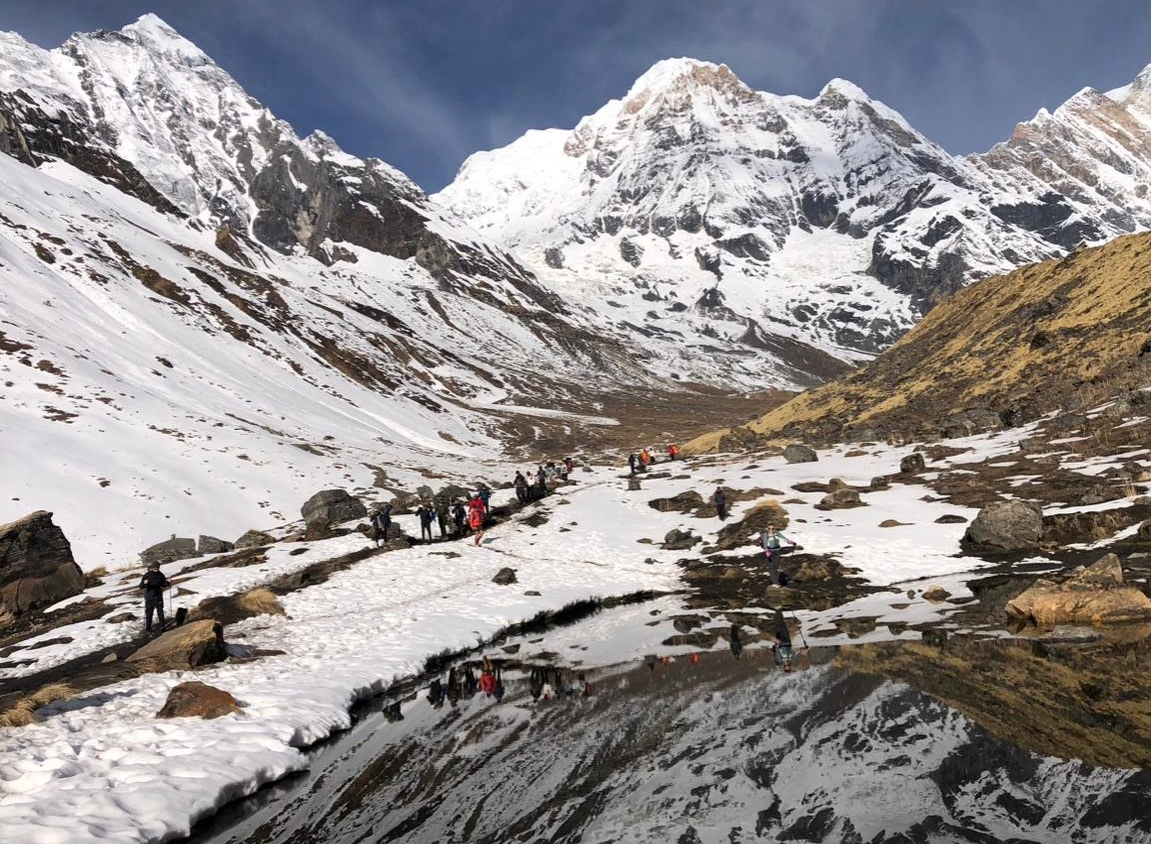
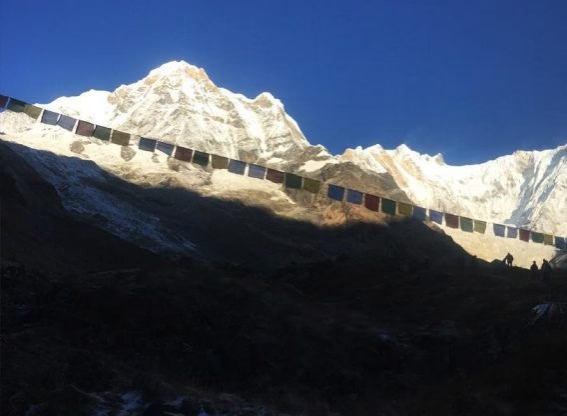
    Finally, our walk leads into beautiful Annapurna Base Camp, the walk leads higher for a few hours to reach the sanctuary with a beautiful amphitheater of peaks that surrounds this wonderful place. Eventually, we will reach the base camp of Annapurna after long walking days and it was our goal and mission to leave your footprint. The base camp is surrounded by numerous mountains like Annapurna I (8,091m / 26,545ft) Annapurna South (7,219m-23,693ft), Gangapurna (7,455m-24,457ft), and Annapurna III (7,555m-24,787ft), including to Mt. Machhapuchare (Fish-tail) at 6,790 m, Glacir Dam, Gandarvechuli, Tharpachuli Barthachuli and Hiuchuli too. At base camp, you will stay overnight and this elevation is the highest you will reach throughout the trip.

  10. 10

    Day 10:Trek from Annapurna Base Camp to Bamboo (2310m) – 7/8 hrs.

    2,130 m7/8 HrsGuest HouseB/L/D

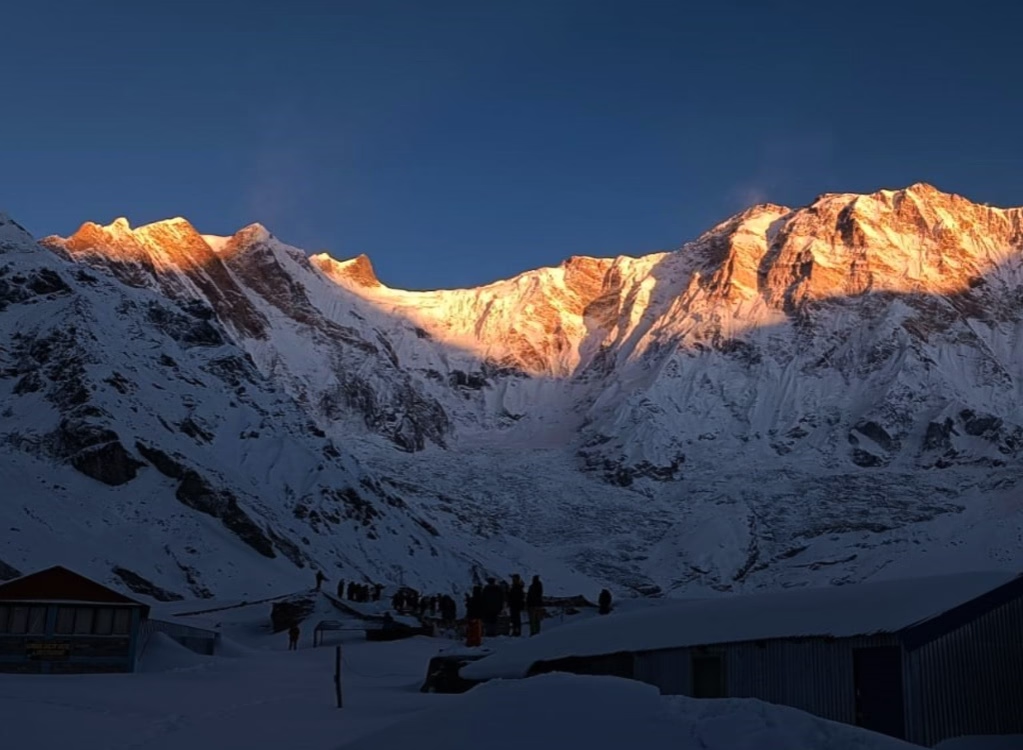
    In the early morning, you can see the magnificent sunrise on the Annapurna Himalayas an amazing Glacier too. After breakfast back downhill through the MBC, Deaurali, Himalaya, Dovan, and an overnight stay at Bombo. The trail is downhill to Bamdo through the beautiful places with walking inside the bamboo forest. It takes 7 to 8 hours to get to Bambo. An overnight stay bambo.

  11. 11

    Day 11:Trek from Bambo to Jhinu Danda (Hot Spring) 1700 m – 5/6 hrs.

    1,700 m5/6 HrsGuest HouseB/L/D

    From Bamboo leaving the Modi River and the gorge behind climb up to Khuldi-Ghar into the forested area. Then short gradual walk to Upper Sinuwa Danda, from here descend to Chomrong River and climb uphill to Chomrong village. You can have lunch at Chhomrong or you can go directly to Jhinu Danda. A short downhill walk brings at scenic and lovely Jhinu village for an overnight stop, located on a ridge top with views of surrounding landscapes and rolling green hills. A short descent of 20 minutes reaches you at a hot spring by the Modi River.

  12. 12

    Day 12:Trek to Samrung Khola then drive back Pokhara by sharing local jeep - 3 Hrs (810m)

    823 m5/6 HrsHotelB/L/

    After an excellent overnight at Jhinu Danda with a wonderful nature hotspring, we will head to Pokhara. Today just a short walk down to Samrung Khola then catch up the sharing local jeep to Pokhara. After driving back to beautiful Pokhara by the serene Phewa Lake after an hour of exciting drive.

  13. 13

    Day 13:Drive back to Kathmandu by Sofa tourist bus - 8 Hours (1350 m)

    1,400 m6/7 HrsHotelB/B

    After enjoying time in lovely staying in Pokhara we will back to Kathmandu by sofa tourist bus. Instead of driving you can short flight back to Kathmandu. If you want to drive back to Kathmandu the tourist bus leaves at 7:00 am from Pokhara for one time. Be ready in the early morning and the drive will be fun and experience with various scenarios and hills.
    (option by air 30 minutes of scenic flight from Pokhara to Kathmandu)

  14. Day 14:International Departure Homeward Bound.

    1,400 m35 mB/B

    Our adventure in Nepal comes to an end today! Nepal High Trek & Expedition representative will escort us to the airport approximately 3 hours before our scheduled flight. On our way home, we have plenty of time to plan our next adventure in the wonderful country of Nepal.

Are you looking to customize the trip itinerary?

If the provided schedule is not suitable for you, we can create a personalized travel arrangement tailored to your preferences and requirements.

Customize Trip

Cost breakdown

What's included

  • Airport Pickup and drop off service.

  • Two night boutique Hotel in Kathmandu with Breakfast

  • Two nights standard hotel in Pokhara with Breakfast

  • Meals During Trek:(Breakfast, Lunch, and Dinner).

  • Three cups of tea/Coffee per day in the mountain.

  • Trekking permit: ‘Trekkers’ Information Management System (TIMS)  and ACAP Permit.

  • Annapurna Conservation Area Project Permit (ACAP)

  • Pokhara to Birethati by private transportation and Samrung to Pokhara by sharing jeep.

  • Kathmandu to Pokhara / Kathmandu Sofa tourist bus.

  • Good accommodation on the trek.

  • Fresh fruit during the trek

  • NHL’S Dawn jacket, sleeping bag & duffle bag.

  • An experienced, expert, helpful and friendly Guide. (Includes Salary, Food, Insurance, Accommodation)

  • Medical kit bag.

What's not included

  • Your Travel and rescue insurance.

  • All the Food in Kathmandu. Also, in the case of early return from the mountain (due to any reason) then the scheduled Itinerary.

  • All the expenses in the mountain over the scheduled itinerary (due to strike, delay or canceled flight)

  • All the Bar bills and personal expenses (phone call, laundry service, battery recharge, a bottle of water, hot water, and shower.

  • Tips for the guide and porter.

Dates & Availability

Filter departures by month
07Sep

Sep 7 – Sep 16, 2026

Available
$850pp
09Sep

Sep 9 – Sep 18, 2026

Available
$850pp
12Sep

Sep 12 – Sep 21, 2026

Available
$850pp
14Sep

Sep 14 – Sep 23, 2026

Available
$850pp
17Sep

Sep 17 – Sep 26, 2026

Available
$850pp
19Sep

Sep 19 – Sep 28, 2026

Available
$850pp
21Sep

Sep 21 – Sep 30, 2026

Available
$850pp
24Sep

Sep 24 – Oct 3, 2026

Available
$850pp
27Sep

Sep 27 – Oct 6, 2026

Available
$850pp
29Sep

Sep 29 – Oct 8, 2026

Available
$850pp

Trip map

Loading map…

Useful information

How Long Are the Daily Walking Hours on the ABC Trek?

There are no formal walking hours for any kind of trekking activities. You'll generally walk five to seven hours daily. Sound manageable? Think again. A "five-hour day" crawling up the endless stone staircase of Ulleri feels infinitely worse than a casual seven-hour cruise through the bamboo forests lower down. At Nepal High Trek, we intentionally build our schedules to save your knees from total destruction. You just take it as it comes. Breathe. Stop when your lungs inevitably threaten to quit on you. Some days you’ll hit the teahouse by early afternoon, completely exhausted, while other stretches leave you staring up at the Annapurna South ridge, wondering why you ever paid money for this specific type of physical torture.

What Changes When You Trek ABC via Different Trailheads?

Well, it depends upon the type of trekkers. If you take different routes, it is understandable that the overall experiences differ. Starting the trek from Nayapul is classical way but you dive straight into the chaotic, sweaty mule trains and classic teahouse chatter that people expect. Road tracks and jeeps on the way may ruin the trekking fun. Do you want to skip the frenzy like this? Sometimes we route Nepal High Trek groups straight up through Jhinu instead. No warm-up. You're just instantly attacking the steep canyon walls, cutting out days of flat walking. Then you've got the Ghandruk option. Start there. Why? Because the morning mountain views literally smack you in the face before you’ve even packed your duffel bag. Hitting Poon Hill first adds serious mileage, but watching the sunrise turn Dhaulagiri a radioactive shade of orange makes the calf cramps totally irrelevant. Pick your poison.

Where Are the Best Places to Rest Between Major Villages?

In a long staircase filled trail, you need proper resting places. So, where do we actually rest and relax? The shaky suspension bridge right past Bamboo. Stand there. Let the freezing river spray totally numb your burning legs. Higher up, the Hinku Cave overhang gives you this weird, gritty little dirt pocket to hide from the brutal valley crosswinds. I constantly remind our Nepal High Trek clients to bypass those massive, packed dining patios in major settlements, aiming instead for the tiny, nameless wooden shacks pieced together with blue tarps. Buy a tea from the old guy running it. Here's the catch with stopping. Keep it under ten minutes. Sit too long on a cold rock near Sinuwa, and your sweaty base layers will literally freeze you into a rigid statue.

How Reliable Is Mobile Network Coverage on the ABC Route?

Forget about scrolling Instagram. The cell towers practically surrender once you hike out of the lower farmlands. You'll get decent Ncell bars up to Chhomrong. Beyond that point? Nothing but radio silence and sheer panic for the chronically online. You might catch a weird ghost-signal if you stand on one leg behind a rock in Dovan, but the network absolutely dies inside the actual sanctuary. Honestly, at Nepal High Trek, we think this forced digital blackout is a massive blessing in disguise. Put the phone down. Now, teahouses do aggressively push Everest Link WiFi cards on shivering tourists. Buy one if you must. Just realize the bandwidth instantly chokes and dies the second fifty trekkers try uploading dinner photos simultaneously. Send an "I'm alive" text. Then log off.

Annapurna Base Camp is now equipped with Mobile Tower but don’t trust as the tower may go down anytime due to cold and energy outage. Make sure that you carry NTC mobile SIM instead of NCELL. The government funded mobile network is more reliable in the Annapurna Base Camp Trek route.

Where Can Trekkers Charge Phones and Cameras Along the Trail?

You can charge your gear everywhere, but mountain electricity is a total racket. Down in the lower valleys, you might actually find a working wall plug right next to your bed. Soak that up. Higher up past Sinuwa, lodge owners hoard the power strips behind the kitchen counter, charging you a small fortune by the hour to use their sketchy micro-hydro setup. The fight for a plug gets surprisingly cutthroat around 6 PM. We aggressively warn our Nepal High Trek groups not to depend on these teahouse sockets. Bring a power bank charger which can be very useful to charge your electronic gadgets. Battery dries faster in the cold temperature. Therefore, you need to keep your power bank and mobile phones inside warm sleeping bag. The biggest hurdle is to make sure that your appliances are warm and it is working.  

What Should You Know About Hot Showers and Bathroom Facilities?

Kiss your normal hygiene standards goodbye. Around Jhinu, you might actually score an attached bathroom with a gas shower that aggressively spits out boiling water. Enjoy it. Once you push past the rhododendron forests, the plumbing devolves into medieval madness. You’ll be navigating shared outdoor squat toilets in the pitch black, freezing your hands off on the frozen metal door latch. As for washing? A "shower" up high is literally just you paying four bucks for a bucket of lukewarm water, shivering violently on a slick concrete floor while trying to rinse soap out of your hair. We tell every single Nepal High Trek guest to pack ridiculous amounts of wet wipes. A quick baby-wipe sponge bath is infinitely smarter than catching hypothermia.

How Much Drinking Water Should You Carry Each Day?

Please don't pack four heavy liters of water like you're crossing the Sahara. You only need two liters at a time. The trail is packed with teahouses selling steaming boiled water. Now, listen closely. Never drink straight from a mountain stream unless you want explosive stomach problems that ruin your entire week. Buy the safe kitchen water, or use a reliable squeeze filter. We push our Nepal High Trek clients hard to stick with reusable Nalgenes instead of buying those awful crinkly plastic bottles that trash the trailside. You'll sweat buckets up here. Chug a liter with your morning eggs. Refill. Down another bottle at lunch, grab a top-up, and you’re perfectly hydrated until the evening dal bhat hits.

The trail has countless stone stairs. Therefore, you lose lots of sweat and you need best cardio – vascular abilities. For this, staying hydrated is the most important thing. Drink plenty of water as well as soupy foods! It really helps you to avoid altitude sickness during the trek. Please note down that there is no formal acclimatization day in the Annapurna Base Camp Trek itinerary like in the Everest Base Camp Trek itinerary. You need to carefully care your body against these situations.

What Happens to the Trail During Rain, Snow, and Landslides?

Mountains are highly unpredictable. When the monsoon remnants hit the lower stone stairs, the path turns into a slick, muddy nightmare completely infested with hungry leeches. It sucks. Bring good trekking poles or you'll land flat on your back. Higher up, rain quickly turns into heavy snow that funnels straight across the narrow avalanche paths just before Machhapuchhre Base Camp. If a landslide rips out a trail section, or the snow gets dangerously deep, we stop. Period. Our Nepal High Trek guides watch the sky like hawks. Sometimes? You're forced to sit in a drafty dining hall drinking black tea all day while the mountain throws a violent tantrum. Do not argue with the weather. The mountain always wins.

How Does Porter Load Management Work on the ABC Trek?

Carrying all your own camera lenses and thick winter jackets to 4,130 meters sounds heroic right up until your spine actually feels it. Porters make this entire industry function. But human beings aren't cheap freight trains. Under our strict Nepal High Trek policies, one porter carries roughly twenty kilos maximum. That means they're lashing two perfectly packed duffels together. So, ditch the heavy cotton jeans. You hand off your bag before breakfast. You won't see it again until the afternoon. You only carry a small daypack with your rain jacket, a water bottle, and blister tape. That's it. Treat the porters with massive respect. Pack exclusively what you actually need to survive, not what looks good in photos.

What Small Cash Expenses Should You Expect Along the Trail?

Credit cards are utterly worthless rocks once you leave the dirt roads. You need physical Nepali rupees. Piles of them. Sure, your Nepal High Trek package covers the heavy stuff like beds and massive rice dinners, but the mountain taxes everything else. Craving a dusty Mars bar at Deurali? Hand over four bucks. Need a hot water bucket to unfreeze your numb hands? Pay up. You’ll slowly bleed cash on overpriced WiFi scratch cards, toilet paper rolls, phone charging fees, and extra mugs of black tea. Don't ignore the tipping etiquette, either. You’ll definitely want to hand over a decent cash tip after watching your guide drag you safely through an ice storm. Stuff a drybag full of small bills in Pokhara.

Packing list

Clothing

Clothing – Layering System

The golden rule on the ABC trail: No cotton. It holds moisture, takes forever to dry, and will make you freeze the second you stop walking. Stick to merino wool or synthetic materials.

Base Layer (2 sets): Lightweight merino wool or synthetic thermal tops and bottoms. One set for hiking on cold days, and one clean set kept strictly dry for sleeping in teahouses.

Mid-Layer (1–2 tops): A breathable grid fleece jacket or lightweight synthetic pullover. This is your go-to layer while moving through cooler forests.

Insulation Layer: A high-loft down jacket (800-fill power is ideal). You’ll throw this on the moment you drop your pack at a teahouse as your body temperature plunges.

Outer Shell: Quality waterproof and windproof jacket (GORE-TEX or similar) plus lightweight rain pants. The Modi Khola valley is famous for afternoon rain showers and sudden snow near base camp.

Trekking Pants: 2 pairs of lightweight, quick-dry stretch pants. Zip-off convertible pants work surprisingly well here as temperatures fluctuate wildly between valley floors and high ridges.

Footwear

Footwear

Trekking Boots: Waterproof, mid-to-high ankle support, and thoroughly broken in weeks before your flight. Fresh, rigid boots will turn the thousands of stone stairs into a blister nightmare.

Camp Shoes: Lightweight sandals, Crocs, or slip-on sneakers. Your feet will desperately want to breathe after 6–7 hours in boots, and you'll need something easy to slip on for late-night bathroom trips.

Hiking Socks: 4–5 pairs of high-density merino wool socks. They cushion your feet, manage moisture, and don't stink after two days of heavy use.

Gaiters (Optional): Short trail gaiters are handy if you’re trekking during shoulder seasons when trail dust or light snow around ABC can work its way into your boots.

Gear

Main Trekking Gear

Backpack: A 40–50 liter pack is plenty if you're carrying your own load. If you're hiring a porter, bring a lightweight 20–30 liter daypack for your daily essentials (water, rain shell, camera, snacks) and give the rest in a duffel bag to your porter.

Sleeping Bag: Aim for a bag rated down to -10°C (14°F). Teahouses provide quilts, but rooms at ABC and Deurali have zero insulation. Having your own cozy bag makes the difference between sound sleep and shivering all night.

Trekking Poles: Non-negotiable for ABC. You’ll be tackling thousands of steep stone steps (especially around Ulleri and Chhomrong), and poles will save your knees on the descent.

Headlamp: A decent headlamp (around 200–300 lumens) with spare batteries or a USB charging cable. You’ll need this for early morning pushes to Poon Hill or the final stretch into ABC for sunrise.

Water Purification: Bring water purification tablets, a Steripen, or a Sawyer Squeeze filter. Buying plastic water bottles on the trail is expensive and creates huge waste problems in the sanctuary.

Headwear

Headwear & Handwear

Sun Cap / Wide-Brim Hat: Protects your face and neck during long, exposed midday stretches.

Warm Beanie: A fleece or wool hat that covers your ears for chilly mornings and cold nights in the dining halls.

Lightweight Liner Gloves: Great for cool mornings when full winter gloves are too hot while hiking with poles.

Warm Insulated Gloves or Mittens: Waterproof and wind-resistant. Needed once you hit Deurali, Machhapuchhre Base Camp (MBC), and ABC.

Buff / Neck Gaiter (2x): Crucial for keeping dust out of your lungs and protecting your throat from the dry, cold air.

Miscellaneous

Optional But Recommended Items

High-Capacity Power Bank: 10,000 to 20,000 mAh. Teahouses charge a fee per device to plug into wall outlets above Chhomrong, and cold air drains phone batteries fast.

Dry Bags / Ziplocks: Pack your clothing inside dry sacks or heavy-duty Ziploc bags inside your pack. If an unexpected mountain downpour hits, your sleeping gear stays dry.

Snacks: Energy bars, trail mix, electrolyte tablets, and dark chocolate. Buying snacks in Pokhara before heading up-valley saves a lot of money.

Book, Kindle, or Playing Cards: Teahouse dining halls get quiet after dark. Having a deck of cards or something to read helps pass the hours before bed.

Toiletries

Toiletries & Hygiene

Keep this category light—you carry every ounce!

Wet Wipes / Baby Wipes: High-altitude teahouse showers get pricey and cold fast. A wet-wipe wash down in your room is often much more practical.

Biodegradable Soap & Hand Sanitizer: Keep a small sanitizer bottle accessible on your pack belt.

Sunscreen & Lip Balm: High SPF (50+). UV rays at 4,000 meters through thin alpine air are intense.

First Aid Essentials: Blister plasters (Compeed works miracles), ibuprofen, rehydration salts (ORS), a small supply of Diamox (if advised by your doctor for altitude), and anti-diarrhea meds.

Toilet Paper: Bring 2–3 rolls packed in zip-top bags. Teahouse restrooms almost never provide paper.

Quick-Dry Towel: A small micro-fiber towel.

Frequently asked

Understanding the Annapurna region isn't a locked grid. It breathes. You might hit a nasty washout near Jhinu Danda, forcing a sudden detour that completely rewrites your afternoon, which honestly happens more than you'd think when the monsoon hangs around late. At Nepal High Trek, our guides constantly read the trail and gets information ahead. If a bridge looks sketchy? We pivot immediately. You aren't handcuffed to the exact PDF itinerary we emailed you. On field, our staffs are highly experienced to alter the itinerary according to situation and safety standards. That said, the sanctuary itself acts like a massive rock funnel above Sinuwa. Once you enter that narrow gorge, there’s only one real way up and one way down, especially the trail of the Annapurna Base Camp Trek route after Chhomrong.

Your knees will absolutely hate you. Honestly. Thousands of uneven, agonizing stone slabs basically pave the entire lower half of this trek, turning a simple uphill stroll into a brutal stairmaster workout that lasts for days. Don't underestimate them. Climbing up through Ulleri alone involves over three thousand literal steps before you even catch your breath. After Chhomrong? More stairs. It sounds miserable, but this ancient Gurung staircase network somehow keeps the steep jungle mud from sliding straight into the raging river below. Just slow down. Your quads will eventually surrender and adapt to the endless climbing rhythm.

You think you want to stay up there? Think again. Most people arrive at base camp, snap a dozen glorious glacier photos, and immediately want to flee the freezing altitude by 8 AM the next morning. But let’s say you’re insanely tough. If you really want a second freezing night trapped in the icy amphitheater, Nepal High Trek can usually shift things around down below. Here's the catch. Beds up there are ridiculously scarce during October and April. If you spontaneously decide to linger, you might literally end up sleeping on a drafty dining room floor. Note down that there are only handful of tea houses in the Annapurna Base Camp. During peak season, you may not get room to sleep even for a night which may force you to return back to Machhapuchhre Base Camp to sleep overnight. Make sure that you pre – inform our trekking crew members if you wish to spend extra night at Annapurna Base Camp.

You drop your pack. Finally and then you sit there staring at the chickens pecking the dirt, wondering what on earth you're supposed to do at two in the afternoon. Listen, arriving early happens a lot if you're naturally quick on your feet or skipped a long lunch break. Our guides won't arbitrarily force you to sit around if you’re itching to crush a few more miles. We often push on to the next settlement. Just remember that chasing extra mileage on a Tuesday means you might inadvertently throw off your carefully planned acclimatization buffer for Wednesday and it is not highly recommended. You can talk with the locals and get some more familiarization about the trail and places. We request you to maintain the pace of your trekking but we also encourage you to mingle with the locals in more polite way. Also, you can talk with other trekkers who are staying in the same lodge.

Absolutely yes. Skip them and your cartilage will scream. Walking uphill on those endless, uneven stone slabs is tough enough, but descending is what actually destroys a trekker's legs. When you're completely exhausted, slamming your entire body weight down onto a wet rock without any upper body support is a terrible idea. Nepal High Trek constantly rescues stubborn hikers who refused to pack poles and blew out their knees near Bamboo. Use two of them. They magically transfer a huge chunk of the shock absorption directly into your shoulders. Plus, they double as decent spider-web clearers in the jungle.

Don't even look at trail runners once the temperature drops. Sure, the ultra-light crowd swears by them down in the dusty terraces. But the second you hit the shady, ice-choked gorge past Deurali, those flimsy mesh sneakers turn into absolute death traps. You need mid-cut hiking boots and always rely on proper brand. Don’t wear new shoes straight in the trekking trail. It is better to use the trekking shoes before arriving to the trailhead. Specifically speaking you need something with an aggressive Vibram sole that bites hard into slippery, frozen mud. The trail up to Machhapuchhre Base Camp frequently freezes solid overnight, leaving behind a treacherous glaze of black ice. Besides, a stiff toe box saves you from agonizing pain when you inevitably kick a hidden rock.

Pack three shirts. Tops. Any more than that, and you're just dragging useless dead weight up a mountain for absolutely no reason. Look, everyone smells terrible by day four. It’s a universally accepted fact up here. You only need one set of lightweight hiking clothes for the sweaty daytime grind, another slightly cleaner set explicitly reserved for shivering in the teahouse dining hall, and maybe one spare base layer if things go horribly wrong. At Nepal High Trek, we beg people to stop overpacking heavy cotton hoodies. Just wash your dirty socks in the sink. They'll dry eventually.

Honestly? Toss them in your bag anyway. They weigh practically nothing, but the sheer relief they provide on a freak icy patch is unbelievable. You wouldn't think you need traction gear in late April, right? Wrong. The avalanche debris zone just below base camp often stays completely frozen solid late into the spring, turning the narrow footpath into a slick, terrifying bowling alley. If a random storm dumps unseasonable snow—which happens more often lately—those cheap rubber spikes might be the only reason you don't slide backward off the mountain. It's cheap insurance. Just pack the damn spikes.

Down low, you're actually in luck. Teahouses in places like Ghandruk, Ghorepani, Jhinu Danda have improved its standards of tea houses. There are few luxury mountain lodges too. We can usually secure you a private toilet that actually flushes. It feels glorious. You can wash your face without shivering in a drafty hallway. But don't get used to this soft living. The second our Nepal High Trek itinerary pushes you past Sinuwa, those fancy attached bathrooms vanish completely into thin air. You'll be right back to sharing a freezing outdoor squat toilet with thirty other exhausted, groaning strangers.

Panic sets in. Well, briefly. During the chaotic October rush, teahouses along the narrow Modi Khola gorge get dangerously overbooked by massive trekking groups long before you even lace up your boots. If a lodge is stuffed full? You keep walking. Sometimes it means an agonizing extra hour of uphill trudging in the dark to reach the next tiny cluster of tin roofs. Look, we pull heavy local strings at Nepal High Trek to guarantee your bed, but the mountains are unpredictable. Worst case scenario? You may have to sleep in a dining hall with your sleeping bag and a mattress. The journey can be tiring but you need proper room after tiring trekking during the trek. Therefore, we plan our trip well ahead in order to avoid such scenario.

Are you gluten-free? Vegan? Don't worry. The kitchen staff up here can actually work some serious magic with incredibly limited supplies. They aren't cooking up fancy, curated farm-to-table menus, obviously. But if you tell our Nepal High Trek guides about your stomach issues beforehand, we make sure the cooks scrub the pans and avoid butter or wheat. Honestly, the default mountain diet—huge mounds of rice, heavily spiced lentils, and fresh spinach—is accidentally vegan anyway. Just manage your expectations. You won't find almond milk lattes, but you definitely won't starve to death either.

Fast. Terrifyingly fast. You'll be shedding layers and sweating through your shirt under a brilliant blue sky at MBC, thinking the final push is a total joke. Thirty minutes later? A massive, suffocating wall of freezing gray fog aggressively swallows the entire valley, completely blinding you. The temperature literally plummets ten degrees in a matter of seconds. I've watched cocky hikers get caught wearing shorts in a sudden, violent whiteout right on the sanctuary gates. The weather doesn't transition up there. It violently snaps. Always keep your heavy Gore-Tex shell shoved right at the top of your pack.

Absolutely. Rain doesn't just make you miserably wet but it structurally alters the terrain and it can be slippery or muddy. A heavy monsoon downpour easily triggers local landslides that wipe out the main stone paths near Bamboo overnight. If a bridge gets violently washed downriver, you aren't crossing. Period no arguing while you are in the mountains. We don't mess around with mudslides. We always remain updated about the trekking trail. Our Nepal High Trek guides will instantly reroute you higher up the ridge, or aggressively stall the group in a safe teahouse for an extra day until the muddy chaos stabilizes. Your neatly printed schedule means absolutely nothing when a chunk of the hillside decides to let go.

It’s basically a completely different planet. You leave Pokhara dripping sweat, swatting mosquitos, and drinking cold beers by a humid, tropical lake. A few days later? You're violently shivering inside a sleeping bag while frost heavily coats the inside of your teahouse window but dining room is always hot due to central heater from the traditional fire pit. Up at 4,130 meters, the ambient air feels thin, sharp, and intensely biting. As soon as the sun dips behind Annapurna South, the deep freeze hits you like a physical wall. We warn our Nepal High Trek clients to expect sub-zero nights. Your Pokhara shorts are completely useless once you enter the sanctuary.

They read the mountain, not the map. Look, a good guide isn't just a walking GPS unit. They're constantly sniffing out subtle hazards that you blindly walk right past and they always are in communication with tea house owners of another place. If a localized storm dumps heavy, unstable snow across the avalanche near Deurali, our Nepal High Trek guides will refuse to let you cross until it is safe. Safety is the biggest priority while trekking with us. They watch the river levels. They talk to passing porters coming down from the snowline. If your guide suddenly says you're stopping at Dovan instead of pushing to Machhapuchhre, you shut up and sit down. They are actively keeping you alive.

We drop them. Literally. If you start violently puking or slurring your words near base camp, the upward vacation is instantly over. There is zero room for negotiation when your brain starts dangerously swelling from oxygen deprivation. Our Nepal High Trek teams are trained to rapidly descend the sick trekker back down below 3,000 meters, even if it means hiking straight through the pitch-black night. We don't wait to see if a pounding headache magically improves by morning. You go down. Fast. The mountain will always be there, but we heavily prefer that you actually survive to see it again.

They don't magically sprout extra legs when the stairs get vertical. A twenty-kilo load feels twice as heavy when you're physically hauling it straight up a thousand jagged stone steps. At Nepal High Trek, we fiercely protect our guys. When the trail gets aggressively steep around Sinuwa, they slow their pace to a rhythmic, agonizing crawl. We don't ever pressure them to sprint ahead just so your dry socks arrive five minutes earlier. Sometimes they take frequent, heavy-breathing micro-breaks using their head straps. Let them work. They know exactly how to pace out the sheer physical suffering.

It gets complicated. Splitting a tight-knit private group is always an organizational headache, but we make it work. If your buddy blows out a knee or catches awful altitude sickness, they absolutely must go down. We don't drag dead weight. A Nepal High Trek assistant guide will immediately peel off to safely escort the sick person back to lower ground, or arrange a frantic helicopter evac if things look genuinely grim. Meanwhile? The rest of you can quietly keep climbing. It completely ruins the shared group vibe, obviously. But your personal summit push doesn't have to die.

The sneaky stuff drains your wallet. Sure, you paid for the main package. But did you budget five bucks for a single roll of scratchy toilet paper? What about the absolute fortune you'll spend just charging your stupid smartphone battery by the hour? Every time you desperately crave a hot bucket shower to thaw your bones, you’re handing over cold, hard cash. Honestly, the constant stream of hot ginger teas alone can completely wreck a tight budget. We always tell our Nepal High Trek groups to carry an extra wad of rupees specifically for these irritating, unavoidable mountain taxes. What should I confirm with a trekking company before paying the ABC booking deposit? Ask where the money actually goes. Don't just blindly wire a deposit because a website has pretty mountain pictures. Are their guides legally insured for helicopter rescues? Look, a shocking number of cheap agencies leave their porters freezing in threadbare sneakers. Not us. Dig into the boring logistics now. You can't fix a terrible agency once you're trapped up in the clouds. Check our package at the Nepal High Trek! We clearly mention what are included in the package and what are not included. We are the responsible, reliable, and registered trekking company. You can find all our legal credentials in our website.

What travellers say

Rated 5.0/5 from 1 reviews.

TripAdvisor
5.0
Google
4.9
Facebook
5.0
Trustpilot
5.0
Annapurna Base Camp Trek
Anjan was our guide to ABC and did everything possible to make the best of our trekking. I strongly recommend Anjan’s services. He is very reliable and knows a lot about Nepal and the routes we took.We did an unforgettable trip to Annapurna Base Camp in April 2016. Nepal is a safe, peaceful and very friendly place. Beautiful sceneries, incredible mountains.We were a team of four from Brazil, three of us in our 50’s and my 24 year old son. The trek was 12 day long. A lot of ups and downs to reach ABC. The scenery is fantastic, we go through nice small villages and can see their real life, school kids, farm workers, shepherds with goats, buffalos, sheep, donkeys carrying all types of loads up the mountains. In April the weather was mild, hot during day time, specially at low altitudes. At ABC the temperature was below zero at night, but as soon as the sunrises and you start walking you just need a T shirt.We woke up at ABC at sunrise to see the huge peaks all around us in clear blue sky…
RaphaelP2000 RaphaelP2000
From$750
Book Now