- Duration
- 7 days
- Difficulty
- Moderate
- Max Altitude
- 4130 m
- Destination
- Nepal
- Activity
- Trekking
- Accommodation
- Hotel/Lodge
- Group Size
- 1
- Transport
- Flight/Drive
- Meals
- B.D.L.
- Season
- Spring/Autumn
- Start / End Point
- Pokhara
Trip highlights
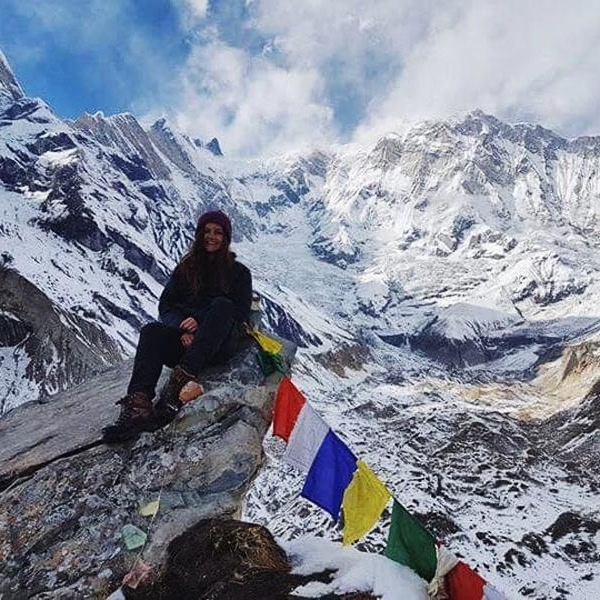
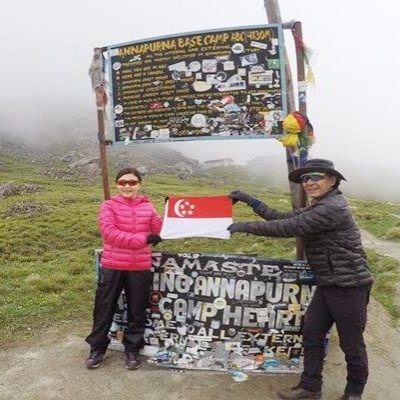
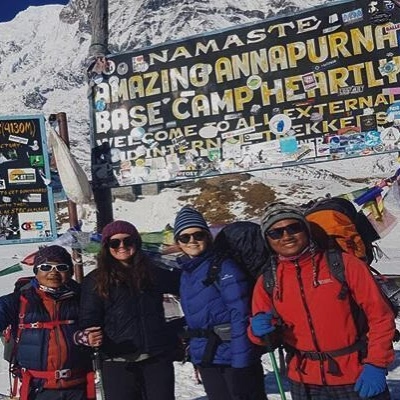
World’s 10th Tallest Mountain’s Base Camp: Relish the chance to reach the foothill of the world’s 10th tallest mountain, Mount Annapurna I (8091 m). It is one of the rarest chances in your life to be in such an altitude and enjoy the majestic scenery of mountains.
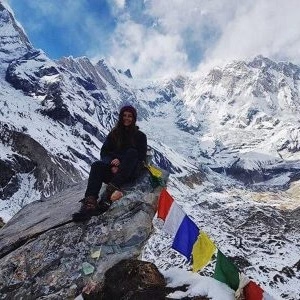
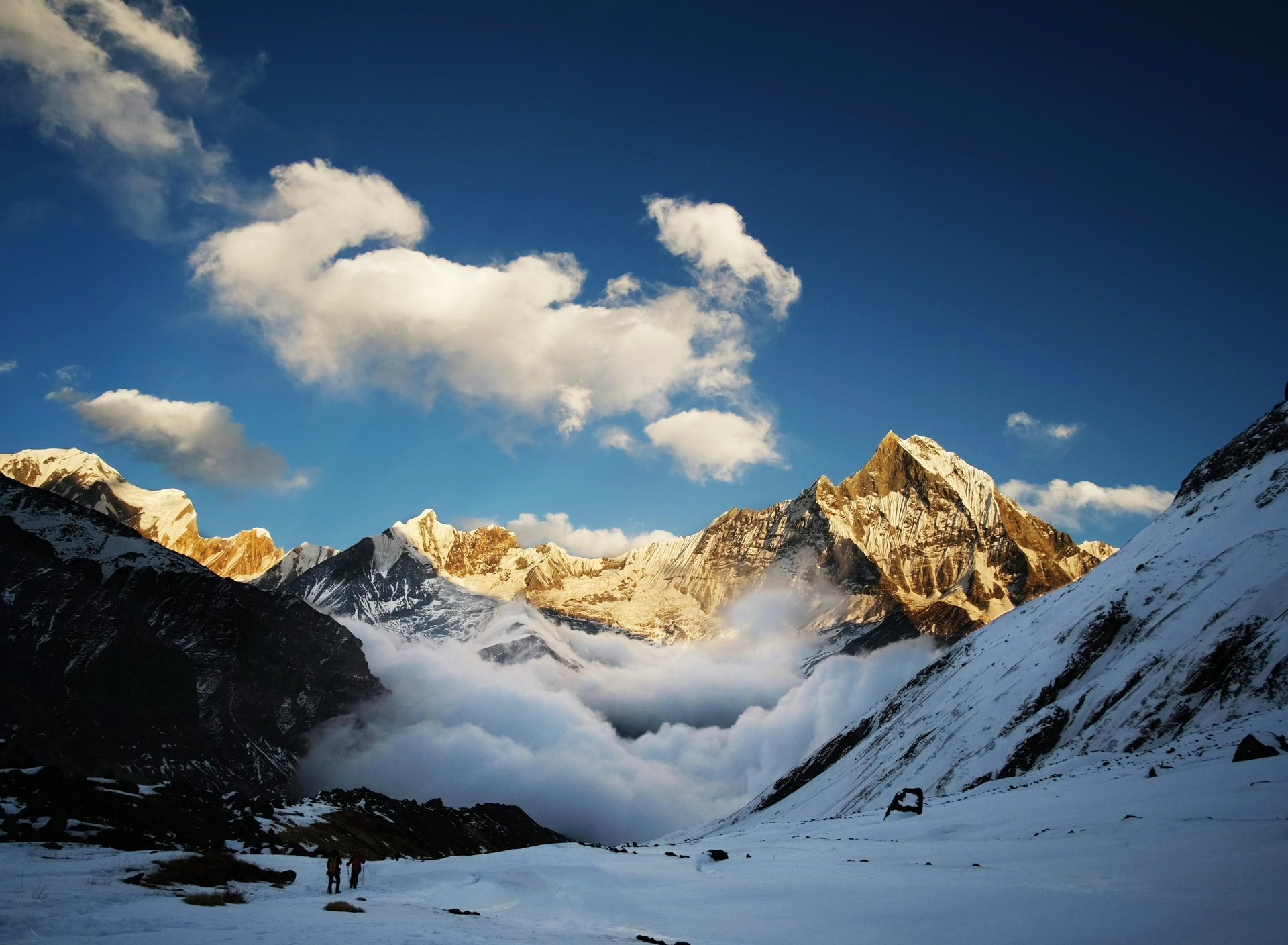
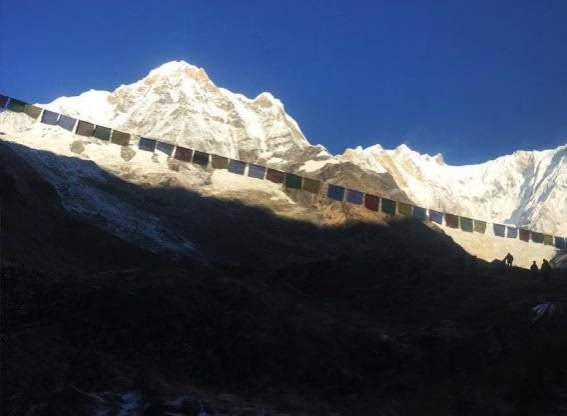
The Sanctuary Amphitheater: You don't just look at the mountains on this trek. You’re literally swallowed by them. A massive 360-degree bowl of jagged ice and rock completely boxes in the base camp, making you feel incredibly tiny and completely awe-struck all at once. Standing in the middle of it? Total sensory overload.
Sunrise from Annapurna Base Camp and Poon Hill: Watching the morning light set Machapuchare on fire is something else. It ruins regular sunrises for you forever. The places like Annapurna Base Camp (4130 m) and Ghorepani Poon Hill (3210 m) are where you can relish the incredible sunrise experiences.
Machhapuchhre Base Camp: Before you reach the Annapurna Base Camp, you will stop for lunch in the Machhapuchhre Base Camp. The place is uniquely placed with captivating scenery of lower valley and mountains. It feels so surreal to have lunch in this place. The anticipation of reaching the Annapurna Base Camp in about 1 hour can also increase the best moment time in the Machhapuchhre Base Camp. The mountain that you see almost everyday is right next to you.
Gurung Hospitality: Places like Ghandruk aren't just places to sleep. They are living, breathing communities hanging off the edge of a cliff. The massive plates of dal bhat they feed you, it will literally keep you walking when your tank is totally empty. Always take the extra rice. Entire region is mainly habituated by Gurung but there are Magar, Dalits, Chhetri, and Brahmins too.
The Infamous Chhomrong Steps: Okay, maybe calling this a highlight is a massive stretch. But conquering that brutal stone staircase down to the river and then dragging your heavy boots all the way back up the opposite side becomes a weird badge of honor that you'll brag about later. You will complain loudly but the moment you conquer these steps, you will feel as if you have achieved something.
Jhinu Danda Hot Springs: Picture this. You've been wiping yourself down with freezing baby wipes for six straight days. Slipping into natural hot geothermal pools right next to a roaring, icy glacier river? Pure heaven experiences can be gained while dipping in the hot springs.
World’s Largest Rhododendron: Walking through thick, messy tunnels of blooming red rhododendrons before you eventually hit the barren snowline. It's like switching planets in the middle of the afternoon. During spring season, you can get chance to witness more than 19 species of rhododendron.
Teahouse Trekking Experiences: Enjoy the beautiful trek by staying overnight in locally owned tea houses. Staying in these tea houses provide unique experiences to you. Chat with fellow travelers and staffs huddled in a common fireplace of dining area and enjoy warm cozy bed after exhaustive walking throughout the day.
Trip overview
The 7 Days Annapurna Base Camp (ABC ) Trek is the most elegant short Himalayan trek in the Annapurna region. The trek offers a variety of mountain scenery, authentic Gurung villages, rhododendron forests, waterfalls, and high alpine landscapes. Throughout the trip, we will reach a maximum elevation at 4130m, the base camp of Annapurna. The hike goes above the tree lines to higher altitudes around the base camp. You will love this easy-going trek that takes you into the heart of the Annapurna range. Most importantly, Lonely Planet lists this trek as a ‘must-do experience’. Simply put, the trip takes you through one of Nepal’s most beautiful mountain landscapes.
Annapurna Base Camp Trek is famous for its sharp slopes, snowy peaks, and chocolate box valleys. This area now sees plenty of trekkers walk its trails. Above all, the Annapurna trekking route is full of interesting cultural heritage. It has fast become one of the most popular trekking trails with all eager hikers. Your heart smiles with the stunning Himalayan scenery. Likewise, the different tribal locals keep you happy with their friendly welcoming hospitality.
There’s never a dull moment hereabouts. You will discover the home of the world’s 10th highest mountain – Mt. Annapurna I at (8091 m. Moreover, the trails are a mix of different charming scenery that stirs your feelings. Inside the Annapurna Conservation Area Project, the trail cuts through narrow valleys. It’s a lovely walk through lush green forests, colorful villages, and winding rivers.
Most mountain lovers enjoy trekking in this lush region. If you’re looking for something fresh, this journey is for you. However, do it before anyone else gets to know about it. This will be the best decision you will have ever made for memories of a lifetime.
A gem of a Trail at the Base Camp of the mighty Annapurna
Our 7 Days Annapurna Base Camp Trek itinerary gives you an exciting encounter to remember. You will witness different traditional cultures on the trails. In other words, you won’t find this anywhere else on the planet. We see so much cultural and natural beauty in one single destination. Above all, in a little over a week, travelers enjoy an awesome experience to remember. The quiet trails and amazing landscapes leave you happy to the hilt. You also get to soak in a whole range of breathtaking mountains. This truly unspoiled part of the world offers so much natural beauty. So, there’s always a surprise for you through every turn of the trail.
Nepal High Trek & Expedition escorts various treks around the Himalayas of Nepal. Likewise, we have been doing this for a long time, now. Trekkers can get a whole lot of adventure activities for an unforgettable holiday in Nepal. Moreover, we have suitable itineraries and pocket-friendly rates for all of our Treks. Simply surf Nepal High Trek’s website and get more exact information. Similarly, we have packages to suit everyone’s needs. We specialize in the short 7 Days Annapurna Base Camp Trek and take you to places most others simply pass by.
Can You Do This Trip?
The highest you go on this trip is 13,550 ft (4,130 m). The short ABC Trek is certainly not a stroll down to the Emirates Stadium in North London. However, it’s a well-paced route and one of the best in Nepal. You can acclimatize really well on this trip, naturally. As you go up it’s gradual and pretty easy on your body. You sleep at lower altitudes but two nights are slept out at high altitudes (over 11,480ft/3,500m). You cannot avoid this elevation as you reach 4130m.
You surely need some reasonable fitness for this trip. Also, you must be confident about your physical fitness. It gets tougher as you go higher. That is to say, you feel this when you’re nearing base camp. Your walking each day lasts for anything between 5 to 7 hours.
The short ABC Trek Cost & itinerary can be customized as per your specific requirements, holiday length, and physical fitness. Probably, this trip is one of the most glamorous and blissful journey in the Annapurna region. The 7 Days Annapurna Base Camp Trek has integrated the popular Ghorepani Poon Hill with other trekking trails too. Do you love walking and enjoy doing the staircase in high-rise buildings? As a habit do you enjoy climbing hillocks? If you do, this trek is for you. Leave your footprint on the world’s 10th-tallest base camp of Annapurna I and discover the unique, graceful culture and prestige scenarios of numerous Annapurna peaks.
When is the best time to do 7 Days Annapurna Base Camp Trek ?
The normal itinerary of the Annapurna Base Camp Trek is about 10 to 12 days from Kathmandu to Kathmandu but this is the short trekking itinerary. Therefore, careful planning is necessary to avoid any kinds of hassles while trekking in the route. Climatic and weather factors are crucial to knit a momentous trekking holiday in the Annapurna region of Nepal. Therefore, the best time to do 7 Days Annapurna Base Camp Trek in Nepal is during months of spring and autumn seasons.
Spring season consists of months like March, April, and May, whereas the autumn season consists of months like September, October, November and December. This time of the year the route experiences clear weather and warm temperature. You can enjoy the majestic view of the mountains without hurdles! Relish the chance to knit the best trekking holiday moments by picking best time to do this trek!
Meals and Accommodation Throughout the Journey
Almost every tea houses and lodges provide quality food and accommodation during Annapurna Base Camp Trek. However, don’t expect lavish provisions of food and lodging as the trek moves high altitude places. In high altitude places, trekkers may have to spend overnight at the dining hall during peak season. However, meals are available from local delicacies to Western cuisines. Don’t be depressed as spending overnight in dining area seems bad but in terms of warmth and safety, dining area is very much reliable. To get best lodging facilities, try the 7 Days Annapurna Base Camp Trek with Nepal High Trek. We assure you that you will get best possible accommodation during your trek.
Average Cost of the ABC Trek For 2026/2027
The cost of 7 Days Annapurna Base Camp Trek is relatively lower than the regular ABC Trek. It is because of the reduced number of trekking days. The journey starts in Pokhara and ends in Pokhara. Therefore, the trekking agency will not have any obligation to arrange transportation to Pokhara as well as lodging in Pokhara. The cost ranges from 450 $ to 700 $ per person. Plan smartly with our travel planners!
Trekking Difficulty
In comparison to regular Annapurna Base Camp Trek, the journey of 7 days Annapurna Base Camp Trek in Nepal is strenuous. It is highly difficult trek to do as you have to walk more than 7 hours a day. The trail has numerous uphill and downhill sections where trekkers have to walk using their utmost physical stamina. Moreover, the trekking route consists of relentless walking in the high altitude places where the oxygen level is very low. The route is comparatively in less altitude than the Everest Base Camp Trek route but the difficult walking courses make it strenuous in comparison to EBC Trek. Don’t underestimate this trekking trail as it is highly tiring. Therefore, prepare yourselves physically before doing the trek.
Do some exercises and build your stamina. Completing the 12 days course in just 7 days is not ordinary. It demands great physical strength. If you are in your top notch condition then only try to do this trek. If not, book our regular trekking package to the foothill of the world’s 10th tallest mountain, Mt. Annapurna I and mount Dhaulagiri 8167m
What types of amenities gets During ABC Trek ?
When you are in low altitude places up to Chhomrong, you may get lots of lavish amenities. In some cases, wifi is free and hot shower is available in your room attached with bathrooms. Beyond this place, you may have to pay extra for all kinds of amenities. Hot shower, shops, internet, and mobile coverage come up with some prices. You may have to pay extra if you want to use these things while trekking. Consult with your trekking guide and get the best deals.
Permits required for Annapurna Base Camp Trek
In order to do 7 Days Annapurna Base Camp trek in Nepal, you must acquire 3 trekking permits. They are the Annapurna Conservation Area Project (ACAP) Permit, the Trekkers’ Information Management System (TIMS) permit and some rural municipality permits in some cases but not mandatorily. It depends upon your trekking course. Nowadays, TIMS is not in use, so you may require only one permit to do this trek.
How much should I tip my trekking guide and porter?
Tipping is not compulsory but it is expected. The average salary of a trekking guide is about 25 $ per day and an average salary of a porter is about 18 $ to 20 $ per day. Therefore, these trekking crew members depend upon the generosity of their trekking guests. Allocate at least 10 % of the trip cost as a tip.
What to pack for the trek?
Don’t carry too much unnecessary stuff if you are doing the trip without a porter. A porter carries a maximum of 18 kilograms of luggage. The rule is simple. Two trekkers get one porter and the porter carries 9 kilograms each. However you can carry compulsory gear like warm clothes and gears. Each tea house provides a blanket but in autumn and winter better to carry a sleeping bag. Here is a link to check the compulsory equipment list before towards the base camp of Annapurna.
Typical Day of Trekking
Every day, trekking starts after breakfast. Trekkers will be assembled in a courtyard of a teahouse and they will perform light PT sessions. After stretching, a trekking guide will lead the trek. Lunch will be on the way and in the evening trekkers will get rooms to stay and they will be briefed about next day’s trip. They will be presented with the menu to choose for dinner. About 6 to 8 hours of walking may result in exhaustion. Therefore, trekking guide will monitor the health issues of trekkers before bidding good night.
Why Nepal High Trek for 7 Days Annapurna Base Camp Trek?
Nepal High Trek is a reliable trekking agency in Nepal. For more than two decades, the agency is relentlessly working towards contributing in the sustainable tourism industry mission. Yes, the agency is well aware about its responsibility towards the natural and cultural aspects’ conservation while operating the trip. Our trekking trips are always eco-friendly. We only employ locals for any kinds of trekking activities. This helps us to give back to the society. Moreover, having a local in a trekking trip ensures authentic information and safety. Our trek cost is crafted expertly to meet the demands of our valued clients. At an affordable rate you can enjoy the trip that takes you to the foothill of the world’s 10th tallest mountain Mt. Annapurna I.
Book your Annapurna Base Camp Trek with Nepal High Trek and Expedition without hassles free and confidently. Nepal High Trek is one of the reputable travel company in Nepal and check the recent reviews of the trip on TripAdvisor.
Itinerary
Itinerary at a glance
| Day | Route | Altitude at destination | Walking | Stay | Meals |
|---|---|---|---|---|---|
| 1 | Pokhara → Ghandrunk | 2,012 m (6,601 ft) | 4–5 hrs | Guest House | B/L/D |
| 2 | Ghanrunk → Sinuwa | 2,345 m (7,694 ft) | 7–8 hrs | Guest House | B/L/D |
| 3 | Sinuwa → Deurali | 3,700 m (12,139 ft) | 7–8 hrs | Guest House | B/L/D |
| 4 | Sinuwa → Annapurna Base Camp | 4,130 m (13,550 ft) | 5–6 hrs | Guest House | B/L/D |
| 5 | Annapurna Base Camp → Bambo | 2,335 m (7,661 ft) | 7–8 hrs | Guest House | B/L/D |
| 6 | Bambo → Jhinu Danda | 1,700 m (5,577 ft) | 5–6 hrs | Guest House | B/L/D |
| 7 | Jhinu Danda → Pokhara | 822 m (2,697 ft) | 3–4 hrs | — | B/L |
Day 1:Drive from Pokhara to Bikash Danda 3 Hrs then walk to Ghandrunk Village 2,012 m – 20 m.
After a pleasant time at Pokhara with beautiful scenery and views of the Annapurna Himalayas and Manaslu Himalayas with various beautiful lakes. In the morning we will drive to Kyu Mi Danda via Nayapul and Birethati. The road is unpaved we will take a four-wheel jeep and it takes 3 hrs to at Ghandrunk from Pokhara. The trail goes through the Modi River, authentic villages, and hills with the thrilling valley of Annapurna.
The Ghnandrunk village is the massive Gurung village and it's an iconic village in the Annapurna region. Where you can explore the local Gurung culture, customs, museums, lifestyle, and magnificent views of Annapurna South, Hiuchuli, Machhapuchre, Gangapurna, and Annapurna III. Ghandrunk village is the best place to spend unforgettable memories and a highly acceptable destination in Nepal. At night will stay overnight at Ghandrunk.
- 02
Day 2:Trek from Ghandrunk to Upper Sinuwa 2345 m – 7/8 hrs.
On the second day after breakfast, we will towards Upper Sinuwa from beautiful Ghanrunk village. The trail would fluctuate and we must strenuous walk to get to Upper Sinuwa. It takes 7 hours except for the lunch and tea break. The trail goes through the Kimrung Danda, Kimrung River, and Chhomrong village then you will reach at Sinuwa. Along the trail, you can explore the various vegetation and culture of Gurung with mesmerizing scenarios of the Annapurna Himalayas ranges.
The Chhomrong village is one of the massive villages throughout the Short Annapurna Base Camp Trek. At Chhomrong you can find bakeries, coffee shops, and local cuisines too. When you reached at Chhomrong village you will reach upper Sinuwa within 2 hrs. Overnight at the local guest house at Upper Sinuwa with beautiful scenarios of mountains.
- 03
Day 3:Trek from Upper Sinuwa to Deurali 3,700 m – 7/8 hrs.
On the third day overnight in Upper Sinuwa, the trail ahead uphill, as the air gets cooler and fresher to reach Annapurna Sanctuary, as the walk leads on the winding path. Along the trail, we can see beautiful places such as Bamboo, Dovan, and the Himalayas. The whole day you must walk into the beautiful bamboo and rhododendron forest with the Eden valley of the Modi River.
These places are not villages just local guest houses where with gentle ups to Himalaya Hotel, near Hinko Cave located beneath Hiunchuli peak. Walkover glacier and moraine then cross a small bridge to reach Deurali, the last lodge before Machhapuchare Base Camp 3900m, from here vegetation and tree lines disappear for alpine bushes and shrubs, as the walk climbs following Modi River upstream to reach Machhapuchare Base Camp. Overnight at Deurali where is 5 local guest houses.
- 04
Day 4:Trek from Deurali to Annapurna Base Camp (ABC) at 4,130 m – 5/6 hrs.
On the fourth day after breakfast, the trail goes up to Machhapuchhre Base Camp and it lies at 3900m above sea level. Today you should climb up 730 m to the Annapurna Base Camp. Furthermore, the trail goes gradually up to ABC. A pleasant stop at MBC beneath the towering North Face of Machhapuchare the Fish Tail peaks as the walk heads uphill into Annapurna Sanctuary and the Base Camp, journey continues on grassy uphill reaching higher areas to Annapurna Base Camp (4130m) with stunning views of Annapurna peaks that circles the sanctuary with Annapurna I.
After a good short walk reaching at Annapurna Base Camp a magnificent spot where a few lodges are located, offers tremendous scenery of snowcapped peaks that encircle the base camp of Annapurna. Afternoon at leisure to enjoy the mountain views with glorious glaciers too. Annapurna Base Camp is a delightful place to soak into the beauties of wonderful mountains.
- 05
Day 5:Trek from Annapurna Base Camp to Bamboo 2,335 m – 7/8 hrs
After a grand time at Annapurna base camp will back down to Bamboo. The trail is decent but you should walk carefully to come down. Along the walk downhill all the way to via Deurali, Himalaya, Dovan then reach Bamboo. It would be easiest to come down with a few ups and downs with the gradual winding trail in the serene forest and back to the tree lines to Bamboo for the overnight stay. Let's take a good warm hot shower at Baboo and it's a beautiful place to discover the brilliant time.
- 06
Day 6:Trek from Bambo to Jhinu Danda 1,700 m a place with Hot Spring – 5/6 hrs.
From here short steep up to KhuldiGhar, then downhill within the forest to reach at lonely spot Sinuwa-Danda, from here descend to Chomrong Khola. After the bridge climb for a short while to Chomrong village for lunch, after Chomrong with another short up to reach on top of Chomrong ridge, as the last day walk takes you down-hill to Jhinu-Danda.
The Jhinu Danda is one of the most beautiful and popular places of Natural Hot Springs. Where you can enjoy the natural hot spring. The hot spring is located at the bank of the Modi River you must walk 10 away from the hotel. Where you can find the four hot spring ponds and each pond has different temperatures of the waters. Overnight stay at beautiful Jhinu Danda village and have a wonderful time with the natural hot spring.
Day 7:Trek to Samrung Khola -30m then drive to Pokhara - 04 hrs.
After refreshing the adventure time and last day walk with a short downhill crossing a long suspension bridge to reach at Samrung Khola. At Samrung Khola we will catch the local jeep for Pokhara and it takes 4 hours to drive to Pokhara. The road goes through the Kimrung village, Syauli Bazaar, Birethati Nayapul, Kande, and Naudanda then reaches in Pokhara. After completing the Annapurna Base Camp Trek you can relax at Pokhara and walk around Phewa Lake.
Are you looking to customize the trip itinerary?
If the provided schedule is not suitable for you, we can create a personalized travel arrangement tailored to your preferences and requirements.
Cost breakdown
What's included
Meals During Trek:(Breakfast, Lunch, and Dinner).
Government license holder mountain guide for 7 days from Pokhara including salary, meals, accommodation and insurance)
Annapurna Conservation Area Project Permit.
Pokhara to Syauli Bazar and Samrung to Pokhara by sharing a jeep.
Taxi service from hotel to the bus park and buspark to the hotel.
6 Nights of local tea house accommodation on the trek.
Three times hot tea/coffee per day.
Fresh fruit during the trek
Medical kit bag.
What's not included
Your Travel and rescue insurance.
A porter cost $190 for the whole trek (A porter can be used by 2 trekkers).
All the Bar bills and personal expenses (Laundry service, battery recharge, a bottle of water, hot water, shower.
Tips for the guide and porter.