

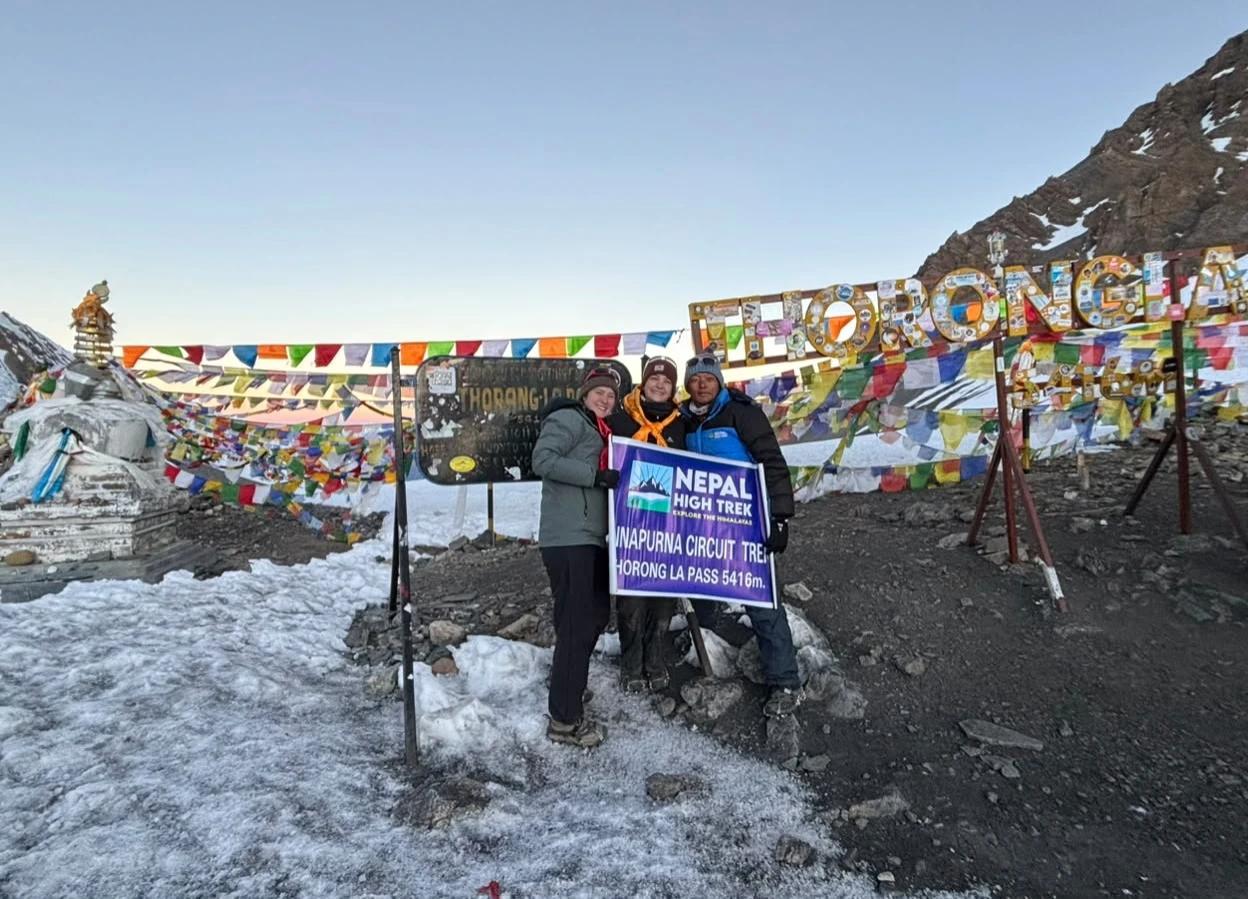
Few journeys in the Himalaya reward a trekker as generously as the Annapurna Circuit. Over 10 to 16 days, you walk around the Annapurna Massif in central Nepal, crossing Thorong La Pass (5,416 m / 17,769 ft) and moving from warm, terraced valleys to the dry, Tibetan-influenced plateau of Mustang. We at Nepal High Trek have prepared this guide so that you can plan with confidence.
The route is moderate to strenuous but entirely non-technical. Depending on how much road you choose to skip, it covers roughly 145 to 230 km. Most trekkers begin in Besisahar, or by jeep from Dharapani or Chame, and finish in Jomsom or Pokhara. The most rewarding seasons are March to May and September to November. You will need an Annapurna Conservation Area Permit (ACAP), and your agency will advise on TIMS or e-TIMS registration.
Annapurna Circuit Road Changes and Jeep Options in 2027
Roads now run up the Marshyangdi Valley from Besisahar to Manang, and through the Kali Gandaki Valley from Muktinath to Jomsom and on to Beni. Many of these roads are still dirt tracks. Many trekkers choose to take a jeep through the dusty lower sections, which saves two to four days. The high-altitude heart of the trek, around Manang and Thorong La, remains on foot. Wherever possible, operators follow the New Annapurna Trekking Trails (NATT) to keep walkers off the road.
Nepal has also introduced rules for licensing individual foreign trekkers, along with a digital trekking permit system. The permits section below explains how these work on the trail.
Best Time to Trek the Annapurna Circuit in 2027
The two finest windows are autumn (September to November) and spring (March to May). Conditions are most dependable in October and November and in April, when skies are clear, and Thorong La is at its most reliable. Days at Manang and Thorong Phedi are pleasantly mild in peak season, though nights fall below freezing at both, particularly in autumn.
Autumn (September to November): The most spectacular mountain views, but also the busiest trails and the coldest nights at the pass.
Spring (March to May): A little warmer and greener, with rhododendrons in bloom. Afternoon haze can soften the views, and early March may bring some snow.
We suggest booking teahouses, guides, and Jomsom flights well ahead in either season, especially for October and April.
Beyond the peak seasons: winter (December to February) and monsoon (June to August). Heavy snow in January and February can close Thorong La for several days, and group leaders adapt the plan when that happens. During the monsoon, the lower valleys see rain and landslides, while Upper Manang is drier. Experienced trekkers who prefer quieter trails may find this appealing.
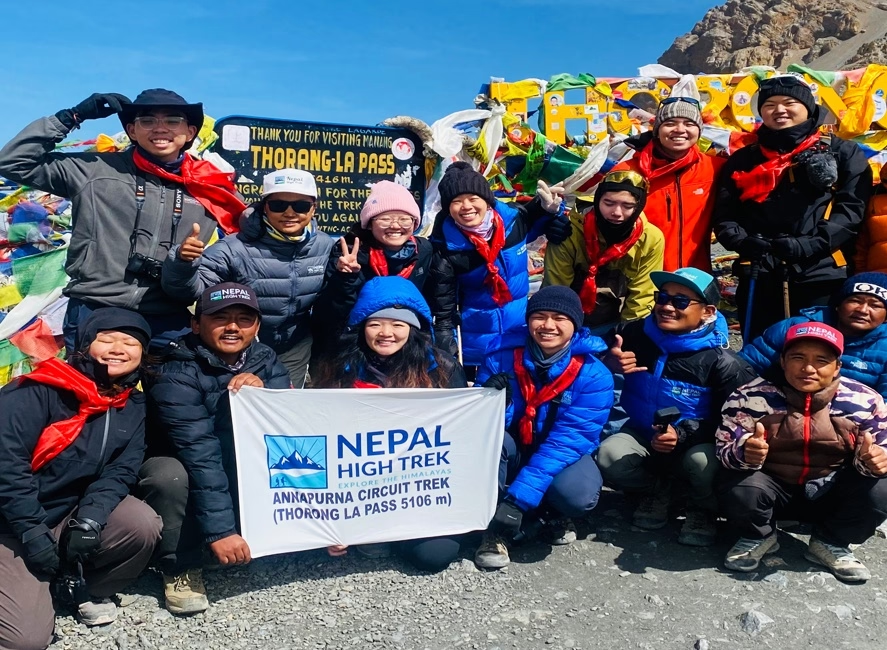
Annapurna Circuit Trek: Explore the world’s longest Thorong La Pass
View detailsAnnapurna Circuit Permits 2027: ACAP, TIMS and Fees
Every foreign visitor needs the ACAP. Fees are commonly quoted as NPR 3,000 for foreign nationals and NPR 1,000 for SAARC nationals, and some operators quote about NPR 3,390 with 13% VAT included. The permit is valid for a single entry, so leaving the conservation area and returning requires a new one. You can obtain it in Kathmandu or Pokhara, usually through your agency.
Guidance on TIMS has varied. In 2023, TIMS was dropped on most Annapurna routes, and checkpoints verify only the ACAP. Other sources state that it is still required and is now issued digitally by agencies at NPR 3,000 per person and NPR 1,000 per agency or group. When booking, please ask your agency exactly which documents it is arranging for you.
Can You Trek the Annapurna Circuit Without a Guide in 2027?
Officially, no. Since April 2023, Nepal has required foreign trekkers to be accompanied by a licensed guide. In practice, one report notes that enforcement on the most popular open routes remained limited as of early 2026. The restricted areas of Upper Mustang and Manaslu are different: a March 2026 change permits solo trekkers to enter them together with a licensed guide from a registered agency.
Above 5,000 m, we strongly recommend a guide. A good guide recognizes the early signs of altitude sickness, knows when to turn back on an icy or snow-covered pass, secures teahouse beds in peak season, and can organize an evacuation. Trekking through a registered agency also keeps your permits and registrations in order.
How Much Does the Annapurna Circuit Trek Cost in 2027?
A 14-day guided Annapurna Circuit Trek in Nepal typically costs about US$ 9,000 to US$ 1,900 per person, excluding international flights. Budget packages start near US$1,200. Arranging everything independently may cost less, though it asks more of your time and planning.
Nepal High Trek 2026/27: 14-day guided Annapurna Circuit Trek.
Item | Typical market range | Nepal High Trek 2026/27 rate |
Permits (ACAP, TIMS) | NPR 3,000 for foreign nationals, NPR 1,000 for SAARC nationals, and NPR 100 for Nepali citizens | NPR 3,000 for foreign nationals, NPR 1,000 for SAARC nationals, and NPR 100 for Nepali citizens |
Licensed guide | USD 25 to USD 60 | USD 30 |
Porter (shared by two trekkers) | USD 15 to USD 30 | USD 20 |
Teahouse room | USD 5 per night (cheapest when you also eat at the lodge) | Included |
Meals (dal bhat, tea, snacks) | USD 25 to USD 35 per day, rising with altitude | Included |
Jeep, Besisahar to Dharapani/Chame | USD 100- USD 200 per jeep | Included |
Jomsom to Pokhara | USD 110-USD 150 | Included |
Hidden Costs on the Annapurna Circuit
A few small expenses are easy to overlook. Hot showers, device charging and Wi-Fi cost more above Manang, and boiled or purified drinking water is a daily expense. Tipping is customary, usually 10 to 15 percent of the guide and porter rate, shared fairly across the group. Please make sure your insurance covers helicopter evacuation up to 6,000 m, and set aside an extra night in case a flight is delayed.
Annapurna Circuit Itinerary: 14 Days
The classic direction is anticlockwise. This way, you climb gently up the Marshyangdi side, which helps your body adapt, and then enjoy a long descent to Muktinath rather than a hard climb on the way up. Elevations are approximate.
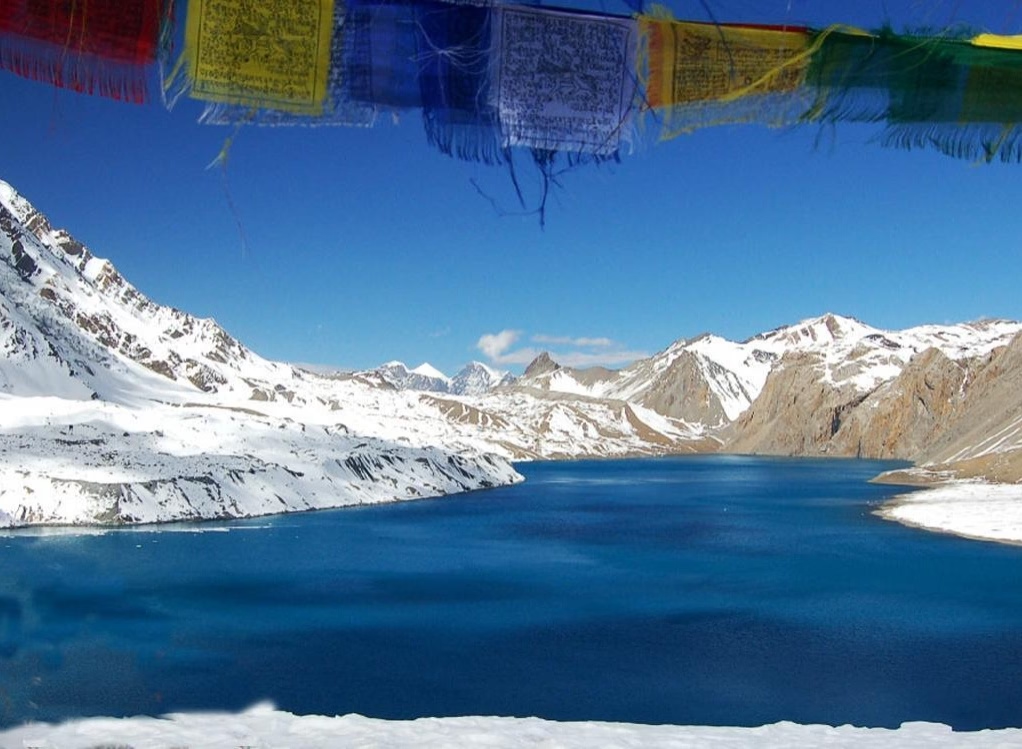
Annapurna Circuit Trek 12 Days
View detailsDay | Route | Time/notes | Sleeping altitude |
1 | Kathmandu to Besisahar | 6 to 7 hours by road through the Trishuli and Marshyangdi valleys | 760 m |
2 | Jeep to Dharapani, walk to Bagarchhap | 2 to 3 hours walking; first chortens and mountain views | about 2,160 m |
3 | Bagarchhap to Chame | 5 to 6 hours through pine forest; Chame is the Manang district headquarters | 2,670 m |
4 | Chame to Pisang | 5 to 6 hours beneath the Paungda Danda rock wall | 3,300 m |
5 | Pisang to Manang via Upper Pisang and Ngawal | 5 to 7 hours on the high road with Annapurna panoramas | 3,540 m |
6 | Acclimatisation day in Manang | 3 to 4-hour side hike to Ice Lake or Gangapurna Lake, then sleep at 3,540 m | 3,540 m |
7 | Manang to Yak Kharka | 3 to 4 hours through alpine meadows with grazing yaks | 4,050 m |
8 | Yak Kharka to Thorong Phedi | 3 to 4 hours; early night before the pass | 4,450 m |
9 | Thorong Phedi over Thorong La to Muktinath | 9 to 12 hours; descend about 1,600 m | 3,800 m |
10 | Muktinath to Jomsom via Kagbeni | 5 to 6 hours into the Mustang desert, Kali Gandaki valley | 2,720 m |
11 | Jeep to Tatopani | Welcome hot springs | 1,190 m |
12 | Drive to Pokhara | Road journey | about 820 m |
13 | Weather and flight contingency day | Buffer for delays | n/a |
14 | Return to Kathmandu | By road or air | n/a |
Please treat the Manang acclimatisation day as essential, not optional. It is among the best protections against altitude sickness, and its side hike follows the proven "climb high, sleep low" principle.
Best Side Trips: Tilicho Lake and Poon Hill
If time allows, add two to three days from Manang to reach Tilicho Lake (4,919 m), one of the highest lakes in the world. The trail is exposed and can be disrupted by weather and landslides. Poon Hill (3,210 m), reached from Tatopani via Ghorepani, adds two to three days and rewards you with a classic sunrise over Dhaulagiri and Annapurna.
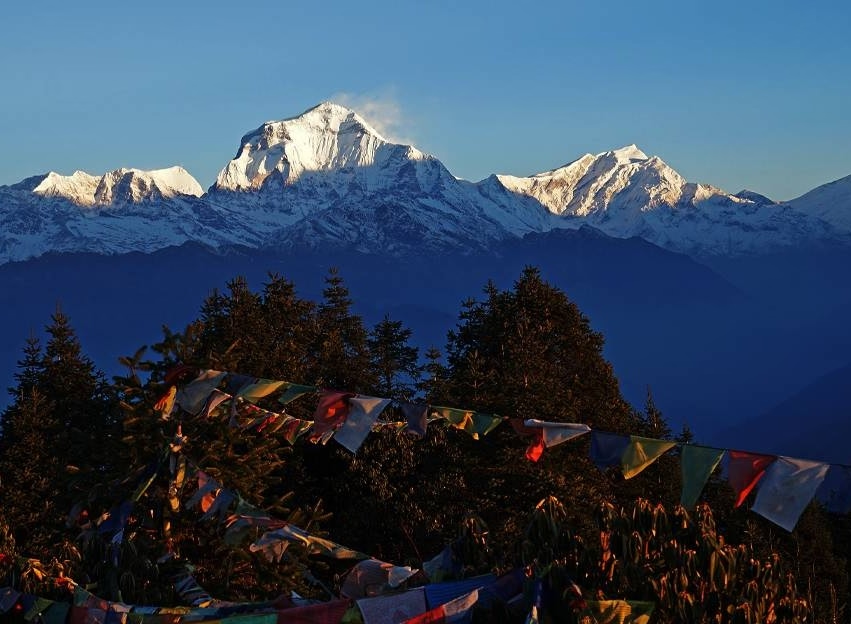
Ghorepani Poon Hill Trek: Poon Hill Trek 4 Days From Pokhara
View detailsHow Difficult Is the Annapurna Circuit, and How Should You Prepare?
The trek is moderate to strenuous. It needs no technical skill, but the high altitude and the long, steep descent from Thorong La to Muktinath are demanding. With steady preparation, however, it is well within reach of a determined, fit trekker.
An 8 to 12-week training plan works well:
Three to four aerobic sessions a week of 60 to 90 minutes (running, cycling or hiking).
Stair or incline work with a load, once or twice a week.
Two long weekend hikes with a 6 to 8 kg daypack.
Quad and knee strengthening, which helps greatly on the descent.
How to Prevent Altitude Sickness on Thorong La
Follow the "climb high, sleep low" principle, and gain only a moderate amount of sleeping altitude each night above 3,000 m. Drink about 3 to 4 liters of fluid a day; your urine should stay pale and frequent. Learn the early symptoms: headache, nausea, dizziness, poor sleep and unusual fatigue. If symptoms worsen, descend. Please also discuss acetazolamide (Diamox) with your doctor before you travel.
Your travel insurance must cover emergency helicopter evacuation up to 6,000 m. Stay flexible on pass day, as weather may hold trekkers in place. During one extreme weather event, hundreds of trekkers had to end their treks early, and many were airlifted from Manang and Mustang.
Annapurna Circuit Packing List: Cold-Weather Essentials
Layers: moisture-wicking base layers, a fleece, a windproof shell, and a down jacket rated to about -15°C.
Footwear: broken-in waterproof boots, micro spikes for icy mornings on the pass, and sandals for the teahouse.
Sleeping bag: rated to -10°C to -15°C, as teahouse blankets are not sufficient at Thorong Phedi.
Water purification: tablets, a pump, or a filter.
Other: UV sunglasses, sun hat, warm hat and gloves, headlamp, power bank, and two passport photos for permits.
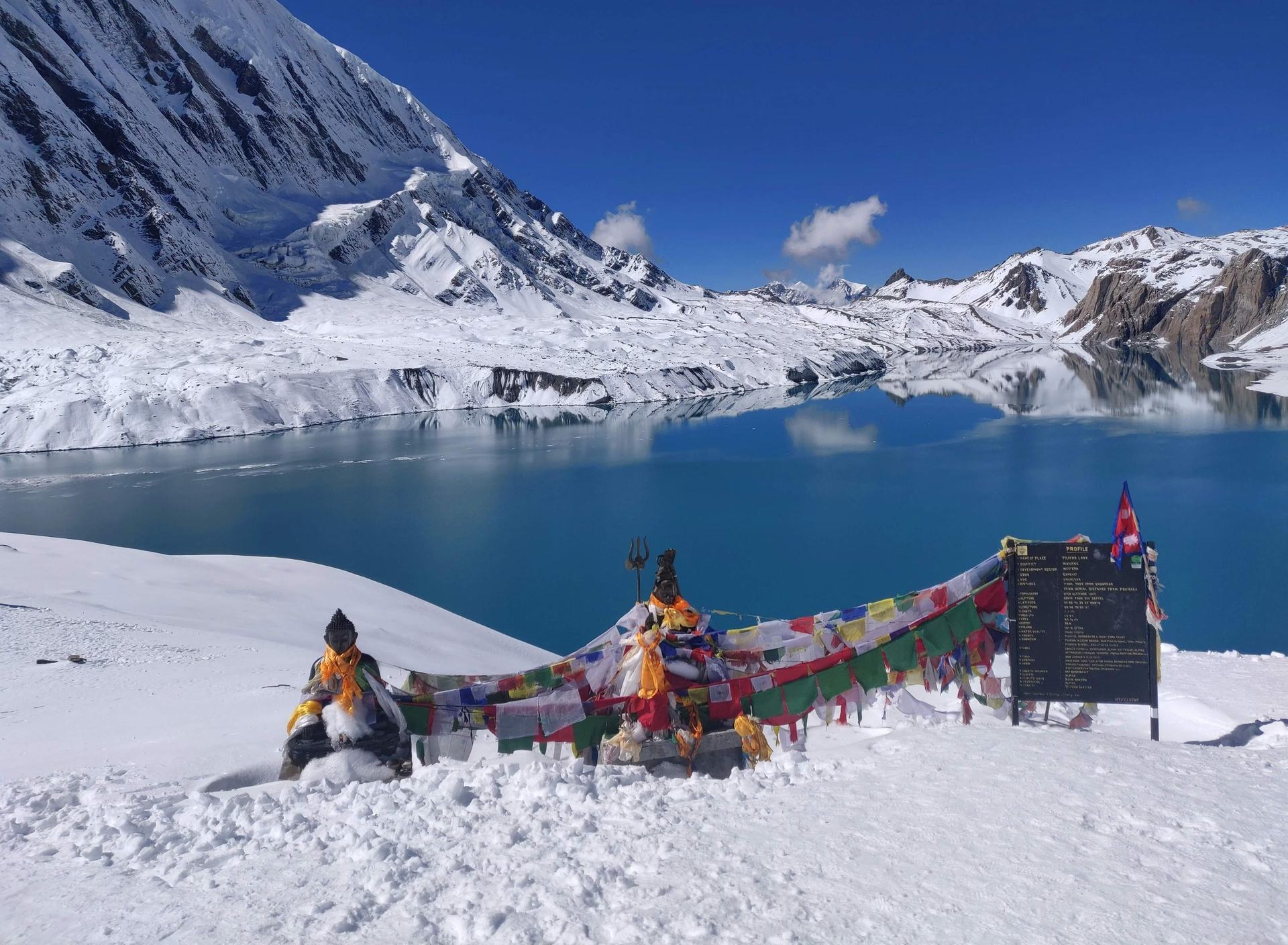
Tilicho Lake Trek
View detailsWhy Choose Nepal High Trek for the Annapurna Circuit Trek 2027?
Nepal High Trek is committed to making your Annapurna Circuit journey safe, memorable, and well organized. Our licensed guides are trained to recognize early signs of altitude sickness and make careful decisions on Thorong La. We arrange your ACAP and TIMS documents so that you can focus on the trail. Our itinerary includes an essential acclimatization day at Manang and a built-in contingency day for weather or flight delays. Pricing is transparent, with clear inclusions and exclusions. Whether you are a fit first-timer or an experienced trekker, we welcome you warmly and look forward to guiding you across the pass.
Conclusion: Begin Your Annapurna Circuit Journey with Confidence
The Annapurna Circuit is one of Nepal's most rewarding treks. It offers changing landscapes, warm local hospitality, and the unforgettable crossing of Thorong La at 5,416 m. With sound preparation, a proper acclimatization plan, the correct permits, and the support of an experienced licensed guide, this journey is well within reach of a determined, fit trekker. Choose your season wisely, train steadily, and keep your plans flexible for weather. When you are ready to take the first step, Nepal High Trek would be honored to guide you. Please contact us to plan your 2027 Annapurna Circuit adventure.
Frequently asked

Nepal High Trek
Travel writer and passionate explorer sharing stories and expert guides from the heart of the Himalaya.