

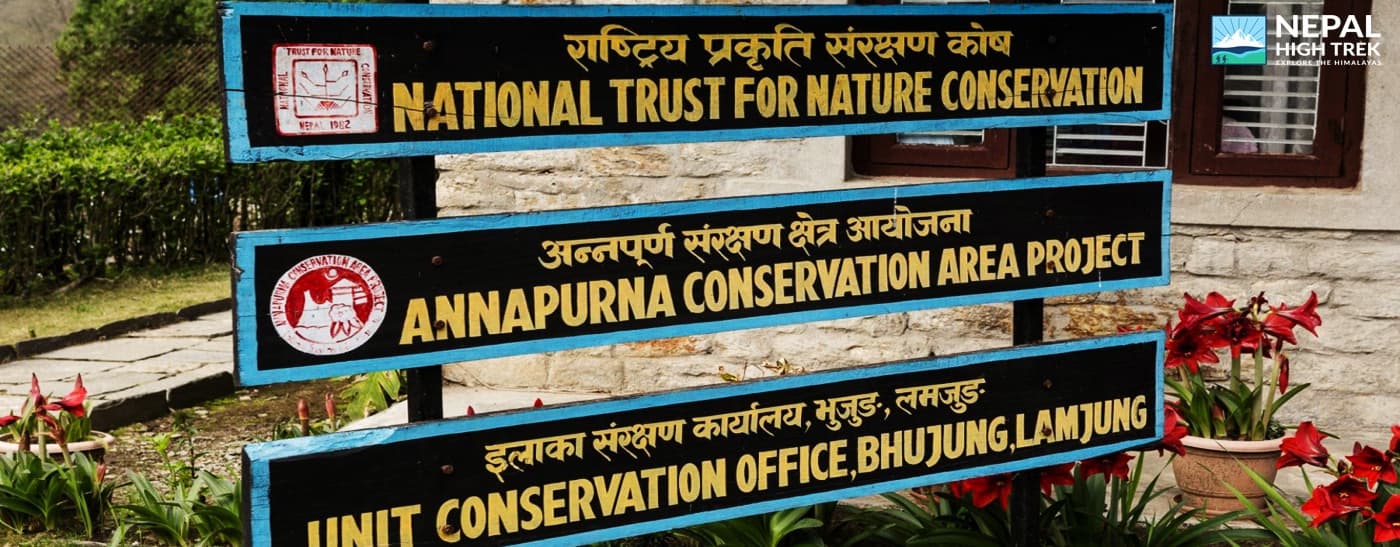
Nepal is proving to the world in the field of natural and cultural conservation. The unique model of people participation in conservation activities has seen remarkable success in the preservation of wildlife, vegetation, and cultural heritages. There are many national parks, wildlife reserves, conservation area, and heritage sites. Today’s blog is about the Annapurna Conservation Area of Nepal. As a trekking blogger of the best trekking company, the Nepal High Trek, it is important to share information about Nepal’s biggest conservation area. Note down that there are many trekking trails and tourist destinations inside the area.
Let’s find out about the Annapurna Conservation Area and learn about various trekking trails inside the region.
What Is the Annapurna Conservation Area? History and Establishment of the Annapurna Conservation
The largest undertaking of the National Trust for Nature Conservation is the Annapurna Conservation Area. The Nepal government launched the conservation area in 1986 with motto to preserve the rich bio – diversity of this amazing place. Besides the biological diversity, the region is equally diverse in cultural aspect. The main goal of the ACA is to achieve sustained balance between nature conservation and socio – economic improvement in the area assisting the NTNC (National Trust for Nature Conservation) in achieving the goal.
The objectives of ACAP under NTNC are to conserve natural resources for sustainability, to bring long term social and economical development of locals, and to develop tourism with minimum impact on nature, socio – cultural, and economic activities.
Where Is the Annapurna Conservation Located? Size and Geographic Coverage of the Conservation Area
The conservation area covers areas of Manang, Kaski, Myagdi, Mustang, and Lamjung districts of Nepal. The protected area spans around 7629 sq. kilometers. The lowest point of the conservation area is 790 m and the highest point is the summit of Mount Annapurna I (8091 m). As mentioned above, it is the largest protected area of Nepal and home of countless flora and fauna.
Various landmarks inside the region make it very special. The world’s deepest river gorge, the Kali Gandaki gorge, the world’s highest situated fresh water lake, the Tilicho Lake, and the world’s largest rhododendron forests, Ghorepani, are inside the Annapurna Conservation Area.

Why is the Conservation Area Important for Nepal?
The model of conservation in Nepal is different from other countries. Local people are directly involved in the conservation efforts. Therefore, the result of the combined efforts of government and people have seen lots of changes in the protection of endangered species of animals and vegetation. Similarly, these conservation areas have helped the locals to mobilize their resources and uplift their socio – cultural standards. There are many remote areas in Nepal and people living there are underprivileged. These conservation areas attract visitors and help the locals to earn living. Therefore, conservation areas are very important for Nepal.
The area is a rare treasure house with more than 1226 flowering plants species, more than 105 mammals, more than 40 reptiles, 23 amphibians, and 523 species of birds. The ecosystem is so balanced and one can feel the natural vibes inside the region.
Cultural Diversity and Ethnic Communities: Traditional Villages Within the Conservation Area
Yes, biological diversity of the Annapurna is huge but it is equally rich in cultural diversity. Dominant ethnic groups in the southern part are Gurung and Magar communities. Similarly, in the northern side, Thakali, Manange, and Loba are dominant. Interestingly, these communities have their own language, culture, traditions, and rituals. Besides these indigenous communities, Brahmin, Dalits, and Chhetri are also present in the area. People follow Buddhism, Hinduism, and traditional Tibetan Buddhism. According to the latest census, more than 100,000 people live inside the Annapurna Conservation Area.
Major Trekking Routes Inside Annapurna Conservation
Amazing wonders of Mother Nature and grandeur of multi – ethnic culture inside the ACA made it popular to travelers from across the globe. Tourism industry has been firmly established as one of the major sources of local economy. More than 1000 tea houses or lodges, tea shops, tourist assisting services are present in ACA. Every year, thousands of pilgrims, trekkers, and support crew members visit the region.
Now, let’s talk about major trekking routes inside the Annapurna region of Nepal. Among several trekking routes, there are few which are now the commercial trails of Nepal. Here is the list of the trekking routes popular in the region:
Mardi Himal Trek
Upper Mustang Trek
Mohare Danda Trek
Khopra Ridge Trek
Nar Phu Valley Trek
Above listed treks are popular among travelers from across the globe. However, there are many treks where you can knit amazing walking holiday. The journey of the Annapurna Circuit is through the diverse landscape. It gives trekkers amazing idea of diverse landscape present in Nepal. Similarly, it also tests your perseverance and endurance as you have to cross over the famous 5106 m Thorong La Pass.
The trip to the foothill of the world’s 10th tallest mountain, Mt. Annapurna, is the Annapurna Base Camp Trek. Explore the authentic villages of Magar and Gurung Communities including largest rhododendron forests during the Mohare Danda and Ghorepani Poon Hill with ABC Trek. Similarly, you can get the tranquil and serene experiences during Khopra Trek and forest environment experiences during Mardi Trek. There’s something for everyone inside the Annapurna Conservation Area.

Best Time to Visit Annapurna Conservation
The region is best to visit throughout a year but it depends upon the destination. High – altitude treks are best when you visit during the months of spring season (March – May) and the months of autumn season (September – November). Some are okay to trek even during winter season (December – February) and monsoon season (June – August).
ACAP Fees for Visitors and Trekkers: Entry Fees and Permit Requirements for Trekkers
The ACAP fees for visitors are different for different nationalities. Foreign visitors have to pay NRs. 3000 whereas the SAARC nationals have to pay NRs. 1500. Nepalese visitors may have to pay minimal fee in some areas inside the Annapurna Conservation Area.
Nepal High Trek urges to the world about threat of Climate Change
The threat of climate change is real. Nepal is suffering a lot from this phenomenon than other countries even if we are not the guilty party. Our Himalayas are depleting and glaciers are melting. Flash floods, avalanches, forests fire, soil erosion, etc. are affecting our places. Conservation areas in Nepal are helping to preserve natural resources for younger generations but we can’t do it alone.
Raise the voice now about global warming and climate change. Nowadays, most of the mountains look like a black rock due to snow melting. Climate is unusual and unpredictable. Therefore, we must preserve the ecosystem inside the conservation area and in other places. Make sure to follow guidelines when you are trekking or touring inside the Annapurna Conservation Area.
Nepal High Trek
Travel writer and passionate explorer sharing stories and expert guides from the heart of the Himalaya.