
- Duration
- 8 days
- Difficulty
- Moderate
- Max Altitude
- 4130m
- Destination
- Nepal
- Activity
- Trekking
- Accommodation
- Trek Lodges
- Group Size
- 1
- Transport
- Drive
- Meals
- B.D.L.
- Season
- September - December & February to June
Trip highlights
Trek to the spectacular Annapurna Base Camp (4,130 m) at an affordable cost.
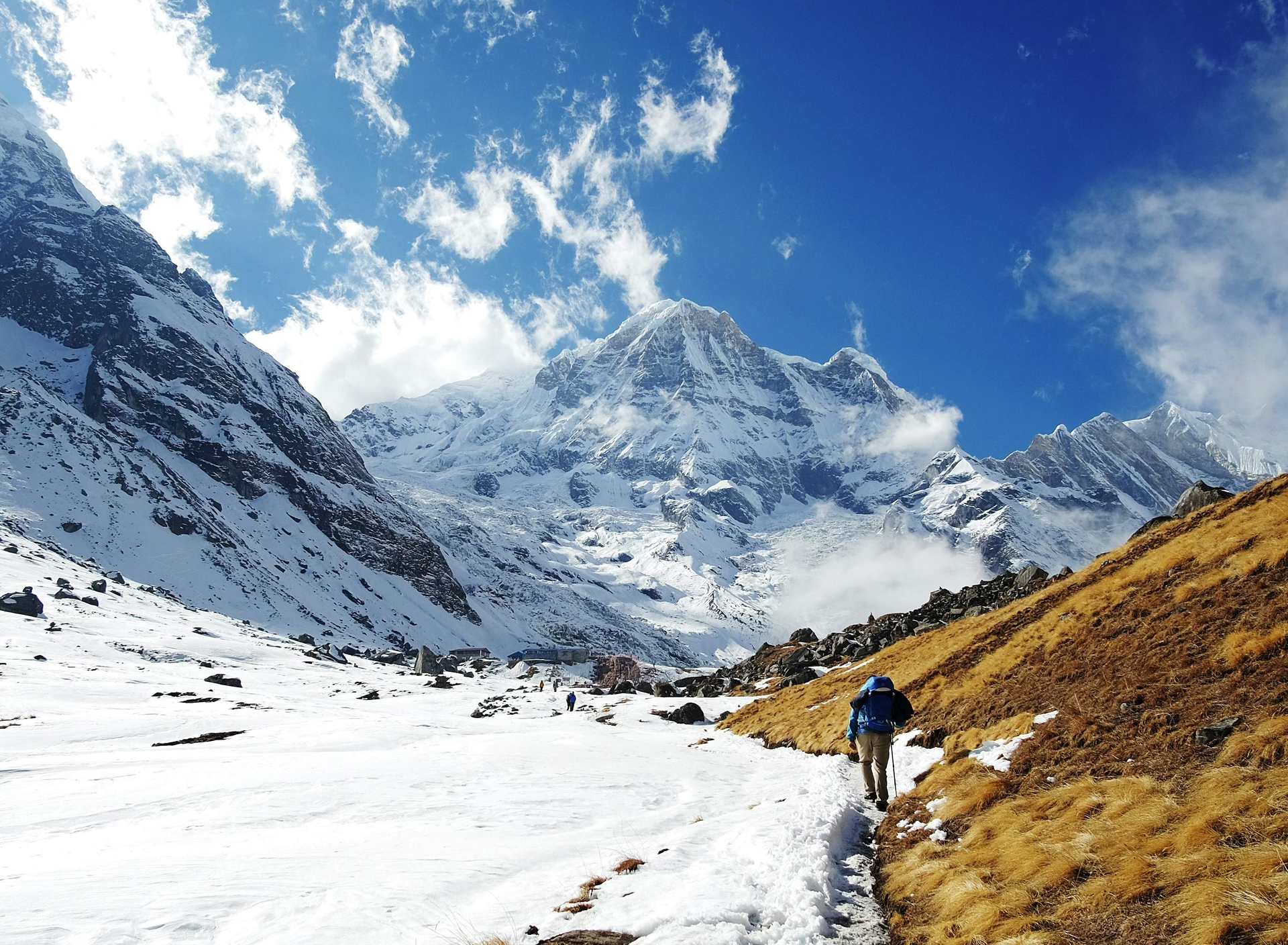
Enjoy breathtaking views of Annapurna I (8,091 m), Machhapuchhre, Hiunchuli, Annapurna South, and Gangapurna.
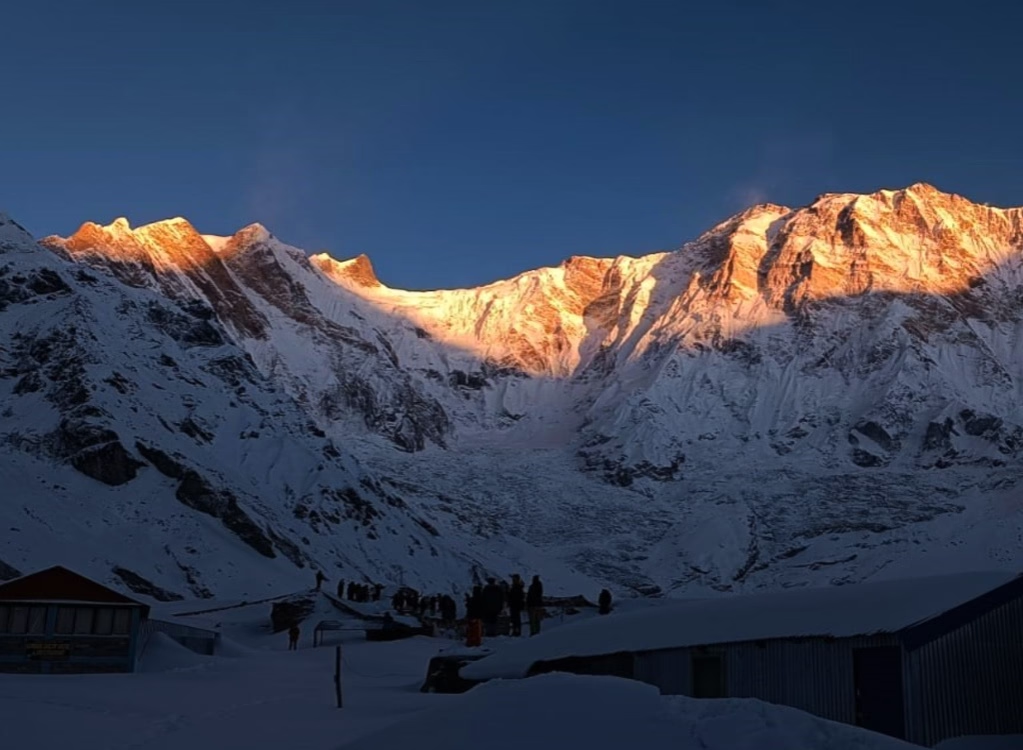
Experience sunrise and panoramic Himalayan scenery from the heart of the Annapurna Sanctuary.
Walk through beautiful rhododendron and bamboo forests, terraced farmland, and mountain valleys.
Explore traditional Gurung and Magar villages and experience authentic local culture and hospitality.
Stay in comfortable local teahouses and mountain lodges, helping keep the trek budget-friendly.
Trip overview
Look, getting into the heart of the Himalayas shouldn’t drain your savings. It just shouldn't. Traveling must be accessible to all kinds of travelers. Some travelers love to travel the world but they may wish to do in the backpacking style on limited budget. With Nepal High Trek, we built this trip to slice out the fat. You get the staggering peaks, the sweaty climbs, and the cozy teahouse vibe without the massive price tag. Ready to walk? It’s gritty, completely authentic, and surprisingly affordable. Contact our travel planners to embark on the amazing journey of the Annapurna Base Camp Budget Trek. Let’s reach the foothill of the world’s 10th tallest mountain, Mount Annapurna in a limited budget or smart budget!
So, what's the actual deal here? Basically, it’s the legendary Sanctuary route engineered for everyday wallets. We handle the annoying logistics like permits, beds, local buses but skip the fancy things that covers the luxury trekking packages. You'll eat massive plates of local rice and sleep in simple wooden rooms. Please note that you will be sleeping in tea houses available in the overnight places. We walk the exact same rocky paths as folks paying triple the price. Honestly, it’s just us and the mountains. Pure, unfiltered adventure that actually respects your bank account. Backpacking wish and the Annapurna Base Camp Budget Trek matches perfectly. So, contact the travel planners of the Nepal High Trek today to secure your seat. Do it!
Annapurna Base Camp Budget Trek Highlights
Standing directly under the South Face of Annapurna is mind-blowing. It really is. But the lead-up is just as wild. We’ll wander through moody, mist-soaked rhododendron forests and soak our aching legs in the Jhinu Danda hot springs. Catching the sunrise at Poon Hill? That golden light hitting the mountain range is something you won't ever forget. Plus, we usually spot monkeys in the lower jungles before hitting the icy alpine zones.
Why Choose a Budget Annapurna Base Camp Trek?
Why rough it a bit? Because throwing ridiculous money at a mountain mostly insulates you from the real Nepal. Saving cash means we get to rub elbows with local trekkers around a smoky dining room stove. That shared suffering and laughter over hot ginger tea? You absolutely cannot buy that in a VIP suite. Besides, keeping things cheap means we can travel longer. Just embrace the dirtbag simplicity. It’s way more fun anyway.
Annapurna Base Camp Trek Budget Cost
Let’s talk numbers. Our Nepal High Trek budget package usually runs somewhere between $550 and $750. Sounds crazy cheap, right? That covers essential road transport, three square meals a day on the trail, teahouse beds, and a licensed guide to keep us alive. Here's the catch, though. It doesn't cover your Kathmandu bar tabs, hot bucket showers, or trailside Wi-Fi. We definitely need a stash of rupees for those little luxuries.
Annapurna Base Camp Trek Route and Distance
We cover roughly 110 kilometers round trip. That sounds like a long haul. But remember, we break this down over a week and a half. Starting from the sweaty foothills near Pokhara, we grind up thousands of stone steps through Ulleri. From there, it’s a steady push higher into the freezing gorge leading into the Sanctuary itself. The descent? Blindingly fast. Just watch your knees on those steep downhill stairs.
Best Time for Budget ABC Trek
Want to score the best deals? Timing is literally everything. Spring and Autumn are gorgeous, sure, but they are packed tight and pricey. If we gamble on the shoulder months—think late February or early December—we save serious cash. Yeah, it’ll be incredibly cold at night. The trade-off? Empty trails, cheap rooms, and absolute silence in the sanctuary. Monsoon season is insanely cheap, but walking through leech-infested mud isn't worth the discount.
Annapurna Base Camp Trek Difficulty
Is it a technical alpine climb? Not at all. We don't need ropes or crampons. But is it tough? Hell yes. It’s a relentless, sweaty grind up thousands of uneven stone steps. We walk up to seven hours a day on unforgiving terrain. The budget style means we recover in a basic bed, making the fatigue stack up quickly. Mental stubbornness matters way more than how fast you run at sea level.
Accommodation During the Budget ABC Trek
Don't expect soft mints on your pillow. The teahouses are basic, functional, and mostly slapped together with stone and plywood. Down low, we might snag a private bathroom. Higher up? It’s twin beds, thin blankets, and a shared squat toilet down a freezing hallway. Honestly, the communal dining rooms are fantastic, though. We all huddle around the central heater to thaw out. After walking all day, a hard mattress feels like absolute heaven.
Meals on the Annapurna Base Camp Trek Budget Package
We are going to eat a staggering amount of Dal Bhat. Lentils, rice, curries—and they give endless refills. Our budget package covers three meals daily, so we just order off the local menus. Breakfast is usually porridge or Tibetan bread. Dinner might be a massive plate of greasy fried noodles. Now, about meat. Everything is carried up by porters, so skip the chicken once we get high up. Stick strictly to the vegetarian stuff.
Guide and Porter Services for a Budget ABC Trek
Even on a tight budget, walking solo is a massive gamble. We pair up with a local guide who knows every bizarre cloud pattern and lodge owner. They keep us safe. As for porters? A pure budget run means we carry our own backpacks. It’s tough work. If we realize halfway up we’ve made a terrible mistake, we can usually hire a porter on the fly. Better start doing some heavy squats now.
Altitude and Acclimatization on the ABC Trek
The air up in the sanctuary is pretty thin, though not as bad as Everest. We cap out around 4,130 meters at Base Camp. Still, altitude sickness hits randomly. We deliberately walk incredibly slow to let our red blood cells adjust. Drink massive amounts of water. If your head starts pounding like a cheap drum, say something immediately. Hiding a headache is just asking for a miserable, dangerous night. We can always descend.
Annapurna Base Camp Trek Transportation Option for Budget Package
Domestic flights are fast, but they destroy a budget instantly. To keep prices low, we stick to the roads. From Kathmandu, we jump on a tourist bus to Pokhara. It’s a bumpy, dusty, seven-hour ride that actually lets us see the countryside. From Pokhara, we cram into a shared jeep or local bus to hit the actual trailhead. It’s definitely not glamorous. But honestly, it’s part of the raw Nepalese adventure.
How to Prepare for the Annapurna Base Camp Budget Trek?
Start training months before we fly out. Seriously. Throw some heavy books in a backpack and find the biggest hills around. Walk up until your legs shake. Since we're going budget, pack a ridiculously warm sleeping bag because teahouse blankets just won't cut it. Bring a stash of wet wipes and a huge power bank. Break in those hiking boots early. Bleeding heels on day two will absolutely ruin the whole week.
Who Can Join the Annapurna Base Camp Budget Trek?
Almost anyone with stubborn determination. You don’t need an alpine resume to do this with us. We take total beginners up there constantly. But beginner doesn't mean lazy. We still have to be fit enough to endure long, painful days on steep stairs. If we have solid cardio, broken-in boots, and a good sense of humor when things get a little gritty, we belong here. We just set the pace and keep walking.
Our main objective behind the Annapurna Base Camp Budget Trek is to make sure that you get what you pay! Your budget will be our key focus while knitting the package. Note down that we are the most reliable trekking company of Nepal and we will ensure that services and hospitality remain the same whichever package you buy from us.
Itinerary
Itinerary at a glance
| Day | Route | Altitude at destination | Walking | Stay | Meals |
|---|---|---|---|---|---|
| 1 | Pokhara → Ulleri Kaski | 2,050 m (6,726 ft) | 6–7 hrs | Guest House | B/L/D |
| 2 | Ulleri → Ghorepani | 2,860 m (9,383 ft) | 5–6 hrs | Guest House | B/L/D |
| 3 | Ghorepani → Chuile | 3,210 m (10,531 ft) | 6–7 hrs | Guest House | B/L/D |
| 4 | Chuile → Sinuwa | 2,340 m (7,677 ft) | 6–7 hrs | Guest House | B/L/D |
| 5 | Sinuwa → Deurali | 3,200 m (10,499 ft) | 7–8 hrs | Guest House | B/L/D |
| 6 | Deurali → Annapurna Base Camp | 4,130 m (13,550 ft) | 4–5 hrs | Guest House | B/L/D |
| 7 | Annapurna Base Camp → Upper Sinuwa | 2,340 m (7,677 ft) | 7–8 hrs | Guest House | B/L/D |
| 8 | Upper Sinuwa → Jhinu/Pokhara | — | 6–7 hrs | — | B/L |
Day 1:DAY 01: DRIVE TO NAYAPUL AND TREK TO ULLERI (2050M.)
You will be picked up from your hotel in Lakeside Pokhara or anywhere in Pokhara. Trekking guide will introduce you with the travel crew members and we get to know each other before the trek. We will drive to Nayapul and start our trek. After walking for about 30 minutes to 45 minutes, we will reach Birethanti where our permits will be checked. The trail until we reach Tikhedhunga is on the dirt track road along the banks of river. There are terraced farmlands and lush green forests along the way. Our lunch will be served in Tikhedhunga and continue the trek. From Tikhedhunga after crossing the suspension bridge, we will be walking steep uphill through uneven stone trails all the way to Ulleri Village. There are two Ulleri villages, upper and lower. We will spend overnight in Ulleri and end the first day of the trek. Overnight in a tea house
- 02
Day 2:DAY 02: TREK TO GHOREPANI (2860M) 5/6 HOURS
Early in the morning, we will wake up and enjoy the first morning view of Mount Annapurna South and Hiunchuli. You can do morning exercises or yoga – meditation overlooking the lofty mountain peak and green lush hills! After breakfast, we will continue our journey to Ghorepani! On the way to Ghorepani, we will walk through green lush forests listening to the chirping sound of birds and whistling sound of smaller streams along the way. Our lunch will be in Banthanti which is the small lunch – stop place in this trekking route. After lunch, we will continue our uphill trek all the way to Ghorepani. Permits will be checked once again and we will check in to our tea house. If weather is clear, we will enjoy breathtaking scenery of mountains from Annapurna, Dhaulagiri, and Machhapuchhre Himalayan ranges. Overnight in a tea house.
- 03
Day 3:DAY 03: CLIMB TO POON HILL (3210 M) AND TREK TO CHUILE (2430M) 6-7 HOURS
Early in the morning, we will wake up around 4 am according to the morning sunrise timing. We will walk uphill through green lush forests on stone paved staircase trail all the way to the top of Poon Hill. After walking for about 45 minutes to one hour, we will reach the top and wait for the sun to rise. Once the sun rises near the Machhapuchhre Mountain, the entire scenery looks golden and amazing. We will relish the scenery of mountains from Dhaulagiri to Machhapuchhre including Annapurna series and few smaller mountains. We will take pictures and enjoy our sunrise experiences before trekking downhill to Ghorepani for breakfast. Our trek begins after breakfast and we will continue our journey to Chuile. On the way, we will have lunch either in Nangethati or in Tadapani village. The trail is uphill until the top of the Gurung Hill and then complete downhill all the way to Chuile. Overnight in a tea house
- 04
Day 4:DAY 04: TREK TO SINUWA (2340M) 6-7 HOURS
Finally, we will enter the actual Annapurna Base Camp Trek route. Early in the morning, we will start our trek after breakfast and continue our journey to Sinuwa. At first, we will trek downhill to river and continue uphill trek to Chhomrung. Lunch will be served in Chhomrung and then continue the trail to Sinuwa. The trail is gentle and gradual Nepalese flat trail through narrow river gorge valley. There are few uphill sections as well as flat trail sections. We will maintain the uniform pace to walk through the stone staircase trail all the way to Sinuwa. Overnight in a tea house
- 05
Day 5:DAY 05: TREK TO DEURALI (3200M.) 6-7 HOURS
As usual, we will start the trek after breakfast and continue our journey to Deurali. Today’s trek is slightly difficult due to uphill sections through dense forests. Along the way, we will have lunch and continue walking through the narrow valley of river guarded by two gigantic hills. Once we are in Deurali, we will rest inside the tea house for our epic day tomorrow to reach the Annapurna Base Camp. Overnight in a tea house
- 06
Day 6:DAY 06: TREK TO ANNAPURNA BASE CAMP (ABC) (4130M) 5HOURS
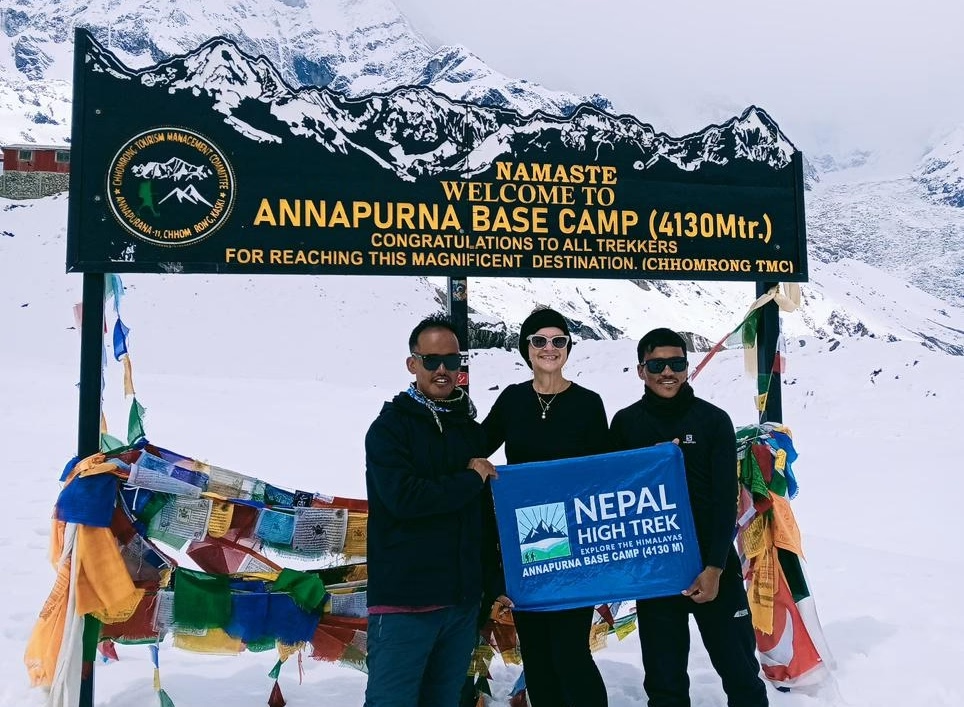
Early in the morning after breakfast, we will start the trekking. The landscape on this day is completely different than other days in our Annapurna Base Camp Trek journey. We will start the trek with short uphill hike until we reach the river. The trail is rugged and full of big boulders and rocks. As we approach Machhapuchhre Base Camp, we will start to see towering mountains on all sides. Once we are in the Machhapuchhre Base Camp, we will have our lunch and rest for a while before continuing to the Annapurna Base Camp. The trail is uphill until we reach the ridge top. The sight of the Machhapuchhre Base Camp and the valley looks spectacular from the ridge. We start the gentle Nepalese flat trail trek all the way to Annapurna Base Camp sign board near small pond. Once we are in the base camp, you can stroll around and enjoy the time being in the base camp of the world’s 10th tallest mountain, Mount Annapurna. Overnight in a tea house
- 07
Day 7:DAY 07: TREK TO SINUWA (2340M.) 7-8 HOURS
Early in the morning, we will wake up before sunrise. We will head to a nearby hill top and wait for the sun to rise. The sight of mountains before and after sunrise is spectacularly different. Our walking journey till date becomes worthwhile today with the sense of victory and achievement. After breakfast, we will retrace the same trail back to Sinuwa via Machhapuchhre Base Camp and Deurali Village. Overnight in a tea house
Day 8:DAY 08: TREK TO JHINU DANDA 3 HOURS AND 3 HOURS DRIVE TO POKHARA
We will continue to retrace the same trail back to Jhinu Danda. It takes around 3 to 4 hours to reach Jhinu Danda from Sinuwa. Upon reaching Jhinu Danda, we will hop on the local jeep and travel back to Pokhara. Our trip ends in Pokhara as we will bid farewell with you.
Are you looking to customize the trip itinerary?
If the provided schedule is not suitable for you, we can create a personalized travel arrangement tailored to your preferences and requirements.
Cost breakdown
What's included
Government license holder expert friendly Guide from Pokhara (Included salary, meal, accommodation and insurance)
Trekking permit: ‘Trekkers’ Information Management System (TIMS) and ACAP Permit.
Pokhara to Nayapul by private vehicle and Samrung Khola to Pokhara by sharing a jeep.
7 night good accommodation on the trek.
Medical kit bag.
What's not included
Meals and drinks.
Your Travel and rescue insurance.
Porter fees.
All the expenses in the mountain over than the scheduled itinerary (due to strike, delay or canceled flight)
All the Bar bills and personal expenses (phone call, laundry service, battery recharge, a bottle of water, hot water, and shower.
Tips for guide and porter
.avif&w=1920&q=75)