- Duration
- 12 days
- Difficulty
- Moderate
- Max Altitude
- 5106 m
- Destination
- Nepal
- Activity
- Trekking
- Accommodation
- Hostels & Guesthouses
- Group Size
- 2
- Transport
- Drive
- Meals
- B.D.L.
- Season
- Sep - Dec & Feb- June
- Start / End Point
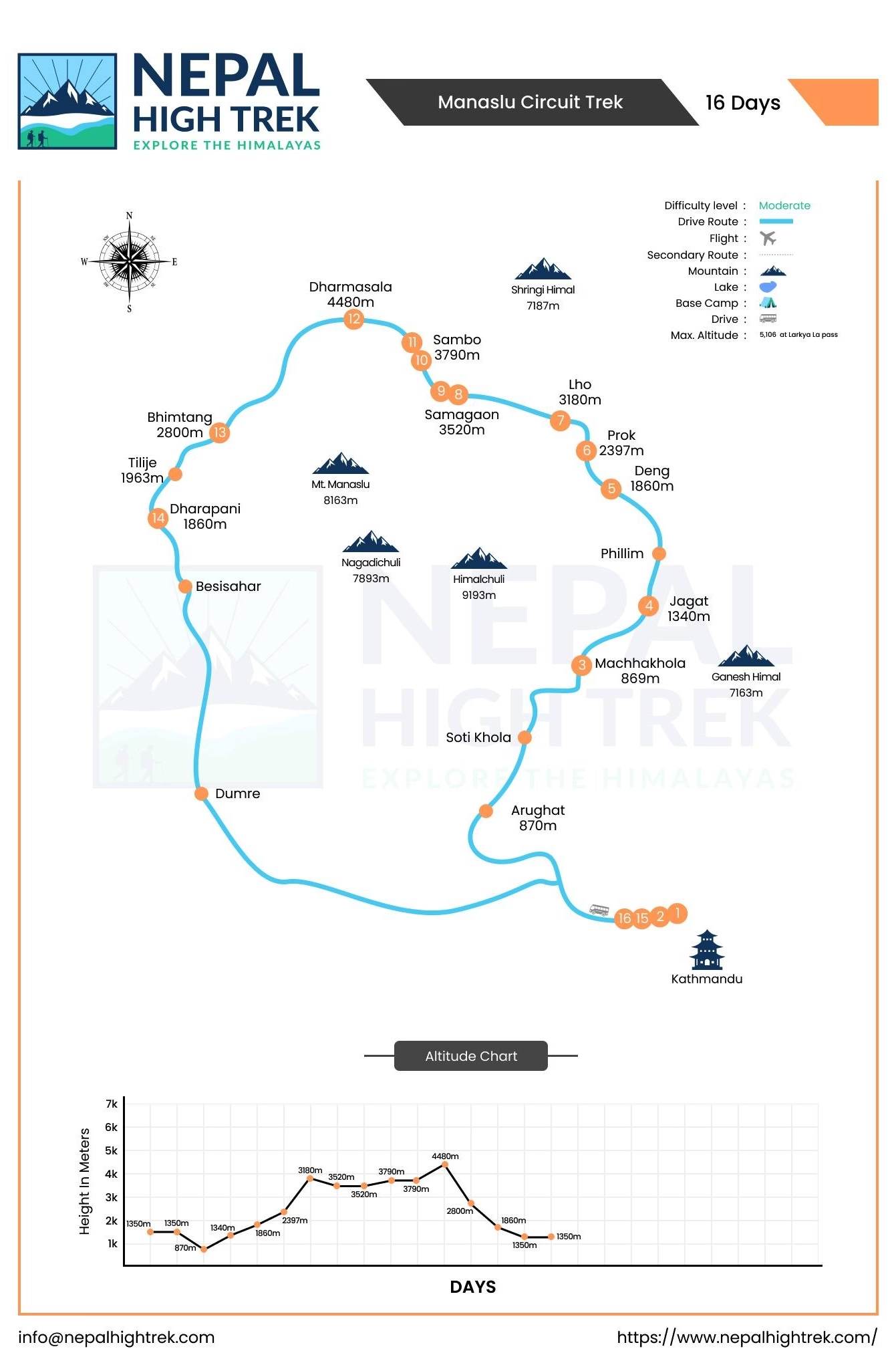
- Machhakhola - Tilje
Trip overview
Nepal is a country blessed by the mountain gods as it has a plethora of Himalayas. The presence of mountains and diverse landscapes has helped trekking activities flourish in this country. There are many popular trekking destinations in Nepal. They are Everest region, Annapurna region, Langtang region, and Manaslu region. These regions have most of the popular trekking routes. Among these routes, the Manaslu Circuit Trekking 12 Days route is the most mystical, serene, attractive and mythical. The trail is inside the Manaslu region in the vicinity of Mt. Manaslu – the eighth tallest mountain in the world. There are numerous monasteries on this trekking trail. These monasteries are the proof that Manaslu Circuit Trek 12 Days trip is not only a natural vista grasping trek but also an immersion of Tibetan Buddhist culture. Therefore, many people love to visit this destination. After the 2015 earthquake, the trail became even more popular. The epicenter of the great 2015 earthquake in Nepal is in the region. Many people noticed the beauty of the region and started to visit this destination either for the tour or for the trek.
Restricted Trekking Region of Nepal
Nepal has enlisted various regions as a restricted trekking region. It is to protect the natural and cultural heritage of these places. These places enlisted under the restricted trekking destinations have their own unique attractions and specialties. The major restricted trekking regions of Nepal are the Upper Mustang region, Manaslu region, Nar Phu Valley, Kanchenjunga region, Upper Dolpo region, etc.
Trekkers planning to trek in the trails of restricted trekking regions of Nepal have to fulfill certain requirements. These trekkers are not allowed to do solo trekking. They must hire a licensed trekking guide and the trekking team must comprise of at least two people. A special immigration permit is required to enter these restricted trekking areas. Apart from the immigration permit, trekkers have to buy the Manaslu Conservation Area Project (MCAP) permit and Annapurna Conservation Area Project (ACAP) permit and Trekkers’ Information Management System (TIMS) permit for trekking. It is really tedious to manage this trek. However, Nepal High Trek can help you skip these hassles and enjoy the trek to the fullest. We have efficient trekking crew members based in offices and mountains and our clients get impeccable hospitality and quality services while they enjoy the majestic mountain bliss.
Suspension Bridges and Multiethnic Villages
Budi Gandaki River is ever present on this trekking route. Trekkers have to cross the river so many times during the trek. Therefore, they will be able to experience the crossing of unique suspension bridges. Crossing the suspension bridges is surreal. The raging white water rapids below and the magnificent landscape offer the best picturesque moments.
During the Manaslu Circuit Trek 12 Days journey, trekkers traverse through diverse villages of multiethnic people. In the early phase of the trekking, trekkers traverse through villages of Brahmins, Chhetris, Dalits, and Magars of the hilly Nepal. Before crossing the Larke La Pass at a high altitude, trekkers traverse through villages of Tibetan Buddhist followers’ community villages. Gurung and Tibetan origin people densely habituate the villages beyond 3000 m altitude. You will be able to witness the culture and traditions of these people. Apart from the cultural experiences, trekkers will be able to witness the changing landscape and vegetation along the way. The early phase comprises of temperate deciduous forests and eventually heads towards the alpine and tundra vegetation.
Samagaon Acclimatization and A Day Hike to Manaslu Base Camp
In high altitude trekking acclimatization is key to success. If you don’t do the proper acclimatization you can get caught by the altitude sickness. Therefore, we recommend you follow our itinerary and follow the instructions of the trekking guide. For the acclimatization in Manaslu Trek 12 Days journey the acclimatization activity is done in Samagaon. This is the last village that has a huge population on this trekking route. The major economic sources of this village are either trekkers or potato farming.
The acclimatization activity includes the hike to Manaslu Base Camp (4800 m). Leave your footprints at the base camp of the world’s 8th tallest mountain Mt. Manaslu. The word Manaslu is derived from the word “Manas” which means spirit. No wonder, you can feel the spirituality during the Manaslu Circuit Trek 12 Days journey. After visiting the Manaslu Base Camp (4800 m) trekkers return back to Samagaon for overnight sleep.
If you wish to do the Manaslu Circuit Trekking 12 Days trip then do this trek in the months of spring and autumn season. During this time of the year, the scenery is clear and the weather is fantastic. You will be able to enjoy the enticing nature of the trekking route and immerse yourself in the fantastic culture of the Manaslu region.
Larke La Pass Crossing 5106 m
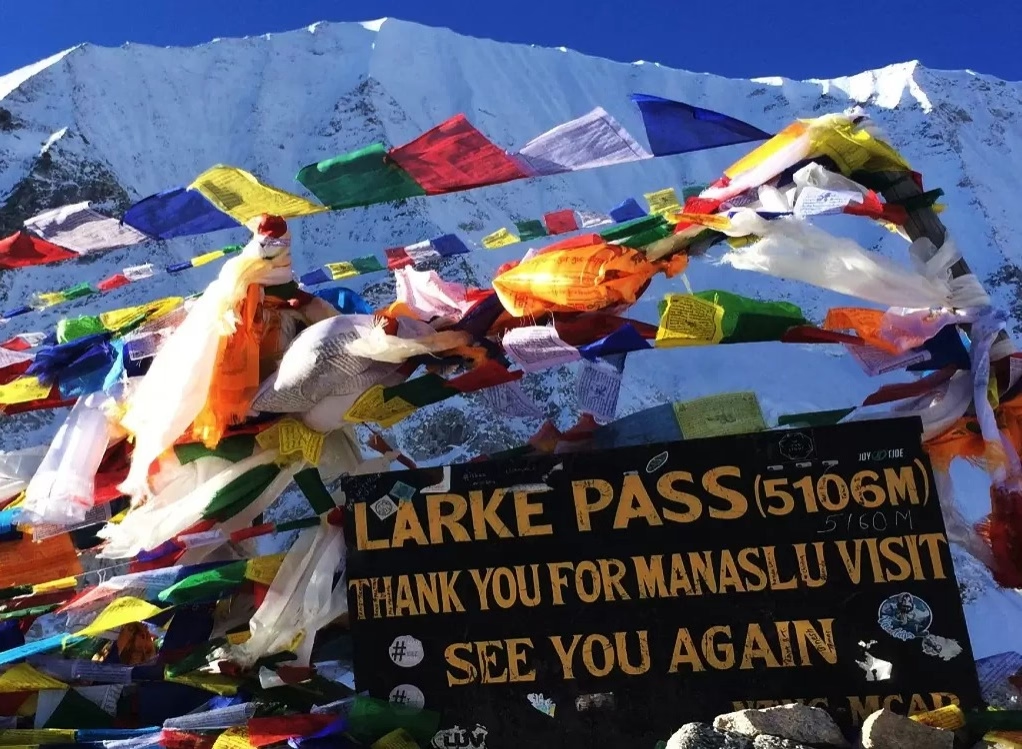
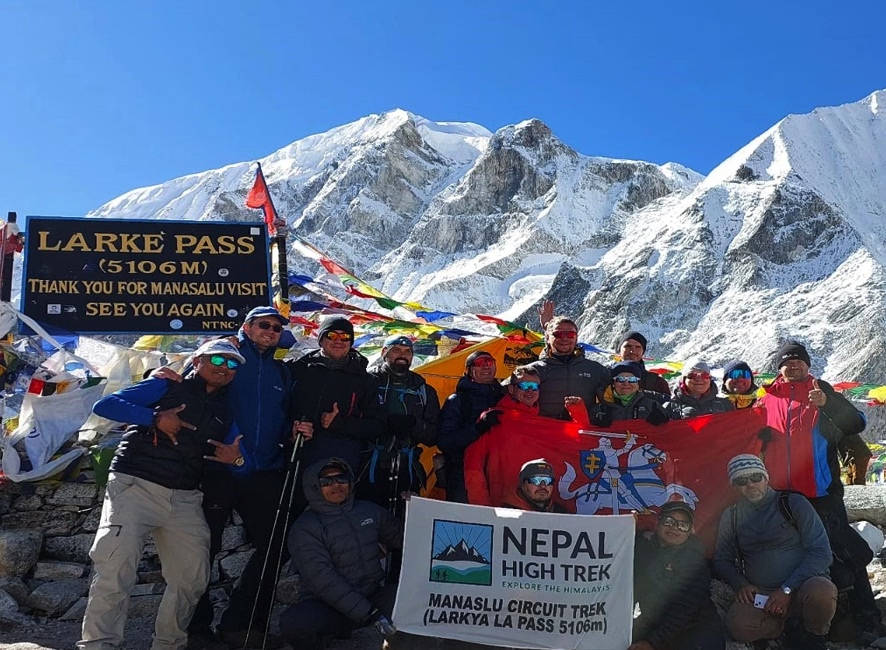
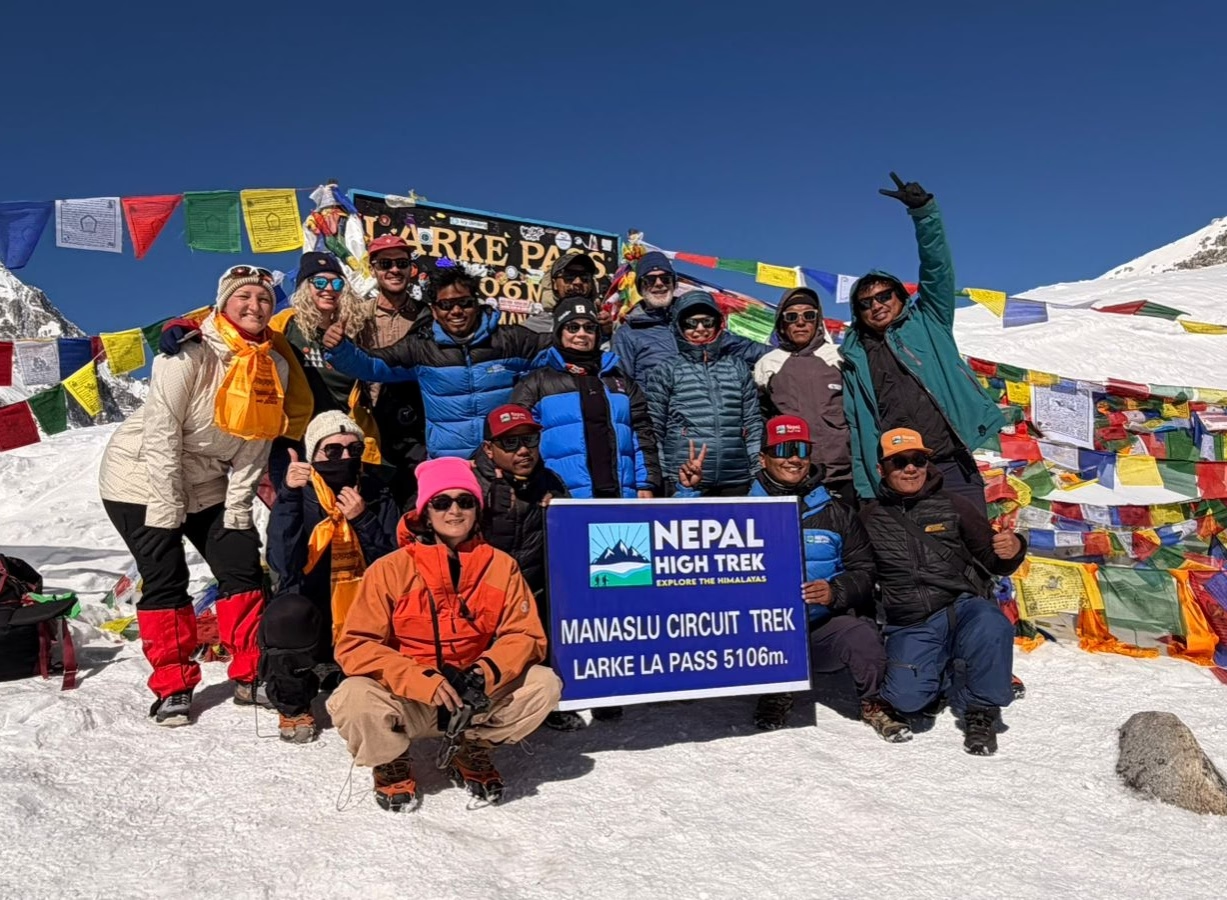
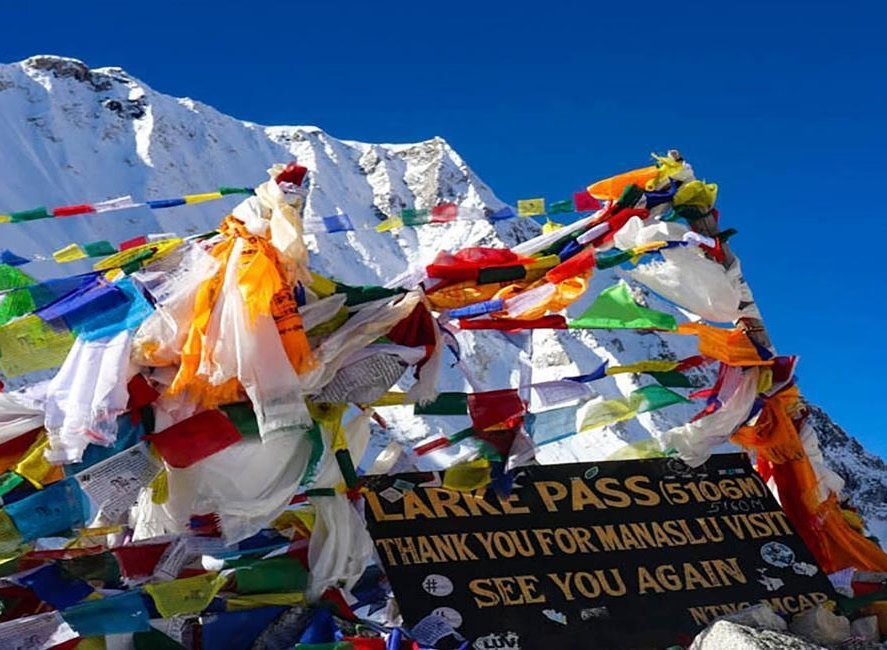
Finally, after two days’ of trekking from Samagaon trekkers cross the Larke La Pass (5106 m). If you have ample time you can visit the vergin Tsum Valley area then head to Manaslu base camp with Larkya La pass. Tsum Valley is an isolated place to soak into hidden Buddhist culture with unbelievable Ganesh Himalayas ranges too. This is one of the highest and longest passes of Nepal. You need to be careful while crossing the pass. It is a physically very demanding trekking pass. However, you get to witness the best Himalayan vistas as far as the Annapurna Himalayan ranges. On the other side of the Larke La Pass (5106 m) trekkers enter the Annapurna region of Nepal Trekking. This is the reason why trekkers have to take the Annapurna Conservation Area Project (ACAP) permit along with the Manaslu Conservation Area Project (MCAP) permit. Trekkers reach Bimthang and eventually to Tilje from where they will reach Besisahar by using a jeep.
Book the Manaslu Circuit Trekking 12 Days with Tsum Valley package with Nepal High Trek and experience the impeccable hospitality and wonders of Mother Nature as well as the grandeur of multiethnic culture in the lap of the Himalayas. Nepal High Trek always sends its best travel planners to various trekking routes of Nepal to explore and prepare the updated itinerary. Our itinerary of Manaslu Circuit Trek 13 Days comprises of efficient planning that focuses on trekkers’ safety and well-being in terms of lodging, food, and overall experiences. Contact our travel planners and relish the chance to explore an abode of the world’s 8th tallest mountain Mt. Manaslu.
Itinerary
Itinerary at a glance
| Day | Route | Altitude at destination | Walking | Stay | Meals |
|---|---|---|---|---|---|
| 1 | Arrival in Tribhuwan International Airport Kathmandu (1345 m - 4427 feet) Nepal then transfer to hotel | 1,345 m (4,413 ft) | — | — | — |
| 2 | Drive from Kathmandu to Machhakhola by local Deluxe bus (7- 8 hrs) - (930 m/3051 feet) | 930 m (3,051 ft) | — | — | — |
| 3 | Trek from Machhakhola to Jagat 7-8 hours ( 1410 m - 4625 feet) | 1,410 m (4,626 ft) | — | — | — |
| 4 | Trek from Jagat to Deng 7/8 hours (1800 m - 5905 feet) | 1,800 m (5,906 ft) | — | — | — |
| 5 | Trek from Deng to Namrung - 7/8 hours (2660 m- 8727 feet) | 2,660 m (8,727 ft) | — | — | — |
| 6 | Trek from Namrung to Shyala 6/7 hours (3500 m - 11482 feet) | 3,500 m (11,483 ft) | — | — | — |
| 7 | Visit to Pungyen Gompa; the Trek to Samagaon 7/8 hours (3570 m - 11712 feet) | 3,570 m (11,713 ft) | — | — | — |
| 8 | Acclimatization A Day Hike to Manaslu Base Camp - 6/7 Hours (4800 m - 1591 feet) | 4,800 m (15,748 ft) | — | — | — |
| 9 | Trek from Samagaun to Samdo ( 4-5 hours) (3870 m - 12696 feet) | 3,870 m (12,697 ft) | — | — | — |
| 10 | Day Hike to Tibet Border - 7/8/ Hours (20 km) | — | — | — | — |
| 11 | Trek from Samdo to Dharmasala (4/5 hours) (4470 m - 14665 feet) | 4,470 m (14,665 ft) | — | — | — |
| 12 | Crossing Larke La Pass 5106 m / 16751 feet then Trek to Bimthang - (7/8 hours) 3725m - 12221 feet) | 5,106 m (16,752 ft) | — | — | — |
| 13 | Trek from Bhimthang to Tilje - 4/5 Hours (1860 m - 6102 fee t(then drive to Besisahar by local sharing jeep - 3 hours | 1,860 m (6,102 ft) | — | — | — |
| 14 | Drive back to Kathmandu by local sharing deluxe bus - 7/8 hours (4229 feet) | 4,229 m (13,875 ft) | — | — | — |
| 15 | Final Departure | — | — | — | — |
Day 1:Arrival in Tribhuwan International Airport Kathmandu (1345 m - 4427 feet) Nepal then transfer to hotel
Our airport representative will be at the airport and receive you to take you to the hotel in Thamel. Our trekking leader will brief you about the trip and all the trip formalities will be concluded. You can do shopping if you want before the trekking in Thamel. Overnight at Hotel
- 02
Day 2:Drive from Kathmandu to Machhakhola by local Deluxe bus (7- 8 hrs) - (930 m/3051 feet)
Early in the morning drive to the new bus park by taxi 10m then catch the local deluxe bus. We will travel to Machhakhola driving through the Dhading and Gorkha districts of Nepal. Only about 20 kilometers are graveled roads but others are black-topped tarred roads. Machhakhola is on the bank of Budi Gandaki River and we will spend a night here. Overnight at teahouse
- 03
Day 3:Trek from Machhakhola to Jagat 7-8 hours ( 1410 m - 4625 feet)
Crossing the bridges will be a regular activity on this day as we navigate through terraced farmlands and trek higher to Jagat. The trail is relatively easy on this day. We will have well well-leveled trail as well as a few uphill. There are more than two waterfalls on this route. Relish the surrounding scenery and enjoy your Manaslu Circuit Trek journey to the fullest. The altitude is less and the walking is just the second day so your body will fully immerse into the trekking activity. Overnight at teahouse
- 04
Day 4:Trek from Jagat to Deng 7/8 hours (1800 m - 5905 feet)
After breakfast, we will continue our trekking in the uphill terrain. The vegetation and the landscape starts to differ as we trek higher. Our lunch stop will be at Chisapani and then we will continue to trek through hilly terrain and terraced farmlands. There is high chance of falling stones. Therefore, please be careful and watch out for the falling stones. Overnight at teahouse
- 05
Day 5:Trek from Deng to Namrung - 7/8 hours (2660 m- 8727 feet)
We will have to walk through the rocky gorges on this day. The Namrung village is one of the massive villages and where you can immerse in the nature and culture of the valley. We will have our lunch at Ghap and continue the journey towards Namrung. Once we reach the village we will explore the place and also visit the monastery. Overnight at teahouse
- 06
Day 6:Trek from Namrung to Shyala 6/7 hours (3500 m - 11482 feet)
This is a very special day as we will visit the monastery as well as spend overnight in the candy-shaped beautiful village of Shyala. On this day you will visit the monastery and fully immerse in the culture of the region. The Manaslu Circuit Trek offers great insights of the Tibetan Buddhist culture and traditions. Overnight at teahouse
- 07
Day 7:Visit to Pungyen Gompa; the Trek to Samagaon 7/8 hours (3570 m - 11712 feet)
Before breakfast, we will visit the Pungyen Gompa the oldest monastery of the region and have breakfast in the teahouse. After breakfast, we will continue to walk on the trail that is open with a gorgeous view of the mountains and hills. In Samagaon, we will explore the village and understand the daily chores of the people living in the village. This is the last village on the trail that has huge settlement of people. In the places beyond Samagaon, you will find only the places with hamlets of few teahouses. Overnight at teahouse
- 08
Day 8:Acclimatization A Day Hike to Manaslu Base Camp - 6/7 Hours (4800 m - 1591 feet)
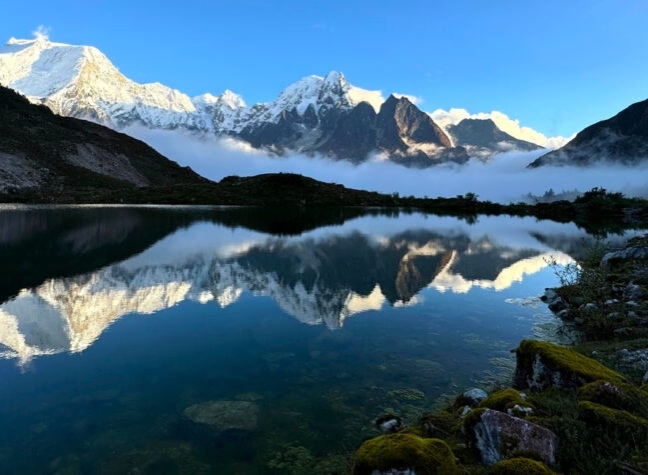
High-altitude trekking requires proper acclimatization. During this trip, we will do the acclimatization of a day hike to the base camp of the world’s 8th tallest mountain Mt. Manaslu. Once we visit the base camp. Where you can see the magnificent Birendra Lake, the Manaslu base camp glacier with diverse vegetation, and the stunning Manaslu Himalayas. We will again return to Samagaon and it takes 6 to 7 hours up and downhill. Overnight at teahouse
- 09
Day 9:Trek from Samagaun to Samdo ( 4-5 hours) (3870 m - 12696 feet)
We will continue our trip to Samdo through the high-altitude trail. There are uphill and downhill sections in the trail but largely there are uphill activity. Always stick to the trekking leader and soak into the attractions of the trail. Don’t go too fast and don’t go too slow in the group. Ask questions and enjoy your trek. Overnight at teahouse
- 10
Day 10:Day Hike to Tibet Border - 7/8/ Hours (20 km)
After the joyous day hike to the Manaslu Base Camp, we would get enough rest in the Samagaon Village. The day we arrived in Samdo, yesterday, was a gentle walk for about 3 to 4 hours. We will spend another night in the Manaslu region in the serene surroundings of the Samdo Village. There are two options to spend a day in the Samdo Village. There is a monastery in the village where we will visit and do the hike towards the top of the Samdo Peak. This is the first option. This is a short hike, yet it provides the mesmerizing scenery of mountains and valleys down below.
Another interesting side hike to do from Samdo Village is to reach the Tibet-Nepal border. Comparatively, the Tibet border hike is longer and challenging than the Samdo Peak Hike. It takes about 6 to 7 hours for this round trip. We will do the uphill hike through the rugged and rocky trail up to the border pillar. The Tibetan side view of Mt. Manaslu is seen from the place. We will have the packed lunch and enjoy the majestic view of this different landscape from that seen during the regular Manaslu Circuit Trekking. We will again return the same trail back to Samdo Village. Overnight in a tea house
- 11
Day 11:Trek from Samdo to Dharmasala (4/5 hours) (4470 m - 14665 feet)
Finally, we will reach the Larke La Phedi or Dharmasala. This is the big day as the next day we will be crossing the Larke La Pass 5106m. Dharmasala is a small place with very few teahouses. Prepare for a great day tomorrow. Overnight at teahouse
- 12
Day 12:Crossing Larke La Pass 5106 m / 16751 feet then Trek to Bimthang - (7/8 hours) 3725m - 12221 feet)
Early in the morning, we will embark on our quest to cross the Larke La Pass. This is the longest pass in Nepal. Therefore, we have to start early. We will pack our breakfast and start walking to cross the pass. We will have our breakfast along the way and finally enter the Annapurna region of Nepal Trekking. We will spend 10 – 15 minutes at the top of the pass and relish the view of the gorgeous mountains. Overnight at teahouse
- 13
Day 13:Trek from Bhimthang to Tilje - 4/5 Hours (1860 m - 6102 fee t(then drive to Besisahar by local sharing jeep - 3 hours
We will walk towards Tilje and we will have lunch at Surkekhola then will reach at Tilje village. From Tilje we'll drive to Besisahar by local sharing jeep and it takes 3 hours to get to Besisahar. The road is bumpy but the waterfalls and terraced farmlands will keep us occupied. We will enjoy with the success party together with the trekking crew members on the last night of the trekking. Overnight at Guest House
- 14
Day 14:Drive back to Kathmandu by local sharing deluxe bus - 7/8 hours (4229 feet)
We will drive back to Kathmandu by local sharing deluxe bus. The drive will be quite long but you will have an opportunity to explore the various scenarios throughout the drive. In Kathmandu, Nepal High Trek will host a farewell cultural dinner and recollect all the memories of the trekking. Overnight at Hotel
Day 15:Final Departure
Today is your last day in the land of the Himalayas Nepal. We will arrange airport drop-off service and our crews will drop you at the airport with respectively. However, better to leave 3 hours before the hotel and within 30 minutes you will get to the airport.
Are you looking to customize the trip itinerary?
If the provided schedule is not suitable for you, we can create a personalized travel arrangement tailored to your preferences and requirements.
Cost breakdown
What's included
All ground transportation ( Airport pick & drop off, local transportation from Kathmandu – Machhakhol, Tiliche to Besisahar and Kathmandu)
During the trek three times full board meals (Breakfast, lunch, and Dinner)
All Trekking permist (Special permit, Manaslu Conservation Area Permit and Annapurna permit)
3 cups of hot beverage per day ( Tea/Coffee)
Seasonal fruits throughout the trip.
Government register expert and knowledgeable trekking Guide (Including Salary, Food, Accommodation, Transportation, and Insurance)
Private twin sharing basis beds room throughout the trek.
Nepal High Trek’s down jacket, sleeping bag, T-shirt, trekking pole and duffle bag (if required)
Arrangement of Emergency Helicopter service which will be paid for by your Travel insurance company.
Medical supplies (first aid kit will be available).
What's not included
Travel insurance.
A porter wages US$ 290.
Per way, a private jeep costs US$090 (Kathmandu-Machha Khola)
All the Bar bills and personal expenses (phone call, laundry service, battery recharge, a bottle of water, hot water, shower.
Tips for the guide and porter