
Is the Annapurna Circuit Trek worth it in 2027 ?
Is the Annapurna Circuit Trek worth it in 2027 ? Well, the question is so vague and confusing! Yes, you should never doubt about the experiences that you can gather while visiting Nepal! The country offers countless types of holiday activities from adventures to leisurely family trips. Today’s blog is about finding out the worth of doing the Annapurna Circuit Trek in Nepal. In the midst of the debate about degrading status of the oldest trekking trail of Nepal due to the construction of road, you must know authentic information. We will tell you the latest and honest things about the trail.
Please note that the trip offers great wonders of Mother Nature and diverse cultures (Thakali, Manangi, Gurung, Magar, etc. communities) during the trek. Similarly, trekkers can also experience the adventurous high – altitude pass crossing to tranquil village visits. In fact, the chance to visit places like Manang and Mustang including sacred Muktinath temple enhance the cultural advantages of the trek.
Please find answer to the question “Is the Annapurna Circuit Trek Worth It In 2027?” via the blog. Our blog is always true as we prepare after confirming with the locals and trekking guides. Read all the way till the end to know complete guide about the Annapurna Circuit Trek in Nepal.
The Legend of the Annapurna Circuit: Nepal’s Oldest Trekking Route
For decades, the Annapurna Circuit held the undisputed crown of global trekking. Back in the late 1970s, when Nepal first opened its gates to foreign adventurers, this loop became the ultimate pilgrimage for backpackers. You walked through untouched ancient worlds. You crossed massive river gorges, slept in stone hamlets, and pushed over high mountain passes on sheer willpower. It wasn’t just a hike. It was a complete life-changing journey across the Himalayas. People talked about it in hushed, reverent tones around campfires from Kathmandu to Bangkok.
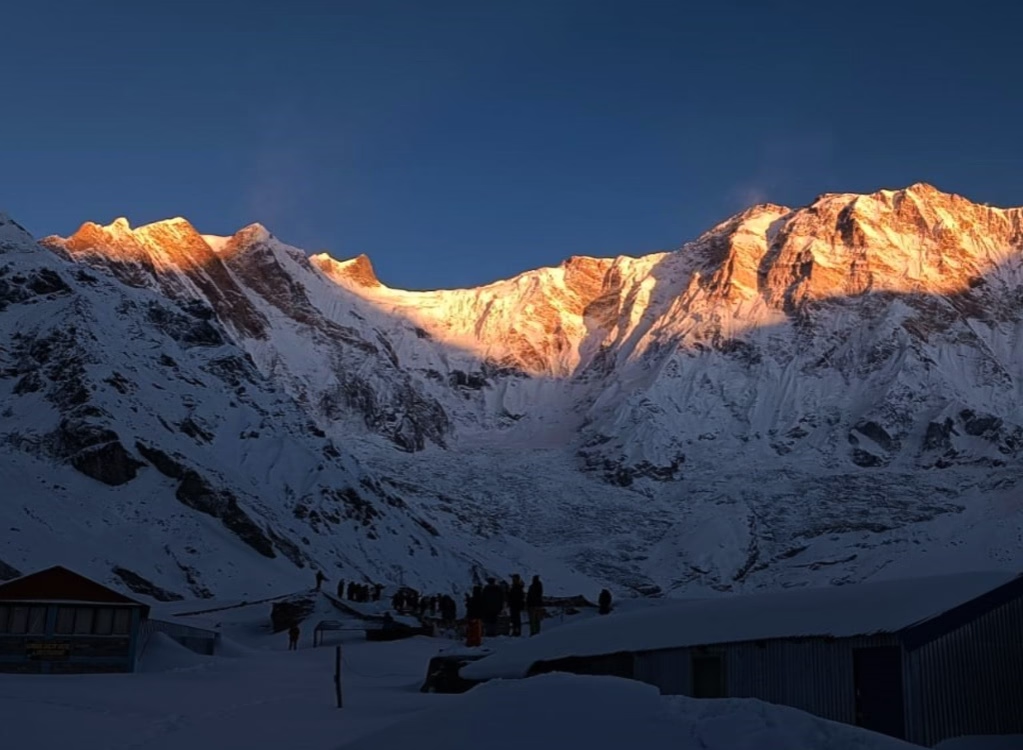
Today, that legendary status still hangs in the air. The massive, towering peaks haven't changed their spots. Annapurna Massif still dominates the sky, demanding respect from every single step you take. The route has evolved, sure. Yet the raw spirit of walking around one of the world's greatest mountain massifs remains as thrilling as it ever was.
Why 2027? The Evolving Landscape of Himalayan Trekking
Trekking in Nepal is changing rapidly, and 2027 marks a pivotal moment for the Himalayas. Modern infrastructure, safer mountain logistics, and refined trail networks have completely transformed the region. You aren't stepping into the totally wild, disconnected wilderness of the 1980s anymore. Instead, you get a modernized mountain experience that blends rich history with modern convenience.
Sustainable eco-lodges are popping up everywhere along the trail. Solar technology and high-speed satellite internet mean you can stay connected even in isolated valleys. More importantly, revised conservation policies and mandatory guide rules mean trails are safer and cleaner than ever. If you want the perfect balance of raw high-altitude adventure and reliable safety networks, 2027 offers the ideal window. You experience ancient Himalayan culture without sacrificing basic comfort or personal safety.
Quick Highlights: What Makes This Loop Iconic
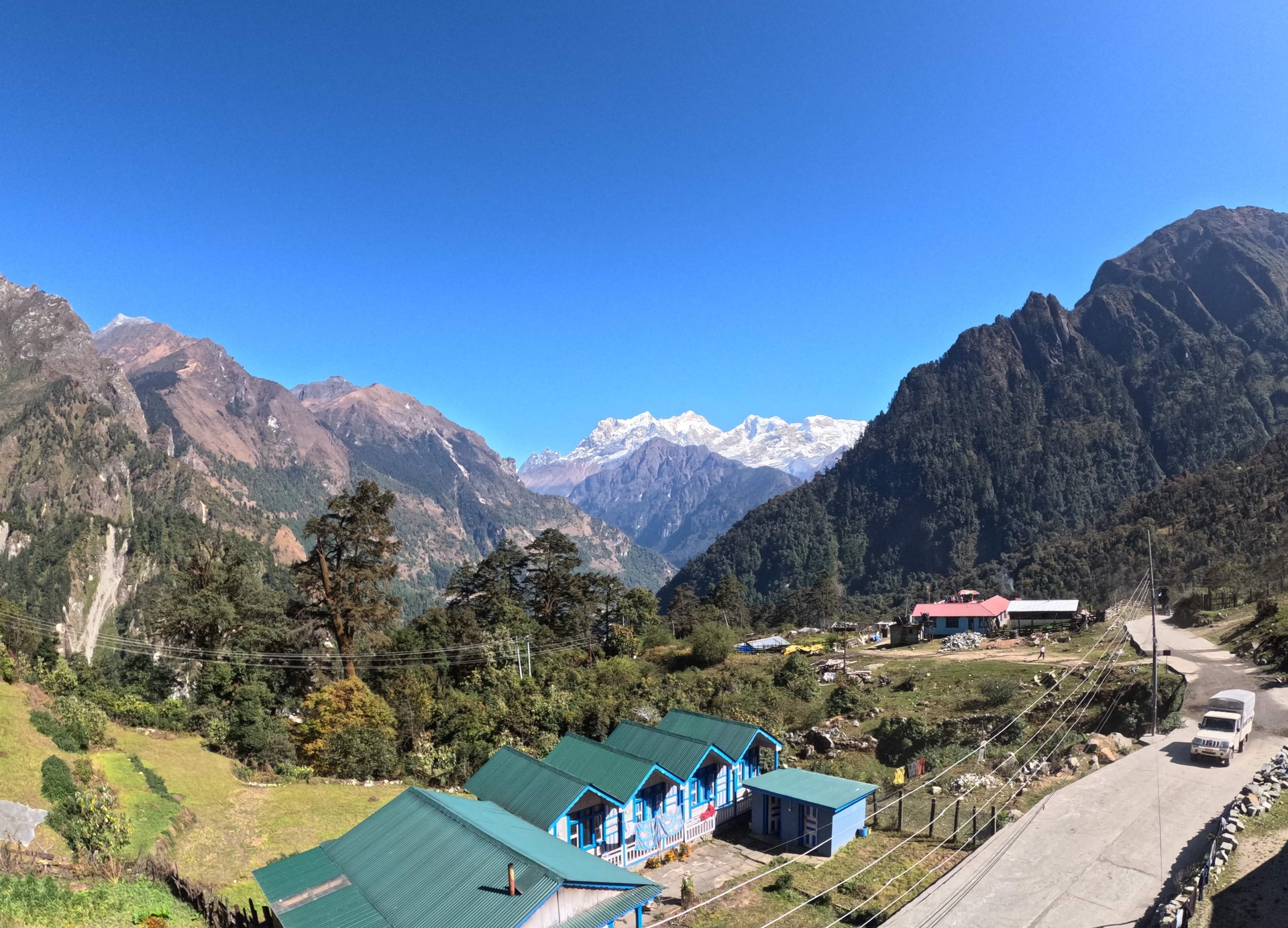
No other trail on Earth packs this much variety into a single continuous walk. You start in lush, tropical farmland and end up in cold, barren mountain deserts. Along the way, you cross Thorong La Pass at a staggering 5,416 meters above sea level. You gaze at 8,000-meter giants like Annapurna I and Dhaulagiri towering directly overhead. You walk through deep river canyons, cross hanging suspension bridges, and sleep in remote mountain villages.
You get to eat steaming hot dal bhat while looking out at ice-covered peaks. You experience two distinct cultural spheres, transitioning smoothly from Hindu foothill villages to Tibetan Buddhist strongholds higher up. It’s a complete geographic and cultural journey in one single loop.
Scenery Overview: From Subtropical Valleys to High-Altitude Deserts
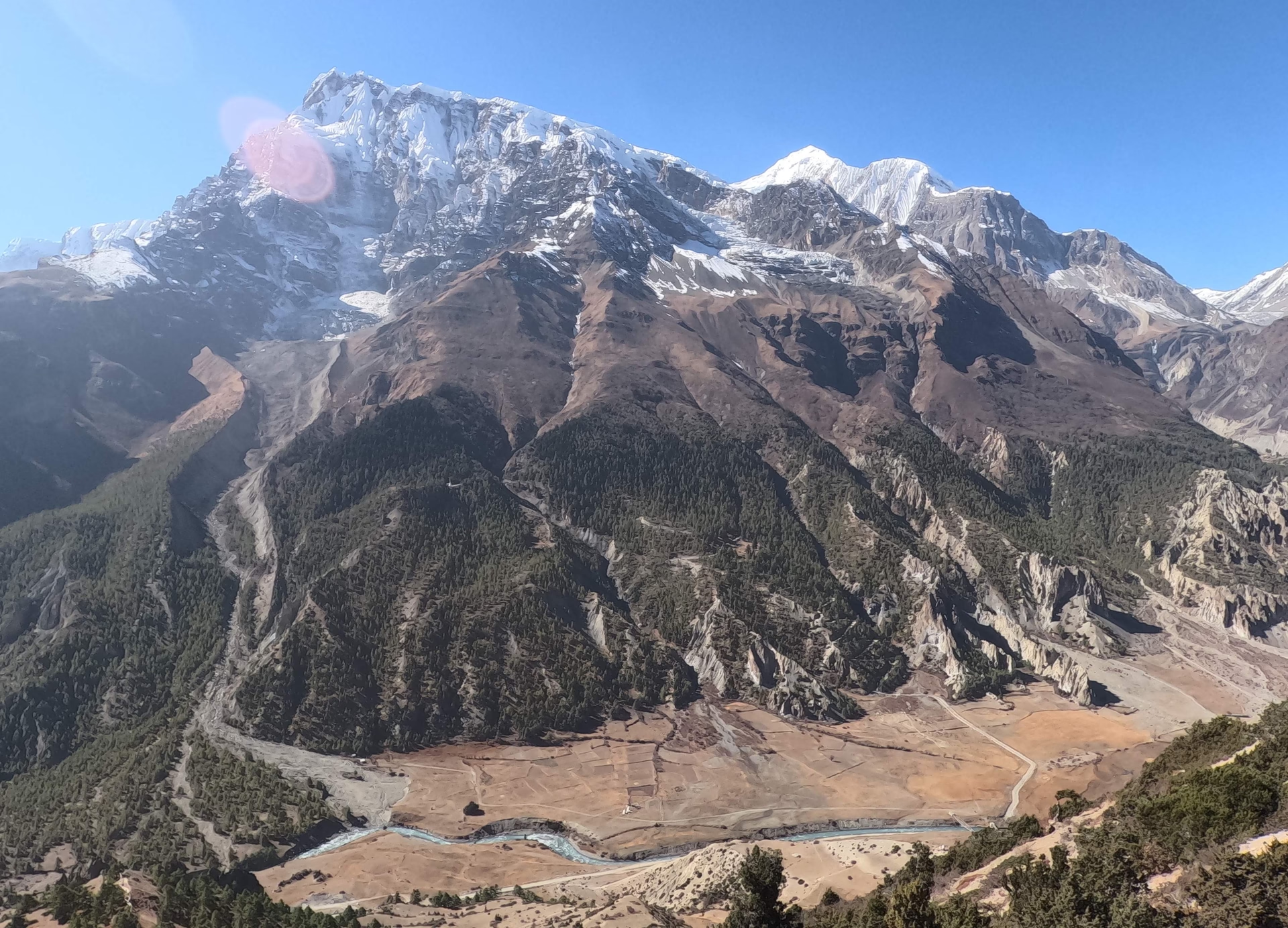
The sheer visual transformation on this route will blow your mind. On day one, you walk through humid, green banana groves, terraced rice paddies, and roaring waterfalls. Within just a few short days, the air grows crisp and cool. Lush pine forests replace tropical jungles, filled with fragrant rhododendron trees.
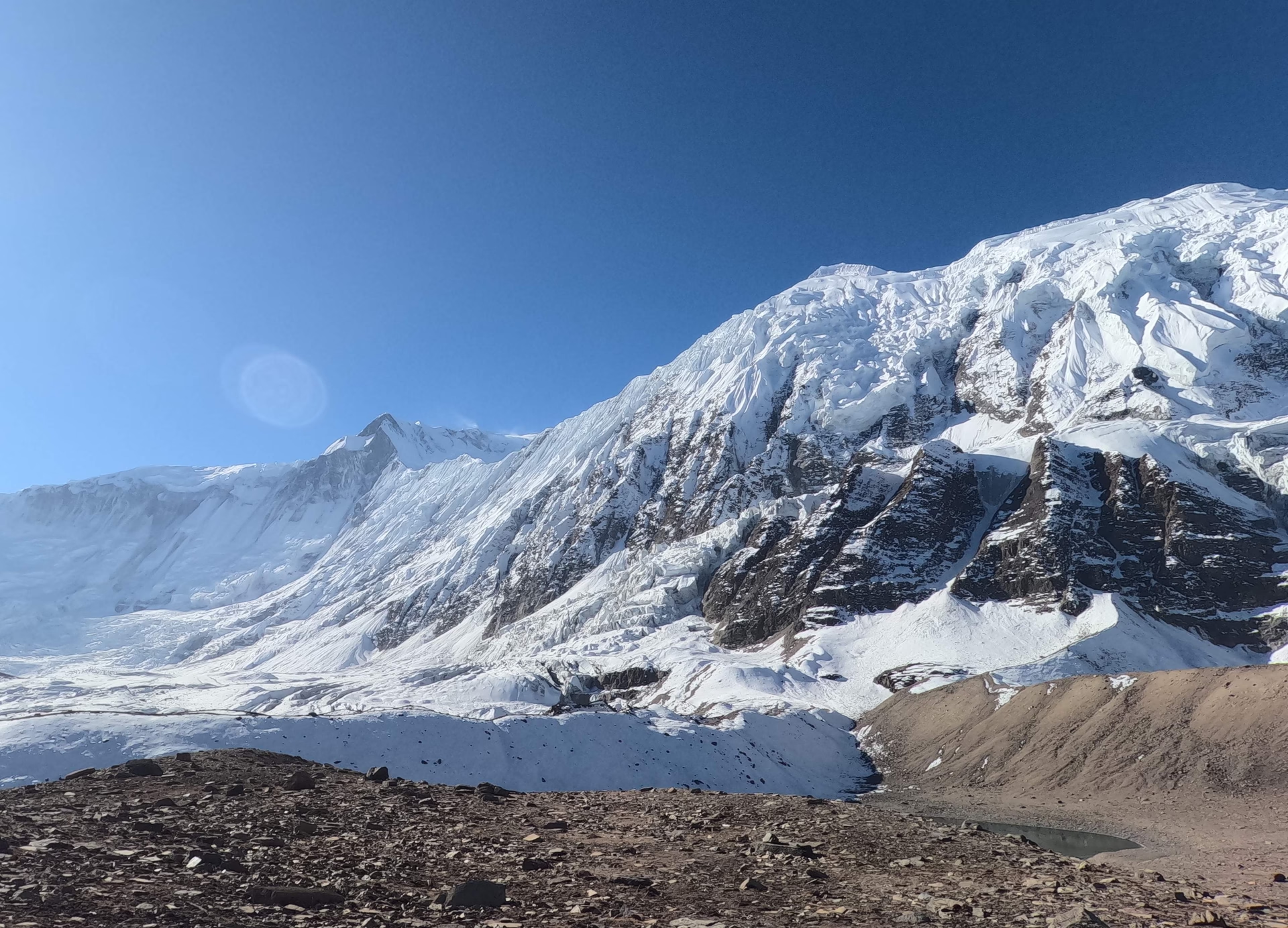
Push higher past Manang, and the trees vanish entirely. Suddenly, you step into a stark, windswept arctic desert that looks like the surface of the moon. Towering walls of white ice surround you on every side. Dust swirls across barren scree slopes under a deep blue sky. Down the other side in Mustang, dry brown cliffs glow orange in the late afternoon sun. It feels like walking through five different planets in two weeks.
.avif)
Annapurna Circuit Trek: Explore the world’s longest Thorong La Pass
View detailsCultural Immersion: Exploring Gurung, Thakali, and Manangi Villages
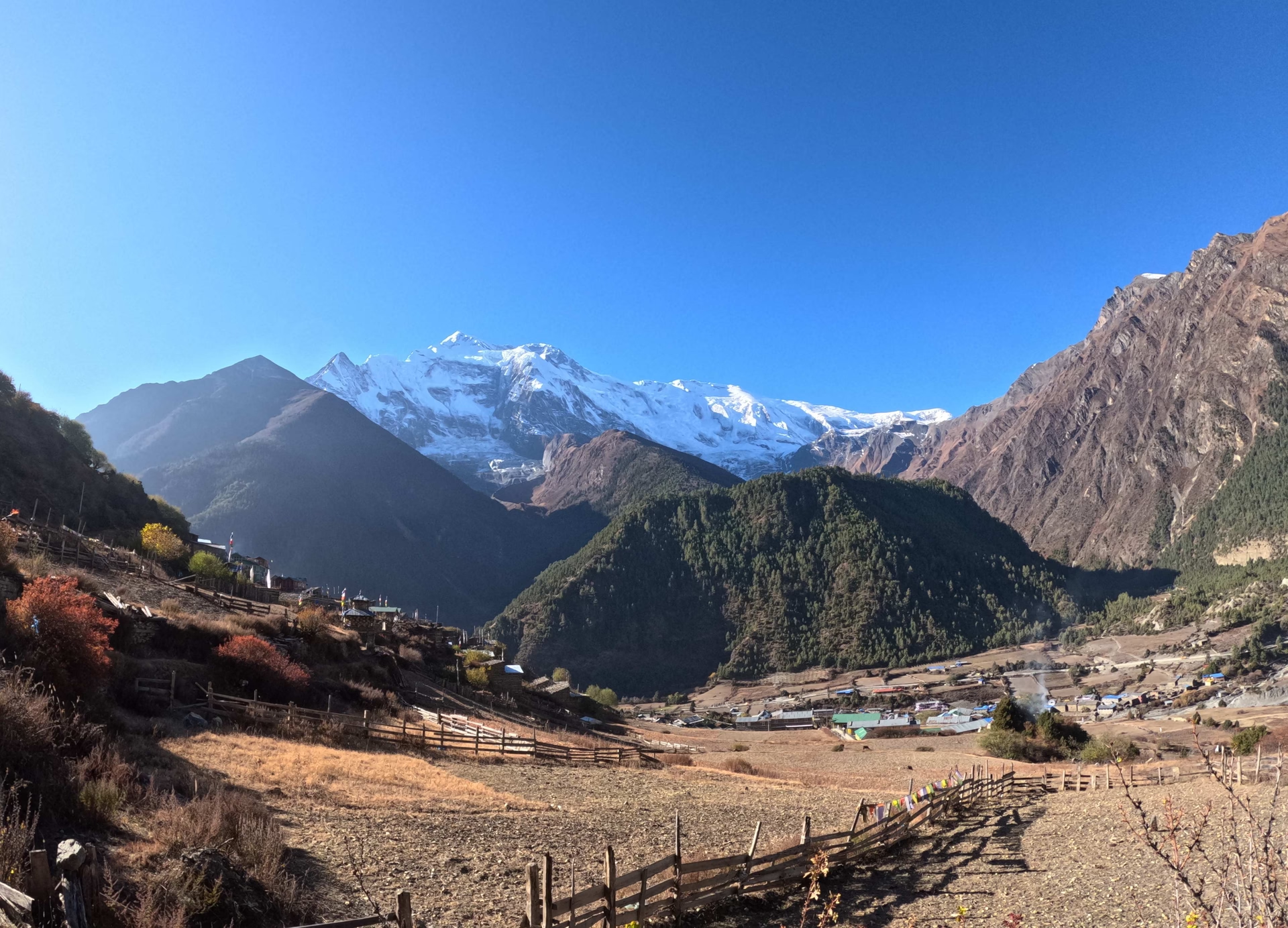
The culture along the circuit changes just as dramatically as the landscape. In the lower valleys, you walk through traditional Gurung villages with stone-paved paths and slate roofs. Farmers tend to terraced fields while livestock roam free. As you gain elevation, you enter the distinct culture of the Manangi people in Upper Manang. Prayer flags flutter from every rooftop, and ancient monasteries cling precariously to cliff faces.
Prayer wheels spin quietly in the mountain breeze as elders chant sacred mantras. Further along, after crossing the pass, you hit the Kali Gandaki valley, home of the Thakali people. Known across Nepal as master hosts, Thakali inns serve up legendary local food and rich trade history. Every valley has its own dialect, customs, and deep-rooted traditions.
How Much Road Expansion Has Changed the Trail?
Let’s address the elephant in the room: roads have definitely expanded into the valley. Jeep tracks now run deep into both sides of the circuit, stretching up toward Manang and Muktinath. If you walk strictly on the dirt road, you will dodge dusty jeeps and noisy construction gear. That isn't the classic mountain experience anyone signs up for. However, panic about the trail's death is vastly exaggerated.
The roads have brought vital medical access, fresh supplies, and economic life to remote local communities. For trekkers, it simply changes how you plan your route. You can easily skip uninspiring road sections by hopping in a local transport. Or better yet, you can steer entirely clear of vehicle traffic by taking alternative footpaths designed specifically for hikers.
Bypassing the Dirt Roads: Natural Annapurna Trekking Trails
You do not have to walk on dusty roads. Thanks to the Natural Annapurna Trekking Trails (NATT) initiative, side trails bypass virtually every section of road construction. Marked clearly with red-and-white or blue-and-white painted signs, these dedicated footpaths keep you immersed in pristine nature. You walk through quiet forests, hidden cliffside hamlets, and peaceful alpine meadows. You cross wild glacial streams away from engine noise.
Route variations like the high trail through Upper Pisang offer far superior mountain views than the lower valley road ever did. With a good map or an experienced guide, you can spend over 80% of your time on peaceful, isolated trails. The classic, wild Annapurna experience is still very much alive if you know where to walk.
Thorong La Pass (5,416m): The Ultimate High-Pass Challenge
Thorong La Pass is the physical and emotional climax of the entire journey. You wake up long before dawn, usually around 3:00 AM, in freezing darkness. Frost covers the ground, and your breath freezes instantly in the biting cold air. Headlamps line the steep, icy trail like a slow-moving string of fireflies. Every breath requires conscious effort as the oxygen levels drop to nearly half of sea level.
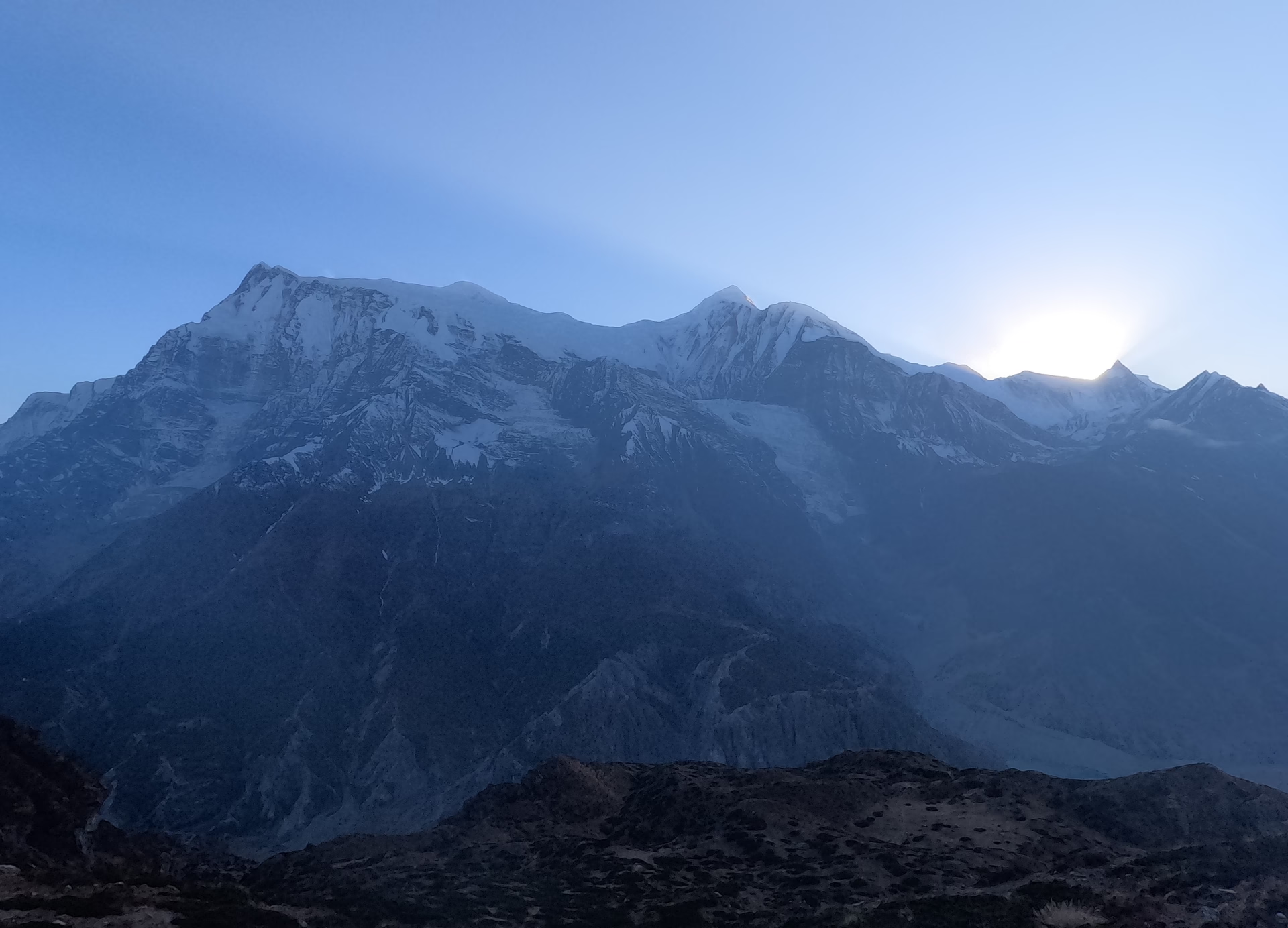
Your legs burn, your lungs scream, and progress becomes a slow, rhythmic grind. But reaching the summit prayer flags as the sun hits the snowcapped peaks is pure magic. Standing at 5,416 meters, staring down into the dramatic, sunlit Mustang valley below, brings tears to your eyes. It is a hard-earned victory you will remember forever.
Tilicho Lake Side Trip: Is the High-Altitude Detour Mandatory?
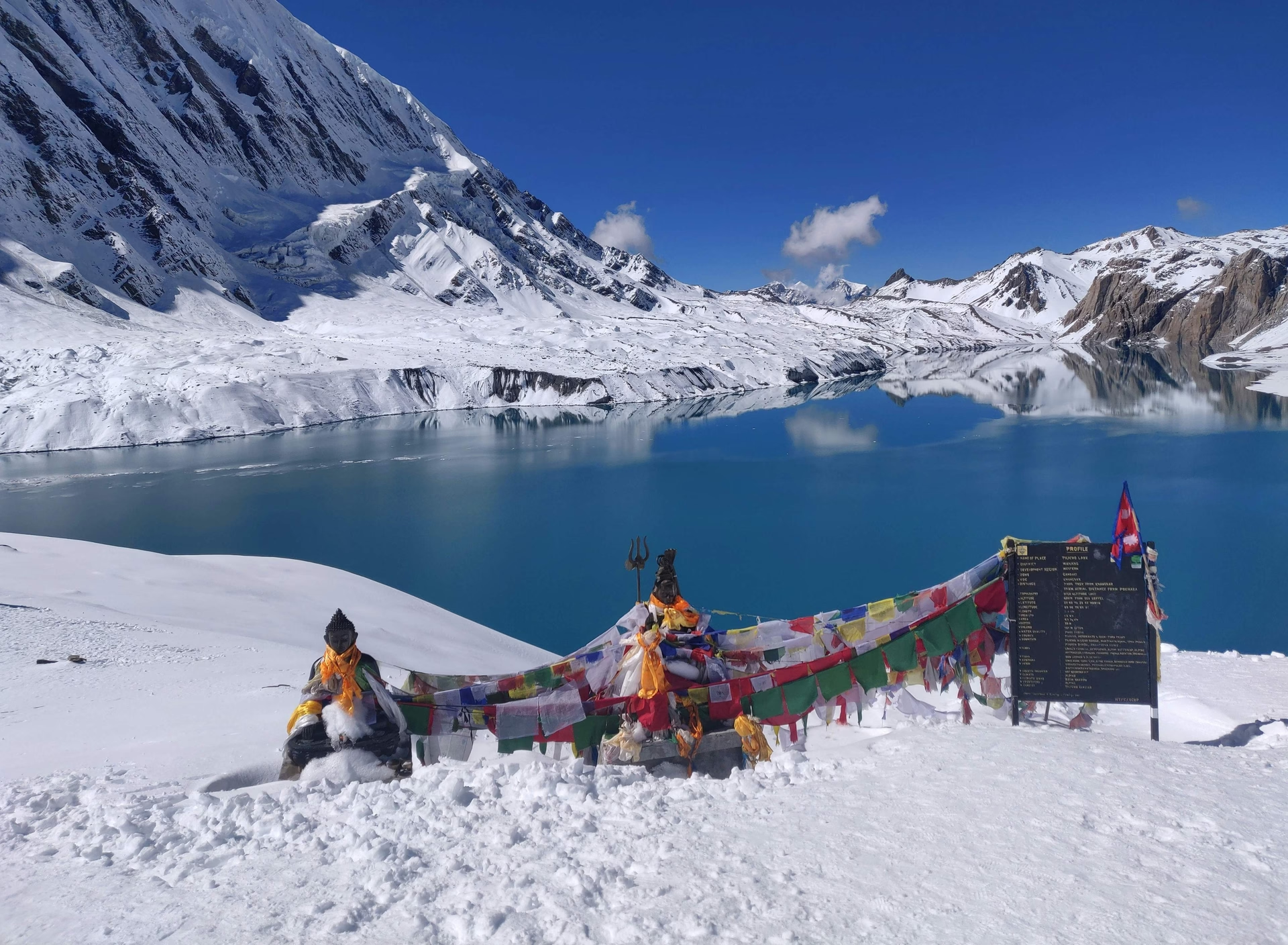
If you have extra days in your schedule, the side trip to Tilicho Lake is absolutely essential. Sitting at 4,919 meters, it ranks among the highest alpine lakes in the world. The trail leads you off the main circuit into a wild, surreal landscape of massive scree slopes and towering snow cliffs. Annapurna Circuit Trek via Tilicho Lake is an excellent journey to experience the diverse culture and nature of the Annapurna region.
The lake itself is a breathtaking expanse of deep, brilliant turquoise water framed by the massive icy wall of Tilicho Peak. Sitting on the shore in absolute silence, listening to the crack of distant glaciers, feels utterly otherworldly. It requires two to three extra days of steep, challenging walking, but it also serves as the ultimate acclimatization warm-up before tackling Thorong La Pass.
.avif)
Annapurna Circuit Trek 12 Days
View detailsMuktinath and Beyond: Spiritual Sites and the Mustang Valley Wind
Dropping down from Thorong La brings you into the sacred grounds of Muktinath. This holy shrine is deeply revered by both Hindus and Buddhists alike. Pilgrims travel from all over Asia to bathe in the 108 icy water spouts flowing from the temple walls. Eternal natural gas flames burn side-by-side with rushing natural springs inside the shrines.
Leaving Muktinath, you enter the ancient Kingdom of Mustang, where the landscape opens up into sweeping canyons. Be prepared for the famous Mustang valley wind! Every afternoon like clockwork, fierce mountain gales howl down the Kali Gandaki River canyon. Dust kicks up, so wrapping a scarf around your face and pulling down your goggles becomes your daily afternoon ritual.
Comparing Decades: Annapurna Circuit 10 Years Ago vs. 2027
A decade ago, trekking the circuit was far more rugged and unpredictable. Tea houses were cold, rustic wooden structures with thin blankets, dim kerosene lamps, and basic pit toilets. Communication with the outside world was practically non-existent for weeks on end. You carried heavy wads of cash and relied entirely on paper maps. Today, in 2027, the trek is significantly smoother and far safer.
Comfortable lodges offer memory-foam mattresses, attached private bathrooms, solar lighting, and high-speed satellite Wi-Fi. Fresh food options are better, and emergency evacuation protocols are far more efficient. Purists might miss the old, isolated wild west feel, but for most modern hikers, the upgraded safety and comfort make the mountain experience vastly more enjoyable.
Required Permits, and Updated Regulations for 2027
You cannot just show up and start hiking without paperwork. To trek the circuit legally, you need the Annapurna Conservation Area Permit (ACAP). Note down that TIMS is no longer in use nowadays but it may be required in future. Please contact with the travel planners of the Nepal High Trek to know about the latest updates on trip permits. Some of the trekking trails require you to get the rural municipality local permit instead of TIMS. For example, you must acquire the Chumnubri Rural Municipality entry permit for the Manaslu Trek and the Pasang Lhamu Rural Municipality entry permit for the Everest Trek in Nepal. Foreign trekkers strictly require to register digital permits through official channels prior to setting off. The Nepal High Trek can surely help you get all these permits to trek in Nepal. Additionally, mandatory guide regulations are strictly enforced across Nepal’s national parks to enhance hiker safety and support local employment.
Checkpoints are positioned at key entry towns like Besisahar and Manang to verify your credentials. Ensure your paperwork is completely sorted in Kathmandu or Pokhara beforehand, and carry multiple hard copies alongside digital PDFs on your phone to avoid massive fines or delays.
Tea House Conditions Today: WiFi, Hot Showers, and Charging Stations
Forget the outdated myth that you'll be sleeping in drafty, freezing mud shacks. Modern tea houses along the Annapurna Circuit are impressively well-equipped. Most lodges feature cozy communal dining halls warmed by central wood stoves every night. You'll enjoy clean private rooms with actual mattresses, warm duvets, and electrical outlets for charging your gear. Solar-powered or gas-heated hot showers are available at nearly every stop for a small extra fee. Thanks to satellite technology like Starlink, reliable high-speed Wi-Fi is common right up to high camps. You can easily charge your camera batteries, power banks, and smartphones while sipping hot ginger-lemon tea after a long day on the trail.
Annapurna Circuit Trek 10 Days
View detailsTypical Budget Breakdown: Expected Daily Costs in 2027
Trekking the Annapurna Circuit remains incredibly affordable compared to major alpine routes in Europe or North America. On average, plan to budget between $40 to $60 USD per day for independent or guided expenses on the trail. Lower elevations are cheaper, while prices naturally rise as you hike higher because all supplies must be hauled up by mules or porters.
Accommodation: $5–$15 per night (often free or heavily discounted if you eat dinner and breakfast at the same lodge).
Meals: $20–$30 daily for three hearty meals (Dal Bhat, noodles, soups, pancakes).
Water & Extras: $5–$10 daily for hot showers, battery charging, Wi-Fi, snacks, and purified water.
Permits & Transport: Budget around $100–$150 total for initial permits, TIMS, and local jeep/bus transfers.
Choosing Your Season: Autumn vs. Spring Weather
Timing is everything when planning your Himalayan trek. Autumn (September to November) is widely considered the absolute gold standard. The monsoon rains clear away the dust, leaving crystal-clear skies, razor-sharp mountain views, and stable, dry weather. Trails are lively, but night temperatures drop fast, especially high up. Spring (March to May) offers a totally different kind of natural beauty.
The temperatures are warmer, days are longer, and the hillsides explode with blooming red and pink rhododendron flowers. However, afternoon haze can build up, obscuring high peak views in late spring. Winter brings extreme, dangerous cold and heavy snow that closes Thorong La Pass, while summer monsoons bring mud, thick leeches, and dangerous landslides. Stick to Autumn or Spring. If you really wish to do trek in monsoon or winter season, then check out carefully prepared trips of the Nepal High Trek. The agency offers best off season trekking packages for trekkers.
Altitude Sickness Risk and Acclimatization Strategy
Altitude sickness is a very real, potentially dangerous risk on this trek. You are walking well above 5,000 meters, where the air is noticeably thin. The absolute golden rule of high-altitude trekking is simple: climb high, sleep low, and never rush your itinerary. Spending at least two full rest days in the village of Manang (3,540m) is mandatory for safe acclimatization.
Use these rest days to take steep day hikes up to higher viewpoints before coming back down to sleep. Drink at least 4 liters of water daily, avoid alcohol completely, and pay close attention to your body. Early symptoms like mild headaches, nausea, or dizziness shouldn't be ignored. If symptoms worsen, the only true cure is descending immediately.
Training & Physical Preparation Needed for the Circuit
You don't need to be an Olympic athlete to complete the Annapurna Circuit, but you do need solid endurance. You will be walking anywhere from 5 to 8 hours daily for nearly two weeks, often carrying a backpack on steep, uneven terrain. Start training at least two to three months before your trip.
Focus heavily on leg strength and cardiovascular endurance. Long weekend hikes with a weighted backpack are the absolute best preparation you can do. Incorporate stair climbing, running, squats, and lunges into your weekly workouts. Strengthening your knees, core, and calves will make those long, brutal downhill descents past Thorong La far less painful on your joints.
Going Solo, Hiring a Guide, or Joining a Group?
How you choose to trek comes down to your personal preferences and current regulations. Under recent safety updates, hiring a licensed local guide is mandatory for foreign trekkers in Nepal's mountain regions. Hiring a local guide or porter-guide is a fantastic decision anyway. They navigate tricky trail junctions, arrange the best tea house rooms ahead of time, handle emergencies, and share rich cultural stories you'd never find in a guidebook.
Joining a organized group trek is great if you want instant companions and hassle-free logistics. If you prefer a private experience, hiring a personal guide gives you total control over your daily pace without sacrificing safety.
Tilicho Lake Trek
View detailsAnnapurna Circuit vs Everest Base Camp in 2027
Choosing between Nepal’s two biggest legendary treks is a classic dilemma. Everest Base Camp offers the unmatched thrill of standing near the world's highest peak, surrounded by legendary mountaineering history. However, EBC is an out-and-back route, meaning you walk back down the exact same trail you walked up.
The Annapurna Circuit, by contrast, is a continuous, dynamic loop where every single day brings entirely new landscapes and fresh scenery. Annapurna also offers richer cultural diversity, shifting from Hindu villages to Tibetan strongholds, and features far more varied vegetation zones. It is generally slightly cheaper and offers a more complete cross-section of mountain life.
Responsible Travel: Environmental Impact and Eco-Friendly Trekking
With thousands of hikers visiting every year, leaving a positive footprint is crucial. Plastic pollution is a major threat in fragile mountain ecosystems. Never buy single-use plastic water bottles on the trail. Instead, carry reusable bottles or bladders and use UV purifiers, water filter pumps, or purification tablets.
Always stick to established trails to prevent soil erosion, and pack out all your personal trash, including wet wipes and batteries. Support the local economy directly by eating locally sourced meals and purchasing hand-crafted souvenirs directly from village artisans. Treat local customs, religious shrines, and villagers with deep respect—always walk clockwise around Buddhist mani walls and chortens.
.avif)
Who Should (and Shouldn't) Hike This Route?
This trek is perfect for adventurous travelers who love diverse scenery, rich cultural encounters, and pushing their physical boundaries. If you enjoy daily physical challenges, high-mountain passes, and simple rustic living, you will fall head over heels for this trail. However, it isn't for everyone. If you cannot survive without luxury amenities, pristine fine dining, perfect climate control, or absolute predictable schedules, you will struggle here.
You need mental resilience to deal with early freezing mornings, thin air, steep ascents, and occasional travel delays. If you have severe unmanaged cardiovascular conditions or an extreme aversion to dirt and dust, you should consider lower-altitude, shorter hikes instead.
Is the Annapurna Circuit Still Worth It in 2027?
The short answer is an emphatic yes. Despite ongoing road development, the Annapurna Circuit remains one of the greatest mountain treks on planet Earth. The incredible contrast of landscapes, from lush tropical rice paddies to stark alpine deserts, is unmatched anywhere else in the world.
Modern trails allow you to bypass vehicle traffic, while upgraded tea house facilities make the journey far more comfortable and accessible than ever before. Standing atop Thorong La Pass at 5,416 meters, watching the morning light hit the snow-covered Himalayas, is an unforgettable bucket-list experience. In 2027, the legend of the Annapurna Circuit is alive, well, and thoroughly worth every single step.
7 Days Annapurna Base Camp Trek
View detailsFAQs of the Annapurna Circuit Trek in Nepal
Has road construction ruined the Annapurna Circuit Trek?
The narrative that road construction has totally killed the Annapurna Circuit is wildly blown out of proportion. While it is true that dirt roads now stretch deep into the Marsyangdi and Kali Gandaki valleys, they haven't destroyed the magic; they've simply altered how you experience it. The roads brought essential medical access, fresh food, and economic mobility to isolated mountain communities that previously had to transport everything on foot or by mule. If you stick strictly to the vehicle track, you will certainly find yourself dodging dusty jeeps and heavy machinery, but nobody forces you to hike along the road.
Thanks to the NATT (Natural Annapurna Trekking Trails) project, a massive network of dedicated footpaths completely bypasses the vehicular traffic. These marked trails lead you away from the dust and drop you right into pristine pine forests, ancient cliffside hamlets, and peaceful alpine meadows. You still get the towering 8,000-meter peaks, the shifting landscapes, and the deep cultural immersion that made the circuit famous in the first place. With proper route planning and the right maps, you can easily spend more than 80% of your time on quiet, vehicle-free trails that feel just as wild as they did decades ago.
Some responsible companies like the Nepal High Trek always take trekkers from authentic route. For example, you can do the Annapurna Circuit Trek in Nepal from the company taking on the Ngawal Village route which is considered as raw and mesmerizing!
How many days do you need to complete the Annapurna Circuit?
To comfortably complete the full classic Annapurna Circuit without feeling rushed, you should plan on setting aside 12 to 16 days. The exact duration depends heavily on where you decide to lace up your boots and where you choose to end the walk. In the past, the trek routinely took 18 to 21 days because you had to start at the low-altitude town of Besisahar. Nowadays, most trekkers utilize local 4x4 jeeps to skip the dusty lower road sections, officially beginning their trek around Syange, Dharapani, or even Chame, which shaves off a few days of tedious lowland walking.
Your itinerary needs to account for mandatory acclimatization days, particularly at Manang (3,540m), before attempting the grueling push over Thorong La Pass (5,416m). Skimping on these rest days to save time is the number one reason trekkers fail to cross the pass due to altitude sickness. If you want to include popular high-altitude detours like the stunning Tilicho Lake, you should add another 2 to 3 days to your schedule. On the back end of the pass, you can either wrap up at Jomsom and fly back to Pokhara, or continue walking down through the lush Kali Gandaki valley toward Tatopani and Poon Hill.
Is a licensed guide strictly required for the Annapurna Circuit Trek?
Under regulations enforced by the Nepal Tourism Board, foreign trekkers inside the Annapurna Conservation Area are required to be accompanied by a government-licensed guide. This safety mandate was put in place to protect hikers from severe high-altitude risks, unpredictable mountain weather, and getting lost on remote side trails. While enforcement at lower checkpoints can occasionally vary depending on current local management policies, booking your trek through a registered agency or hiring a licensed guide ensures your paperwork is compliant, your safety is monitored, and you won't risk being turned back at trail checkpoints.
Beyond simply satisfying the legal requirement, hiring a local guide dramatically elevates the entire trekking experience. Your guide takes care of every logistically stressful detail booking clean tea house rooms during peak season, arranging jeep transport, and monitoring your health for early signs of acute mountain sickness. More importantly, they act as a bridge to the local culture. A good guide will explain village customs, introduce you to local innkeepers, translate conversations, and point out hidden monasteries that you would almost certainly walk right past on your own.
What permits are needed for the Annapurna Circuit Trek?
To legally hike the Annapurna Circuit, you primarily need the Annapurna Conservation Area Permit (ACAP). The ACAP permit costs NPR 3,000 (roughly $23 USD) for foreign nationals and is valid for the entire duration of your trek inside the protected area. The revenue from this permit directly supports environmental conservation, wildlife protection, trail maintenance, and sustainable tourism infrastructure across the local villages you will be visiting.
Historically, trekkers were also required to carry a Trekkers’ Information Management System (TIMS) card. However, system updates have streamlined trail registration, meaning the standalone TIMS card has been phased out or integrated into modern guide-agency registration protocols at major checkpoints. You can easily secure your ACAP permit through the Nepal Tourism Board offices in Kathmandu or Pokhara, or let your registered trekking agency handle the entire application process for you before you hit the trail. Keep hard copies of your permit and passport photos easily accessible in your daypack, as you will need to present them at official checkpoints like Besisahar, Chame, and Manang.
How hard is the Annapurna Circuit compared to Everest Base Camp?
While both are demanding high-altitude Himalayan journeys, the Annapurna Circuit is widely considered slightly more physically dynamic and varied, whereas Everest Base Camp (EBC) presents a more relentless, high-altitude grind. EBC starts at a high elevation right out of the gate in Lukla (2,860m) and keeps you above 3,500 meters for almost the entire duration of the trip. The air is thinner for longer, the nights are consistently colder, and the sustained physical toll on your body can feel quite punishing over two full weeks.
In contrast, the Annapurna Circuit starts much lower in lush, oxygen-rich subtropical valleys, giving your body a far gentler, more natural ramp-up for acclimatization over the first several days. However, the single hardest day on the Annapurna Circuit—crossing Thorong La Pass at a towering 5,416 meters—is significantly higher, steeper, and more physically intense than reaching Everest Base Camp (5,364m) or Kala Patthar (5,550m). The climb up Thorong La requires an arduous 3:00 AM start in freezing conditions, pushing up steep scree and snow for hours. Annapurna tests your versatility across dramatically shifting environments, while EBC tests your stamina against cold, sustained thin air.
What is the best month to trek the Annapurna Circuit?
The absolute best months to trek the Annapurna Circuit are October and November during the autumn season. This is the undisputed prime window for Himalayan trekking because the summer monsoon rains have washed the atmosphere clean, leaving crisp, crystal-clear skies and razor-sharp mountain views. The daytime temperatures in the lower and mid-elevation valleys are comfortable for walking, and trail conditions are generally dry and stable. Because it is the peak travel window, the villages are lively and tea houses are fully operational, though you should expect busier trails and crowded lodges.
The second-best window is the spring season, spanning from late March through May. During spring, the daytime temperatures are noticeably warmer, the days are longer, and the lower valleys explode with color as massive rhododendron and wildflower forests come into full bloom. The trade-off is that atmospheric haze can build up in the late afternoons, occasionally obscuring the high mountain peaks compared to the crystal clarity of autumn. You should strictly avoid the summer monsoon months (June to August) due to torrential rain, dangerous landslides, and leeches, as well as mid-winter (January to February), when severe snow routinely blocks Thorong La Pass.
How much does the Annapurna Circuit Trek cost on average?
On average, you should budget between $40 and $60 USD per day while on the trail to cover your personal daily living expenses. The beauty of tea house trekking in Nepal is that accommodation is remarkably cheap often ranging from $5 to $15 per night because lodge owners expect you to eat your meals at their establishment. However, food and water prices steadily increase as you gain elevation. Down in the lower valleys, a hearty plate of Dal Bhat might cost $4, but up near High Camp (4,800m), where every ingredient must be hauled up by mules or porters, that same meal might cost $8 to $10.
When planning your total overall trip budget, you need to factor in logistics beyond daily food and lodging. Your required ACAP permit runs about $23 USD, and local transport (a combination of local buses and private or shared 4x4 jeeps from Kathmandu/Pokhara) will total around $60 to $100 USD depending on how far up the valley you drive. If you hire a licensed local guide—which costs roughly $25 to $35 USD per day—and a porter to carry your heavy luggage ($20 to $25 USD per day), a complete 12-to-14-day guided package generally lands between $900 and $1,500 USD per person, excluding international flights and personal gear.
How do you manage altitude sickness when crossing Thorong La Pass?
Successfully managing altitude sickness (Acute Mountain Sickness, or AMS) during the crossing of Thorong La Pass comes down to strict, disciplined preparation long before you reach the base of the pass. The most critical factor is your acclimatization schedule: you must spend at least two full nights resting and doing active day-hikes in Manang (3,540m) to allow your body to adapt to the lower oxygen levels. The golden rule of high-altitude trekking is to "climb high, sleep low." Take slow, deliberate, rhythmic steps on the trail—if you are breathing so hard that you cannot hold a basic conversation, you are moving too fast.
Hydration and early detection are your best defenses against severe altitude issues. You should drink 3 to 4 liters of clean water every day, completely avoid alcohol and sleeping pills, and eat high-carb meals to fuel your system. Many trekkers carry Diamox (Acetazolamide), a prescription medication that accelerates natural acclimatization, starting it a day or two before ascending into high camps. Pay close attention to your body's warning signs; a mild headache, light nausea, or fatigue are early indicators. If your symptoms worsen into severe dizziness or loss of coordination, you must stop ascending immediately and descend to a lower altitude—that is the only definitive cure for severe AMS.
Is Wi-Fi, electricity, and cell coverage available along the trail?
Modern infrastructure along the Annapurna Circuit is surprisingly advanced, so you won't be completely cut off from the outside world. Almost every tea house from the lower foothills up to Manang offers Wi-Fi, usually powered by satellite networks or local broadband providers. Lower down, Wi-Fi is often free, but as you climb above 3,500 meters, lodges usually charge a small flat fee ($2 to $4 USD) for access. Keep in mind that connection speeds can slow down significantly in the evenings when dozens of cold trekkers are all trying to load videos at the same time in the communal dining hall.
Electricity for charging your devices is widely available, though it operates on a similar pay-per-use model higher up the trail. Lower tea houses often have free wall outlets in the private bedrooms, but higher camps rely on solar panels and generators, charging $2 to $5 USD to top up your phone, camera batteries, or power bank in the main hall. Cell service via local SIM cards (NTC or Ncell) works surprisingly well through most of the lower valleys and major hubs like Chame, Manang, and Jomsom. However, signal coverage becomes spotty or completely drops out in narrow river gorges, near Tilicho Lake, and on the high approach to Thorong La Pass.
Can you combine the Annapurna Circuit with Tilicho Lake or Poon Hill ?
Yes, absolutely, combining the main circuit with side trips like Tilicho Lake or Poon Hill creates the ultimate Himalayan trekking experience if you have the extra time. Tilicho Lake sits at a dizzying elevation of 4,919 meters and is one of the highest alpine lakes in the world. To visit it, you branch off the main circuit trail shortly after Manang, heading through a dramatic, landslide-prone valley to stay at Tilicho Base Camp before making the steep early-morning push to the turquoise, glacier-rimmed lake. This side trip adds 2 to 3 days to your overall itinerary, but it serves as a phenomenal high-altitude acclimatization builder before you tackle Thorong La Pass.
On the back end of the pass, after descending into the Mustang Valley and visiting Muktinath, you can choose to extend your trek southward toward Poon Hill (3,210m) instead of taking a jeep straight to Pokhara. By continuing down through the lush rhododendron forests of Tatopani and Ghorepani, you can climb Poon Hill for one of the most famous sunrise panoramas in Asia, where the sun illuminates the massive snowcapped walls of both the Annapurna and Dhaulagiri ranges. Adding both Tilicho Lake and Poon Hill turns the standard circuit into a grand 18-to-20-day mega-trek that showcases every single landscape layer Nepal has to offer.
Please contact the bloggers of the Nepal High Trek to make sure that you have a hassle - free trek in Nepal! Even if you know all things about trekking activities, it is important to travel with the experts. We are definitely one of the best trekking agencies of Nepal that provide value of every penny spent for the trek investment!
Follow our blogs to understand about what, how, where, when, and why about trekking in Nepal. Subscribe our newsletters and blogs to find out honest reviews and information about traveling to Nepal. So, the answer to the question “Is the Annapurna Circuit Trek Worth It In 2027?” is simply absolutely yes! Book the trek package and embark on this amazing journey!
Frequently asked
Nepal High Trek
Travel writer and passionate explorer sharing stories and expert guides from the heart of the Himalaya.