


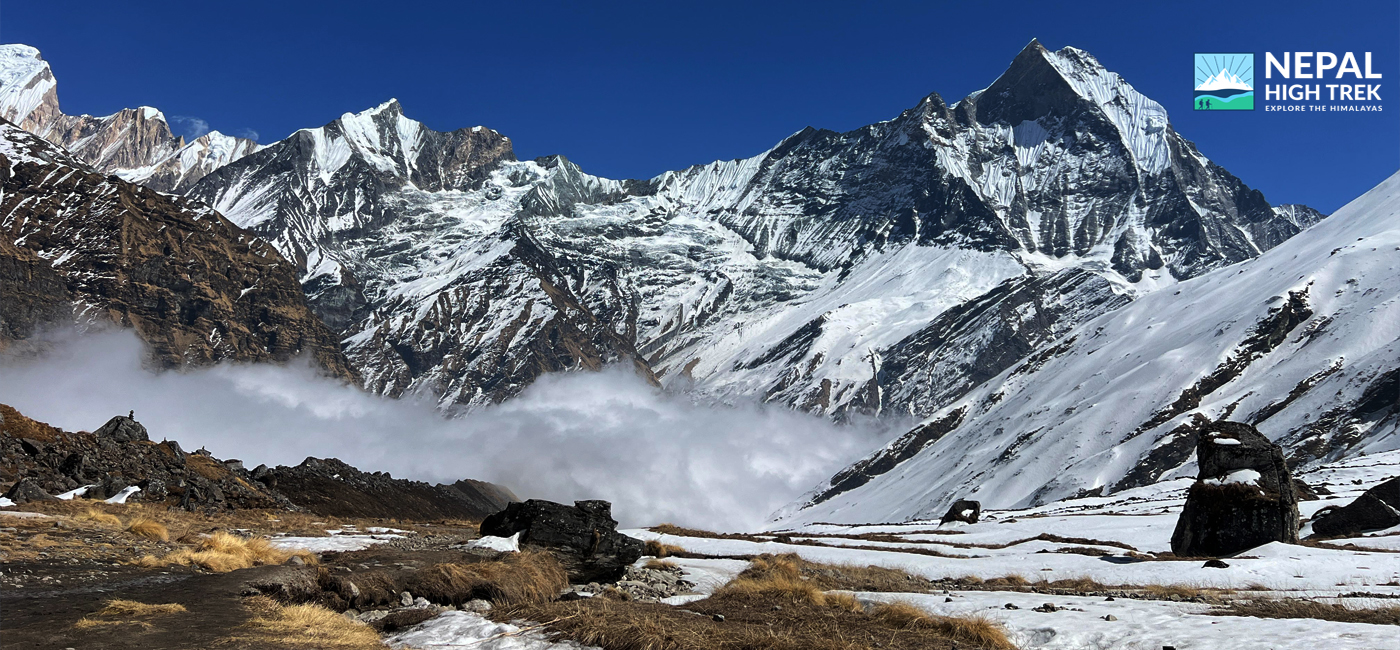
Nepal is the place where you get to experience the Himalayan wilderness experiences. From mountains to the valleys, the country is blessed by the Mother Nature. Thus, trekking has been the cornerstone of tourism industry of Nepal which is the pillar of national economy. Out of many trekking trails to walk in Nepal, you can say that the Annapurna Base Camp Trek is the best commercial trek with lots of options. Trekkers can get different options for this amazing adventure up in the Himalayan abode of the world’s 10th-tallest mountain. Today’s blog is about finding out the Annapurna Base Camp Elevation and the things surrounding this.
Please note down that the information of elevation can give you an idea of the difficulty, physical & mental requirements, things that you must do for a hassle-free trip.
Understanding Annapurna Base Camp Elevation in Detail
Let’s delve deeper into the details of finding out the Annapurna Base Camp Elevation. The main purpose of writing the elevation blog is to make sure that you are well informed about the possible pros and cons. Furthermore, it also provides you an idea to pack things for the trip. What to expect during the Annapurna Base Camp Trek? Once you know about the things surrounding the Annapurna Base Camp Elevation, you can surely find answer to this question.
Starting Elevation: Where Your ABC Trek Begins?
The trailhead of the Annapurna Base Camp Trek is so confusing. There are multiple trail heads of the ABC Trek and it depends upon the trekking itinerary. For example, 6 Days Annapurna Base Camp Trek starts from Jhinu whereas regular Annapurna Base Camp Trek starts from Tikhedhunga or Ulleri. The classical trek start point of the ABC Trek in Nepal is Nayapul. The elevation of Nayapul is 1070 m above sea level. If you start the trek from Jhinu, then the starting elevation is 1780 m.
Maximum Elevation of Annapurna Base Camp Trek in Nepal
The highest point a trekker reaches during the Annapurna Base Camp Trek in Nepal is 4130 m above sea level. It is the height of the Annapurna Base Camp and it is also the final destination of this trekking journey. Interestingly, you can stay in the Annapurna Base Camp to spend overnight. There are few tea houses in the base camp that provide basic tea house services with basic rooms and meals options.
Elevation Gain Day-by-Day on the ABC Trek
This blogger wishes to provide you the elevation gain idea on the regular Annapurna Base Camp Trek. The trek starts from 1070 m above sea level and reaches 3210 m above sea level. These activities are done until a trekker reaches the first famous destination of the Annapurna Base Camp Trek route. It’s Ghorepani Poon Hill. From this place, trekkers descend down to Chhomrung which is about 2150 m above sea level. Finally, trekkers again reach 3200 m altitude in Deurali and heads to the Annapurna Base Camp (4130 m) via Machhapuchhre Base Camp.
Key Altitude Points Along the Annapurna Base Camp Trail
Major altitude points along the Annapurna Base Camp Trail are Ghorepani Poon Hill, Deurali, Machhapuchhre Base Camp, and Annapurna Base Camp. Please note down that these places are key places that are popular among trekkers from across the globe. Similarly, these places also hold special place in the regular itinerary of the Annapurna Base Camp Trek.
If you are following the regular trekking itinerary, then you must reach 3210 m (Height of Poon Hill) and descend down to Chhomrung before heading to Deurali (3230 m). Besides the advantages of proper acclimatization chance, these places are also the best vantage points in the ABC Trek route.
Elevation Comparison: ABC vs Everest Base Camp
Before we go further deep into the Annapurna Base Camp Elevation, let’s compare with the Everest Base Camp. It’s not an exasperation to say that the Everest Base Camp is the most elegant trekking route in terms of elevation and its worth. The trip of the EBC Trek reaches up to 5545 m above sea level which is the height of Kalapathar. Please note down that the altitude of the Everest Base Camp is 5364 m above sea level whereas the Annapurna Base Camp is merely 4130 m. Therefore, lots of trekking itineraries of the ABC Trek in Nepal don’t have acclimatization rest days.
This blogger is okay to say that the Mardi Himal with Annapurna Base Camp Trekking in Nepal is far easier than the Everest Base Camp Trek in Nepal. However, the memories and values are different. For some people, the ABC may win over EBC. I don’t want to be judgmental while comparing elevation of Annapurna Base Camp and Everest Base Camp.
How Elevation Affects Your Trekking Experience?
Trekking experience is greatly affected by the elevation. The higher you go, the harder it becomes for a normal person to breathe. Higher elevation places have lesser oxygen density. The air is thin. Therefore, trekkers may not enjoy the overall trekking if they are not fully acclimatized. How can you enjoy the trek if you are constantly suffering from headaches, nausea, body pain, shortness of breath, blurred vision, and tight chest? Therefore, it is safe to say that elevation affects the overall trekking experiences.
Altitude Sickness Risks at Annapurna Base Camp: Role of Guides in Managing Elevation Challenges
Fortunately, the risks of altitude sickness during the Annapurna Base Camp Trek are comparatively lower than the Manaslu Circuit Trek, the Annapurna Circuit Trek, and the Everest Base Camp Trek route. The main reason behind this is the gradual elevation gain. Moreover, the risks of altitude sickness in the places below 4200 m are comparatively lower than in the places above 4200 m. Therefore, trekkers in the Everest Base Camp Trek needs to do second acclimatization hike from Dingboche Village (4400 m).
Acclimatization Tips for High Elevation Treks
The basic principle of the acclimatization is to reach higher elevation place and return back to lower elevation place for overnight stay. Reach high comeback to lower altitude place is the biggest mantra for proper acclimatization. Include long itineraries with more rest days for any kinds of high – altitude trekking activities.
Best Itinerary to Manage Elevation Gain Safely during the Annapurna Base Camp Trek
You can find different types of itineraries of the ABC Trek Nepal. Nowadays, shorter itineraries are getting lots of attention from trekkers across the globe. Therefore, the popularity of the 5 Days Annapurna Base Camp Trek, 8 Days Annapurna Base Camp Trek, and 9 Days Annapurna Base Camp Trek is on rise. If you really wish to have the best itinerary to manage Annapurna Base Camp Elevation gain safely, then choose the regular itinerary via Ghorepani Poon Hill (3210 m).
Weather Changes with Elevation at ABC
Remember that the weather changes with elevation at ABC. In fact, it is a natural phenomenon. Higher elevation places have unpredictable weather situations. Every hour the weather changes. As for example, the temperature drastically decreases in the high – altitude place. Choose the right season to do the trek for stable climatic conditions.
Trekking Seasons and Their Impact on Elevation Experience
The best time to do trekking in the Annapurna Base Camp Trek route is during the months of spring season (March – May) and months of autumn season (September – November). Safe Annapurna Base Camp elevation is during these two seasons. Monsoon season is not recommended for the trek but the elevation experience is relatively lower during these months. Winter season is not recommended if you are looking for safety due to the impact of elevation factors.
How Elevation Impacts Trek Duration? Fitness Requirements for High Elevation Trekking
As mentioned above, elevation impacts the trek duration. Walking in the higher elevation places requires lots of physical fitness level. The higher places that you go the more energy will be drained. The gravity pulls you down and you get exhausted a lot. During these times, if you are not hydrated fully, then you can surely get caught by the altitude sickness. Moreover, in serious cases you may get fatal HACE and HAPE. Low – altitude places are easy to walk as oxygen can enter your blood stream properly.
All kinds of trekking activities in Nepal require lots of physical fitness level. Average walking hours per day during trekking in Nepal range from 6 hours to 8 hours depending upon the trail. Similarly, the Annapurna Base Camp Elevation Trek up to 4130 m requires ability to walk about 6 hours in an average. Therefore, prepare your body at least one month prior to the trek.
I am so much delighted to share the blog “Annapurna Base Camp Elevation” to all. The blogger hopes that you know about the risks and ways to tackle these risks after understanding the elevation gain. One must not forget the fact the safety is the biggest concern. Please make sure to contact the reliable trekking company like the Nepal High Trek for better trek deals. Reach the foothill of the world’s 10th tallest mountain Mt. Annapurna at reasonable cost, with safe itinerary, and from multiple options.
 Nepal High Trek & Expedition Pvt. Ltd.
 Explore The Himalayas


